What’s actually slowing this PC down?
Pick the symptom - the matching free tool is one click away.
Compare electricity plans by estimating each one’s total cost for your household’s actual usage—not by choosing the lowest advertised rate or biggest discount. Your location, when you use electricity, fixed charges, fees, contract terms, and any solar exports can all change which offer costs less. Use an official comparison service for your area where available, then verify the provider’s current written offer and your eligibility.
How do I compare electricity plans?
Start with your own bills and usage pattern. Electricity offers are location-specific, so a plan available in one state, utility territory, or country may not be available elsewhere. A comparison estimate is useful only if it reflects the right location, meter, and consumption.
- Gather several recent bills. Record the billing period, total kilowatt-hours (kWh), current plan, fixed or standing charge, usage rates, discounts, fees, and any solar export credits. Several bills help capture seasonal changes that one bill may miss.
- Get usage by time period if relevant. If you have a time-of-use tariff or smart meter, look for your consumption in each billed time band. If you have solar, gather import and export quantities and, if available, when they occur.
- Enter the same household details for each offer. Use your postcode or service address, meter type, annual or recent usage, and tariff type where requested. These details affect which plans are available and how estimates are calculated.
- Compare estimated annual totals. Include the daily fixed charge and all applicable usage rates. Add taxes, levies, network charges, monthly or one-off fees, and the conditions on discounts or bundles where they apply.
- Check the contract, not just the estimate. Confirm how prices are set and can change, the contract term, renewal arrangements, cancellation or exit fees, notice requirements, payment method, billing frequency, and any applicable cooling-off rights.
- Verify the written offer before switching. Comparison tools provide estimates, not a guarantee that you qualify or will pay exactly that amount. Confirm the current rates, fees, eligibility, and terms directly with the provider.
Prefer an official independent comparison service when one exists in your jurisdiction. For example, the Australian Energy Regulator (AER) explains how Australian consumers can compare plans; Ontario’s Utilities Consumer Advocate tool is for that province. The European Commission says national independent comparison tools can help consumers assess offers; its 2026 article estimates potential savings of over €150 per year on average under current EU market conditions, not a promised or household-specific saving (European Commission).
Some commercial comparison services may receive commission for transferring customers, according to Australian government consumer guidance. Check whether a service is official or commercial, how it is funded, and whether it compares the whole market or only participating providers (Australian Government).
Quick wins for a faster PC:
Fix the driver behind crashes, sound loss and screen glitchesFind Drivers →Repair Windows errors before they cause bigger problemsFix Now →#1 Best Overall

- Various Monitoring Parameters: The power meter plug can monitor the power (W), energy (kWh), volts, amps, hertz, power factor, cost, minimum and maximum power (W), cumulative days and time of your appliances. By switching 7 display modes, you can easily know the various parameters while the appliance is working. The home energy monitor can also calculate and display how much power your appliance uses and how much electricity bill it cost in cumulative time
- Upgraded LCD Display: With large screen size 2.36 inch x 1.85 inch, clearer monitor backlit, our electrical usage monitor can display the data clearer and more visible no matter day or night. 180°full wide viewing angles is great for reading and recording the data in any angles. No need to stand on the front of the display and bend over to read the numbers
- Adjustable Backlight Time: Our upgraded watt meter has 5 options of backlight time. The default backlight time duration is 10 minutes(bL-0). If you want to change the backlight time, you can press and hold "UP" and "DOWN" button at the same time to enter backlight time setting, then press "UP" and "DOWN" to select the backlight time (bL-0 =10 minutes, bL-1=1 hour, bL-2=4 hours, bL-3=8 hours, bL-4=always on), finally press the "COST" to save the backlight time settings
- Overload protection: When the power of the appliance exceeds the overload power, the LCD will display “OVERLOAD” to warn the user. All the buttons will quit working and can only be workable when you lower or remove the load power. The default overload power is 3680W and is adjustable from 0 to 3680W. In general, you need to set the overload power to 1800W before using. Just press the "function" button for more than 3 seconds to enter the setting
- Data Memory Function: The wattage meter will record your power consumption data when you remove it from socket, or remove appliances from the electricity monitor. You can directly see the last data when you use it next time. This function can also automatically save the data when there is a sudden power failure
How can I save money on my electricity bill?
Compare total cost, not the headline rate
A low cents-per-kWh rate can be outweighed by a high daily charge, fees, or a discount that expires or applies only if you meet conditions. Compare estimated annual bills for the same usage, location, and assumptions. If estimates are monthly, multiply by 12 only when the tool’s figures are representative and do not already account for seasonal usage.
Where the offer includes taxes, levies, or network charges, check whether the comparison estimate includes them. A cheaper offer on one component is not necessarily cheaper overall.
Match the tariff to your routine
Time-of-use tariffs charge different rates at different times. They can help if you can shift flexible use to cheaper periods, but may cost more when much of your consumption falls in peak hours. Read the offer’s actual peak, shoulder, and off-peak windows; nights and weekends are not automatically the cheapest periods. The Australian Government notes that time bands depend on the retailer and plan (energy.gov.au).
Rank #2

- Multi-function power monitor: Our electric usage monitor can monitor the power (W), electricity(kWh), voltage(V), frequency(Hz), current(A), power factor(PF), unit price($/kWh), total cost($) of your appliances. By switching 8 display modes, you can easily know the various parameters while the appliance is working. The “electricity” mode can calculate and display how much power your appliance uses. And the “total cost” mode will show how much electricity bill it cost in cumulative time
- Overload protection: When the loading power of the appliance is over the default overload threshold 1800W, the whole display with backlight and the word “OVERLOAD” will keep flashing to warn the users. Please turn off the appliance for safety concern
- Premium Material: The whole body of our energy meter is made of high-quality ABS material. It makes our home electricity usage monitor more long lasting, fireproof and anti-drop. The standard US socket and plug is suitable for all US standard appliances
- Backlight Display: With white backlight and black words, the LCD display of our home power monitor can display the data clearer and help you to read the data easier no matter day or night. The backlight will only lights up when the device is connected to AC power. If no button is pressed, the backlight turns off automatically after 10 minutes. You can also press the "UP" button to turn off the backlight manually, and press any button to turn on backlight again
- Easy to reset: No reset tool needed, our appliance power usage meter is easy to reset. You can press the “M” button for 5 seconds directly to reset the device. After reset, all cumulative data (electricity quantity, cost) will be cleared, and all settings will be restored to factory settings
Australian guidance puts it plainly: “The best energy contract is one that matches your overall use and time-of-use pattern.” That principle is useful broadly, but specific tariff structures and availability vary by market.
Consider whether a different tariff fits
Tariff labels and rules differ by jurisdiction. Australian government guidance describes these common types:
- Single-rate: One usage rate regardless of when electricity is used.
- Time-of-use: Different rates for periods such as peak, shoulder, and off-peak; the hours are plan-specific.
- Controlled-load: A separate rate for a particular appliance, such as a storage water heater, where the retailer and installation support it.
- Demand: Charges can depend on the highest power draw during a billing period, not only total energy consumed.
Other markets may offer different structures. The European Commission distinguishes flat fixed-price contracts, variable contracts linked more closely to wholesale prices, and dynamic contracts that may change hourly or every 15 minutes. Potential savings from a dynamic offer depend on whether you can move use into cheaper periods; the structure should not be assumed to exist in every location (European Commission).
Rank #3
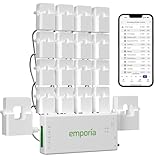
- SAFETY YOU CAN TRUST WITH UL CERTIFICATION: With Emporia Energy, your home energy monitoring is safe, reliable, and certified. The Emporia Vue is UL Listed, meaning it has met rigorous safety standards for electrical products in the U.S. and Canada. This certification ensures that every component has been thoroughly tested to prevent hazards, such as overheating, short-circuiting, or fire, offering you peace of mind as you manage your home’s energy consumption.
- INSTALLS IN CIRCUIT PANEL of most homes with clamp-on sensors. Supports Single phase, Single-split phase, and 2-wire systems. 3-wire systems; 3-phase, 4-wire Wye systems with earthed (TN or TT) neutral (no-Delta) are supported with an additional 200A sensor (sold separately).
- 24/7 ENERGY MANAGEMENT AND MONITORING: Automate, manage and control your home's real power anywhere, anytime to prevent costly repairs, conserve energy, and save costs. Monitor solar / net metering. PROTECTED BY A 1-YEAR WARRANTY.
- LOWER YOUR ELECTRIC BILL: Configure settings in the Emporia Energy App to automate energy management for time of use, peak demand, excess solar, and rewards programs. You can even see live reporting and invaluable savings opportunities instantly. Gauge real-time spending and get actionable notifications and automated energy management to help you reduce costs.
- REAL-TIME ENERGY DATA: REQUIRES 2.4 GHz WIFI WITH AN INTERNET CONNECTION to monitor energy use with iPhone / Android / Web app. Vue sensors collect energy data and are accurate from ±2%. The Vue is UL and CE Listed for your safety. 1 second data is only available in the app (when actively open) and retained 3 hours. Minute and hour data are retained in the cloud. 1 minute data is retained 7 days, 1 hour data is retained indefinitely. Export cloud data whenever you want in the app.
Use flexible loads strategically
Before choosing a time-based tariff, identify which large or repeatable loads you can shift—such as laundry, dishwashing, or supported off-peak water heating—and whether doing so is practical for your household. Australian Government guidance says hot water accounts for 25% of household energy use on average in Australia; this is a household-energy figure, not a universal electricity-only share. Off-peak storage hot water may reduce bills when both the appliance and provider support that arrangement (Australian Government).
Is a fixed or variable electricity plan better?
Neither is automatically better. The right choice depends on the offer’s pricing mechanism, how often rates can change, your tolerance for uncertainty, and the cost of leaving or renewing.
| Plan type | How pricing works | What to check |
|---|---|---|
| Fixed-price | The contract sets a price or pricing terms for a stated period; the contract may still allow specified charges or components to change. | Which elements are fixed, the term, exceptions, renewal price, and exit fees. |
| Variable | The provider may change prices under the contract, often with notice and subject to local rules. | How often prices can change, how notice is given, and whether you can leave without a penalty. |
| Indexed or wholesale-linked | Some prices are tied to an index or wholesale market measure, according to the offer’s formula. | The exact formula, update frequency, caps or protections if stated, and an illustrative bill under different price conditions. |
| Dynamic | Rates may vary frequently—some European offers change hourly or every 15 minutes. | How rates are communicated, whether you can shift usage, and the bill impact if you cannot. |
Do not infer stability from a plan name. Read the pricing formula and contract language, and check whether any quoted rate is temporary or conditional. A fixed headline rate also does not make unrelated fees or contract terms disappear.
Rank #4

- Various Monitoring Parameters: The power meter plug can monitor the power (W), energy (kWh), volts, amps, hertz, power factor, cost,minimum and maximum power (W), cumulative days and time of your appliances. By switching 8 display modes, you can easily know the various parameters while the appliance is working. The wattage meter can also calculate and display how much power your appliance uses and how much electricity bill it cost in cumulative time
- Premium Material: The whole body of our power monitor is made of high-quality PC material. It makes our home power consumption monitor more long lasting, heat resistant and fall resistant. The standard US socket and plug is suitable for all US standard appliances
- Overload Protection: When the power of the appliance exceeds the overload power, the word "OVERLOAD" and the LCD display will keep flashing, the buzzer will keep making a bi sound to warn the users. All the buttons will quit working and can only work again when the overload alarm has been cleared by raising the setting value or removing the appliance. The default overload power is 3680W and is adjustable from 0 to 3680W. In general, you need to set the overload power to 1800W before using. Just press the "MODE" button for more than 3 seconds to enter the setting
- KWH Alarm: Our power monitor plug has a upgraded power consumption alarm function. You can set the alarm power consumption for the appliances you monitored. Once the accumulated power consumption reaches the set alarm power consumption, the word "kwh alarm" will be displayed and keep flashing, the LCD will also keep flashing, and the buzzer will keep making a bi sound all the time to warn the users
- Data Memory Function: The watt meter plug in will record your power consumption data when you remove energy meter from socket, or remove appliances from the electricity monitor. All setting data and cumulative data(electricity quantity, cost, unit price, time) will be saved. You can directly see the last data when you use the electric usage meter plug next time(NOT including current, voltage, power, power factors). This function can also automatically save the data when there is a sudden power failure
Is a time-of-use plan cheaper for my household?
Only if your actual load profile makes it cheaper after applying every time band and fixed charge. Estimate the cost by multiplying your usage in each period by that period’s rate, then adding fixed charges and other applicable costs. Compare that result with a single-rate offer using the same total usage.
If you cannot obtain time-period usage data, treat a time-of-use estimate as less certain. Do not assume that shifting a few appliances will offset higher peak rates without calculating how much consumption remains in those hours.
Independent reader supportYour contribution helps us test, update, and keep practical guides available for everyone.What fees and terms should I check before switching electricity providers?
- Daily or standing charge: A fixed charge that applies regardless of how much electricity you use.
- Usage rates and time bands: All applicable rates, including controlled-load or demand components if relevant.
- Taxes, levies, and network charges: Confirm whether they are included in the quoted estimate and whether they can change separately.
- One-off and recurring fees: Connection, payment, paper-bill, late-payment, or other fees stated in the offer.
- Discount conditions: Whether the discount is temporary, conditional on on-time payment or a particular billing method, or tied to a bundle.
- Contract and exit terms: Term length, renewal, notice, cancellation fee, cooling-off rights where applicable, and what happens if you move.
- Payment and billing requirements: Any direct-debit, electronic billing, or billing-frequency conditions that affect the advertised price.
- Price changes: The provider’s ability to reprice, how much notice it must give, and the method for communicating changes.
For the UK, Ofgem’s published cap values illustrate why geography and dates matter: for Direct Debit customers in the 1 October–31 December 2026 period, the page lists electricity at 26.32 pence per kWh and a 54.83 pence daily standing charge. Those are period-, region-, and payment-specific contextual figures, not a universal benchmark or a substitute for comparing current offers in your area (Ofgem).
Best Value

- ⚡ EASY INSTALLATION: Installs in circuit panel of most homes with clamp-on sensors. Supports single-phase up to 240VAC line-neutral; single, split-phase 120/240VAC; and three-phase up to 415Y/240VAC (no Delta). The branch lines can automatically match different phases and have no restrictions in terms of quantity and voltage.Panels with access only to busbars will need flexible sensors available from SEM-Meter.
- ⚡ ENERGY MONITORING ANYTIME, ANYWHERE: Monitor your home's real power anywhere, anytime to prevent costly repairs, conserve energy, and save costs. Monitor solar / net metering. Light commercial 3 phase option available as a separate bundle. Protected by a 1-year warranty.
- ⚡ VARIOUS ELECTRICAL APPLIANCE MONITORING: Comes with 16 50A sensors to accurately monitor your air conditioner, furnace, water heater, washer, dryer, range, etc.
- ⚡ LOWER YOUR ELECTRIC BILL: SEM-Meter measures real-time spending and gets actionable notifications to understand where savings can be made, both to lower your electric bill and to conserve energy and protect the planet’s resources. Be an environmentalist.
- ⚡ REAL-TIME ENERGY DATA: Connect SEM-Meter device via 2.4GHz WiFi to monitor energy usage, with an accuracy range of 1%. View usage in real time through Android/Apple software. Statistics of power usage in now/day/week/month/year format: the validity period of hourly exported data is 90 days, and the exported data of day/month/year data is permanent, available at any time Export from application.
How should solar households compare plans?
Compare what you pay for imported electricity, fixed charges, and what you receive for exports as one bill calculation. Include when and how much electricity you use on-site, import from the grid, and export. A high feed-in tariff alone does not establish that a plan will produce the lowest total bill.
Australian Government guidance notes that most new solar feed-in rates are lower than the retail rate for purchased electricity, so using self-generated power can be valuable in that market. This is not a universal rule, and legacy arrangements or other jurisdictions may differ. Check the applicable export rate, any tiers or conditions, and whether the comparison assumes a realistic level of self-consumption (Australian Government).
Does switching electricity providers change the wires or local distributor?
In Australia, switching retailers ordinarily does not change the distributor responsible for the physical connection to your property, according to the AER. The retailer sells the plan; the local distribution network remains responsible for the wires. Rules and arrangements differ elsewhere, so use the relevant regulator’s guidance for your jurisdiction (AER).
Which comparison tool should I use?
Start with the official regulator or government comparison service for your state, province, or country, if available. The tools in the table are examples for specific jurisdictions, not interchangeable services.
| Jurisdiction | Official resource | Scope note |
|---|---|---|
| Australia | Australian Energy Regulator: Compare energy plans | Australian consumer guidance; plan availability and rules still depend on location. |
| Ontario, Canada | Ontario Energy Board: Energy contracts and forms | Ontario-specific information and calculator resources; not a tool for other provinces. |
| United Kingdom | Ofgem: Check if the energy price cap affects you | Explains the UK price cap; it is not a universal market price or a personalized plan ranking. |
| European Union | European Commission: Compare energy offers and save | Directs consumers toward national independent comparison tools; availability and market rules are national. |
When a tool produces an estimate, confirm that the plans shown are available at your address and meter type. Review the provider’s current offer and full terms before authorizing a switch.
Quick Recap
Product prices and availability are accurate as of the date/time indicated and are subject to change. Any price and availability information displayed on Amazon at the time of purchase will apply.




