Free tools Windows power users keep installed
One-click scans. No signup required.
Elon Musk helped derail the original December 2024 government funding agreement, but he did not legally kill a bill, possess a veto, or order a shutdown. Musk’s campaign on X pushed House Republicans against bipartisan legislation, and President-elect Donald Trump and JD Vance delivered the decisive political rejection on December 18. Speaker Mike Johnson then abandoned the deal.
Congress did not ultimately wait until Trump’s January 20, 2025 inauguration. After a failed replacement, lawmakers passed a different stopgap, H.R. 10545, in the early hours of December 21. President Joe Biden signed it later that day, funding the government through March 14, 2025 and averting a sustained shutdown.
The short version: the first deal died, but the government did not
The headline “Musk kills spending deal, demands shutdown until Trump is sworn in” captures a real political episode, but it compresses several separate events into one dramatic phrase.
- Musk initiated and amplified the revolt. On December 18, 2024, he told lawmakers to reject the package, threatened electoral consequences for supporters, and endorsed waiting until Trump took office on January 20.
- Trump and Vance turned the revolt into official political opposition. Their statement rejected the negotiated agreement and added a demand that Congress address the debt ceiling before Trump’s inauguration.
- House Republicans made the legislative decision. They abandoned the original package, tried and failed to pass a Trump-backed replacement, and then negotiated a narrower bill.
- The final result was a different law. H.R. 10545 passed the House 366–34–1, the Senate 85–11, and was signed by Biden on December 21.
So the most accurate description is that Musk helped blow up H.R. 10445. He did not single-handedly control Congress, and his preferred strategy—allowing a funding lapse until Trump arrived—was not carried out.
The Tool Desk
Outbyte Driver Updater FREEFix the driver behind crashes, sound loss and screen glitchesFind Drivers →Outbyte PC Repair FREERepair Windows errors before they cause bigger problemsFix Now →#1 Best Overall

- 【Multifunctional】 The desktop organizer has 2 storage boxes and 1 pen box, you can store many office supplies, such as pens, scissors, staplers, etc. Perfect for office, bookcase, home, etc
- 【Quality Material】 The Office Supplies Desktop Organizer is made of lightweight and durable metal mesh and reinforced with a sturdy steel frame for lasting strength and reliable performance.
- 【Large Capacity Organizer]】The 7-layer layered design and large capacity make the paper organizer ideal for managing a wide variety of letter-sized letters, papers, books, bills, and more. Makes it super easy for you to quickly identify the contents of each compartment!
- 【Save Space]】Desktop Organizer can help you organize your desktop and help you save space better. Keep you productive at work all the time.
- 【Size】16.75 "W x 8.75 "D x 16.75 "H (U.S. Patent Pending)
What was the original spending deal?
The original package was H.R. 10445, formally titled the Further Continuing Appropriations and Disaster Relief Supplemental Appropriations Act, 2025.
It was not a full-year federal budget. It was primarily a stopgap measure intended to keep the government funded through March 14, 2025, giving Congress more time to complete regular appropriations. But it was also much more than a bare continuing resolution. The released package ran roughly 1,500 pages—commonly reported as 1,547 pages—and combined temporary funding with several other measures.
Among its provisions were:
- Disaster assistance;
- Economic assistance for farmers;
- An extension of the 2018 farm bill;
- Health-policy provisions;
- Foreign-affairs extensions;
- Workforce legislation; and
- Other policy riders and administrative provisions.
That structure made the bill vulnerable to criticism from lawmakers and outside activists who objected to what they viewed as an omnibus or “Christmas tree” bill—a measure decorated with provisions that do not directly relate to keeping agencies open.
The bill had been negotiated by congressional Republicans and Democrats. Because House Republicans did not have enough unified support to pass it on their own, the agreement needed Democratic votes. That dependence became politically important: a small number of Republican defections could force Speaker Johnson either to rely on Democrats or reopen the negotiations.
Recommended Free Tools
The bill’s legislative history and text are important because many of the claims circulating about it described individual provisions in ways the statutory language did not support.
What Musk said and did
Musk began attacking H.R. 10445 before the House voted on it. His public campaign was unusually direct for a private citizen who held no formal legislative position. He wrote that the bill “should not pass” and called on lawmakers to “kill the bill.”
He also threatened political consequences for members who supported it, including primary challenges and being voted out. In another intervention, he said that no bills should pass Congress until January 20, when Trump would be sworn in. He replied “YES” to a post calling for the government to remain closed until that date and said a shutdown was preferable to passing what he considered a terrible bill.
Contemporaneous posts documenting the campaign include Musk’s statements that the bill should be rejected, his call to wait until January 20, and his later claim that public pressure had defeated the package:
- Musk post, December 18, 2024
- Musk post, December 18, 2024
- Musk post, December 18, 2024
- Musk post, December 18, 2024
- Musk post, December 18, 2024
His posts mattered because they reached a large political audience and gave Republican lawmakers a public rationale for opposing a deal negotiated by their own leadership. Several lawmakers echoed his criticisms or credited the pressure campaign.
But influence is not legal authority. Musk was not an elected official, a member of Congress, a cabinet officer, or a Senate-confirmed government official. The proposed Department of Government Efficiency, or DOGE, was an initiative Trump selected Musk and Vivek Ramaswamy to lead—not a constitutional office, cabinet department, or congressional body.
Rank #2

- 🎁【Multi-Functional Office Organization】Get your work area in order with the OPNICE Desk Organizer! Featuring 4 spacious trays, a vertical file organizer, 2 convenient hanging pen holders, and a sliding drawer, you can store all your office supplies, classify and organize them, and keep your desktop tidy
- 🎁【Easy Installation】Say goodbye to complicated assembly instructions and frustrating tools! Our desk organizers and accessories can be set up in just one minute without the need for any tools, allowing you to enjoy a hassle-free experience from start to finish
- 🎁【Maximize Your Space】Our clever use of space and multi-functional storage creates a workspace that maximizes your productivity. A neat workspace can improve your mood, work efficiency, and ultimately, your happiness
- 🎁【Premium Quality】Crafted from high-quality industrial-strength steel wire mesh and reinforced with a solid steel frame, our desk file organizer is built to last. You can trust that it will withstand the test of time and keep your workspace organized for years to come
- 🎁【Desktop Decor】Our desk organizer not only keeps your workspace organized but also adds a touch of elegance to your office or home decor. With its classic black metal color, it complements any style and showcases your professional and clean work style. Choose OPNICE desk organizers and accessories for a workspace that looks and feels great
Why did Musk oppose the package?
Musk’s stated objections focused on spending, alleged waste, and provisions he characterized as unrelated to keeping the government open. He singled out congressional compensation, the RFK Stadium campus, the Global Engagement Center, public-health and pandemic-preparedness language, and provisions he portrayed as protecting political figures associated with the January 6 committee.
Some of those criticisms identified real provisions or policy disputes. Others exaggerated or misstated what the text did. A large bill can contain controversial riders without every viral description of those riders being accurate.
The main claims checked against the bill
| Claim | What H.R. 10445 actually showed | Accurate way to describe it |
|---|---|---|
| “Congress gave itself a $69,000 raise.” | The widely circulated figure was false. Congress had not received a pay increase since 2009, according to a PolitiFact review. | Attribute the pay claim to Musk or DOGE-related posts, but do not present the $69,000 figure as a fact. |
| “The bill funded a new Washington Commanders stadium.” | The bill transferred administrative jurisdiction over the RFK Stadium campus to the District of Columbia and could facilitate future development. It also expressly barred the use of federal funds for stadium purposes. | It enabled a future local development decision; it did not appropriate federal money to build a stadium. See the statutory text and reporting on the provision. |
| “The package imposed mask or vaccine mandates.” | The text contained vaccine-related public-health provisions, but it did not create a general mask mandate or a general vaccine mandate. | Describe the public-health language precisely instead of repeating the broader mandate claim. The AP fact-check examined the claims. |
| “The bill protected Liz Cheney.” | Reporting found no provision explicitly naming Cheney in the statutory text. | Treat the allegation as a political interpretation, not as an established textual fact. |
| “The bill funded censorship.” | H.R. 10445 extended the Global Engagement Center, a State Department operation described as addressing foreign propaganda and disinformation. | The center is politically disputed. Calling the provision “censorship” is a characterization, not a neutral description of what the text enacted. |
| “It was only a spending bill.” | The package included appropriations, disaster and agricultural assistance, extensions, and policy riders. | Calling it an omnibus is understandable; calling every controversial description of its riders accurate is not. |
The practical lesson is simple: when a funding bill is thousands of pages long, check the provision rather than relying on a social-media summary. A direct appropriation, a reauthorization, a transfer of administrative jurisdiction, a reporting requirement, and a policy mandate have different legal and financial effects.
Trump and Vance changed the fight
Musk’s posts created pressure, but President-elect Trump and Vice President-elect Vance supplied the turning point that made the original agreement politically untenable for House Republicans.
In a December 18 statement, they rejected the negotiated package as containing Democratic “giveaways” and called for a more streamlined bill. They also demanded action on the debt ceiling before Trump took office. Their position was reported by the Associated Press and PBS.
The debt ceiling is separate from appropriations. A spending bill determines whether and how agencies receive funding; the debt limit governs the Treasury’s authority to borrow to meet existing obligations. Combining the two disputes increased the stakes and made compromise harder. It also created a problem for fiscal conservatives who opposed raising or suspending the debt ceiling.
Trump and Vance told Republicans to resist the Democratic position rather than accept the bipartisan compromise. They warned lawmakers who supported the deal that they could face political consequences. That intervention gave Republican members a reason to abandon an agreement even though it had already been negotiated by congressional leaders.
Did Musk alone kill the deal?
No. The most defensible causal account has three parts:
- Musk initiated and amplified the revolt by using X to attack H.R. 10445 and threaten lawmakers who backed it.
- Trump and Vance converted the revolt into a party-level political demand by publicly rejecting the package and adding the debt-ceiling issue.
- House Republicans made the formal legislative decision to abandon the original agreement, with Speaker Johnson moving away from the negotiated package.
That is why “Musk killed the deal” can be fair shorthand for his visible role in derailing the first package, but is misleading if it suggests he had a veto or acted alone. The bill had not passed the House. It was still a proposal, and Congress—not Musk—made the decisions about which text to bring forward and vote on.
The Washington Post’s account of Musk’s influence and the AP account of Trump’s intervention show why the episode should not be reduced to a single actor.
Rank #3

- [5-Tier Paper Organizer with Handle]– This desktop paper organizer features 5 open-front letter trays and a built-in handle, making it easy to move between your desk, shelf, classroom table, or home office workspace.
- [Sort Papers, Folders, Mail & Documents]– Use this desk file organizer to keep letter-size paper, file folders, documents, mail, bills, forms, and notebooks neatly separated for quick access during daily work or study.
- [Office Storage for a Cleaner Desk]– Designed for desk organization and office storage, this paper storage organizer helps reduce workspace clutter and keeps important paperwork off your desktop but still within easy reach.
- [For Office, Home & Classroom Organization]– A practical letter tray organizer for offices, home offices, schools, dorm rooms, reception areas, and teacher desks. Available in more stylish color options, it also works as a cute desk organizer for women, adding a personalized touch to classroom storage, homework trays, and daily paper sorting.
- [Sturdy Metal Mesh Desk Organizer] – Made with durable metal mesh and a reinforced frame, this file folder organizer also works for desk accessories, catalogs, magazines, and paperwork while (USPTO Patent Pending, USPTO Patent Application Number: 23715477)
The replacement bills: H.R. 10515 failed, H.R. 10545 passed
Using the phrase “the spending bill” without a bill number obscures what happened. There were three important versions.
1. H.R. 10445: the original bipartisan package
This was the roughly 1,547-page agreement released on December 17. It would have funded the government through March 14 and included disaster aid, farm assistance, a farm-bill extension, and multiple policy riders. Musk and then Trump and Vance opposed it.
2. H.R. 10515: the first replacement
On December 19, Republicans produced a substantially smaller replacement. It attempted to preserve disaster and agricultural assistance while responding to Trump’s demand for a two-year suspension of the debt ceiling.
The House rejected that proposal 174–235–1: 174 members voted yes, 235 voted no, and one voted present. The failed vote showed that Trump’s preferred approach could not command enough support even in a House controlled by Republicans. Some Republicans opposed the debt-limit provision, while Democrats opposed the revised package.
Contemporaneous coverage of the failed Trump-backed plan is available from Reuters and the AP.
3. H.R. 10545: the final law
Congress then negotiated a further revised measure, the American Relief Act, 2025. It:
- Funded the government through March 14, 2025;
- Included disaster relief;
- Included agricultural assistance;
- Extended the farm bill;
- Dropped the debt-ceiling suspension demanded by Trump; and
- Removed or narrowed several controversial policy riders from the original package.
The House passed H.R. 10545 by 366–34–1 on December 20. The Senate passed it 85–11 shortly after midnight on December 21. Biden signed the measure later that day; his signing statement confirmed the enactment.
The final coalition was not the one Musk and Trump had sought. Democrats supplied most of the House yes votes, while dozens of Republicans opposed the measure. The result demonstrated both Musk’s short-term ability to reshape the debate and the limits of Trump’s ability to force Congress to accept his preferred replacement.
What’s actually slowing this PC down?
Pick the symptom - the matching free tool is one click away.
Why did Musk want a shutdown until January 20?
Musk’s stated rationale was that Congress should reject the disputed omnibus and allow the incoming administration to negotiate or legislate after Trump took office.
Politically, waiting until January 20 would have done much more than create a neutral pause. It would have:
Rank #4

- 📂【Save Space】: The office organizer fully utilizes the vertical space of the desktop, creates the largest possible storage space, accommodates various office desk accessories, and saves space.
- 📂【Improve Work Efficiency】:The file organizer includes 4 trays, a magazine rack, 2 pen holders and a sliding drawer, helps you quickly identify the contents of each compartment, doubles your work speed, keeps you busy and more creative throughout the day.
- 📂【High Quality Material】: The file organizer is made of durable metal mesh and solid steel, which has better stability and durability, and the outer layer is epoxy coated, which is rust-resistant and highly durable, ensuring a long service life.
- 📂【Easy to Assemble】: Easy to assemble the desktop organization within 4 minutes after watching the reading the installation manual, no extra tools required, super easy to assemble, don't worry about any problems!
- 📂【Happy Purchase】: We offer a 100-day return policy. If you have any questions, please feel free to contact us, we will help you within 24 hours.
- Shifted the next funding decision into the Trump administration;
- Delayed the debt-ceiling fight until Trump was president;
- Prevented the outgoing Biden administration from signing a temporary package Trump opposed;
- Increased pressure on Speaker Johnson and congressional Republicans; and
- Risked disrupting federal operations during the holiday period.
In other words, “wait until Trump is sworn in” was a political strategy to deny the outgoing administration a funding agreement and force the incoming administration to inherit the crisis. It was not simply an administrative scheduling preference.
Nor would a shutdown have automatically ended at noon on January 20. If funding had lapsed, Congress could have passed a new bill at any point. Trump’s inauguration itself would not restore appropriations; Congress and the president would still have needed to enact funding.
Do these 3 things before closing this tab:
1Scan for outdated or missing drivers - takes under a minute2Repair Windows errors before they cause bigger problems3Fix the driver behind crashes, sound loss and screen glitchesWas there actually a government shutdown?
No sustained shutdown occurred as a result of this confrontation. Existing funding was set to expire at the end of December 20. Congress passed H.R. 10545 after midnight in the early hours of December 21, and Biden signed it that day.
It is therefore imprecise to say that Congress allowed the government to shut down until Trump took office. A better description is that Congress came close to a funding lapse and passed a replacement around the deadline that avoided a sustained shutdown. The White House said agencies could continue operating because federal obligations were tracked daily and the likelihood of passage meant ordinary shutdown procedures were not activated in the usual way.
The bill’s final actions, the Senate vote, and the president’s signing statement establish the outcome.
Independent reader supportYour contribution helps us test, update, and keep practical guides available for everyone.What a shutdown would have meant for workers, contractors, and benefit recipients
A shutdown would not have switched off every federal function. Under the Antideficiency Act, agencies generally cannot incur obligations without appropriations. Activities that are not legally excepted must stop, but some functions can continue under exceptions or other funding authorities.
Quick wins for a faster PC:
Repair Windows errors before they cause bigger problemsFix Now →Fix the driver behind crashes, sound loss and screen glitchesFind Drivers →The exact impact varies by agency and program. The Government Accountability Office’s explanation of funding lapses, the Congressional Research Service overview, and the Office of Personnel Management’s December 2024 instructions distinguish among three categories of employees:
| Category | What generally happens during a lapse | Personal-finance implication |
|---|---|---|
| Furloughed employees | They are barred from working except for limited shutdown activities. | Pay can be delayed, creating a cash-flow problem even when employees later return to work. |
| Excepted employees | They may be permitted or required to work because their functions fall within a legal exception, generally without immediate pay. | They may have to continue working while waiting for compensation. |
| Exempt employees | They are funded through sources not affected by the lapse and are not subject to the shutdown furlough. | Their pay and work status may be less directly affected, although agency-specific disruptions can still occur. |
For households, the key distinctions are:
- Federal employees: A lapse can interrupt pay or require people to work without immediate pay, depending on their classification and agency contingency plan.
- Federal contractors and grantees: Payments and work can be delayed. Contractors are not automatically protected by the same back-pay rules that apply to federal employees.
- Social Security recipients: Benefits generally continue because Social Security is supported by permanent appropriations, although administrative services can be affected.
- Other government services: Some activities continue because they are necessary to protect life and property, are funded through multi-year or permanent authorities, or fall within another legal exception.
That means the phrase “the government shuts down” is financially incomplete. The real question is which agency, program, employee category, and funding authority are involved.
For anyone whose income depends on federal work or contracting, a threatened shutdown is primarily a liquidity risk: the obligation to work, deliver, or pay bills may arrive before the corresponding federal payment. A household facing that risk should consult its agency or contracting officer’s contingency instructions rather than assume that every federal payment stops—or that every delayed payment will be covered later.
Verified timeline
| Date | What happened |
|---|---|
| December 17, 2024 | Congressional negotiators released H.R. 10445, the bipartisan package funding the government through March 14 with disaster aid, farm aid, and other provisions. |
| Early December 18 | Musk began attacking the bill on X and urged lawmakers to reject it. |
| December 18 | Musk called for no bills to pass until January 20 and endorsed waiting with the government closed until Trump took office. |
| December 18 | Trump and Vance rejected the agreement, demanded a more streamlined bill, and called for action on the debt ceiling. |
| December 18–19 | House Republicans abandoned the original package. |
| December 19 | The House rejected the first replacement, H.R. 10515, by 174–235–1. |
| December 20 | The House passed H.R. 10545 by 366–34–1. |
| December 21 | The Senate passed H.R. 10545 by 85–11, and Biden signed it into law. |
| Result | The government remained funded through March 14, 2025; the threatened holiday shutdown was averted. |
The original bill record, final bill record, and official House and Senate vote pages provide the legislative sequence.
Crashes, No Sound, or Screen Glitches?
Random freezes, missing sound and display glitches usually trace back to one bad driver. Find and replace yours safely.Free scan · under a minutePC Slower Than It Used to Be?
A free scan shows the junk files, broken settings and background clutter dragging Windows down - then fixes them in one click.Free scan · Windows 10 & 11Best Value
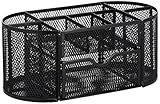
- Desktop organizer with pen holder, pullout drawer, and other compartments
- Ideal for use in offices, workspaces, businesses, and homes
- Durable commercial-grade steel construction
- Stylish mesh surface that promotes airflow and helps prevent dust build-up
- Scratch- and chip-resistant powder-coated finish
What the episode showed about Musk’s power
Musk demonstrated that a wealthy, high-profile outsider with a large social-media platform could rapidly change the political environment around a must-pass bill. He could mobilize conservative voters, give lawmakers cover for opposing a negotiated agreement, and make a previously settled deal politically dangerous before it reached a vote.
But the episode also showed the limits of that influence:
- Musk could not veto H.R. 10445 because it had not passed Congress and he held no veto power.
- He could not order a shutdown. Only Congress and the president could enact or withhold the funding legislation needed to keep agencies operating.
- Trump’s intervention was essential to converting Musk’s online campaign into a broader Republican revolt.
- Trump could not force House Republicans to pass the debt-ceiling replacement.
- The final bill dropped the debt-ceiling suspension and passed with a coalition that relied heavily on Democrats.
The original deal died, but a revised bill passed two days later. That is the central fact behind the headline: Musk had substantial political influence, not formal control of the federal budget process.
Frequently Asked Questions
Did Elon Musk legally kill the government spending bill?
No. Musk was not a member of Congress and had no veto authority. His public campaign helped push House Republicans away from H.R. 10445, but Trump and JD Vance’s intervention and Speaker Mike Johnson’s decision to abandon the package were also essential. Congress later passed a different bill.
Did the federal government shut down until Donald Trump took office?
No sustained shutdown occurred. Funding was set to expire at the end of December 20, 2024, but Congress passed H.R. 10545 after midnight on December 21 and President Biden signed it that day. Trump’s inauguration would not have automatically restored funding anyway; Congress and the president would still have needed to enact a law.
Would Social Security payments have stopped during a shutdown?
Social Security benefits generally continue because they are supported by permanent appropriations. However, administrative services can be affected, and the effect of a funding lapse varies by agency and program. The Government Accountability Office explains the legal distinctions at GAO.gov.
Was the claim that Congress received a $69,000 raise true?
No. The widely circulated figure was false. A PolitiFact review found that Congress had not increased its pay since 2009. The claim should be attributed to Musk or DOGE-related posts rather than presented as a fact: PolitiFact’s fact-check.
Which spending bill became law?
H.R. 10545, the American Relief Act, 2025, became law after passing the House 366–34–1 and the Senate 85–11. It funded the government through March 14, 2025, included disaster and agricultural assistance, and did not include Trump’s requested debt-ceiling suspension.
Quick wins for a faster PC:
Clear out junk files and repair common Windows errorsFree Scan →Scan for outdated or missing drivers - takes under a minuteDriver Scan →Repair Windows errors before they cause bigger problemsFix Now →The Bottom Line
Bottom line: Musk helped derail H.R. 10445 and publicly advocated allowing a shutdown to continue until Trump’s January 20 inauguration. Trump and Vance then delivered the decisive political rejection, and House Republicans abandoned the deal. But the strategy did not produce a sustained shutdown: Congress passed H.R. 10545, a narrower replacement without the debt-ceiling demand, and Biden signed it on December 21, 2024.
Quick Recap
Product prices and availability are accurate as of the date/time indicated and are subject to change. Any price and availability information displayed on Amazon at the time of purchase will apply.




