The most impressive interview question is not unusual or theatrical. It is specific to the role, based on something you researched or heard during the interview, and useful for both you and the employer. Prepare five to seven questions, then ask the best three to five based on what has already been covered. A good final set usually includes one question about priorities, one about success, one about the manager or team, one about working conditions, and one about next steps.
Use these questions to show how you think about contribution and fit—but also to decide whether the job deserves your time. Career-services guidance from RIT treats an interview as a two-way conversation and recommends prioritizing a small number of questions. Current guides from Indeed and Glassdoor similarly emphasize role expectations, success measures, team dynamics, management, culture, growth, and next steps.


The five best starting questions
If you have only a few minutes, choose from these:
- What would you most want the person in this role to accomplish in the first 90 days?
- How will you measure success in this position after six months and after one year?
- What is the biggest challenge the person in this role will face first?
- When several priorities compete, how are trade-offs decided?
- What are the next steps and decision timeline, and is there anything about my experience you would like me to clarify?
Do not ask all 20 questions below. They are a preparation bank. Choose the ones that fill an information gap, match the person interviewing you, and fit the interview stage.
What makes an interview question impressive?
For interview purposes, impressive means relevant, researched, specific, open-ended, and useful—not complicated. The strongest questions do at least one of the following:
#1 Best Overall
- Connect the job to a measurable business or team outcome.
- Clarify expectations that the job description leaves vague.
- Show that you listened and can build on the conversation.
- Reveal how decisions, feedback, workload, and collaboration work in practice.
- Help you evaluate whether the employer’s expectations match what you want.
Use this formula:
Research or observation + focused question + practical follow-up.
For example: “I saw that the company recently expanded into enterprise accounts. How will this role support that growth?” If the answer is broad, follow with: “What would meaningful progress look like in the first year?”
20 questions to ask a potential employer
Role and expectations
1. What would you most want the person in this role to accomplish in the first 90 days?
Why it works: It moves the discussion from a general list of duties to immediate outcomes and shows that you are thinking about how to become useful quickly.
Ask this of: The hiring manager or future supervisor.
Do these 3 things before closing this tab:
1Repair Windows errors before they cause bigger problems2Scan for outdated or missing drivers - takes under a minute3Clear out junk files and repair common Windows errorsFollow up with: “Which of those priorities would come first?”
Listen for: Specific deliverables, stakeholders, deadlines, onboarding steps, and support. A strong answer distinguishes what must happen immediately from what can wait.
Investigate further if: The employer lists several urgent responsibilities without prioritizing them or explaining how a new hire will learn the work. A long list alone is not proof of a bad job, but it is a reason to ask how trade-offs are made.
2. How will you measure success in this position after six months and after one year?
Why it works: It signals that you are comfortable being accountable for results rather than simply completing tasks.
Ask this of: The hiring manager or future supervisor.
Follow up with: “Which measures matter most when priorities compete?”
Listen for: Clear metrics, quality standards, customer outcomes, revenue, productivity, project delivery, or defined behavioral expectations. The exact measure depends on the job; not every role has a single numerical target.
Investigate further if: The answer is only “You’ll know you’re doing well” or another general assurance with no examples. Ask what a successful first project or performance review would look like. Questions about success and performance measurement are also recommended by Indeed, RIT, and Glassdoor.
What’s actually slowing this PC down?
Pick the symptom - the matching free tool is one click away.
3. What problem or business need led you to open this role?
Why it works: It gets beyond the job description and explains why the position exists.
Ask this of: The recruiter or hiring manager.
Follow up with: “What would you want the new hire to do differently or better?”
Listen for: A coherent explanation: perhaps the company is growing, a team needs new expertise, a role was vacated, or a process needs improvement. The explanation should connect the business need to the responsibilities you would perform.
Investigate further if: The interviewer cannot explain the vacancy, gives inconsistent answers, or describes several unrelated jobs bundled into one position. Asking why a role is open is specifically recommended by RIT.
4. What is the biggest challenge the person in this role will face first?
Why it works: It presents you as realistic and ready to understand obstacles rather than assuming the job will be easy.
Ask this of: The hiring manager or a future teammate.
Follow up with: “What has made that challenge difficult so far?”
Listen for: An honest description of operational pain points, resource constraints, competing demands, and the support available to address them.
Free tools Windows power users keep installed
One-click scans. No signup required.
Investigate further if: The interviewer minimizes an obvious difficulty or claims there are no meaningful challenges. A difficult problem can make a job attractive; an unwillingness to discuss it is the more useful signal.
5. What does a typical week look like, and how does it change during busy periods?
Why it works: It produces a more realistic picture than asking only for the day-to-day duties listed in the posting.
Ask this of: The future manager or a current team member.
Follow up with: “How often do those busy periods occur, and how long do they usually last?”
Recommended Free Tools
Listen for: Meetings, focused work, interruptions, customer contact, travel, deadlines, seasonality, staffing, and overtime. Ask separately about what is normal and what counts as an emergency.
Investigate further if: “Every day is different” is used to avoid describing the actual work. Research on realistic job previews has examined how accurate expectations relate to employment outcomes, so understanding the work itself matters—not just whether the employer’s description sounds attractive. See the Academy of Management research for background.
6. When several priorities compete, how are trade-offs decided?
Why it works: It demonstrates judgment and exposes how work is actually prioritized.
Ask this of: The hiring manager, department leader, or senior team member.
Outdated Drivers Are Slowing You Down
One free scan finds every outdated or missing driver and matches the right update for your exact hardware.Free scan · exact hardware matchPC Slower Than It Used to Be?
A free scan shows the junk files, broken settings and background clutter dragging Windows down - then fixes them in one click.Free scan · Windows 10 & 11Rank #2
Follow up with: “Can you give me an example of a recent trade-off the team had to make?”
Listen for: Explicit priorities, customer or business impact, a defined decision-maker, and a way to escalate conflicts.
Investigate further if: Employees are expected to satisfy every stakeholder simultaneously or if every request is described as urgent. That may indicate unclear authority or chronic overload.
7. Which decisions would I own, and which would require approval?
Why it works: It explores accountability and autonomy without sounding as though you are demanding unrestricted authority.
Quick wins for a faster PC:
Fix the driver behind crashes, sound loss and screen glitchesFind Drivers →Repair Windows errors before they cause bigger problemsFix Now →Ask this of: The future manager.
Follow up with: “Does that level of ownership change as someone becomes established in the role?”
Listen for: Clear boundaries, reasonable approval requirements, and a credible path toward greater responsibility.
Investigate further if: The job is advertised as autonomous but the manager requires approval for routine decisions, or if nobody can explain who is accountable when work goes wrong.
Team, manager, and working norms
8. Who would I work with most closely, and how are responsibilities divided across the team?
Why it works: It clarifies the team structure and shows how the position fits into it.
The Tool Desk
Outbyte Driver Updater FREEScan for outdated or missing drivers - takes under a minuteDriver Scan →Outbyte PC Repair FREEClear out junk files and repair common Windows errorsFree Scan →Ask this of: The hiring manager or a future teammate.
Follow up with: “Where do responsibilities most often overlap or require coordination?”
Listen for: Named functions, reporting relationships, handoffs, team size, and clear ownership of important work.
Investigate further if: No one can explain who owns key tasks or how work moves between teams. Team composition, collaboration, and reporting relationships are recurring topics in guidance from Indeed and RIT.
9. How does the team usually handle disagreement or conflicting priorities?
Why it works: This is more revealing than the generic “What is the culture like?” because it asks about observable behavior.
Ask this of: A future teammate or the manager.
Follow up with: “Could you describe a recent example?”
Listen for: Respectful debate, a process for making decisions, appropriate escalation, and accountability after a decision is made.
Investigate further if: The answer is “We never disagree,” “People just work it out,” or a boast that difficult conversations are avoided. Healthy teams can disagree; the important question is how they resolve it.
Free tools Windows power users keep installed
One-click scans. No signup required.
10. How would you describe your management and feedback style?
Why it works: It helps you evaluate the relationship you would have with your direct manager.
Ask this of: The direct manager.
Follow up with: “How do you prefer someone on your team to raise a concern?”
Listen for: One-on-one frequency, coaching practices, autonomy, feedback timing, goal-setting, and a concrete example. A label such as “I’m hands-off” does not tell you enough by itself.
Investigate further if: The manager cannot explain how feedback is delivered, expects employees to infer expectations, or treats questions as a sign of weakness. Glassdoor’s interview guidance also recommends asking about feedback and leadership support.
11. How does the team communicate during normal work, and what happens when something is urgent?
Why it works: It turns “Are you collaborative?” into a question about actual communication practices.
Ask this of: A team member or manager.
Follow up with: “Which channels are used for routine work, and which are reserved for emergencies?”
Listen for: Meeting frequency, messaging norms, response-time expectations, escalation procedures, and a meaningful distinction between urgent and merely important.
Investigate further if: Constant availability is treated as evidence of commitment or the employer cannot define when employees are expected to respond outside normal hours.
PC Slower Than It Used to Be?
A free scan shows the junk files, broken settings and background clutter dragging Windows down - then fixes them in one click.Free scan · Windows 10 & 11Crashes, No Sound, or Screen Glitches?
Random freezes, missing sound and display glitches usually trace back to one bad driver. Find and replace yours safely.Free scan · under a minute12. What behaviors are rewarded here, and what tends to make someone struggle?
Why it works: It can reveal the operating culture more accurately than a list of official company values.
Ask this of: The manager, a team member, or an employee panel.
Follow up with: “Can you give me an example of someone who has succeeded here?”
Listen for: Behaviors tied to results, collaboration, integrity, learning, customer impact, and effective communication.
Investigate further if: The answer appears to reward constant availability, internal competition, personal loyalty, or similarity to leadership more than job-related performance. Ask about working practices rather than trying to guess whether you personally “fit” an abstract culture.
13. What do people who thrive on this team do differently?
Why it works: It shows that you want to understand effective behavior and reproduce it.
Ask this of: The hiring manager or future teammate.
Follow up with: “What would someone who struggles in the role usually underestimate?”
Do these 3 things before closing this tab:
1Repair Windows errors before they cause bigger problems2Fix the driver behind crashes, sound loss and screen glitches3Clear out junk files and repair common Windows errorsListen for: Specific behaviors such as documenting work, communicating early, managing ambiguity, serving customers, or collaborating across functions.
Investigate further if: Success depends mainly on vague ideas such as “fitting in” or being available at all times. Observable expectations are more useful and fairer than subjective similarity.
14. What is one thing people often misunderstand about working here?
Why it works: It invites a candid answer without accusing the employer of hiding something.
Ask this of: A current employee, manager, or recruiter.
Follow up with: “How did you come to understand that?”
Listen for: A balanced answer that acknowledges both a benefit and a trade-off—for example, meaningful autonomy paired with a need to manage ambiguity.
Investigate further if: The interviewer becomes defensive or insists that the company has no downsides. One polished answer is not proof of a problem, but it can justify asking another person the same question.
Company direction and growth
15. Which company or team priority will this role influence most over the next year?
Why it works: It connects the job to business results and demonstrates strategic thinking.
Ask this of: The hiring manager, department head, or executive.
Follow up with: “What would meaningful progress look like?”
Listen for: A specific initiative, customer problem, product, market, or operational goal—and a clear explanation of how your work would contribute.
Investigate further if: The role has no identifiable connection to current priorities or if different interviewers describe completely different priorities. Questions about company direction and challenges are also recommended by Indeed and Glassdoor.
The Tool Desk
Outbyte Driver Updater FREEFix the driver behind crashes, sound loss and screen glitchesFind Drivers →Outbyte PC Repair FREERepair Windows errors before they cause bigger problemsFix Now →16. What changes do you expect could affect this role in the next six to 12 months?
Why it works: It shows that you understand the role exists within a changing organization.
Ask this of: The hiring manager or department leader.
Follow up with: “How is the team preparing for that change?”
Listen for: Acknowledgment of likely technology changes, growth, reorganization, budget uncertainty, acquisitions, policy changes, or shifting priorities, along with a plan for managing them.
Investigate further if: Major known changes are dismissed, concealed, or described inconsistently. Change is normal; the concern is a lack of candor or preparation.
17. How are new hires trained, and what support is available during the ramp-up period?
Why it works: It communicates that you want to become productive while testing whether the employer supports that process.
Ask this of: The hiring manager, recruiter, or potential teammate.
Follow up with: “What should a new employee be able to handle independently after the first month?”
Quick wins for a faster PC:
Repair Windows errors before they cause bigger problemsFix Now →Scan for outdated or missing drivers - takes under a minuteDriver Scan →Listen for: A sequence of training, documentation, job shadowing, mentoring, milestones, and named people who provide support.
Investigate further if: The response to a complex or regulated role is simply “You’ll just pick it up.” Ask how training time is protected and how progress is assessed. Indeed specifically recommends asking about training length, resources, and career paths.
18. What development or career paths have people in this role actually taken?
Why it works: The word “actually” encourages examples instead of general promises.
Ask this of: The manager, recruiter, or a senior employee.
Recommended Free Tools
Rank #4
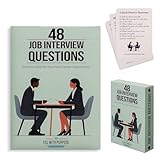
- Essential Phrases: Carefully selected flashcards feature common questions and advice to enhance your preparation and answers.
- Targeted Content: Curated by a career pathways and ESL instructor to help advanced language learners, as well as recent graduates and job seekers.
- Strategic Practice: Organized into 4 categories of relationship, knowledge, character, and leadership, allowing you to delve deep into each question and refine your responses.
- Insightful Guidance: The 8 tip cards such as the STAR method, along with what to ask the interviewer and more thoughtful ideas.
- Hiring Managers: Compact and portable, it provides a convenient resource to identify and draw out meaningful and honest responses.
Follow up with: “Could you share an example of someone who moved forward from this position?”
Listen for: Real progression, approximate timeframes, skills gained, mentoring, promotion criteria, and internal mobility.
Investigate further if: Advancement is described only as “the sky’s the limit” or the employer cannot identify anyone who has developed from the role. Career development and concrete examples of internal progression are recurring topics in Glassdoor and Indeed guidance.
Practical details and closing
19. What are the practical working expectations—location, core hours, flexibility, travel, and after-hours availability?
Why it works: It puts potentially deal-breaking logistics on the table without making the interview seem focused only on perks.
What’s actually slowing this PC down?
Pick the symptom - the matching free tool is one click away.
Ask this of: Ask the recruiter about formal policy, then ask the manager or team member how it works in practice.
Follow up with: “How does that policy work for this particular team?”
Listen for: The actual hybrid or remote schedule, core hours, time-zone expectations, travel frequency, shifts, weekend work, and after-hours norms. If the job is remote or hybrid, also ask about equipment, home-office support, video-meeting load, and occasional in-person requirements.
Investigate further if: The posting says “flexible” or “hybrid” but the interview reveals informal pressure to be in the office or constantly available. Written policy and lived team practice can differ. Indeed and Glassdoor both cover questions about telecommuting, travel, work-life balance, and availability outside normal hours.
Do these 3 things before closing this tab:
1Fix the driver behind crashes, sound loss and screen glitches2Repair Windows errors before they cause bigger problems3Scan for outdated or missing drivers - takes under a minute20. What are the next steps and decision timeline, and is there anything about my experience you would like me to clarify?
Why it works: It closes the interview practically while giving you a chance to address a concern before the conversation ends.
Ask this of: The recruiter or hiring manager, usually at the end.
Follow up with: “Would an additional work sample or example help?”
Listen for: The next stage, decision-maker, approximate date, evaluation criteria, and whether references or a work sample are expected. A precise timeline can still change, but the employer should be able to explain the process.
Recommended Free Tools
Investigate further if: The process is vague, repeatedly changes, or has no identifiable decision owner. Guidance from RIT, Indeed, and Glassdoor recommends asking about next steps.
Match the question to the interviewer
The person in front of you may not be able to answer every question. Use that distinction to avoid treating a recruiter’s lack of team detail as a warning sign.
| Interviewer | Best topics | Questions to avoid expecting them to answer |
|---|---|---|
| Recruiter or HR representative | Hiring stages, timeline, salary range, benefits, employment type, location, travel, formal policies, interview accommodations, and why the role is open | Detailed day-to-day workflow or the manager’s personal leadership style |
| Hiring manager | First 90 days, success measures, current problems, decision authority, feedback, team priorities, training, and development | Every company-wide benefits or payroll detail |
| Future teammate | Typical week, collaboration, communication, workload spikes, disagreement, and what successful employees do differently | Final compensation approval or confidential strategic decisions |
| Executive or senior leader | Company direction, department priorities, strategic change, and how the role contributes to broader goals | Detailed daily procedures they do not oversee |
| Panel | Ask one shared question and invite each person’s perspective | Assuming one person’s answer represents the entire team |
For a panel, try: “From your perspective, what will be the most important relationship for this role to build?” Then direct a follow-up to the person whose answer raises the most useful issue.
Choose your five questions strategically
Before the interview, score possible questions against these tests:
Quick wins for a faster PC:
Clear out junk files and repair common Windows errorsFree Scan →Fix the driver behind crashes, sound loss and screen glitchesFind Drivers →| Test | Ask yourself |
|---|---|
| Relevance | Does this concern this specific role rather than any job? |
| Information value | Could the answer change my decision or help me prepare? |
| Judgment | Does the question show that I am thinking about outcomes and trade-offs? |
| Nonredundancy | Has the employer already answered it in the posting or interview? |
| Audience | Can this particular interviewer give a useful answer? |
| Timing | Is it suitable for this interview stage? |
| Follow-up | Can I ask for a recent example? |
| Risk | Could it sound entitled, invasive, or premature? |
A balanced final set usually contains:
- One question about immediate priorities.
- One question about how success is measured.
- One question about the manager or team.
- One question about the practical working environment.
- One closing question about next steps or an unresolved concern.
Prepare five to seven, but expect to ask three to five. RIT recommends prioritizing three to five because time may be limited, while Glassdoor’s interview-preparation guidance suggests preparing five to seven.
Turn generic questions into useful ones
Generic questions often produce rehearsed answers. Replace broad labels with observable practices:
| Weak version | Stronger version |
|---|---|
| What is the culture like? | How does the team handle disagreement or conflicting priorities? |
| Is the team collaborative? | Who would I work with most closely, and how are responsibilities divided? |
| Is there room to grow? | What development or career paths have people in this role actually taken? |
| Is the job stressful? | How does a typical week change during busy periods? |
| Is the manager supportive? | How do you give feedback, and how should someone raise a concern? |
| Is the job flexible? | What are the core hours, location expectations, and after-hours norms for this team? |
Useful follow-up prompts include:
- Could you give me a recent example?
- What happened the last time that occurred?
- How often does that happen?
- Who owns that decision?
- What would make that difficult?
- How would the person in this role contribute?
- How would you know the approach was working?
- What support would be available?
The follow-up is often more revealing than the prepared question because it asks the interviewer to move from a polished description to a concrete event.
When to ask about salary, benefits, and time off
Compensation is important, but there is no universal rule that it must be discussed either immediately or only after an offer. The right timing depends on the interview stage, the employer’s process, your requirements, and applicable state or local law.
The Tool Desk
Outbyte PC Repair FREERepair Windows errors before they cause bigger problemsFix Now →Outbyte Driver Updater FREEFix the driver behind crashes, sound loss and screen glitchesFind Drivers →During an early recruiter screen
It is reasonable to ask:
“Could you share the approved salary range and the main components of total compensation so we can confirm that we are aligned?”
An early conversation is especially sensible if compensation is a non-negotiable screening factor. A recruiter phone screen commonly covers salary expectations and availability, according to Glassdoor’s interview-preparation guide.
During a first interview with the hiring manager
If the job posting already gives a range, do not repeat a question the employer has answered. If it does not, ask only when the information is necessary:
“Before we go further, could you tell me whether the approved compensation range is consistent with the level and scope we have discussed?”
During a later-stage interview or offer discussion
Ask about the full package:
“Could you walk me through base salary, bonus or commission, equity if applicable, benefits, paid leave, retirement contributions, review timing, and any conditions attached to variable compensation?”
Do not ask only about salary. Bonus targets, commission rules, vesting schedules, insurance costs, retirement contributions, paid leave, review timing, and eligibility conditions can materially change the value of an offer.
Some career guides recommend postponing salary, benefits, and vacation questions when they are premature. That is strategic advice, not a universal prohibition. Pay-transparency requirements also vary by state and locality; consult the U.S. Department of Labor’s pay-transparency resources for the relevant jurisdiction rather than assuming one nationwide rule.
Independent reader supportYour contribution helps us test, update, and keep practical guides available for everyone.How to interpret the employer’s answers
Do not judge the entire company from one awkward answer. Evaluate patterns, ask for examples, and compare what you hear with the job posting, public information, and answers from other interviewers.
PC Slower Than It Used to Be?
A free scan shows the junk files, broken settings and background clutter dragging Windows down - then fixes them in one click.Free scan · Windows 10 & 11Outdated Drivers Are Slowing You Down
One free scan finds every outdated or missing driver and matches the right update for your exact hardware.Free scan · exact hardware matchBest Value

- WHAT'S IN THE BOX: Meet the ultimate job interview prep system: a premium communication card deck featuring 54 interview flashcards, each pairing a key question or scenario with a high-impact answer, 100+ fill-in-the-blanks for authentic responses, and bonus access to 4.5 hours of video tutorials.
- EXPERT CRAFTED CARDS: Developed by Gorick Ng—Harvard career advisor, Wall Street Journal bestselling author, and career strategist—these 54 scenario-based interview flash cards teach you the proven response and storytelling frameworks for high-stakes interviews.
- BONUS VIDEO COACHING: Have Gorick Ng personally walk you through every card scenario and script. Simply use the included secret password to create an account and get instant access.
- MASTER LANDMINE QUESTIONS: Learn what to say—and what not to say—when facing the toughest questions that trip up 99% of candidates and turn high-stakes pressure into a job offer.
- COMPREHENSIVE INTERVIEW PREP: Covers both formal job interviews and informational coffee chats. Like a job hunter’s workbook meets flashcards, just draw a card, practice the framework, and walk in fully prepared.
Positive signals
- The interviewer gives specific examples instead of relying only on slogans.
- Different interviewers describe the role and reporting structure consistently.
- Expectations are measurable or at least clearly defined.
- The employer acknowledges trade-offs rather than pretending the job has no difficulties.
- The manager can explain how feedback, coaching, and concerns are handled.
- Training and onboarding have named owners and realistic milestones.
- The company distinguishes normal work from emergency work.
- Career progression is illustrated with real examples, skills, and timeframes.
- The interviewer answers difficult questions without becoming defensive.
- The hiring timeline is clear enough for you to plan around.
Possible warning signs to investigate
- The job description conflicts with the responsibilities described in the interview.
- The role appears to combine several full-time jobs.
- “Fast-paced” is used instead of explaining workload, staffing, or deadlines.
- The employer cannot explain why the position is open.
- No one can describe how performance will be measured.
- The manager expects constant availability without defining what is truly urgent.
- High turnover is dismissed without explanation.
- Interviewers contradict one another about remote work, hours, travel, or reporting.
- Growth is promised but no one can provide an example of advancement.
- The employer cannot explain the next step or who makes the decision.
- The interviewer speaks contemptuously about former employees.
- You are pressured to accept without a written offer or enough time to review it.
These are diagnostic clues, not automatic proof of a bad employer. For example, a newly created position may legitimately have evolving responsibilities, and a recruiter may not know the manager’s daily workflow. Ask a clarifying question, seek a second perspective, and assess whether the explanation is coherent.
Questions to ask at different interview stages
| Stage | Good subjects | Examples |
|---|---|---|
| Recruiter screen | Basic alignment and process | Salary range, employment type, location, travel, formal schedule, why the role is open, interview stages, and timeline |
| Hiring-manager interview | Work, expectations, and authority | First 90 days, success measures, biggest challenge, decision ownership, manager style, and team priorities |
| Team or panel interview | Daily reality and collaboration | Typical week, communication, workload spikes, team responsibilities, and disagreement |
| Final interview | Mutual fit and unresolved issues | Company priorities, changes affecting the role, career path, total compensation, concerns about your background, and next steps |
| Offer discussion | Written terms | Base pay, variable compensation, equity, benefits, paid leave, retirement contributions, review timing, start date, and conditions |
Special situations
If the interviewer already answered everything
Do not ask a redundant question just to appear interested. Try:
“You have covered most of what I wanted to understand. I would like to ask one follow-up about the team’s priorities…”
Then ask about a detail that arose during the conversation. Showing that you listened is better than reading a list mechanically.
If the interviewer is not the future manager
Ask: “Who would be the best person to answer that?” A recruiter’s inability to describe detailed team workflow is not necessarily a red flag; it may simply be outside that person’s responsibilities.
If the answer is vague
Use a behavioral follow-up: “Could you walk me through the last time that happened?” If the interviewer still cannot provide an example, ask another interviewer the same question later and compare the answers.
If the job is entry-level
Replace “What would I own?” with: “Which responsibilities would a new employee learn first, and how would progress be assessed?” You can discuss coursework, projects, volunteering, internships, and part-time work as evidence of how you would contribute and develop.
If you are changing careers
Ask: “Which skills would be most important for me to transfer successfully into this role, and where would you expect the steepest learning curve?” This invites the employer to distinguish genuine gaps from skills that can be learned.
What’s actually slowing this PC down?
Pick the symptom - the matching free tool is one click away.
If the job is remote or hybrid
Ask separately about the official policy and the team’s actual practice. Clarify location, core hours, time zones, travel, equipment, home-office support, video-meeting load, response expectations, and occasional in-person requirements. “Hybrid” is not a complete description of a schedule.
If you need an interview accommodation
You can ask the recruiter or HR contact:
“Could you explain the process for requesting a reasonable accommodation for the interview?”
Under the Americans with Disabilities Act, reasonable accommodation can apply to the application and interview process. The EEOC explains that an accommodation may enable a qualified applicant to participate, and its pre-employment inquiry guidance says employers generally may not ask disability-related questions before making an offer. Employers may ask whether you can perform the essential functions of the job, with or without accommodation. State and local protections may provide additional rights.
If the employer asks an inappropriate personal question
You do not need to declare that every uncomfortable question is automatically illegal. A calm redirect is usually more useful:
Free tools Windows power users keep installed
One-click scans. No signup required.
“I’m happy to discuss my availability and ability to perform the essential functions of the role.”
As a high-level U.S. federal baseline, the EEOC says pre-employment inquiries should generally be limited to information relevant to qualifications. Questions that indicate race, sex, national origin, religion, age, disability, or another protected characteristic can create discrimination concerns. Specific rules and remedies vary, so check applicable state or local law for a particular situation.
What not to ask
Almost any legitimate concern can be raised with the right timing and wording, but avoid questions that show no preparation or make the interview sound like a negotiation before mutual interest is established.
- Do not ask for information plainly stated on the company website or in the job posting.
- Do not spend the entire initial interview asking about vacation, perks, or leaving early.
- Do not ask how many other candidates are being interviewed as though you are trying to manage the competition.
- Do not ask invasive personal questions about the interviewer.
- Do not frame ordinary information requests as demands, such as insisting on a schedule before understanding the role.
- Do not ask a generic question when a specific one would show more preparation.
- Do not ask every question on a long list. Repetition can make you appear disengaged from the conversation.
Questions about pay, flexibility, time off, or benefits are not inherently inappropriate. They are part of evaluating employment. The issue is whether the timing and wording match the stage of the process.
A closing script
At the end of the interview, you can say:
“Those are the main questions I had. Before we wrap up, is there anything about my background or experience that you would like me to clarify? And could you walk me through the next steps and expected timeline?”
Listen carefully to the first part. If the interviewer raises a concern, answer it directly with a concise example, result, or explanation. If they do not have a concern, thank them and confirm the next step.
Sources and further reading
For additional career-services guidance on candidate questions, see Penn State Scranton’s candidate-question guide and Social Security’s Ticket to Work interview guidance. The broader research literature also examines applicant and interviewer questioning behavior in employment interviews; one review is available through SAGE Journals.
Frequently Asked Questions
How many questions should I ask at the end of an interview?
Prepare five to seven questions, but usually ask the best three to five. The exact number depends on the time available and how thoroughly the interviewer has already answered them. Asking one thoughtful follow-up is better than rushing through a long list.
Should I ask about salary in an interview?
Yes, when the timing is appropriate or when compensation is necessary to determine whether continuing makes sense. An early recruiter screen is often a reasonable time to confirm the approved range. Discuss the full package—salary, bonus, equity, benefits, leave, retirement contributions, and review timing—during later-stage discussions or an offer. Pay-transparency requirements vary by state and locality.
What should I ask a recruiter?
Ask about the hiring process, decision timeline, salary range, employment type, location, formal work policies, travel, benefits, interview format, accommodations, and why the role is open. Save detailed questions about daily workflow and the manager’s style for the hiring manager or future teammates.
What should I ask the hiring manager?
Prioritize questions about the first 90 days, success measures, the role’s biggest challenge, decision-making authority, team priorities, feedback, training, and development. The manager is usually the best source for what you would actually be expected to accomplish.
What if all of my questions were already answered?
Acknowledge it rather than asking something redundant: “You have covered most of what I wanted to understand.” Then ask a follow-up about a detail mentioned during the interview, or use the closing question about concerns and next steps.
Is it bad to ask about remote work or flexibility?
No. Location, core hours, time zones, travel, and after-hours availability can be essential job conditions. Ask about both the formal policy and how the particular team operates in practice. Do not assume that a posting’s use of “hybrid” or “flexible” explains the actual schedule.
What should I do if the interviewer gives a vague answer?
Ask for a concrete example: “Could you walk me through the last time that happened?” You can also ask how often it occurs, who owns the decision, or what support is available. Compare answers from multiple interviewers before treating vagueness as a warning sign.
Can I ask for an interview accommodation?
Yes. Ask the recruiter or HR contact to explain the process for requesting a reasonable accommodation. The EEOC states that reasonable accommodation can apply to the application and interview process, although specific protections may also depend on state or local law.
The Bottom Line
Choose questions that help you understand what the employer needs, how the team works, and whether the job’s practical conditions match your priorities. Prepare seven, ask three to five, follow up for examples, and evaluate patterns rather than isolated answers. A question is impressive when it is relevant and thoughtful—not when it sounds clever.




