What’s actually slowing this PC down?
Pick the symptom - the matching free tool is one click away.
Short answer: Netflix shares did fall during Elon Musk’s October 2025 campaign urging people to cancel their subscriptions. Forbes reported that the stock was down about 2.4% from Musk’s September 30 post by the afternoon of October 2. But that figure describes a particular time window—not necessarily a single-day collapse—and public evidence does not establish that Musk caused the decline or that his campaign produced a measurable, lasting loss of subscribers.
The stock also declined amid broader market weakness, including pressure linked to the U.S. government shutdown. Netflix underperformed the broader market over the week, which made the episode notable, but underperformance is not the same as proof of causation.
Subsequent company results provide the clearest test. Netflix later reported more than 325 million paid memberships, $45.2 billion in 2025 revenue, higher viewing engagement and 13% year-over-year revenue growth in the second quarter of 2026. Those results do not prove that nobody canceled, but they show no visible, sustained company-wide financial impact attributable to Musk’s boycott call.
What happened between Musk and Netflix?
The episode began on social media, not with a Netflix earnings announcement or a corporate decision. On September 30, 2025, Elon Musk replied “Same” to a user who said they had canceled Netflix. On October 1, he posted: “Cancel Netflix for the health of your kids.” He also amplified criticism of Netflix programming and its diversity policies.
The Tool Desk
Outbyte PC Repair FREEClear out junk files and repair common Windows errorsFree Scan →Outbyte Driver Updater FREEFix the driver behind crashes, sound loss and screen glitchesFind Drivers →#1 Best Overall

- HD streaming made simple: With America’s number 1 TV streaming platform,* exploring popular apps—plus tons of free movies, shows, and live TV—is as easy as it is fun. *Based on hours streamed—Hypothesis Group
- Compact without compromises: The sleek design of Roku Streaming Stick won’t block neighboring HDMI ports, and it even powers from your TV alone, plugging into the back and staying out of sight. No wall outlet, no extra cords, no clutter.
- No more juggling remotes: Power up your TV, adjust the volume, and control your Roku device with one remote. Use your voice to quickly search, play entertainment, and more.
- Shows on the go: Take your TV to-go when traveling—without needing to log into someone else’s device.
- TV, simplified: With setup that only takes minutes, a simple-to-navigate Home Screen, and an uncluttered remote control that does all you need—Roku makes it easier to watch the TV you love.
Forbes reported that Netflix shares fell in premarket trading on October 1 and later described the stock as down approximately 2.4% since Musk’s Tuesday post. The relevant posts and the stock movement were close together in time, which explains the headline. It does not, by itself, establish that the posts caused the entire decline.
Here is the chronology:
- September 30, 2025: Musk replied “Same” to a post claiming a Netflix cancellation.
- October 1: Musk urged people to cancel Netflix “for the health of your kids” and shared further criticism of the service.
- October 1: Netflix shares fell about 2.2% in premarket trading and closed lower.
- October 2: Forbes reported a cumulative decline of about 2.4% since Musk’s post, while the stock was down 0.8% in that day’s afternoon trading.
- October 3: Yahoo Finance reported that Netflix had fallen nearly 5% over the five-trading-day period ending that day.
- October 21: Netflix reported third-quarter results, including a margin and earnings shortfall associated with a Brazilian tax dispute.
- January 20, 2026: Netflix reported strong fourth-quarter results and said paid memberships had passed 325 million.
- July 16, 2026: Netflix reported second-quarter revenue growth of 13% year over year.
The original Forbes report contains the reported quotations and the early stock-market reaction. The Yahoo Finance coverage provides the broader weekly context.
What exactly did Musk say?
Two short statements were central to the campaign:
“Same.”
“Cancel Netflix for the health of your kids.”
The first was Musk’s response to another user’s claimed cancellation. The second was a direct call for a consumer boycott. Neither statement was an announcement that Netflix had lost a verified number of customers, and Musk’s assertion that he canceled was not independently confirmed in the public data reviewed.
Musk’s additional posts criticized what he characterized as transgender messaging in Netflix content and attacked the company’s diversity policies. Those were Musk’s criticisms and accusations, not independently established findings about Netflix. The distinction matters: reporting what a public figure said is different from endorsing the factual conclusion implied by the criticism.
Free tools Windows power users keep installed
One-click scans. No signup required.
A contemporaneous report put Musk’s audience at roughly 227 million followers at that point. That was a snapshot of a changing social-media figure, not a count of people who saw the post, agreed with it or canceled Netflix.
What triggered the boycott campaign?
The controversy involved two connected narratives.
First, social-media posts attributed to Hamish Steele, the creator of Dead End: Paranormal Park, became part of a dispute involving conservative activist Charlie Kirk and a post by U.K. Prime Minister Keir Starmer. Second, critics renewed attention on the series because one of its main characters is transgender.
The underlying evidence needs careful handling. Steele’s original post was no longer publicly accessible after the account was made private. Much of the subsequent coverage relied on screenshots and descriptions from other accounts, and reports differed in how they described the post and its context. Steele disputed what he called “lies and slander” and said he received homophobic and antisemitic abuse.
The San Francisco Chronicle and The Independent both covered the controversy, including the screenshots and disputed context. The contemporaneous coverage reviewed for this article did not report a public Netflix response to Musk’s campaign.
Recommended Free Tools
Rank #2

- Ultra-speedy streaming: Roku Ultra is 30% faster than any other Roku player, delivering a lightning-fast interface and apps that launch in a snap.
- Cinematic streaming: This TV streaming device brings the movie theater to your living room with spectacular 4K, HDR10+, and Dolby Vision picture alongside immersive Dolby Atmos audio.
- The ultimate Roku remote: The rechargeable Roku Voice Remote Pro offers backlit buttons, hands-free voice controls, and a lost remote finder.
- No more fumbling in the dark: See what you’re pressing with backlit buttons.
- Say goodbye to batteries: Keep your remote powered for months on a single charge.
It is therefore more accurate to say that Musk amplified a political and cultural controversy connected to an older Netflix series. It is not accurate to present every description of the original post or the disputed accusations as independently verified fact.
Was Dead End: Paranormal Park still an active Netflix show?
No. Netflix’s official listing describes Dead End: Paranormal Park as a 2022 children’s series with two seasons. Independent reporting says Netflix canceled the show in January 2023. It remained available to stream, but it was not a newly released series, an active renewal decision or a new 2025 commission at the time of Musk’s campaign.
Netflix’s official title page lists the two seasons, while the company’s Media Center page identifies Steele as the creator. The reported cancellation is covered by What’s on Netflix.
This detail is easy to miss in a fast-moving social-media story. The campaign revived criticism of an existing title; it did not respond to a new release or a newly announced Netflix renewal.
PC Slower Than It Used to Be?
A free scan shows the junk files, broken settings and background clutter dragging Windows down - then fixes them in one click.Free scan · Windows 10 & 11Crashes, No Sound, or Screen Glitches?
Random freezes, missing sound and display glitches usually trace back to one bad driver. Find and replace yours safely.Free scan · under a minuteHow large was the Netflix stock move?
The answer depends on the measurement window. Premarket trading, an intraday quote, a closing price and a five-day return are different calculations. The 2.4% figure in the headline was a cumulative figure reported from a particular reference point, not necessarily the loss in one regular trading session.
| Date or time | Reported NFLX movement | What the figure means |
|---|---|---|
| September 30 close | $119.89 on Yahoo Finance’s split-adjusted series | Reference point before the campaign’s wider attention |
| October 1 premarket | Down about 2.2%, around $1,173 in contemporaneous pre-split quotations | Initial indication before the regular session |
| October 1 close | $1,170.90 on the pre-split historical series; $117.09 on Yahoo’s split-adjusted display | Approximately 2.3% below the September 30 close |
| October 2 at about 2:15 p.m. EDT | Down 0.8% for the day, around $1,161 | Forbes’ intraday observation; the stock had pared part of the day’s loss |
| October 2 cumulative figure | About 2.4% down since Musk’s Tuesday post | The figure used in the headline and Forbes report |
| October 3 five-trading-day period | Nearly 5% lower, according to Yahoo Finance | A wider period that is not interchangeable with the 2.4% calculation |
Yahoo Finance’s historical data lists October 1 at $117.09 and October 2 at $116.25. Netflix completed a ten-for-one stock split on November 14, 2025, so those historical figures may appear at roughly one-tenth of the prices quoted in contemporaneous October reports. The split changed the number of shares and the per-share quotation, not the underlying value of an investor’s holding. The Yahoo Finance historical series and Netflix’s 2025 Form 10-K provide the relevant historical and split-treatment context.
The October 3 figure also should not be used as a precise estimate of the loss caused by Musk. A five-day return can begin at a different point from the September 30 close and can include other market and company-specific developments.
Did Musk cause the stock to fall?
The public record establishes timing, not a complete causal estimate. Netflix shares fell during and immediately after the campaign, and they underperformed the broader market over the reported week. But no available evidence isolates how much of that decline, if any, came from Musk’s posts.
Quick wins for a faster PC:
Repair Windows errors before they cause bigger problemsFix Now →Fix the driver behind crashes, sound loss and screen glitchesFind Drivers →Rank #3
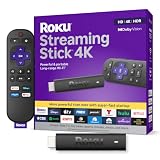
- Stunning 4K and Dolby Vision streaming made simple: With America’s number 1 TV streaming platform,* exploring popular apps—plus tons of free movies, shows, and live TV—is as easy as it is fun. *Based on hours streamed—Hypothesis Group
- Breathtaking picture quality: Stunningly sharp 4K picture brings out rich detail in your entertainment with four times the resolution of HD. Watch as colors pop off your screen and enjoy lifelike clarity with Dolby Vision and HDR10+.
- Seamless streaming for any room: With Roku Streaming Stick 4K, watch your favorite entertainment on any TV in the house, even in rooms farther from your router thanks to the long-range Wi-Fi receiver.
- Shows on the go: Take your TV to-go when traveling—without needing to log into someone else’s device.
- Compact without compromises: Our sleek design won’t block neighboring HDMI ports, so you can switch from streaming to gaming with ease. Plus, it’s designed to stay hidden behind your TV, keeping wires neatly out of sight
There were several reasons to avoid treating the 2.4% number as proof of a boycott-driven repricing:
- Broader market weakness was occurring at the same time. Dow Jones coverage cited by Barron’s reported that S&P 500 futures were down about 0.5% amid pressure associated with the U.S. government shutdown.
- There was no controlled comparison. Netflix’s weaker performance relative to major indexes is relevant, but the stock still reflected company-specific news, valuation, trading flows and market-wide risk.
- No verified cancellation count was available. Neither Netflix nor an independent data provider publicly quantified cancellations attributable to Musk’s campaign.
- Share prices reflect expectations. A stock can move because investors change their views about future revenue, margins, competition, pricing, advertising, content costs, foreign exchange, taxes, interest rates or valuation. A price decline does not automatically measure immediate subscription losses.
A report from Dow Jones/Barron’s explicitly cautioned that the move was probably unrelated to Musk and pointed to the broader market environment. That does not prove Musk had no effect. It means the evidence does not support assigning the whole move to his campaign.
The strongest defensible wording is: Netflix shares fell as Musk urged followers to cancel, but public evidence does not establish how much of the decline was caused by the boycott call.
Was there a real Netflix boycott?
There may have been individual cancellations, but the public evidence does not provide a reliable total. The evidence falls into several levels:
- Musk’s own statement: He said he had canceled Netflix. That verifies what Musk claimed, not whether the cancellation completed or how long it lasted.
- Individual social-media posts: Users shared cancellation claims and screenshots. Such posts can be genuine, but they are not an independently audited count. A screenshot may not establish the timing, account status, duration or whether a subscription was later restarted.
- No campaign-specific measurement: Netflix did not publish a number of cancellations linked to Musk, and no named independent source in the reviewed coverage supplied a verified total or revenue-loss estimate.
- Company-wide results: Later revenue, membership and engagement figures can show whether the company experienced a visible broad impact, but they cannot identify a short-lived or localized boycott effect.
Netflix also made measurement more difficult in 2025 by changing its reporting strategy. Its Form 10-K says the company no longer reported membership numbers and average monthly revenue per paying membership as routine primary metrics. That does not mean Netflix had no membership data internally; it means outsiders had less regular public information with which to test claims about a specific campaign.
A short-term boycott could also be offset by new sign-ups, reactivations, price increases, advertising revenue or normal customer turnover. Conversely, a campaign could matter reputationally even if its effect is too small or brief to appear in quarterly company-wide figures.
What did Netflix report in the next earnings report?
Netflix’s third-quarter 2025 shareholder letter, released on October 21, did not attribute the quarter’s weaker-than-expected profit measures to Musk’s campaign. Netflix reported:
- Revenue: $11.510 billion, up 17% year over year and in line with guidance.
- Operating margin: 28.2%, below the company’s 31.5% forecast.
- Diluted earnings per share: $5.87, below forecast.
- Tax-related expense: approximately $619 million tied to an ongoing Brazilian tax dispute.
Netflix identified the Brazilian tax issue as the reason for the margin shortfall and said it did not expect the matter to have a material impact on future results. The letter also said engagement remained healthy and that Netflix achieved record quarterly U.S. and U.K. television view share.
Rank #4

- Advanced 4K streaming - Elevate your entertainment with the next generation of our best-selling 4K stick, with improved streaming performance optimized for 4K TVs.
- The newest Fire TV experience (2026) – Our biggest update to Fire TV has a new, modern design that gets you to your entertainment fast. Browse dedicated content categories, pin more of your favorite apps, and get personalized recommendations from Alexa+. Spend less time scrolling, and more time watching.
- Cloud gaming, no console required – Stream Call of Duty: Black Ops 7, Hogwarts Legacy, Outer Worlds 2, Ninja Gaiden 4, and hundreds of games on your Fire TV Stick 4K Select with Xbox Game Pass and Luna via cloud gaming. Xbox Game Pass subscription and compatible controller required. Each sold separately.
- Smarter picks with Alexa+ – Getting to what you love has never been easier. Press the voice remote button and talk naturally to find what to watch across your apps, manage your smart home, or dive into virtually any topic.
- Wi-Fi 6 support - Enjoy smooth 4K streaming, even when other devices are connected to your router.
The company’s Q3 2025 shareholder letter is more useful than the stock chart for evaluating whether the campaign created an identifiable operating shock. It does not mention a Musk-related subscription impact.
What happened to Netflix after that?
The later results did not show a material, sustained company-wide deterioration attributable to the boycott campaign.
Fourth quarter and full-year 2025
In its January 20, 2026 report, Netflix said that:
- Full-year 2025 revenue reached $45.2 billion, up 16%.
- Full-year operating margin was 29.5%, three percentage points higher than in 2024.
- Fourth-quarter revenue rose 18% year over year to $12.051 billion.
- Paid memberships crossed 325 million.
- Viewing hours in the second half of the year rose 2% year over year.
Those are company-wide results. They cannot prove that no customers canceled in response to Musk, nor can they measure any temporary effect. They do, however, argue against claims that the campaign caused a visible collapse in Netflix’s overall membership base or financial performance.
Second quarter of 2026
On July 16, 2026, Netflix reported:
- Revenue of $12.560 billion, up 13.4% year over year.
- Operating margin of 33.4%.
- First-half viewing hours up 2% year over year.
- A maintained 2026 revenue forecast of $51.0 billion to $51.4 billion.
Netflix’s Q4 2025 shareholder letter and Q2 2026 shareholder letter show continued growth after the controversy. The proper inference is narrow: as of August 10, 2026, the available public company-level results did not show a material, sustained financial impact traceable to Musk’s posts. They do not disprove individual cancellations or a short-lived burst of churn.
Does the 2020 Cuties controversy offer a useful comparison?
It offers context, but not proof about the 2025 campaign. Yahoo Finance cited subscription-analytics data indicating that Netflix cancellations surged during the 2020 controversy over Cuties, while also reporting that Netflix sustained little long-term damage to its subscriber base.
That comparison illustrates an important possibility: an online boycott can produce short-term cancellations, attention or reputational pressure without changing a large streaming company’s long-term trajectory. But the 2020 experience cannot establish that the Musk campaign generated the same level of churn. The two events involved different content, audiences, market conditions and measurement quality.
What investors should take from the episode
For an investor, the most important lesson is not whether Musk’s post appeared before a down day. It is whether the event changed Netflix’s expected future cash flows. A two-day or five-day move cannot answer that question by itself.
Use this framework when evaluating similar celebrity-driven market stories:
Best Value

- Essential 4K streaming – Get everything you need to stream in brilliant 4K Ultra HD with High Dynamic Range 10+ (HDR10+).
- The newest Fire TV experience (2026) – Our biggest update to Fire TV has a new, modern design that gets you to your entertainment fast. Browse dedicated content categories, pin more of your favorite apps, and get personalized recommendations from Alexa+. Spend less time scrolling, and more time watching.
- Make your TV even smarter – Fire TV gives you instant access to a world of content, tailor-made recommendations, and Alexa, all backed by fast performance.
- All your favorite apps in one place – Experience endless entertainment with access to Prime Video, Netflix, YouTube, Disney+, Apple TV+, HBO Max, Hulu, Peacock, Paramount+, and thousands more. Easily discover what to watch from hundreds of thousands of movies and TV episodes (subscription fees may apply), including free, ad-supported content.
- Getting set up is easy – Plug in and connect to Wi-Fi for smooth streaming.
- Identify the exact return window. Ask whether the reported percentage is premarket, intraday, closing, cumulative or weekly. Do not compare those figures as if they were the same measurement.
- Compare the stock with an appropriate benchmark. A decline during a market-wide selloff is different from an isolated decline. Relative underperformance is evidence worth noting, but it still does not identify the cause.
- Look for operating evidence. Subscriber trends, revenue, retention, viewing, margins and management commentary are more relevant to lasting business damage than a social-media screenshot or one trading session.
- Separate reputation from revenue. A campaign can affect public perception or create political pressure without producing a material quarterly financial effect.
- Avoid false precision. It is not responsible to say Musk wiped out a specific dollar amount of Netflix value unless the calculation clearly states the share-price interval, share count and timestamp. Even then, the arithmetic market-value change would not demonstrate that Musk caused it.
Netflix’s later results were also affected by content releases, pricing, advertising, foreign exchange, taxes, live programming and broader market valuation. Strong subsequent quarters should not be credited entirely to the absence of a boycott effect, just as the October decline should not be charged entirely to Musk.
What consumers should take from it
Consumers can decide whether Netflix’s programming or corporate policies align with their values. But an individual cancellation is not the same as a measurable national boycott, and a social-media trend is not a verified financial result.
If the question is whether canceling Netflix personally made a difference, the answer depends on the consumer’s own budget and preferences. If the question is whether Musk’s campaign materially damaged Netflix as a business, the evidence reviewed through August 10, 2026 does not show that outcome.
Bottom line
Netflix shares fell after Elon Musk urged people to cancel their subscriptions, and the stock underperformed the broader market during the reported week. The 2.4% figure was a cumulative measurement from a specified reference point, not proof of a one-day crash or a precise amount of value destroyed by the boycott.
Do these 3 things before closing this tab:
1Repair Windows errors before they cause bigger problems2Scan for outdated or missing drivers - takes under a minute3Clear out junk files and repair common Windows errorsNo public data verified how many people canceled because of Musk, and Netflix’s later reporting did not identify a campaign-related subscriber or revenue loss. The company subsequently reported more than 325 million paid memberships, strong 2025 revenue and margin growth, higher viewing engagement and 13% year-over-year revenue growth in Q2 2026. The careful conclusion is therefore that the campaign may have generated attention and possibly some individual churn, but the public record does not establish a material, lasting financial impact.
Frequently Asked Questions
Was Netflix stock down 2.4% in one day?
No. The approximately 2.4% figure referred to Netflix’s cumulative decline from the reference point associated with Musk’s September 30 post to the period reported by Forbes on October 2, 2025. Netflix was down about 0.8% in October 2 afternoon trading and about 2.2% in October 1 premarket trading.
Did Elon Musk actually cancel his Netflix subscription?
Musk said he had canceled Netflix, including in a social-media reply saying “Same.” That verifies his public claim, but the cancellation was not independently confirmed in the public evidence reviewed.
Did Netflix lose subscribers because of Musk’s boycott?
No campaign-specific subscriber loss was publicly verified. Netflix later said paid memberships had crossed 325 million, but that company-wide figure cannot rule out short-term or localized cancellations.
Was Dead End: Paranormal Park a new Netflix show when the controversy happened?
No. Netflix’s official listing describes it as a 2022 series with two seasons, and independent reporting says it had already been canceled in January 2023. It remained available to stream but was not a new 2025 release or renewal.
Did Netflix’s 2025 stock split change the size of the October decline?
No. Netflix completed a ten-for-one split on November 14, 2025. The split changed the number of shares and the quoted per-share price, but not the economic value of an investor’s position or the percentage return. Historical October prices should be labeled as pre-split or split-adjusted.
The Bottom Line
The facts support a narrower conclusion than the headline suggests: Netflix shares fell during Musk’s call for cancellations, but the public record does not prove that his posts caused the decline or produced a lasting, measurable subscriber loss. Netflix’s subsequent membership, revenue and engagement results showed no visible company-wide damage attributable to the campaign.
Quick Recap
Product prices and availability are accurate as of the date/time indicated and are subject to change. Any price and availability information displayed on Amazon at the time of purchase will apply.
Quick wins for a faster PC:
Repair Windows errors before they cause bigger problemsFix Now →Fix the driver behind crashes, sound loss and screen glitchesFind Drivers →Clear out junk files and repair common Windows errorsFree Scan →



