The Tool Desk
Outbyte Driver Updater FREEScan for outdated or missing drivers - takes under a minuteDriver Scan →Outbyte PC Repair FREERepair Windows errors before they cause bigger problemsFix Now →Fertilizer prices jumped in spring 2026 as conflict-related disruption around the Strait of Hormuz constrained both shipments and production. The rise was not uniform: urea, a nitrogen fertilizer, later fell back toward January levels, while phosphate fertilizers remained elevated. For farmers, the effect on costs depends on the product, local delivered price, crop and purchase timing—not a single global fertilizer price.
What happened to fertilizer prices in 2026?
Global benchmark prices rose sharply in the spring, then diverged by product. The World Bank reported that urea exceeded US$850 per metric ton in April 2026, about 80% above February. The WTO Secretariat reported that the benchmark had fallen to US$453 per metric ton by June. IFPRI’s September 21 update said urea had returned to January price levels by late August, but MAP and DAP phosphate fertilizers remained about 25–30% above their levels after the Strait’s closure.
| Product or measure | Reported movement | What the figure describes |
|---|---|---|
| Urea | Above US$850 per metric ton in April; about 80% above February | World Bank global benchmark, April 2026. World Bank analysis |
| Urea | US$453 per metric ton | WTO-reported benchmark in June 2026. WTO Secretariat, July 10, 2026 |
| Urea | Back to January price levels by late August | IFPRI’s September 21, 2026 market update; not a local retail quote. IFPRI |
| MAP and DAP | About 25–30% above levels after the Strait’s closure | IFPRI’s September 21, 2026 update; phosphate prices remained elevated. |
These are market benchmarks, not the price a particular farm paid. Local freight, product formulation, retailer, contract terms and purchase date affect delivered costs.
Why did the conflict push prices up?
The Strait of Hormuz disrupted supply routes
The Persian Gulf is an important fertilizer-export region. Citing International Fertilizer Association data, the World Bank reported that the Middle East accounted for almost one-quarter of global urea exports and more than 15% of global ammonia exports in 2024. The World Bank described a near halt in Middle Eastern exports after the Strait of Hormuz was closed, tightening supply just as buyers sought alternatives. World Bank, Commodity Markets Outlook, April 2026.
#1 Best Overall

- FEEDS UP TO 3 MONTHS: Miracle-Gro Shake 'N Feed Tomato, Fruit & Vegetable Plant Food is a plant fertilizer that feeds plants for up to 3 months, and nourishes above and below the soil
- FORMULATED WITH CALCIUM: This plant food for vegetables contains calcium to help form stronger cell walls, producing better quality and longer-lasting fruits and vegetables
- WHERE TO USE: For use with vegetable, fruit, and tomato plants, whether in-ground or indoor or outdoor container plants
- HOW TO APPLY: Apply this garden product evenly onto the soil and work into the top 1-3 inches of soil for in-ground plants, or lightly work into the soil of established container plants; water to start feeding
- COVERAGE: One 4.5 lb. container of Miracle-Gro Shake 'N Feed Tomato, Fruit & Vegetable Plant Food feeds up to 128 sq. ft.; reapply every 3 months and water regularly for a beautiful garden all season long
Production was affected as well as shipping
The disruption was not only a transport problem. The World Bank reported that Iran halted ammonia production and Qatar suspended urea, ammonia and sulfur production after facility damage. Reduced liquefied natural gas supply also cut urea and ammonia output in India. With both regional exports and some production curtailed, fertilizer buyers faced pressure from tighter availability as well as higher energy and shipping costs.
Natural gas and sulfur affect different fertilizer chains
Nitrogen fertilizers such as urea depend on ammonia, which is made using natural gas as both feedstock and fuel. The World Bank’s April 2026 outlook says natural gas represents 80–90% of ammonia production costs. A gas supply or price shock can therefore raise nitrogen fertilizer costs directly, while disruption to ammonia production can reduce the amount available.
Rank #2

- For more nutritious and tasty vegetables
- Optimum levels of primary plant nutrients
- Contains no GMOs, chicken manure or sewage sludge
- Feeds for several months
- Made with 100% organic and natural ingredients
Phosphate fertilizer production has a different exposure: it uses sulfur and ammonia as inputs. IFPRI identified sulfur as a bottleneck amid reduced exports, transport disruption and export restrictions. Its September 2026 update said sulfur prices had more than doubled over the preceding six months. That helps explain why MAP and DAP prices stayed elevated even after urea had retreated.
Why did nitrogen prices ease while phosphate stayed high?
Market conditions had changed by late summer, and the products did not move together. IFPRI’s September 21 update said shipments through the Strait tracked by IMF-Portwatch had fallen back near zero after renewed hostilities in mid-July. Yet global nitrogen and phosphate exports had declined by about 9%, rather than disappearing: suppliers outside the Gulf, including China and the United States, partly filled the gap. Nitrogen prices, including urea, eased from their peaks; phosphate products remained under pressure from their own input constraints.
PC Slower Than It Used to Be?
A free scan shows the junk files, broken settings and background clutter dragging Windows down - then fixes them in one click.Free scan · Windows 10 & 11Crashes, No Sound, or Screen Glitches?
Random freezes, missing sound and display glitches usually trace back to one bad driver. Find and replace yours safely.Free scan · under a minuteRank #3
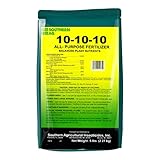
- Size: 5 LB
- Uniform, homogenous granular formulation .
- CONTAINS: 10% Nitrogen, 10% Phosphorus (P205), 10% Potassium (K20) plus minor elements .
- APPLICATION: Broadcast evenly over area and water in.
- For large quantity discount consideration or to request a mixed multi-pack, please message us.
The World Bank’s April 2026 outlook had forecast the overall fertilizer price index to rise more than 30% in 2026 and urea nearly 60% year over year, before easing in 2027. Those were forecasts made in April, not the final 2026 outcome. IFPRI’s later report of urea’s return to January levels by late August shows why an early-year projection should not be treated as a current price or a realized full-year increase.
What did the increase mean for farm budgets?
The effect varies with the fertilizer used, the farm’s location and when inputs were purchased. A University of Illinois and Ohio State University analysis estimated that fertilizer costs for central Illinois rose by more than US$20 per acre in an April 2026 price comparison with the preceding six months. That is a regional estimate, not a typical or universal increase for farms elsewhere. The analysis also found that farmers who bought inputs earlier had less exposure to the rise. University of Illinois farmdoc daily, May 5, 2026.
Rank #4
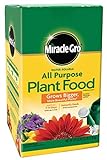
- FEEDS ALL PLANTS: Miracle-Gro Water Soluble All Purpose Plant Food is a plant fertilizer that feeds all outdoor, in-ground and indoor plants, including roses, flowers, houseplants, vegetables, and trees
- PROMOTES GROWTH: Use this all-purpose plant food outdoors and indoors to grow bigger, more beautiful plants (vs unfed plants); starts working instantly to promote quick, beautiful results
- NPK: 24-8-16 outdoor and indoor plant food contains Nitrogen (N), Phosphorus (P) and Potassium (K) which are key nutrients plants need to thrive
- APPLICATION: To use as plant food indoors, mix 1/2 tsp per gallon of water in a watering can; to feed outdoor plants, mix 1-1/2 tbsp per 1-1/2 gallon of water in any watering can or use with the Miracle-Gro Garden Feeder
- COVERAGE: One 3 lb. container of Miracle-Gro Water Soluble All Purpose Plant Food can be used as an outdoor and indoor plant food for houseplants, vegetables, flowers, trees, roses and more; feeds approximately 1,200 sq. ft. of garden area
For a farm budget, a global benchmark is a starting signal, not a substitute for a local quote. The useful comparison is the delivered cost for the nutrient and product needed, on the date and terms available. Switching products can bring different handling, safety, application-speed and management tradeoffs; the Illinois and Ohio State analysis notes, for example, that ammonia is typically less costly than nitrogen solution but has those practical considerations. Crop and soil recommendations still matter, so a lower quoted price alone does not establish that a substitute is suitable.
- Compare the same nutrient and product type, such as urea, ammonia, nitrogen solution, DAP or MAP.
- Use local delivered quotes and check availability, rather than relying only on a global benchmark.
- Account for purchase date and whether the cost was contracted or prepaid.
- Check that any alternative fits the crop, soil recommendation, application timing, handling and safety requirements.
What the price spike does—and does not—say about household costs
Higher fertilizer benchmarks can raise growers’ input costs, but they do not translate one-for-one into an immediate increase in grocery prices. The figures above describe fertilizer markets and one localized farm-cost estimate; they do not establish a particular change in food prices or a single cost increase for all farmers. For households, the practical takeaway is that fertilizer is one potential pressure on farm production costs, while the extent and timing of any downstream effect depend on factors beyond fertilizer prices alone.
What’s actually slowing this PC down?
Pick the symptom - the matching free tool is one click away.
Quick Recap
Best Value

- 3 MONTHS OF FEEDING: Miracle-Gro Shake 'N Feed All Purpose Plant Food feeds plants for up to 3 months, and nourishes above and below the soil
- GROW STRONGER PLANTS: This plant food contains vital micronutrients to grow stronger, vibrant, and more productive plants (vs unfed plants)
- FOR ALL PLANTS: Use this all-purpose plant food outdoor or indoor to feed container plants or plants in outdoor in-ground and raised bed gardens, including flowers, vegetables, and herbs
- APPLICATION: Apply this continuous release garden product evenly onto the soil and work into the top 1-3 inches of soil for in-ground plants, or lightly work into the soil of established container plants; water to start feeding; reapply every 3 months
- NOURISHES ABOVE & BELOW THE SOIL: Indoor and outdoor plant food contains natural ingredients to feed soil microbes that break down the ingredients into nutrients that support root strength and development which increases water efficiency
Product prices and availability are accurate as of the date/time indicated and are subject to change. Any price and availability information displayed on Amazon at the time of purchase will apply.




