A 6.53% APR personal loan is possible, but it is an advertised minimum—not a rate most borrowers should assume they will receive. Forbes Advisor’s current comparison associates 6.53%–35.99% APR with Happen Bank, while Happen’s own rate page currently displays 5.96%–35.99%. The difference shows why borrowers should compare dated, personalized offers that include fees, loan term, net proceeds and total repayment rather than choosing a lender from its headline rate.
This guide compares major personal-loan options available to U.S. borrowers as of August 9, 2026. Rates, fees, loan limits and state availability can change. Your final offer may differ based on credit history, income, debt-to-income ratio, loan purpose, amount, term, state, autopay and other underwriting factors.
Quick answer: Start by prequalifying—using a soft credit check where available—with several lenders that fit your loan amount, credit profile and timing. For excellent-credit borrowers, LightStream, SoFi, Wells Fargo, U.S. Bank, First Tech Federal Credit Union and Happen may be worth comparing. Upgrade may be worth a look for borrowers seeking debt-consolidation features or a lender that publishes a lower credit-score threshold, but its origination fee can substantially reduce the cash received. No lender is universally best, and the lowest advertised APR is not necessarily the lowest-cost offer.
Best personal loans by borrower need
These are needs-based picks, not guarantees of approval or universal rankings. Each recommendation has a material trade-off.
Outdated Drivers Are Slowing You Down
One free scan finds every outdated or missing driver and matches the right update for your exact hardware.Free scan · exact hardware matchWindows Errors? Fix Them Before They Spread
Repair common Windows errors and clear accumulated junk for a smoother, more stable PC - no reinstall needed.Free scan · no reinstall#1 Best Overall
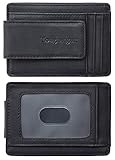
- RFID Blocking Security: Built-in RFID-blocking layer blocks 13.56 MHz signals , shields cards from scanners, unlike regular wallets.Protects your credit cards and ID from digital theft in crowds
- Safe Magnetic Closure: 4 Rare Earth Magnets (instead of 2) to hold on to your cash, but opens with one hand.Safer for cards than weak magnets; no demagnetization
- Ultra-Slim Front Pocket Fit: Just 0.3" thick, sizing 4" x 3" x 0.3".Much thinner than bulky bifold wallets, no more pocket bulge.Sit and move comfortably; Fits 6 cards plus folded 30 bills in a slim, low-profile design
- Perfect Gift for Him: Slim, minimalist design in gift.More useful and personal than generic gifts like socks or mugs.Show you care with a practical, everyday accessory
- Durable Build: Precision stitching, reinforced edges, built to last. Rigorous QC (vs. cheap fakes), no loose threads/peeling. Daily use-proof durability
- Best for a highly qualified borrower seeking no origination fee: LightStream. Its displayed rates include an autopay discount and it advertises no origination fee or prepayment penalty, but the lowest rates generally require excellent credit and the minimum loan amount shown is $5,000.
- Lowest advertised floor in the sources reviewed: Happen Bank. Its official page shows a 5.96% floor, while Forbes lists 6.53%; neither figure is a typical or guaranteed borrower rate, and Happen may charge a 0%–8% origination or processing fee.
- Best for larger borrowing needs: SoFi or Wells Fargo, both of which advertise loans up to $100,000 subject to qualification. Wells Fargo requires an existing customer relationship; SoFi’s APR range reflects stated discounts and may include origination-fee options.
- Best for a credit-union member: First Tech Federal Credit Union. Its rate table starts at 6.99% for a 24-month loan, but the displayed floors rise to 10.04% for 36 months and 11.84% for 60 months. Membership is required.
- Best for an existing bank customer: Wells Fargo or U.S. Bank. Relationship pricing or existing-customer eligibility may improve access or pricing, but those conditions limit who can apply for the best advertised offer.
- Best for a borrower comparing debt-consolidation tools: Upgrade. It offers direct-payment features for some debt-consolidation loans and publishes a 580 minimum score in Forbes’s comparison, but its 1.85%–9.99% origination fee is deducted from the proceeds.
- Best for a borrower prioritizing potentially quick funding: Happen, Best Egg or Splash may advertise fast funding, but same-day or next-day claims depend on approval, verification, signing deadlines, banking days and the receiving bank’s processing time.
Current personal-loan rate comparison
The following is a rate snapshot, not a permanent market ranking. It was compiled for August 9, 2026, and the figures do not all come from the same channel. Forbes’s editorial comparison may route applicants through marketplace partners, while the lender links below point to direct lender or credit-union pages. Always verify the final disclosure before signing.
| Lender | Advertised APR | Loan amounts and terms | Important fee or eligibility issue |
|---|---|---|---|
| Happen Bank | 5.96%–35.99% on its official page; Forbes lists 6.53%–35.99% | $1,000–$75,000; 24–84 months | Origination or processing fee may be 0%–8%. Lowest rate is reserved for highly qualified borrowers and may depend on product, channel, state, amount, term and applicant factors. |
| Upgrade | 7.74%–35.99% | Forbes lists $1,000–$75,000; Upgrade’s direct site displays up to $50,000; 24–84 months | Origination fee of 1.85%–9.99% is deducted from proceeds. No prepayment penalty is advertised. Some discounts or direct-pay conditions may apply. |
| LightStream | Approximately 7.24%–24.89% with autopay for many displayed loan sizes and terms | $5,000–$100,000 in the displayed rate table; terms vary by purpose and may extend beyond seven years | No origination fee or prepayment penalty advertised. A 0.50-percentage-point autopay discount applies, and the lowest rates require excellent credit. |
| SoFi | 6.99%–35.49% with stated discounts | $5,000–$100,000; two to seven years | APR range reflects autopay and member discounts. Origination-fee options may be available; no late or prepayment fees are advertised. |
| Wells Fargo | 6.74%–26.74% with a qualifying relationship discount | $3,000–$100,000; 12–84 months | Available only to existing Wells Fargo customers. The lowest advertised APR assumes at least $10,000, a three-year term and excellent credit. |
| U.S. Bank | 9.24%–24.99%, as of July 20, 2026 | $1,000–$50,000 for current clients; nonclients may be limited to $25,000; clients may receive 12–84-month terms | No origination fee or prepayment penalty advertised. The lowest rate requires specific credit, amount, purpose and autopay conditions. |
| First Tech Federal Credit Union | Starting at 6.99% for 24 months; its rate table shows 10.04% for 36 months and 11.84% for 60 months | $500–$50,000 depending on term; 24–84 months | Membership is required. No application or annual fee is advertised in the supplied rate information. |
| Best Egg | 6.99%–35.99% in Forbes’s August comparison | $2,000–$100,000; generally 36–60 months | Origination fee applies. Forbes lists a 600 minimum score and availability in 47 states. No prepayment penalty or late fee is listed in that comparison. |
| Splash | 10.59%–24.68% in Forbes’s August comparison | $3,000–$50,000; 24–60 months | Forbes lists a 650 minimum score, an origination fee and no co-signer or co-borrower option. Advertised funding speed is conditional. |
Why the figures vary: APR ranges may be updated at different times, apply to different products or distribution channels, assume autopay or direct creditor payment, or use different fee options. The lender’s official disclosure for the exact application is the controlling source for an actual offer.
What 6.53% APR really means
The 6.53% figure is best understood as an advertising floor associated with Happen Bank in Forbes Advisor’s comparison—not as the market’s universal lowest rate and not as a rate an average applicant should expect.
Forbes’s current page, titled Best Personal Loans of August 2026: Compare Top Lenders, lists Happen at 6.53%–35.99% APR and loan amounts of $1,000–$75,000. Happen’s own current rates and fees page lists 5.96%–35.99% APR, a possible 0%–8% origination or processing fee, $1,000–$75,000 loans and 24–84-month terms.
What’s actually slowing this PC down?
Pick the symptom - the matching free tool is one click away.
The public pages do not fully explain the discrepancy. It may reflect different update dates, products or application channels. Treat the official Happen disclosure for your specific product and application as more relevant than either general headline. Happen says its rate can vary with loan amount, term, state, product, application channel, applicant characteristics and sufficient investor commitment, and that the lowest APR may be available only to borrowers with excellent credit.
The older Forbes URL associated with the original headline now redirects to the canonical comparison page. Happen Bank is also the new name for LendingClub Bank after a June 2026 rebrand, so older search results, reviews and complaints may use the LendingClub name. The rebrand is documented in the company’s SEC-filed announcement.
Personal loan basics
A typical personal loan is an unsecured installment loan: the lender gives you one lump sum, and you repay it through scheduled monthly payments, usually at a fixed rate. Common uses include debt consolidation, home improvements, medical expenses, major purchases and emergencies.
It is different from a personal line of credit. A line of credit is revolving, allows repeated draws up to a limit and generally has a variable rate. U.S. Bank explains the distinction. Some personal loans can be secured, but the offers compared here are generally evaluated as unsecured borrowing.
Recommended Free Tools
Interest rate versus APR
The interest rate is the percentage applied to the outstanding principal. APR is a broader annualized measure that incorporates the interest rate and certain finance charges and fees required under applicable disclosure rules.
APR is usually the better first metric for comparing loans, but it is not the only number that matters. Review the amount financed, cash actually received, monthly payment, number of payments, total repayment, late fees, optional products and any conditions that cause a discount to disappear. Regulation Z contains the federal framework for APR and consumer-credit disclosures.
How origination fees change the real cost
An origination fee is commonly deducted from the loan before the money reaches your bank account. For example, with a $10,000 loan and a 5% fee, you may receive only $9,500 even though the repayment schedule is generally based on the full $10,000 principal. If you need exactly $10,000 in cash, borrowing enough to cover the fee can increase both the payment and total repayment.
Upgrade’s official example illustrates a $10,000 loan with a 5% fee, $9,500 in proceeds and a 17.59% APR. Happen’s representative example also shows fees deducted from proceeds. These are examples, not predictions of your offer.
Compare two offers using the same cash need. A loan with a lower stated interest rate can be more expensive if its origination fee is large. Look for these numbers in the final disclosure:
- Requested loan amount
- Origination or processing fee in dollars and as a percentage
- Net proceeds deposited or sent to creditors
- APR and interest rate
- Monthly payment and number of payments
- Total payments and total interest
- Late fees and any other permitted charges
Illustrative payments on a $10,000, 36-month loan
The table shows standard fixed-rate amortization assuming no origination fee. It is an illustration only; actual lender calculations can differ because of fees, payment timing, discounts and the amount actually financed.
| APR | Approximate monthly payment | Approximate total interest | Approximate total repayment |
|---|---|---|---|
| 6.53% | $306.63 | $1,038.56 | $11,038.56 |
| 15.00% | $346.65 | $2,479.52 | $12,479.52 |
| 35.99% | $457.98 | $6,487.32 | $16,487.32 |
The difference between a 6.53% and 35.99% offer is about $151 per month and more than $5,400 in interest on this example. A high-rate personal loan may not improve on existing credit-card debt, so compare the full cost rather than assuming installment payments are automatically cheaper.
Shorter term versus longer term
- Shorter term: Usually means a higher required monthly payment but less interest over the life of the loan.
- Longer term: Usually lowers the monthly payment but increases total interest and keeps you in debt longer.
Do not compare a 24-month offer with a 72-month offer by monthly payment alone. Compare total repayment at the same amount borrowed, and choose the shortest term that remains comfortably affordable without sacrificing emergency savings.
Do these 3 things before closing this tab:
1Clear out junk files and repair common Windows errors2Scan for outdated or missing drivers - takes under a minute3Repair Windows errors before they cause bigger problemsRank #2

- MAGNETIC CLOSURE--Designed with a convenient magnetic closure,the BULLIANT slim wallet offers easier access to your essentials while ensuring they stay securely in place;
- BIG CAPACITY--Equipped with 12 card slots,this wallet provides ample space for your cards,IDs,and driver's license,keeping them organized and easily accessible;
- SLIM IN SIZE--With its sleek and slim profile,this wallet fits comfortably in your front pocket,minimizing bulk and maximizing convenience;
- BUILT TO LAST--Crafted from genuine leather with everalasting magnetic closure,this front pocket wallet combines durability and style,making it the perfect accessory for daily use;
- RFID BLOCKING--Built-in RFID blocking technology protects your sensitive information from electronic pickpockets,ensuring your cards and personal data are safe.
Individual lender reviews
Happen Bank: lowest advertised floor, with a major disclosure mismatch
Happen is the lender connected with the original 6.53% headline in Forbes’s comparison. Its official page currently shows a 5.96%–35.99% APR range, $1,000–$75,000 loan amounts and 24–84-month terms. That makes it potentially useful for borrowers who need a smaller loan or a longer repayment term.
The drawback is uncertainty around the advertised floor and fees. The official page allows a 0%–8% origination or processing fee and says rates vary by product, channel, state, amount, term and applicant. Borrowers should ask for the exact dollar fee and net proceeds before accepting. Happen may offer co-borrower availability, but that should be confirmed for the specific application.
Upgrade: useful to compare for consolidation and more-accessible credit profiles
Upgrade advertises 7.74%–35.99% APR, 24–84-month terms and loan amounts that differ by channel: Forbes lists $1,000–$75,000, while the direct site displays up to $50,000. Forbes’s comparison reports a minimum credit score of 580, but that is not a guarantee of approval or a favorable rate.
The key cost is the 1.85%–9.99% origination fee, deducted from proceeds. Upgrade also advertises no prepayment penalty, and its product may offer direct payment to creditors or an autopay-related discount. Confirm whether those features apply to your offer. Upgrade describes itself as a financial-technology company; its loans are issued by bank partners, so the legal lender and terms should be identified in your disclosures.
LightStream: strong no-fee choice for excellent credit
LightStream’s displayed rate table shows approximately 7.24%–24.89% APR for many loan sizes and terms with autopay. It advertises $5,000–$100,000 loans, no origination fee and no prepayment penalty. Its 0.50-percentage-point autopay discount and purpose-specific rate table mean the displayed floor is conditional.
LightStream is most compelling for a borrower with excellent credit who can meet the $5,000 minimum and does not want an origination fee. It is less useful if you need less than $5,000, have a weaker credit profile or need a term that is unavailable for your particular purpose.
SoFi: large loans and broad online availability
SoFi advertises 6.99%–35.49% APR with stated discounts, $5,000–$100,000 loan amounts and two-to-seven-year terms. It advertises no late or prepayment fees. Its APR range reflects autopay and member discounts, and origination-fee options may be available.
SoFi can be worth comparing for a strong-credit borrower with a large expense or consolidation need. Compare the no-fee and fee-bearing rate options by net proceeds and total repayment rather than assuming the lower nominal rate wins.
Free tools Windows power users keep installed
One-click scans. No signup required.
Wells Fargo: relationship pricing for existing customers
Wells Fargo advertises 6.74%–26.74% APR with a qualifying relationship discount, $3,000–$100,000 loans and 12–84-month terms. The offer is available only to existing Wells Fargo customers. The lowest advertised APR assumes at least $10,000, a three-year term and excellent credit.
This can be a practical option if you already bank with Wells Fargo and meet the conditions. It should not be treated as a broadly available market rate, and the supplied comparison does not establish that every offer has the same fee or repayment terms.
U.S. Bank: an option for current clients
U.S. Bank lists 9.24%–24.99% APR as of July 20, 2026. Current clients may borrow $1,000–$50,000 with 12–84-month terms; nonclients may be limited to $25,000. The lender advertises no origination fee or prepayment penalty.
The lowest rate requires specific credit, loan amount, purpose and autopay conditions. U.S. Bank says funds are generally available within one to four business days after closing, so that estimate is not the same as guaranteed same-day receipt.
First Tech Federal Credit Union: membership-based pricing
First Tech’s official rate table shows how much term can matter: the displayed floor is 6.99% for 24 months, 10.04% for 36 months and 11.84% for 60 months. Loan amounts range from $500 to $50,000 depending on term, and terms run from 24 to 84 months. Membership is required.
First Tech may be worth checking if you qualify for membership and can afford a shorter term. A rate that starts below 7% for 24 months should not be generalized to longer terms.
Best Egg: a broad comparison option
Forbes’s August comparison lists Best Egg at 6.99%–35.99% APR, with $2,000–$100,000 loans and generally 36–60-month terms. It reports a 600 minimum credit score and availability in 47 states. An origination fee applies.
Forbes’s comparison lists no prepayment penalty or late fee, but borrowers should confirm the current terms for their state and product. Best Egg may be worth prequalifying with when its amount and term fit, but its fee must be included in the net-proceeds calculation.
The Tool Desk
Outbyte PC Repair FREEClear out junk files and repair common Windows errorsFree Scan →Outbyte Driver Updater FREEScan for outdated or missing drivers - takes under a minuteDriver Scan →Rank #3
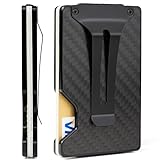
- Slim & Minimalist Design- Crafted for simplicity, this ultra-thin men’s wallet secures your cards and bills without bulk or extra weight. Compact enough for front-pocket carry and offered in various stylish finishes, it combines clean, modern looks with daily practicality.
- Advanced RFID Protection - Built-in RFID blocking technology creates a secure shield around your cards, preventing unauthorized scans and protecting your sensitive personal and financial information. It delivers reliable security in a slim, streamlined design.
- Easy Card Access & Durable Construction - This wallet allows smooth, convenient card access with a simple push and slide-out function. Made from sturdy aerospace-grade aluminum, it is scratch-resistant and built to endure daily use without cracking, chipping, or breaking.
- Practical Storage with Money Clip - Despite its slim profile, it easily holds up to 15 cards while staying organized. The included money clip keeps bills securely in place, making it highly functional for work, travel, and everyday carry.
- Great Gift for Men - With a sleek appearance and modern metallic design, this card holder comes ready as a premium gift. Perfect for birthdays, Christmas, and all special occasions, it is an ideal present for fathers, husbands, brothers, and friends.
Splash: potentially useful for mid-sized borrowing
Forbes’s August comparison lists Splash at 10.59%–24.68% APR, $3,000–$50,000 loan amounts and 24–60-month terms. It reports a 650 minimum score, an origination fee and no co-signer or co-borrower option.
Splash may fit a borrower who meets its credit and amount requirements, but its rate floor is materially above the lowest advertised floors in this comparison. Funding claims should be treated as conditional rather than guaranteed.
What credit score do you need?
There is no single personal-loan credit-score requirement. Some lenders publish a minimum, others do not, and the score used in underwriting can differ from the score a consumer sees in a free credit-monitoring app.
Forbes’s current comparison reports published or editorially identified minimum scores ranging from 580 for Upgrade to 700 for LightStream. It reports 600 for Best Egg and 650 for Splash. These thresholds are screening information, not promises of approval. Lenders may also consider income, debt-to-income ratio, payment history, length and mix of credit, recent inquiries, loan amount, purpose, state and whether a co-borrower applies.
A lender that does not publish a minimum score is not necessarily accessible to every borrower. The most useful evidence is a personalized prequalification result followed by the final offer.
Debt-to-income ratio explained
Lenders use debt-to-income ratio, or DTI, to evaluate whether your income can support existing and proposed debt payments:
DTI = total monthly debt payments ÷ gross monthly income × 100
For example, $1,800 in monthly debt payments divided by $5,000 in gross monthly income produces a 36% DTI. Lenders do not all use the same threshold or calculate debt identically, so 36% or 40% is not a universal approval cutoff. Include the proposed personal-loan payment when estimating your post-loan DTI.
Quick wins for a faster PC:
Scan for outdated or missing drivers - takes under a minuteDriver Scan →Clear out junk files and repair common Windows errorsFree Scan →Fix the driver behind crashes, sound loss and screen glitchesFind Drivers →Does checking personal-loan rates hurt your credit?
Usually, the rate-check or prequalification stage uses a soft inquiry that does not affect your credit score. A formal application generally produces a hard inquiry, which can affect your score. The Consumer Financial Protection Bureau explains the difference between hard and soft inquiries.
Read the lender’s exact wording before submitting information. Happen, SoFi, U.S. Bank and other lenders say checking a rate will not affect the score, but proceeding to a formal application can trigger a hard pull. Prequalify with several lenders, then make a full application only after choosing the best offer.
Do not assume that personal-loan inquiries are always grouped together for scoring purposes. The CFPB’s explicit rate-shopping guidance about grouping inquiries is mainly directed at mortgage and auto-loan shopping; treatment of personal-loan inquiries can differ by credit bureau and scoring model.
How to compare actual offers
- Use the same cash need. If you need $10,000 after fees, do not compare it with an offer that deposits only $9,500.
- Use the same repayment term. A lower monthly payment may simply reflect a longer term.
- Compare APR, not only the interest rate. APR incorporates certain finance charges and may expose the impact of an origination fee.
- Record the net proceeds. Confirm whether the lender sends money to you, pays creditors directly or deducts a fee first.
- Calculate total repayment. Multiply the payment by the number of payments and add any charges not already included.
- Check discount conditions. Note autopay requirements, direct-pay requirements and what happens if you cancel autopay.
- Review flexibility. Check late fees, prepayment penalties, payment dates, hardship policies, co-borrower rules and state restrictions.
- Confirm funding timing. Separate approval time from identity and income verification, signing, lender release and bank posting.
How to apply with fewer surprises
- Define the exact need. Borrow only what is necessary. If a fee is deducted from proceeds, increase the requested amount only enough to meet the cash need after accounting for the fee.
- Review your credit reports. Check reports from all three major bureaus for errors, unfamiliar accounts or inaccurate balances. The CFPB explains that credit-report errors can affect approval and the terms offered; review its credit-report guidance and dispute inaccuracies before applying when practical.
- Estimate affordability. Calculate gross income, existing monthly debt payments, the proposed payment, post-loan DTI, emergency savings and net proceeds.
- Prequalify selectively. Use tools that explicitly say the check is a soft inquiry. Save each result and record APR, interest rate, amount, term, payment, fee, net proceeds, total repayment, late fee, autopay discount, direct-pay terms and funding estimate.
- Compare equivalent offers. Hold amount, purpose, term, payment method and fee option constant wherever possible.
- Submit one formal application after choosing. Expect the lender to verify identity, income and employment and to perform a hard inquiry before issuing a final loan.
- Read the final disclosure. Confirm the legal lender, amount financed, finance charge, APR, payment schedule, fees and cancellation or rescission rights that apply to the product and state.
- Verify funding. Check whether money goes to your account or directly to creditors and when the receiving bank is expected to post it.
- Set up repayment carefully. Autopay may reduce the APR, but confirm the discount, qualifying bank account, payment date, overdraft risk and whether the discount disappears if autopay is canceled.
Debt consolidation: when a personal loan helps—and when it does not
A consolidation loan can simplify several bills and may reduce the interest rate, but it saves money only when the new loan’s total cost is lower or the improved structure creates a realistic payoff plan. A lower monthly payment may merely result from extending the debt over more years. The CFPB warns about this exact risk.
Quick wins for a faster PC:
Clear out junk files and repair common Windows errorsFree Scan →Fix the driver behind crashes, sound loss and screen glitchesFind Drivers →Repair Windows errors before they cause bigger problemsFix Now →Before consolidating, answer these questions:
- Is the new APR lower after origination fees?
- Is the new term longer than your existing payoff plan?
- How much cash will you actually receive or how much will be sent to creditors?
- Will the lender pay creditors directly, and can you verify each payoff?
- Can you afford the new payment without borrowing again?
- Will you close, freeze or otherwise stop using the paid-off cards?
- Would a 0% balance-transfer card be cheaper if you can repay the balance before its promotional period ends?
- Would nonprofit credit counseling or a debt-management plan address the underlying cash-flow problem better?
If a lender pays creditors directly, continue making the old payments until each creditor confirms receipt and the account reflects the payoff. Direct pay does not necessarily close the old account instantly or stop interest from accruing before the payment posts.
A 0% or low-rate balance-transfer card can cost less than a personal loan for a borrower with strong credit and a credible short-term payoff plan. Account for the transfer fee, the promotional expiration date and rules for new purchases. If you use home equity instead, remember that an unsecured credit-card balance becomes debt secured by your home; failure to repay can create foreclosure risk.
Independent reader supportYour contribution helps us test, update, and keep practical guides available for everyone.Alternatives to a personal loan
- 0% balance-transfer card: Potentially cheaper for strong-credit borrowers who can repay during the promotional period. The transfer fee and post-promotion APR matter.
- Credit-union loan: Compare local and federal credit unions, especially if membership is easy to obtain and the credit union’s rate cap or term pricing is competitive.
- Home-equity loan or HELOC: May offer a lower rate, but your home is collateral. A lower payment is not worth the risk if the payment is not affordable.
- Nonprofit credit counseling: A counselor can help with a budget and may arrange a debt-management plan with one monthly payment distributed to creditors. The CFPB explains credit counseling.
- Creditor hardship options: Ask creditors directly whether they can reduce payments, waive fees, lower the rate or change the due date before taking on new debt.
- Emergency alternatives: Depending on the situation, consider an employer advance, an existing emergency fund or a negotiated medical or creditor payment plan. Compare the cost and repayment risk before using any option.
Unsecured, secured and co-borrowed loans
An unsecured loan does not pledge a house, vehicle or savings account as collateral. That protects the asset from direct repossession, but lenders may compensate for the added risk with stricter underwriting or a higher rate. A secured loan may be cheaper, but default can put the pledged asset at risk.
A co-borrower may improve eligibility or pricing because the lender evaluates two applicants’ finances. However, both borrowers generally share responsibility for repayment. A co-borrower is not a harmless credit-score shortcut: missed payments can affect both people, and the debt may appear in both credit files. A co-signer or co-borrower policy must be verified for the exact lender and product; Splash’s comparison listing, for example, says it does not offer either option.
Free tools Windows power users keep installed
One-click scans. No signup required.
Rank #4

- QUICK CARDS ACCESS: This minimalist wallet for men features a smooth pop-up mechanism. Just press the side button, and the cards slide out in a stepped layout for easy access.
- SLIM BODY WITH LARGE CAPACITY: Despite being slim at only 0.6 inches thick, this card wallet for men can hold 10-12 cards. The aluminum chamber holds 6-8 and the leather flap holds 4 (2 ID windows included). The money clip on the back holds 10+ bills.
- DOUBLE ID WINDOWS: KAFELLON designed the first pop up wallet on the market with 2 ID windows, based on real user needs. It's perfect for holding your ID and driver's license for quick access and quick view.
- RFID BLOCKING: This rfid blocking wallet features a built-in RFID-blocking layer that blocks unauthorized scans, protecting your finances and personal information.
- PERFECT GIFT IDEA: This money clip wallet combines a modern design with great practicality and comes with an elegant gift box. It's the perfect gift for men on Christmas, Valentine’s Day, Father’s Day, and other special occasions.
Funding speed: what same-day claims actually mean
Separate the timeline into five stages: prequalification, approval, identity and income verification, signing and bank posting. A lender may be able to process an approved loan the same day without guaranteeing that funds will be available in your account that day.
Funding claims can depend on approval, completed documentation, cutoff times, banking days and the receiving bank. Happen, Best Egg, LightStream and other lenders advertise fast funding under conditions. U.S. Bank says funds are generally available within one to four business days after closing. If the expense is urgent, ask the lender for the expected funding date after verification—not just the marketing claim on the application page.
How the comparison was evaluated
This article uses needs-based recommendations rather than declaring one universal winner. The comparison gives priority to:
- Personalized cost and APR
- Origination fees and net proceeds
- Loan amounts and repayment terms
- Credit, income, membership and state accessibility
- Funding and application process
- Prepayment, late-fee and servicing considerations
For context, Forbes says its current comparison evaluated 33 lenders, analyzed 64 rates and gathered 759 data points. Its methodology weights loan cost at 35%, loan details at 20%, eligibility and accessibility at 20%, customer experience at 15% and the application process at 10%. That is an editorial framework, not a prediction of approval odds or the lowest total cost for every borrower. Some Forbes links route applicants through Credible, Fiona or MoneyLion, so the lender, fee and eligibility shown through a marketplace may differ from the direct lender channel.
Do these 3 things before closing this tab:
1Fix the driver behind crashes, sound loss and screen glitches2Clear out junk files and repair common Windows errors3Scan for outdated or missing drivers - takes under a minutePersonal-loan scam warnings
Do not pay money upfront to receive a promised loan. The FTC warns that legitimate lenders do not guarantee approval and then demand an advance payment for processing, insurance or paperwork. Treat requests for gift cards, cryptocurrency, wire transfers or payment to a person as major warning signs. Be especially cautious of fake preapproval messages that use a bank’s logo or ask you to click an unverified link.
Verify the lender through its official website, identify the actual legal lender and read the disclosure before sharing bank credentials. The FTC’s advance-fee loan guidance and its debt-relief scam alert provide additional warning signs.
Frequently Asked Questions
Is 6.53% APR a good personal-loan rate?
Yes, it would be a relatively low rate for an unsecured personal loan, but it is an advertised minimum rather than a typical guaranteed offer. It may require excellent credit, a particular amount and term, autopay or other conditions. Compare the final APR, origination fee, net proceeds and total repayment.
What is the lowest personal-loan APR in 2026?
There is no single universal lowest APR because rates vary by lender, product, channel, date, state, amount, term and applicant. In the sources reviewed for August 9, 2026, Happen’s official page displayed a 5.96% floor, while Forbes listed Happen at 6.53%. A personalized quote is more meaningful than either headline.
The Tool Desk
Outbyte PC Repair FREEClear out junk files and repair common Windows errorsFree Scan →Outbyte Driver Updater FREEScan for outdated or missing drivers - takes under a minuteDriver Scan →Does personal-loan prequalification hurt your credit?
A prequalification or rate check usually uses a soft inquiry and does not affect your score. A formal application generally uses a hard inquiry. Confirm the lender’s wording before proceeding because the soft-check promise normally applies only to the initial rate-check stage.
Can I apply with several personal-loan lenders?
You can prequalify with several lenders to compare offers, but ask whether each check is soft or hard and avoid submitting full applications indiscriminately. Do not assume personal-loan inquiries are always grouped together for scoring purposes as mortgage and auto-loan inquiries may be.
How much can I borrow with a personal loan?
The lenders in this comparison advertise amounts from $500 or $1,000 to as much as $100,000, depending on the lender, state, purpose, credit profile and customer status. A lender’s maximum is not a recommendation to borrow that much. Calculate the exact cash need and account for any fee deducted from proceeds.
How quickly can a personal loan be funded?
The timeline depends on approval, identity and income verification, signing, cutoff times and bank processing. Same-day funding claims are conditional. U.S. Bank says funds are generally available within one to four business days after closing, which illustrates why approval time and account-posting time should be treated separately.
What’s actually slowing this PC down?
Pick the symptom - the matching free tool is one click away.
Are personal-loan origination fees negotiable?
Sometimes a lender may offer different rate or fee options, but you should not assume an origination fee can be negotiated. Compare the fee in dollars, the amount deposited, the APR and total repayment. A lower rate with a large fee may cost more than a slightly higher-rate loan with no fee.
Is a personal loan better than a 0% balance-transfer card?
It depends on qualification and payoff timing. A balance-transfer card may be cheaper if you qualify and can repay the balance before the promotional period ends, but transfer fees, the post-promotion rate and new-purchase rules matter. A personal loan offers a defined installment schedule but may charge interest and an origination fee.
Can I use a personal loan for rent, taxes or education?
Permitted uses vary by lender and product. Ask the lender directly before applying, especially for education, taxes, rent or other restricted purposes. Do not assume that a general-purpose personal loan can be used for every expense.
What happens if I pay a personal loan off early?
Many lenders advertise no prepayment penalty, including LightStream, Upgrade and U.S. Bank in the supplied disclosures, but confirm that the policy applies to your exact product and state. Paying early can reduce future interest, but it does not usually refund an origination fee already charged.
What should I do if I cannot qualify for a low-rate personal loan?
Do not turn to a lender that guarantees approval or demands an upfront fee. Consider waiting while correcting credit-report errors, reducing debt, adding a qualified co-borrower where appropriate, checking a credit union, asking creditors about hardship options or contacting a nonprofit credit counselor. Borrowing at a very high APR may worsen the problem.
The Bottom Line
Bottom line: The 6.53% APR headline is a qualified-borrower advertising floor associated with Happen’s Forbes listing, not a promise. Happen’s own page currently shows a 5.96% floor, which reinforces the need to check dated official disclosures. Prequalify selectively, compare offers at the same amount and term, subtract origination fees from the cash you will actually receive, and choose the loan with the best combination of affordable payment and lowest total cost—not merely the lowest advertised rate.
Quick Recap
Product prices and availability are accurate as of the date/time indicated and are subject to change. Any price and availability information displayed on Amazon at the time of purchase will apply.




