The Tool Desk
Outbyte Driver Updater FREEScan for outdated or missing drivers - takes under a minuteDriver Scan →Outbyte PC Repair FREERepair Windows errors before they cause bigger problemsFix Now →The best nonprofit accounting software depends on the organization’s financial complexity. Aplos is the strongest nonprofit-native choice for many small and midsize organizations; QuickBooks Online is the strongest value and ecosystem option; MIP, Blackbaud Financial Edge NXT, Sage Intacct, and Oracle NetSuite serve progressively more complex grant, fund, entity, and operational requirements.
Do not choose solely by subscription price or the presence of a nonprofit label. The right system must reliably track donor restrictions, funds, grants, programs, functional expenses, budgets, approvals, supporting documentation, and audit trails. This comparison uses U.S. nonprofit accounting and Form 990 requirements as its baseline, with pricing and public documentation reviewed as of August 9, 2026.
Quick comparison: the best nonprofit accounting software
These products do not all compete at the same complexity level. QuickBooks Online and Aplos may be appropriate for a small charity, while NetSuite may be designed for a nonprofit that needs an ERP spanning finance, entities, grants, constituents, and operations.
| Software | Best for | Fund-accounting approach | Grant capability | Form 990 support | Published price or status | Main caution |
|---|---|---|---|---|---|---|
| Aplos | Small and midsize nonprofits wanting nonprofit-native accounting | Purpose-built fund accounting, with funds and tags | Good for fund, project, program, and budget tracking; verify advanced grant workflows | 990 tags and reports; not automatic tax filing | $79 to $229 per month on listed plans; custom tier available | Tags, allocations, users, and advanced features can increase the cost |
| QuickBooks Online Plus or Advanced | Small nonprofits prioritizing price, familiarity, accountants, and integrations | Classes, locations, projects, subaccounts, and disciplined controls rather than a purpose-built fund ledger | Possible with careful configuration and add-ons; not a dedicated grant-management system | Nonprofit labels and reports help organize data for preparation | $115 per month for Plus and $275 per month for Advanced at reviewed list prices; TechSoup offers separate nonprofit pricing | Class tracking can be mistaken for true fund accounting |
| MIP Accounting | Grant-heavy and midmarket nonprofits | Purpose-built nonprofit fund accounting with multiple segments | Strong grant, program, budget, and funding-source reporting | Verify the precise reports and exports needed by the CPA | Quote required | More formal implementation and training than small-business software |
| Blackbaud Financial Edge NXT | Established nonprofits with complex grants, endowments, subfunds, or Blackbaud fundraising systems | Deep fund and subfund accounting | Grant budgets, reimbursement calculations, indirect costs, and grant reporting | Nonprofit reporting support; confirm the filing workflow | Quote required | Potentially substantial implementation and enterprise pricing |
| Sage Intacct | Growing, multi-entity, or financially complex nonprofits | Flexible dimensional accounting for funds, programs, grants, departments, and entities | Grant tracking, billing, reimbursement, compliance, and allocations | Nonprofit and FASB 958 reporting support; not automatically a filing service | Quote required | Configuration, implementation, and specialized consulting may be necessary |
| Oracle NetSuite Nonprofit / Social Impact | Large or operationally complex nonprofits needing an ERP | Nonprofit segmentation and financial controls; confirm the required fund model during implementation | Grant administration, restricted revenue, budgeting, and forecasting | Nonprofit-specific reports; verify the exact 990 preparation and filing process | Quote required; a Donation Edition may be available to eligible organizations | Can be excessive for a small nonprofit, and donated licensing does not remove implementation costs |
Prices are public list prices or published program terms reviewed on the date above. Promotions, renewals, users, modules, support, payroll, implementation, and add-ons can change the actual cost.
Free tools Windows power users keep installed
One-click scans. No signup required.
#1 Best Overall

- [Dual Power Design] This desktop calculator utilizes both the powerboard and battery power(battery is not included). The powerboard will power up the calculator thoroughly in a lit environment, it's a simple and worry-free partner.
- [12-digit Large Display] The LCD screen displayer clearly shows big numbers makes it easy to read from afar, it's layout and aesthetically pleasing. Max support 12 digits display.
- [Big Buttons] The electronic desk calculator adopts a scientific large button design, which can make you work more quickly, efficiently and conveniently.
- [Mulit-Function] Add, subtract, multiply, divide, backspace, grand total, CE, %, M+/M-/MRC, ON/AC button, and auto Powr-Off. The desktop calculator will turn itself off after about 6 minutes of being idle.
- [Specification ] ABS material, size 5.7 x 4.7 x1.8 In, weight 4 Oz. Doesn't take up much desk space, but it's big enough to be comfortable using it, suitable for business, office, home, school.
What makes nonprofit accounting different?
Nonprofit accounting is not ordinary business accounting with donations substituted for sales. The organization must show how resources may be used, whether restrictions have been met, which programs consumed money, and whether financial activity is supported by appropriate documentation.
At a minimum, many nonprofits need a system or connected process for:
- Net assets with and without donor restrictions. FASB guidance distinguishes resources subject to donor-imposed restrictions from resources without those restrictions. See FASB ASU 2016-14.
- Funds and subfunds. A grant, endowment, capital campaign, scholarship fund, or operating fund may require its own balance and reporting.
- Programs and departments. Management needs to know not just total expenses, but what each program and department cost.
- Functional expenses. U.S. nonprofits generally need to classify expenses among program services, management and general, and fundraising for Form 990 reporting. The IRS Form 990 instructions also require reasonable, documented allocation methods.
- Grants and pledges. A nonprofit may need to monitor award periods, allowable costs, reimbursement claims, matching requirements, reporting deadlines, and remaining balances.
- Contributions and in-kind gifts. Cash donations, noncash contributions, donated services, and volunteer time do not all receive the same accounting treatment.
- Budget-to-actual reporting. Boards, funders, and managers need timely comparisons between approved budgets and actual spending.
- Audit-ready records. The system should preserve approvals, attachments, reconciliations, allocation support, and transaction history. Software does not replace the organization’s recordkeeping responsibility; the IRS discusses that responsibility in its recordkeeping guidance.
True fund accounting versus class or category tracking
This is the most important distinction in the comparison.
True fund accounting treats funds as separate accounting pools with their own balances, activity, and restrictions. A fund-based statement can help answer whether resources assigned to a restricted purpose remain available after considering the fund’s income, expenses, transfers, and other activity.
Class, location, project, or tracking-category accounting attaches labels to transactions. That can produce useful reports, but a label by itself does not prove that the organization has maintained an independent fund balance or correctly enforced a restriction.
For example, suppose a nonprofit codes $20,000 of tutoring expenses to a class called After-School Grant. The class report may show $20,000 of spending. It may not, by itself, show whether the grant had $20,000 remaining, whether all costs were allowable, whether the related revenue was recognized correctly, or whether shared payroll and rent were allocated consistently.
QuickBooks’ own nonprofit guidance recommends using class tracking and banking subaccounts to implement fund accounting in QuickBooks Online. Aplos, by contrast, explicitly documents a fund-accounting structure and distinguishes funds, which carry balances, from tags, which add reporting dimensions. That does not make QuickBooks unusable. It means a QuickBooks nonprofit needs a carefully designed chart of accounts, class structure, reconciliations, and review controls. See the QuickBooks fund-accounting guidance and Aplos explanation of funds versus tags.
Form 990 support is not the same as filing Form 990
Accounting software can organize transactions and produce reports that help a CPA prepare Form 990. That is different from:
Do these 3 things before closing this tab:
1Clear out junk files and repair common Windows errors2Scan for outdated or missing drivers - takes under a minute3Repair Windows errors before they cause bigger problems- Automatically deciding the correct tax classification for every transaction;
- Providing tax advice;
- Guaranteeing compliance with donor or grant restrictions; or
- Electronically filing the completed Form 990.
Aplos provides 990 tags and reports such as Form 990 Revenue, Form 990 Expense, and a missing-990-tag report, but its documentation says the system does not automatically determine the correct tag for every transaction. QuickBooks can be configured with nonprofit terminology and reports, but Intuit describes that as organizing information for preparation, not as automatic Form 990 filing. Treat every product’s 990 feature as preparation support unless the vendor demonstrates a specific filing workflow that your CPA accepts.
Detailed reviews
1. Aplos: best nonprofit-native option for small and midsize organizations
Best for
Aplos is a strong fit for a small or midsize nonprofit that wants actual fund accounting without adopting an enterprise resource planning system. It is especially appealing when the finance team needs fund-based statements, donor tools, 990 tagging, and a comparatively approachable interface and price structure.
Why it made the list
Aplos documents a nonprofit-specific model with balance sheets and income statements by fund. It also separates funds from tags: funds carry balances, while tags can represent projects, departments, locations, or other reporting dimensions. Its documented capabilities include bank reconciliation, budgeting, accounts payable and receivable, recurring transactions, period close, user roles and permissions, donor and contribution tracking, and optional allocation tools. The Aplos fund-accounting documentation describes the relevant workflows.
Aplos can also produce a statement of functional expenses, but the report is only as reliable as the organization’s coding and allocation policy. The software cannot decide whether a shared employee’s time, rent, technology, or insurance was allocated reasonably.
Current listed pricing
As of August 9, 2026, the Aplos pricing page listed:
- Lite: $79 per month and two users;
- Core: $129 per month and two users;
- Advanced: $229 per month and three users; and
- Custom: quote-based for larger organizations.
The page also identifies extra charges for some dimensions and advanced features. Aplos documentation lists accounting tags at $30 per month per tag dimension and allocations at $100 per month. Confirm the current quote because the organization may need more than one tag dimension, and an expired promotion should not be used as a budget assumption. The pricing page displayed a promotion that ended July 31, 2026.
Advantages
- Nonprofit-specific fund accounting rather than only generic income-and-expense tracking;
- Fund-based balance sheet and income statement reporting;
- Contribution and donor functionality;
- 990 tags and related reports;
- Budgeting by fund and tag;
- More transparent list pricing than the enterprise products in this comparison.
Limitations
- Tags, allocations, additional users, and advanced features can materially raise the subscription;
- Payroll, a full donor CRM, and advanced operational functions may require separate products or integrations;
- Functional expense reporting still depends on a documented allocation policy and accurate coding;
- A larger organization may eventually need more advanced entity, workflow, integration, or reporting capabilities.
Migration warning
Aplos warns that QuickBooks and Aplos use different accounting structures. Importing a QuickBooks chart of accounts can replace the existing Aplos chart, and some organizations choose to preserve historical reports outside Aplos and begin with clean opening balances instead of importing every historical transaction. Review the Aplos QuickBooks migration guidance with the CPA before switching.
Decide in advance whether the migration will include full transaction history, opening balances only, outstanding checks, pledges, receivables, restricted-fund balances, payroll liabilities, and grant balances. A clean opening balance is not a shortcut if it cannot be reconciled to the prior system and year-end financial statements.
Who should not choose Aplos?
Aplos may not be the right first choice for a national nonprofit with extensive intercompany activity, multiple currencies, complex consolidations, or a large operational ERP requirement. It may also be a poor fit if the organization needs advanced grant reimbursement and indirect-cost workflows that should be demonstrated before purchase.
2. QuickBooks Online Plus or Advanced: best ecosystem and value option
Best for
QuickBooks Online is a practical option for a small nonprofit that prioritizes affordability, familiarity, accountant availability, bank feeds, and integrations. It is often easiest to staff when the volunteer treasurer, bookkeeper, and outside CPA already know QuickBooks.
Configure the account for nonprofit reporting
QuickBooks provides a nonprofit organization configuration. The documented path is:
- Open Settings.
- Select Account and settings.
- Open Advanced.
- Under Company type, select Edit.
- Set the tax form to Nonprofit organization (Form 990).
- Select Save, then Done.
- Sign out and back in.
This changes labels such as customers to donors and invoices to pledges and exposes nonprofit-oriented reports such as Statement of Activity and Statement of Financial Position. It does not transform the product into a dedicated fund-accounting ledger.
Quick wins for a faster PC:
Fix the driver behind crashes, sound loss and screen glitchesFind Drivers →Repair Windows errors before they cause bigger problemsFix Now →Set up class tracking deliberately
QuickBooks documents this path for class tracking:
- Go to Settings, then Account and settings.
- Open Advanced.
- Under Categories, select Edit.
- Turn on Track classes and save.
- Go to All lists, select Classes, and create classes for funds or reporting categories.
Do not create a class for every possible attribute. A class structure should answer a defined management question, such as which program incurred an expense. Use the chart of accounts, projects, locations, subaccounts, or another dimension for other questions. Require coding on every applicable transaction and reconcile the class reports to the general ledger.
Current listed pricing
The official QuickBooks pricing page displayed these list prices when reviewed:
Rank #2
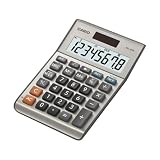
- LARGE EIGHT-DIGIT DISPLAY – Clear and easy-to-read 8-digit display, perfect for everyday calculations and ensuring accurate results in home or office settings.
- TAX & CURRENCY EXCHANGE FUNCTIONS – Effortlessly handle tax calculations and convert home currency to other currencies for easy financial management.
- GENERAL PURPOSE CALCULATOR – Ideal for a wide range of applications, from basic math to business and personal use, with memory keys for quick storage and recall.
- USER-FRIENDLY KEYBOARD – Easy-to-use layout, featuring square root, percent calculation, and simple functions that make it perfect for everyday tasks.
- COMPACT & PORTABLE DESIGN – Space-saving design that fits easily on any desk or in a briefcase, making it ideal for both home and office use.
- Simple Start: $38 per month;
- Essentials: $75 per month;
- Plus: $115 per month; and
- Advanced: $275 per month.
Promotional rates are not permanent. Intuit announced that Essentials, Plus, and Advanced prices changed for renewals on or after August 1, 2026. Check the current QuickBooks pricing page and the August 2026 pricing announcement before budgeting.
Eligible nonprofits may have a less expensive route through TechSoup. Its current listing provides:
Recommended Free Tools
- QuickBooks Online Plus for five users for one year with an $80 annual administrative fee; or
- QuickBooks Online Advanced for 25 users for one year with a $170 annual administrative fee.
TechSoup states that payroll and other add-on services are not included and that the offer is generally limited to one donated subscription per organization lifetime, subject to eligibility. Direct Intuit pricing and TechSoup provisioning are separate purchasing paths; do not assume the terms of one apply to the other. See the TechSoup QuickBooks nonprofit page and its subscription-fee documentation.
Advantages
- Large ecosystem of accountants, bookkeepers, banks, payroll services, payment tools, and donor integrations;
- Familiar bookkeeping workflows for many small organizations;
- Bank feeds, bills, invoices, budgets, projects, and reporting;
- Nonprofit labels and reports after configuration;
- Potentially very low nonprofit cost through TechSoup.
Limitations
- Classes and subaccounts are not the same as a purpose-built fund ledger;
- Restricted-fund reporting depends heavily on consistent transaction coding and separate controls;
- A poorly designed class structure can generate attractive but misleading reports;
- Payroll, donor CRM, grant management, and payment processing may cost extra;
- It may become difficult to manage complex restrictions, allocations, subfunds, or entities without substantial spreadsheet work.
Who should not choose QuickBooks Online?
Be cautious if the nonprofit has numerous restricted awards, formal reimbursement claims, endowments, multiple entities, or a finance team that cannot enforce class coding and monthly reconciliations. In those cases, compare Aplos, MIP, Blackbaud, or Sage Intacct before assuming the lowest subscription is the lowest total cost.
3. MIP Accounting: best for grant-heavy midmarket nonprofits
Best for
MIP is aimed at nonprofits that have outgrown a basic small-business ledger and need detailed fund, grant, program, department, project, and budget reporting. It can occupy the middle ground between Aplos or QuickBooks and a broader ERP.
Why it made the list
MIP describes its product as cloud-based SaaS fund accounting for nonprofits, schools, health care organizations, and government organizations. Its materials describe unlimited funds, a multi-segment chart of accounts, budgeting, purchasing, accounts payable and receivable, payroll and HR modules, grant and program reporting, and cloud or on-premise deployment options. Its product documentation and material on audit-ready financials emphasize funding-source tracking, budgets, reporting, and audit support.
Pricing
MIP requires a quote rather than publishing a standard list price. Request a written total-cost estimate that separates:
- Core accounting and number of users;
- Cloud hosting or on-premise costs;
- Budgeting, purchasing, payroll, HR, grant, and reporting modules;
- Implementation, data conversion, training, and consulting;
- Support and future upgrades; and
- Integrations with payroll, banking, fundraising, and expense systems.
Public pricing research also identifies MIP as quote-based; see the MIP pricing listing for that status, but use the vendor quote for a buying decision.
Advantages
- Nonprofit-native fund accounting;
- Strong orientation toward budgeting and detailed reporting;
- Suitable for grant-funded organizations with multiple reporting dimensions;
- More structured controls than a basic small-business ledger;
- Cloud and on-premise options may suit different IT policies.
Limitations
- Implementation and training are likely to be more involved than with QuickBooks or Aplos;
- Quote-based pricing makes it harder to compare without a detailed requirements list;
- The formal structure may be excessive for a volunteer-run nonprofit;
- Buyers should verify current cloud functionality, integrations, report templates, support response terms, and migration tools during the demo.
Who should not choose MIP?
Do not select MIP simply because the nonprofit wants a more professional-looking system. If the organization has one bank account, a few programs, limited restrictions, and an outside CPA who already works efficiently in QuickBooks, the implementation effort may not be justified.
4. Blackbaud Financial Edge NXT: best for complex nonprofit finance and grants
Best for
Financial Edge NXT is best suited to an established nonprofit with complex restrictions, grants, endowments, subfunds, multiple programs, formal finance roles, or an existing Blackbaud fundraising environment.
Why it made the list
Blackbaud describes Financial Edge NXT as purpose-built nonprofit fund-accounting software. Its documented features include restricted-fund tracking, subfund accounting, grant, project, and endowment tracking, role-based access, attached supporting documents, approval workflows, audit trails, budgeting, and customizable reporting.
Its grant and program accounting materials describe grant-level budgets, reimbursement calculations, indirect-cost handling, and grant-specific reporting. Blackbaud also says Financial Edge NXT was built alongside Raiser’s Edge NXT and supports data exchange between the two products. See the grant and program accounting documentation and the nonprofit ERP page.
Blackbaud describes subfund accounting as a hierarchical structure carrying revenue, expense, and equity related to restricted funds, including grants, contracts, endowments, and agency funds. That is materially different from merely adding a campaign label to a transaction.
Pricing
Blackbaud does not publish a standard Financial Edge NXT price. Its pricing page says pricing is customized according to organization size, users, solutions, modules, support, implementation, training, and services.
What’s actually slowing this PC down?
Pick the symptom - the matching free tool is one click away.
Ask the vendor to price a realistic implementation, including opening balances, historical grants, endowment records, approvals, attachments, bank reconciliation, functional expense allocations, and any Raiser’s Edge integration. A generic product demonstration is not enough.
Advantages
- Strong nonprofit-specific fund and subfund model;
- Granular grant and reimbursement workflows;
- Internal-control and audit-trail capabilities;
- Close fit with Raiser’s Edge NXT for organizations already using Blackbaud fundraising software;
- Appropriate for finance teams that need controlled data exchange between development and accounting.
Limitations
- Quote-based enterprise cost;
- Implementation, migration, and training must be budgeted;
- May be far too elaborate for a small organization;
- Integration quality and reporting fit should be tested using the nonprofit’s actual data model and approval process.
Blackbaud also markets AI-powered reconciliation, insights, anomaly detection, and chat features. Treat those as vendor-described capabilities, not independently verified performance improvements. Ask for a demonstration and define which actions require human review.
Who should not choose Financial Edge NXT?
A small nonprofit with a simple chart of accounts and no complex grants or endowments will probably pay for more structure than it needs. If the organization does not use Raiser’s Edge NXT, compare the integration value against the cost and implementation burden.
5. Sage Intacct: best for scalable, dimensional nonprofit finance
Best for
Sage Intacct is a strong candidate for a growing nonprofit with multiple entities, departments, programs, grants, locations, or a finance team moving beyond spreadsheets and fragmented systems.
Crashes, No Sound, or Screen Glitches?
Random freezes, missing sound and display glitches usually trace back to one bad driver. Find and replace yours safely.Free scan · under a minutePC Slower Than It Used to Be?
A free scan shows the junk files, broken settings and background clutter dragging Windows down - then fixes them in one click.Free scan · Windows 10 & 11Why it made the list
Sage emphasizes dimensional accounting: an organization can track attributes such as fund, program, department, location, grant, and project without creating a separate general-ledger account for every combination. Its nonprofit materials describe grant tracking and billing, grant reimbursement and compliance workflows, allocations, dashboards, real-time reporting, multi-entity accounting, nonprofit revenue recognition, and FASB 958 compliance dashboards.
Sage describes its nonprofit revenue-recognition solution as supporting ASU 2018-08 and ASC 606 compliance for nonprofits. Those standards and the correct classification of a contribution or exchange transaction still require accounting judgment. See Sage’s materials on nonprofit grant tracking and billing, nonprofit revenue recognition, and dimensional chart-of-accounts design.
Pricing
Sage Intacct uses quote-based pricing. The cost may depend on users, entities, modules, planning, grants, revenue recognition, integrations, implementation, and support. Do not compare a Sage quote with a QuickBooks subscription unless both include comparable migration, reporting, payroll, support, and implementation services.
Advantages
- Flexible dimensional reporting;
- Strong multi-entity and multi-department potential;
- Grant tracking, billing, reimbursement, and allocations;
- Scalable financial management for a growing organization;
- Dashboards and planning capabilities for a formal finance team;
- Potentially cleaner reporting than an oversized chart of accounts.
Limitations
- Implementation and configuration are a material part of the purchase;
- Quote-based pricing reduces initial price transparency;
- Small nonprofits may not use enough of the system to justify its cost;
- The organization needs an internal owner or capable implementation partner who understands nonprofit restrictions and functional allocations.
Sage markets claims about faster closes, automation, and efficiency gains. Those are vendor claims and should not be treated as guaranteed outcomes. Ask the implementation partner to show how the nonprofit’s payroll, shared costs, grant reimbursements, restricted contributions, and intercompany transactions will actually flow.
Rank #3

- Two-way Power Desk Calculator: Use solar power or battery power,In the case of sunlight or light, it can also be used without battery (Provide 2 AA batteries, only 1 needed).
- Optimized for Desk Use: The angled display offers a better viewing angle, especially when placed on a flat surface.
- Ergonomic Screen Tilt: Reduces neck strain with a user-friendly viewing angle, naturally aligning with your line of sight for a more comfortable experience.
- 10-Key Calculator with Large Buttons: Easy-to-use design follows computer keyboard layout.
- Desktop Basic Office Calculator:Perfect for daily use in offices, businesses, schools, retail stores, shopping centers, and home offices.
Who should not choose Sage Intacct?
A one-entity nonprofit with a few programs and simple bookkeeping may find Aplos or QuickBooks easier to administer. Sage becomes more compelling when dimensional reporting, entity management, grant accounting, controls, and future scale outweigh the additional implementation effort.
6. Oracle NetSuite Nonprofit / Social Impact: best for enterprise operations
Best for
NetSuite is best for a large, multi-entity, internationally active, or operationally complex nonprofit that needs an ERP rather than only a general ledger.
Why it made the list
Oracle documents several nonprofit editions, including Social Impact Donation, Starter, and Standard editions. The editions differ in roles, dashboards, nonprofit financials, grant administration, customization, constituent management, households, and approvals. NetSuite’s 2026 nonprofit materials describe segmentation by fund, grant, program, restriction, initiative, region, and entity; budgeting and forecasting; financial dashboards; constituent management; pledges and donations; grant management; and revenue restriction management.
Relevant documentation includes the NetSuite nonprofit editions, the 2026 nonprofit datasheet, and Oracle’s documentation for nonprofit management.
Free tools Windows power users keep installed
One-click scans. No signup required.
Donation Edition does not mean zero total cost
Oracle maintains a Social Impact Donation Edition, but a nonprofit should not assume that NetSuite is free. Confirm eligibility, included users, modules, support, implementation, additional entities, paid add-ons, professional services, renewal terms, and expansion costs. The existence of a donation program is documented in Oracle’s Social Impact Donation Edition documentation; the commercial terms must be confirmed directly with Oracle.
Advantages
- ERP-level scalability;
- Nonprofit financials, reporting, budgeting, and forecasting;
- Entity and program segmentation;
- Constituent, pledge, donation, and grant functionality depending on edition and configuration;
- Potential to connect finance with broader operational processes;
- Different nonprofit editions for different organizational sizes.
Limitations
- Implementation can be substantial;
- A donated license does not eliminate configuration, data conversion, training, support, or add-on costs;
- Small nonprofits may pay for complexity they will never use;
- Buyers should test restricted revenue, nonprofit reports, grant billing, intercompany activity, entity permissions, and audit controls rather than only viewing the general ledger.
Who should not choose NetSuite?
Do not choose NetSuite because it appears on a donation-program list if the organization only needs bank reconciliation, basic fund reporting, and a few users. The system makes sense when the cost of disconnected finance, fundraising, grant, constituent, and operational systems is greater than the cost of implementing an ERP.
Best software by nonprofit profile
| Nonprofit profile | Best starting shortlist | Why |
|---|---|---|
| Small volunteer-run charity with simple operations | Aplos or QuickBooks Online Plus | Both can be approachable; Aplos offers nonprofit-native funds, while QuickBooks offers familiarity and accountant availability. |
| Small faith-based organization with straightforward finances | Aplos or QuickBooks Online | Choose based on whether fund balances or existing bookkeeping support is the bigger need. |
| Small or midsize organization seeking the lowest software cost | QuickBooks through TechSoup, if eligible | The annual administrative fee can be much lower than direct list pricing, but payroll and add-ons are separate. |
| Grant-heavy human-services nonprofit | MIP, Blackbaud, Sage Intacct, or a carefully scoped Aplos implementation | Test grant budgets, allowable costs, payroll allocation, reimbursement, indirect costs, and reporting deadlines. |
| Established nonprofit with endowments, subfunds, and Raiser’s Edge NXT | Blackbaud Financial Edge NXT | Its fund, subfund, grant, endowment, control, and Blackbaud integration capabilities are relevant. |
| Growing nonprofit with multiple entities or many reporting dimensions | Sage Intacct | Dimensional and multi-entity accounting may scale better than a collection of classes and spreadsheets. |
| Large or international nonprofit needing finance plus operations | Oracle NetSuite | An ERP may connect entities, grants, constituents, donations, and operating processes. |
| Organization preparing for a Single Audit | MIP, Blackbaud, Sage Intacct, or NetSuite | These systems can support deeper controls and grant reporting, but no software guarantees compliance or replaces the auditor. |
These are fit assessments, not vendor-defined revenue thresholds. A nonprofit with $500,000 in revenue and unusually complex federal grants may need more controls than a $2 million organization with simple operations. Complexity comes from restrictions, grants, entities, reporting, and controls—not revenue alone.
How to compare the real cost
Separate the published software price from the total cost of ownership. A low monthly subscription may become expensive if the organization must maintain spreadsheets, pay for manual reconciliations, or rebuild reports for every grant and board meeting.
Include these items in every quote:
- Number of users and role-based permissions;
- Funds, tags, dimensions, entities, locations, and currencies;
- Payroll and time tracking;
- Grant management, reimbursement, and indirect-cost modules;
- Budgeting, forecasting, allocations, fixed assets, and revenue recognition;
- Donor CRM, payment processor, expense management, and bank integrations;
- Implementation, data migration, training, and consulting;
- Customer support, account management, and future upgrades;
- Historical reports, audit support, and data retention; and
- Payment-processing fees, payroll taxes, and other services outside the accounting subscription.
For Aplos, specifically price the required tag dimensions and allocation feature. For QuickBooks, compare direct list pricing with the separate TechSoup offer and price payroll separately. For MIP, Blackbaud, Sage Intacct, and NetSuite, ask for a quote that includes implementation rather than only the license or subscription.
A practical scoring model
Use a weighted score based on the organization’s actual risks rather than counting features. A reasonable starting framework is:
| Criterion | Suggested weight | Questions to ask |
|---|---|---|
| Nonprofit accounting depth | 25% | Can it distinguish funds, donor restrictions, board designations, contributions, pledges, endowments, and net assets? |
| Grants and program accounting | 20% | Can it track award periods, grant budgets, allowable costs, reimbursements, indirect costs, matches, and remaining balances? |
| Reporting and Form 990 support | 15% | Can it produce statements of activities, statements of financial position, functional expenses, budget-to-actuals, and CPA-ready 990 reports? |
| Internal controls | 15% | Are approvals, permissions, attachments, segregation of duties, close procedures, and audit trails practical? |
| Scale and dimensions | 10% | Will it support future users, departments, programs, entities, locations, currencies, and consolidations? |
| Integrations | 5% | Can it exchange gross gifts, fees, restrictions, refunds, pledges, payroll, and donor data without losing detail? |
| Total cost and usability | 10% | Can the team operate it accurately after implementation, and what is the complete three-year cost? |
Do not award a high score merely because a product offers invoicing, a mobile app, hundreds of integrations, AI marketing, or a low introductory price. Those features matter only when they reduce a real nonprofit accounting or control problem.
Independent reader supportYour contribution helps us test, update, and keep practical guides available for everyone.Implementation checklist before signing
1. Design the accounting structure first
Write down the funds, programs, departments, grants, locations, entities, and functional categories the nonprofit actually needs. Distinguish:
Do these 3 things before closing this tab:
1Fix the driver behind crashes, sound loss and screen glitches2Clear out junk files and repair common Windows errors3Scan for outdated or missing drivers - takes under a minute- Donor-restricted funds;
- Board-designated funds;
- Unrestricted operating funds;
- Time-restricted resources;
- Endowment principal and earnings; and
- Agency or pass-through funds.
A donor restriction is not the same as a board designation. Donor-imposed restrictions arise from the donor’s terms; a board designation is an internal action that can have a different accounting treatment. Have the CPA review the proposed structure and the donor agreements.
2. Document functional expense allocations
The IRS requires qualifying organizations to report expenses by functional category and to use reasonable allocation methods. Decide how the organization will allocate shared salaries, rent, insurance, technology, occupancy, and administrative services. Document the method, source data, review frequency, and person responsible for approval. Software can automate a documented allocation; it cannot make an unreasonable allocation reasonable.
3. Test grants using real examples
During a demo, enter one real or representative grant and ask the vendor to show:
- Grantor, award period, purpose, and restrictions;
- Approved budget by category;
- Direct and indirect costs;
- Personnel time and benefit allocations;
- Allowable and unallowable costs;
- Matching requirements;
- Reimbursement requests;
- Deferred or conditional revenue;
- Remaining balances and reporting deadlines; and
- Attached invoices, time records, approvals, and other supporting documents.
Blackbaud documents grant records, reimbursement calculations, grant-level budgets, indirect-cost handling, and grant-specific reporting. Sage documents grant tracking, billing, reimbursement, and compliance workflows. MIP emphasizes grant and program reporting. Those capabilities should still be tested with the nonprofit’s actual award terms.
4. Test payroll and in-kind transactions
Ask whether payroll posts by fund, program, grant, and functional category. Check whether timesheets support grant billing and whether benefits and payroll taxes can be allocated consistently. Also distinguish cash contributions, noncash contributions, donated facilities, donated inventory, donated professional services, and volunteer hours. Not every volunteer hour or donated service is automatically recognized as revenue.
5. Plan the donor-system integration
A donor CRM manages relationships, campaigns, appeals, communications, prospects, and giving histories. Accounting software records the financial transactions. Some platforms connect the two, but one should not be treated as a substitute for the other.
Whether the system is QuickBooks plus a third-party donor tool, Financial Edge NXT plus Raiser’s Edge NXT, or NetSuite with constituent functionality, test whether the integration preserves:
- Gross donation;
- Processing fee;
- Net deposit;
- Donor identity;
- Fund or campaign restriction;
- Pledge status;
- Refunds and chargebacks;
- Anonymous gifts and soft credits; and
- Tax-receipt information.
6. Plan the migration and parallel close
Before switching systems, document bank reconciliations, open bills and receivables, outstanding checks, restricted balances, pledges, fixed assets, loans, leases, payroll liabilities, historical Form 990 reports, donor records, grant budgets, and remaining grant balances.
What’s actually slowing this PC down?
Pick the symptom - the matching free tool is one click away.
For a high-risk migration, run a parallel year-end close or have the CPA reconcile the opening trial balance to the prior system. Retain historical reports even if old transactions are not imported. A migration that produces a clean-looking new ledger but cannot explain the opening restricted-fund balances is not complete.
7. Verify controls and support
Ask for a demonstration of user permissions, approval routing, period close, audit-log access, supporting-document attachments, bank reconciliation, and correction of posted transactions. Request current information about security, uptime commitments, data export, backup retention, support response, and implementation responsibility instead of relying on generic marketing claims.
Rank #4

- Dual power ways: Solar power or 1 AA battery (Battery Included) , energy saving and convenient.
- Adopt Japanese LCD screen, 12 digits, display data clearly.
- Support +/-(negative),%,√ calculation; Rounding off & decimal place setting; CE/C (part/all clear), MC/MR/M+/M- (memory) key.
- Auto shut-down in 8min if no further operation.
- Big ABS plastic button, offer accurate positioning and comfortable texture, support >1 million times press.
Cash basis, accrual basis, and federal grants
Cash versus accrual
Cash-basis bookkeeping may be adequate for some small organizations, but grants, pledges, receivables, deferred revenue, accrued payroll, leases, and audited financial statements often require accrual-based processes. The IRS generally expects an organization to use the same accounting method on Form 990 that it uses for its books and records. Confirm the method and reporting requirements with the CPA before choosing software or changing the books.
The current Single Audit threshold needs verification
There is an important source discrepancy for U.S. grant-funded organizations. The IRS 2025 Form 990 instructions still refer to a $750,000 federal-award audit threshold, while current 2026 federal grant materials cite a $1 million threshold under 2 CFR 200.501. See the IRS instructions and a 2026 federal grant notice.
Recommended Free Tools
For a current compliance decision, use the current Uniform Guidance and the specific awarding agency’s instructions, and confirm the requirement with the auditor or awarding agency. The accounting system can help produce schedules and preserve documentation; it cannot determine whether an organization meets every audit requirement.
Alternatives and when not to choose the six
The six products above are a shortlist for different levels of nonprofit complexity, not the only possible tools.
- Xero: May work for a very small nonprofit with simple books and an experienced accountant, but it is a general small-business platform rather than a product explicitly designed around nonprofit fund accounting. Forbes Advisor similarly describes Xero as not designed specifically for nonprofits.
- FreshBooks: Consider it only when invoicing and expense tracking dominate and restricted-fund, grant, and functional-expense reporting are limited.
- Zoho Books: Its low cost may appeal to a very small organization, but validate fund balances, functional expense reports, grant reporting, and accountant compatibility before selecting it.
- Microsoft Dynamics 365 Business Central or Acumatica: These may fit a nonprofit already operating in a Microsoft or ERP environment, but they require a nonprofit-focused implementation and should not be treated as plug-and-play charity accounting.
- Donor CRMs: Bloomerang, Neon CRM, DonorPerfect, Salesforce nonprofit products, and similar tools can be valuable fundraising systems, but they are not automatically substitutes for a general ledger and fund-accounting system.
What nonprofit accounting-software comparisons often get wrong
Many comparison lists place generic bookkeeping tools next to fund-accounting and ERP products as though they serve the same buyer. A low-cost ledger may be perfectly reasonable for a small nonprofit, but it becomes risky when the organization has complicated restrictions, multiple grants, reimbursement requirements, or several entities.
Comparisons also often use the phrase fund accounting casually. Class tracking can be useful, but it does not automatically produce legally or operationally separate fund balances. Likewise, a Form 990 report is not the same as electronic filing or tax compliance.
Quick wins for a faster PC:
Clear out junk files and repair common Windows errorsFree Scan →Fix the driver behind crashes, sound loss and screen glitchesFind Drivers →Repair Windows errors before they cause bigger problemsFix Now →Finally, subscription prices rarely normalize implementation. A $79 monthly plan may need paid tag dimensions, allocations, payroll, donor software, payment processing, support, migration, and outside accounting work. A donated enterprise license may still require a costly implementation and paid modules. Ask what the system will cost to operate accurately for three years, not merely what appears on the pricing page.
This article is based on current public vendor documentation, official tax and accounting sources, and comparison research. It does not represent independent hands-on testing, implementation experience, pricing negotiations, or an assurance of customer-service quality.
Frequently Asked Questions
Is QuickBooks good for nonprofits?
Yes, for many small nonprofits that have simple operations, an experienced bookkeeper or CPA, and strong controls over classes, subaccounts, restrictions, and reconciliations. QuickBooks Online is not automatically a purpose-built fund-accounting system, so it becomes less attractive as grants, endowments, entities, and allocation requirements become more complex.
Does QuickBooks have a nonprofit version?
QuickBooks Online can be configured as a nonprofit organization by going to Settings > Account and settings > Advanced > Company type and selecting Nonprofit organization (Form 990). This changes terminology and enables nonprofit-oriented reports. It does not mean that QuickBooks automatically files Form 990 or provides the same fund model as a nonprofit-native system.
What is true fund accounting?
True fund accounting maintains funds as accounting pools with their own activity and balances. Class, location, project, or category tracking labels transactions for reporting but may not independently show the resources available in a restricted fund. A nonprofit using category-based software needs careful chart-of-accounts design, coding rules, reconciliations, and review controls.
Is Aplos better than QuickBooks for nonprofits?
Aplos is generally the better fit when the nonprofit needs a nonprofit-native fund model, fund-based statements, donor tools, and 990 tags. QuickBooks may be better when low cost, TechSoup access, accountant availability, and broad integrations matter most. The answer depends on whether the organization values native fund accounting more than ecosystem familiarity and price.
Does nonprofit accounting software file Form 990?
Do not assume so. Aplos provides 990 tags and reports, and QuickBooks provides nonprofit labels and reports that help organize information for preparation. These features do not automatically decide the correct tax treatment, replace CPA review, or necessarily e-file the return. Confirm any specific filing workflow with the vendor and tax professional.
What is the best free accounting software for nonprofits?
There is no universally free full-featured nonprofit accounting system in this shortlist. Eligible organizations may obtain QuickBooks Online through TechSoup for an annual administrative fee, and Oracle offers a Social Impact Donation Edition to organizations that meet its eligibility requirements. Neither option should be described as zero-cost: payroll, implementation, support, add-ons, and professional services may still cost money.
Can a nonprofit use cash-basis accounting?
Some small nonprofits can use cash-basis bookkeeping, but grants, pledges, receivables, deferred revenue, accrued payroll, leases, and audited financial statements often require accrual processes. The IRS generally expects the organization to use the same accounting method on Form 990 that it uses for its books and records. Confirm the appropriate method with the CPA.
How should restricted grants be tracked?
Track the grantor, award period, purpose, approved budget, allowable and unallowable costs, direct and indirect costs, matching requirements, personnel allocations, reimbursement rules, reporting deadlines, remaining balance, deferred or conditional revenue, and supporting documents. A grant name attached to a transaction is not enough if the organization must prove compliance with the award.
Do nonprofits need a separate bank account for every fund?
Not necessarily. Donor restrictions are accounting and legal classifications and do not automatically require a separate bank account for each fund. The nonprofit needs reliable records showing restricted and unrestricted resources and must follow donor terms, board policy, and any applicable legal requirements. Ask the CPA whether separate banking or additional cash controls are appropriate.
What software is best for a Single Audit?
MIP, Blackbaud Financial Edge NXT, Sage Intacct, and NetSuite are reasonable products to shortlist when the nonprofit needs deeper grant reporting, approvals, documentation, and audit trails. However, no software guarantees a Single Audit outcome. The organization remains responsible for allowable-cost decisions, internal controls, records, reporting, and current federal and award-specific requirements.
Outdated Drivers Are Slowing You Down
One free scan finds every outdated or missing driver and matches the right update for your exact hardware.Free scan · exact hardware matchWindows Errors? Fix Them Before They Spread
Repair common Windows errors and clear accumulated junk for a smoother, more stable PC - no reinstall needed.Free scan · no reinstallIs a donor CRM the same as accounting software?
No. A donor CRM manages relationships, campaigns, appeals, communications, prospects, and giving histories. Accounting software records the financial transactions and produces financial statements. The systems may integrate, but the nonprofit should verify that gifts, fees, restrictions, pledges, refunds, chargebacks, and deposits transfer accurately.
How much does nonprofit accounting software really cost?
Budget beyond the subscription. Include users, tag dimensions, allocations, payroll, grant modules, donor CRM, payment processing, implementation, migration, training, support, integrations, fixed assets, reporting, and future expansion. A three-year total-cost estimate is more useful than comparing only monthly list prices.
Should a nonprofit use MIP, Sage Intacct, Blackbaud, or NetSuite?
Choose MIP when grant-heavy fund accounting and structured nonprofit reporting are the priority. Consider Blackbaud when complex subfunds, endowments, grants, and Raiser’s Edge NXT integration matter. Consider Sage Intacct for dimensional and multi-entity financial management. Consider NetSuite when finance must connect with broader nonprofit operations and entities. Require each vendor to demonstrate your real workflows before deciding.
The Bottom Line
Bottom line: Choose Aplos when a small or midsize nonprofit needs nonprofit-native fund accounting at a published price. Choose QuickBooks Online when affordability, TechSoup access, accountant familiarity, and integrations outweigh the limitations of class-based fund tracking. Move to MIP, Blackbaud Financial Edge NXT, Sage Intacct, or NetSuite when grants, subfunds, entities, allocations, approvals, and audit requirements make a general ledger with labels too risky or labor-intensive.
The Tool Desk
Outbyte Driver Updater FREEScan for outdated or missing drivers - takes under a minuteDriver Scan →Outbyte PC Repair FREEClear out junk files and repair common Windows errorsFree Scan →Before signing, have the CPA or auditor review the fund structure, restriction treatment, functional expense policy, grant workflows, opening balances, and Form 990 reporting process.
Quick Recap
Product prices and availability are accurate as of the date/time indicated and are subject to change. Any price and availability information displayed on Amazon at the time of purchase will apply.




