Intel’s process roadmap was a manufacturing recovery plan, but it also became an important part of the company’s investment story. The plan promised five process nodes in four years: Intel 7, Intel 4, Intel 3, Intel 20A and Intel 18A. Each step was meant to improve performance, power efficiency and transistor density while helping Intel compete with TSMC and Samsung—and eventually manufacture chips for outside customers through Intel Foundry.
The roadmap changed as schedules moved and Intel redirected resources from 20A to 18A. For investors, the key distinction is between a node being announced, reaching risk production, supporting a product, and becoming a commercially meaningful high-volume manufacturing operation.
The roadmap in one table
| Node | Technology | Original target | Product or status |
|---|---|---|---|
| Intel 7 | Refined FinFET; formerly 10nm Enhanced SuperFin | 2021 | Alder Lake, Sapphire Rapids and other products |
| Intel 4 | FinFET with extensive EUV lithography | Production readiness in the second half of 2022; products in 2023 | Meteor Lake, including first-generation Core Ultra processors |
| Intel 3 | Enhanced FinFET, denser libraries and improved interconnects | Manufacturing readiness in the second half of 2023 | Server products including Sierra Forest and Granite Rapids; also intended for customers such as AWS |
| Intel 20A | First Intel node planned with RibbonFET and PowerVia | 2024 | Arrow Lake used Intel 20A tiles, while other tiles were made externally |
| Intel 18A | RibbonFET plus PowerVia | 2025 production target | Entered production in 2025 according to Intel; Panther Lake was the first client SoC built on 18A |
Intel announced the “five nodes in four years” strategy in 2021. The original sequence contained Intel 7, Intel 4, Intel 3 and Intel 20A. Intel added 18A to the extended roadmap in 2022 as the successor to 20A.
The names are branding rather than literal measurements. “Intel 4” does not mean that every important transistor feature is exactly 4 nanometers, and “20A” does not mean a particular feature measures exactly 20 angstroms. Intel says its node names represent a broader combination of performance, power, area and density characteristics.
#1 Best Overall

- Next‑Gen Platform Support: Compatible with Intel 800 Series Chipset‑based motherboards with LGA1851 Socket enabling PCIe 5.0/4.0 and high‑speed DDR5 memory (up to 7200 MT/s).
- High‑Performance Core Configuration: Features up to 24 cores (8 P‑cores + 16 E‑cores) for demanding gaming and creator
- Ultra‑Fast Boost Clocks: Reaches up to 5.5 GHz max turbo frequency for top‑tier responsiveness and performance
- Built for Enthusiasts: Unlocked for performance tuning when paired with Intel Z‑series chipsets, making it ideal for overclockers and power users.
- Robust Power & Thermal Design: Engineered with 125W base power and 250W max turbo power to sustain high‑intensity
Intel 7: a refined version of 10nm
Intel 7 was the renamed version of 10nm Enhanced SuperFin. It did not introduce a completely new transistor architecture. The process continued to use FinFET transistors, with improvements to transistor strain, materials, patterning, routing and resistance.
Intel estimated a roughly 10% to 15% performance-per-watt improvement over its earlier 10nm SuperFin process. The first major client product built on Intel 7 was 12th-generation Core, code-named Alder Lake, which launched in the fourth quarter of 2021.
Intel also associated Intel 7 with server products including Sapphire Rapids and Emerald Rapids. For an investor, Intel 7 matters because it was the first visible output of the company’s process-recovery effort. It was not, however, proof that Intel had already restored leadership over competing foundries. Product competitiveness still depended on chip design, packaging, yields, pricing and the performance of rival nodes.
Intel 4: EUV arrives in volume products
Intel 4 was previously referred to as Intel’s 7nm process. It remained a FinFET node but made extensive use of extreme ultraviolet lithography, or EUV. EUV can reduce the number of patterning steps needed for some layers, potentially simplifying manufacturing at advanced nodes.
Do these 3 things before closing this tab:
1Fix the driver behind crashes, sound loss and screen glitches2Clear out junk files and repair common Windows errors3Scan for outdated or missing drivers - takes under a minuteIntel projected approximately a 20% performance-per-watt improvement over Intel 7 and about twice the high-performance-logic-library area scaling versus Intel 7. The company originally targeted manufacturing readiness in the second half of 2022 and products in 2023.
The main client product associated with Intel 4 was Meteor Lake. Intel launched the first Core Ultra processors on December 14, 2023.
Rank #2

- Get ultra-efficient with Intel Core Ultra desktop processors that improve both performance and efficiency so your PC can run cooler, quieter, and quicker.
- Core and Threads 24 cores (8 P-cores plus 16 E-cores) and 24 threads. Integrated Intel Graphics included
- Performance Hybrid Architecture Integrates two core microarchitectures, prioritizing and distributing workloads to optimize performance
- Performance Unlocked Up to 5.7 GHz unlocked. 40MB Cache
- Compatibility Compatible with Intel 800 series chipset-based motherboards
There is an important qualification for anyone comparing processor “node” claims. Meteor Lake is a tiled design. Intel 4 primarily identifies the Intel-manufactured compute tile; it does not mean every tile in the processor was made on Intel 4. A processor can combine tiles produced on different processes and, in newer Intel designs, by different manufacturers.
Intel 3: more performance from FinFET
Intel 3 was the successor to Intel 4, but it was not the first RibbonFET node. It continued using FinFET transistors and focused on refining the existing approach.
Free tools Windows power users keep installed
One-click scans. No signup required.
The main changes included:
- A denser, higher-performance standard-cell library.
- Higher intrinsic transistor drive current.
- An improved metal stack with lower via resistance.
- More EUV layers than Intel 4.
Intel initially estimated an approximately 18% performance-per-watt improvement over Intel 4. The company’s roadmap moved Granite Rapids from Intel 4 to Intel 3 and identified Sierra Forest as an Intel 3 Xeon product.
Intel 3 also formed part of the company’s attempt to build a foundry business. Intel announced an Intel 3 custom Xeon 6 chip for Amazon Web Services. That is commercially significant because a successful foundry operation needs more than Intel’s own product launches: it needs outside customers willing to design around Intel processes, accept the manufacturing schedule and place meaningful orders.
Intel 20A: RibbonFET and backside power
Intel 20A was designed to introduce two major changes at once:
- RibbonFET: Intel’s gate-all-around transistor architecture, intended to replace FinFET at the leading edge.
- PowerVia: a backside-power-delivery system that moves power routing to the back of the wafer.
In a conventional chip, signal and power connections compete for routing space on the front side of the wafer. Backside power is intended to free front-side routing resources and reduce voltage droop and noise. RibbonFET surrounds the channel more completely than a conventional FinFET, giving the manufacturer greater control over the transistor channel.
Quick wins for a faster PC:
Repair Windows errors before they cause bigger problemsFix Now →Scan for outdated or missing drivers - takes under a minuteDriver Scan →Clear out junk files and repair common Windows errorsFree Scan →Rank #3

- 20 cores (8 P-cores + 12 E-cores) and 20 threads. Integrated Intel Graphics included
- Performance hybrid architecture integrates two core microarchitectures, prioritizing and distributing workloads to optimize performance
- Up to 5.3 GHz. 36 MB Cache
- Compatible with Intel 800 series chipset-based motherboards
- Turbo Boost Max Technology 3.0, and PCIe 5.0 & 4.0 support. Intel Optane Memory support. No thermal solution included
Intel described RibbonFET as its first new transistor architecture since introducing FinFET in 2011. The planned first product using Intel 20A tiles was Arrow Lake. However, Arrow Lake was not manufactured entirely on Intel 20A. Intel’s roadmap described a mixture of Intel 20A tiles and tiles made on an external process.
Intel later said it was shifting engineering resources from 20A to 18A earlier than planned. It also said the Arrow Lake family was built primarily using external partners and packaged by Intel Foundry.
That makes “Intel 20A was canceled” an overly simple description. Intel 20A was de-emphasized as a broad production and foundry node, but Intel tied it to Arrow Lake tiles and said the process work and lessons fed into 18A.
Intel 18A: the successor intended to matter most
Intel 18A combines the two technologies associated with 20A:
- RibbonFET gate-all-around transistors.
- PowerVia backside power delivery.
Intel’s original 2022 target suggested 18A manufacturing readiness in 2024. Later updates moved the meaningful production milestone to 2025. Intel reported risk production in April 2025 and subsequently stated that Intel 18A entered production during 2025.
The first client system-on-chip built on Intel 18A was Panther Lake, marketed as Intel Core Ultra Series 3. Intel announced in October 2025 that Panther Lake was already in production and that Arizona Fab 52 was scheduled to reach high-volume production later that year.
Rank #4
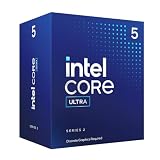
- 10 cores (6 P-cores + 4 E-cores) and 14 threads.
- Performance hybrid architecture integrates two core microarchitectures, prioritizing and distributing workloads to optimize performance
- Up to 4.9 GHz. 22 MB Cache
- Compatible with Intel 800 series chipset-based motherboards
- PCIe 5.0 & 4.0 support. Intel Optane Memory support. No thermal solution included. Discrete graphics required
Intel also associated 18A with Clearwater Forest, a next-generation Xeon product. Earlier roadmap references to Clearwater Forest should be treated as plans unless supported by a later product announcement. Roadmap dates are projections, not completed shipments.
Why the roadmap matters to personal-finance readers
Process technology affects Intel’s financial performance through several channels, but the effect is not automatic.
Outdated Drivers Are Slowing You Down
One free scan finds every outdated or missing driver and matches the right update for your exact hardware.Free scan · exact hardware matchPC Slower Than It Used to Be?
A free scan shows the junk files, broken settings and background clutter dragging Windows down - then fixes them in one click.Free scan · Windows 10 & 11| Operational issue | Potential financial effect |
|---|---|
| Yield and ramp speed | Low yields can raise the cost of usable chips and delay revenue. |
| Performance per watt | More efficient chips may improve demand, pricing power and competitiveness. |
| Factory utilization | Underused fabs can leave Intel carrying large fixed costs without enough wafer revenue. |
| External manufacturing | Using another foundry can accelerate a product, but it may reduce gross-margin benefits from Intel-owned capacity. |
| Foundry customers | Outside customers could diversify Intel’s revenue, but require credible yields, capacity and delivery schedules. |
| Capital expenditure | New fabs and equipment consume cash before they produce meaningful revenue. |
Consequently, an investor should not treat a process announcement as equivalent to earnings growth. Useful follow-up questions include:
- Is the node in development, risk production or high-volume manufacturing?
- Which products actually use it, and which tiles are made elsewhere?
- Are yields improving quickly enough to support profitable production?
- Are Intel’s own products using the capacity, or are outside foundry customers also placing orders?
- What are the effects on gross margin, capital spending, free cash flow and depreciation?
These questions are more informative than comparing “4,” “3,” “20A” or “18A” as if the numbers were directly comparable measurements across companies.
Independent reader supportYour contribution helps us test, update, and keep practical guides available for everyone.What the major claims get wrong
“Intel 4 is literally a 4nm process”
Not in the measurement sense. Intel’s node names are labels for a collection of process characteristics and do not specify one physical transistor dimension.
“Intel 3 introduced RibbonFET”
Incorrect. Intel 3 is an enhanced FinFET node. RibbonFET begins with Intel 20A and continues into Intel 18A.
Recommended Free Tools
Best Value

- 10 cores (6 P-cores + 4 E-cores) and 14 threads. Integrated Intel Graphics included
- Performance hybrid architecture integrates two core microarchitectures, prioritizing and distributing workloads to optimize performance
- Up to 4.9 GHz. 22 MB Cache
- Compatible with Intel 800 series chipset-based motherboards
- PCIe 5.0 & 4.0 support. Intel Optane Memory support. No thermal solution included.
“20A was canceled and never used”
Too broad. Intel publicly connected 20A to Arrow Lake tiles and said its process learning contributed to 18A. The more accurate description is that Intel shortened or de-emphasized 20A as a major production and foundry node.
“18A was ready in 2024”
That was an earlier target. Later Intel updates placed risk production and production entry in 2025.
“The process name covers every tile in a processor”
That is increasingly misleading. Arrow Lake, for example, combined Intel 20A tiles with tiles made on an external process. A processor’s advertised node may identify only one tile or the principal compute tile.
FAQ
What is the difference between Intel 7, Intel 4 and Intel 3?
Intel 7 is a refined FinFET process formerly called 10nm Enhanced SuperFin. Intel 4 uses extensive EUV while retaining FinFET and was used for Meteor Lake’s compute tile. Intel 3 further improves FinFET performance, cell density and interconnects and was used for server products such as Sierra Forest and Granite Rapids.
What do RibbonFET and PowerVia mean?
RibbonFET is Intel’s gate-all-around transistor architecture, which replaces FinFET at the leading edge. PowerVia is backside power delivery, which moves power routing behind the wafer to free front-side routing space and potentially reduce power-delivery losses. Both were associated first with Intel 20A and then with Intel 18A.
Was Intel 20A canceled?
That description is incomplete. Intel shifted engineering resources from 20A to 18A and de-emphasized 20A as a broad production node, but Intel tied 20A to Arrow Lake tiles and said its process learning fed into 18A.
Does Intel 18A mean an 18-nanometer processor?
No. The “A” refers to angstrom, but Intel’s node names are not literal measurements of a particular transistor feature. Intel 18A is a process-generation label for a technology combining RibbonFET and PowerVia.
The Bottom Line
Intel’s roadmap moved from a refined FinFET generation in Intel 7, through EUV-based Intel 4 and improved FinFET Intel 3, to the RibbonFET and backside-power era beginning with 20A and continuing with 18A. The commercial story is more complicated than the node names suggest: products can mix tiles from Intel and outside foundries, and a process milestone does not guarantee profitable high-volume production.
What’s actually slowing this PC down?
Pick the symptom - the matching free tool is one click away.
For personal-finance and investment analysis, watch production status, yields, product demand, foundry customers, capital spending, gross margin and free cash flow—not just the next number in Intel’s process roadmap.
Quick Recap
Product prices and availability are accurate as of the date/time indicated and are subject to change. Any price and availability information displayed on Amazon at the time of purchase will apply.




