The Tool Desk
Outbyte Driver Updater FREEFix the driver behind crashes, sound loss and screen glitchesFind Drivers →Outbyte PC Repair FREERepair Windows errors before they cause bigger problemsFix Now →Texas Instruments announced on June 21, 2000, that it would acquire Burr-Brown Corporation in an all-stock merger valued at approximately $7.6 billion using TI’s closing share price that day. TI completed the acquisition on August 25, 2000. The deal paired TI’s manufacturing scale and digital signal-processing expertise with Burr-Brown’s high-performance analog technology, particularly data converters and amplifiers.
The deal at a glance
| Detail | What was announced or completed |
|---|---|
| Announcement | June 21, 2000, when TI announced a definitive agreement to acquire Burr-Brown. TI announcement |
| Completion | August 25, 2000, when TI announced the acquisition had closed. TI closing announcement |
| Buyer and target | Texas Instruments Incorporated acquired Burr-Brown Corporation, headquartered in Tucson, Arizona. |
| Structure | Stock-for-stock merger through Burma Acquisition Corp., a wholly owned TI subsidiary; Burr-Brown became a wholly owned TI subsidiary. |
| Exchange ratio | 1.3 TI common shares for each Burr-Brown share, under the merger agreement. |
| Announced value | Approximately $7.6 billion, calculated using TI’s closing share price on June 21, 2000. This was not a fixed cash price. |
| Premium | Approximately 56%, as described in TI’s announcement based on the companies’ stock prices at the time. TI transaction details |
Why TI wanted Burr-Brown
TI already sold analog integrated circuits and digital signal processors (DSPs). Burr-Brown brought specialized expertise in precision analog design, especially data converters, high-performance amplifiers and other signal-chain components. The combination gave TI a way to join analog components that handle real-world signals with the digital processing and manufacturing capabilities it already had.

What analog components do
Many systems must translate between physical signals and digital data. A data converter changes an analog signal—such as sound or a sensor reading—into digital information that a processor can use. An amplifier can condition or strengthen a signal along the way. A DSP then processes the digital data; in some systems, a converter turns the result back into an analog output. TI presented the complementary parts as useful in communications, audio, instrumentation and industrial applications.
Burr-Brown’s contribution
Burr-Brown was broader than an audio-chip company. Its capabilities included precision converters, high-resolution converter technology, including 24-bit products, amplifiers and signal-chain devices. TI’s stated rationale was to combine that design expertise with its process technology, manufacturing scale, DSP portfolio, sales and application-engineering organization. TI’s closing announcement
#1 Best Overall
In 2000, TI pointed to applications such as 3G phones, DSL modems, Internet audio players and digital consumer audio. Those were examples of the market opportunities TI identified at the time, not present-day forecasts.
How the stock deal worked
Burr-Brown shareholders were to receive 1.3 shares of TI common stock for each Burr-Brown share. Burr-Brown stock options and convertible notes were also to be converted into instruments exchangeable for TI shares at the same ratio. TI expected to issue approximately 88 million shares, including shares associated with those options and notes, according to its transaction announcement.
The approximately $7.6 billion headline value was an implied valuation based on TI’s share price on June 21, 2000. Because consideration consisted of TI stock rather than a fixed amount of cash, the dollar value of the shares could change as TI’s share price changed before closing. The expected share issuance was not simply a count of the basic common shares exchanged; it also accounted for equity-linked instruments.
TI described the offer as an approximately 56% premium to Burr-Brown stockholders, using the relevant stock prices at the time. That premium and the $7.6 billion figure are announcement-era measures, not a separate cash payment made at closing. TI transaction details
Do these 3 things before closing this tab:
1Clear out junk files and repair common Windows errors2Fix the driver behind crashes, sound loss and screen glitches3Repair Windows errors before they cause bigger problemsRank #3

- Genuine Burr-Brown INA122P instrumentation amplifier
- Precision analog signal amplification with low power consumption
- 8-pin DIP package for breadboards or socketed PCBs
- High common-mode rejection ratio (CMRR) for noise immunity
- Low input offset voltage for accurate signal measurement
Approvals and merger mechanics
The agreement did not make completion automatic. It required Burr-Brown stockholder approval, expiration or early termination of the waiting period under the Hart-Scott-Rodino Antitrust Improvements Act, satisfaction of applicable foreign regulatory requirements, and other customary closing conditions. Merger agreement announcement
Legally, Burma Acquisition Corp. was to merge into Burr-Brown. Burr-Brown would survive the merger as a wholly owned subsidiary of TI. The commercial description “TI acquired Burr-Brown” refers to that result; it was not a simple cash purchase.
Rank #4
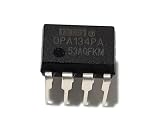
- Superior Sound Quality
- Ultra Low Distortion: 0.00008%
- Low Noise: 8 nV/√Hz
- True FET-Input: IB = 5pA
- High Open-Loop Gain: 120 dB (600 Ω)
Shareholder support and the option agreement
Burr-Brown directors and officers entered a voting agreement covering approximately 29.6% of the company’s voting power as of the relevant record date, committing those shares to support the merger. The transaction documentation also included an option for TI to purchase up to 11,236,702 Burr-Brown shares at $112.94 per share, subject to adjustment provisions. The option represented approximately 19.9% of Burr-Brown’s outstanding shares at the time. Voting and option agreements
Independent reader supportYour contribution helps us test, update, and keep practical guides available for everyone.What Burr-Brown brought to TI
Founded in 1956 by Robert Page Burr and Thomas R. Brown Jr., Burr-Brown was based in Tucson and had a manufacturing site there, along with technology development centers in Atsugi, Japan, and Livingston, Scotland. TI’s transaction materials cited about 1,500 employees. Contemporary coverage reported Burr-Brown’s 1999 revenue at approximately $291.4 million. TI transaction details EE Times contemporary coverage
Recommended Free Tools
Best Value

- Superior Sound Quality and High Open-Loop Gain: 120 dB (600 Ω)
- Ultra Low Distortion: 0.00008% and Wide Supply Range: ±2.5 V to ±18 V
- Low Noise: 8 nV/√Hz
- True FET-Input: IB = 5pA
- High Speed: Slew Rate: 20 V/µs Bandwidth: 8 MHz
The purchase formed part of TI’s broader effort to expand its analog business amid strong semiconductor demand and growing interest in combining analog components with digital processing. Contemporary semiconductor coverage placed the deal alongside TI’s earlier analog-related acquisitions, including Unitrode and Power Trends; those were separate transactions, not parts of the Burr-Brown merger. EE Times coverage
Closing and continuing legacy
TI announced that the acquisition was complete on August 25, 2000, roughly two months after the agreement was announced. Burr-Brown ceased to be an independent public company, but its technology did not simply disappear into a company name. TI later described continued development of Burr-Brown-branded audio products and the contribution of Burr-Brown signal-chain expertise to its broader analog portfolio. TI technical article on Burr-Brown products
Quick Recap
Product prices and availability are accurate as of the date/time indicated and are subject to change. Any price and availability information displayed on Amazon at the time of purchase will apply.




