Apple led the global smartphone market in Omdia’s full-year 2025 shipment estimates, but the headline ranking does not tell the whole story. Samsung competes across premium, mainstream and entry-level phones; Xiaomi retains substantial emerging-market volume, much of it in the price tier most exposed to rising costs. In 2026, the market’s direction depends not just on who ships the most phones, but on what those phones cost, where they are sold and whether shipments turn into profitable consumer demand.
What “smartphone sales” measures—and what it does not
Market reports often use “sales” as shorthand, but the underlying measures are not interchangeable:
| Measure | What it means | What it tells you |
|---|---|---|
| Shipments | Devices sent into distribution channels; many market trackers estimate vendor sell-in to distributors, retailers or carriers. | Vendor scale, but not necessarily phones already bought by consumers. |
| Sell-in | Units a vendor ships to its channel partners. | Can move ahead of consumer demand if retailers or carriers build inventory. |
| Sell-through | Units purchased by end users. | A closer measure of consumer demand. |
| Revenue | Money generated from device sales. | Reflects both volume and price mix; premium phones can produce more revenue per unit. |
| Average selling price (ASP) | Average price per device in a defined group and period. | Helps distinguish growth driven by higher prices or premium mix from growth driven by unit volume. |
| Profit | Earnings after costs. | Cannot be inferred from shipment share or revenue alone. |
For example, Omdia labels its Q1 2026 figures as sell-in shipments. Apple’s reported iPhone revenue is a company financial measure, not an estimate of global unit share. A vendor can gain shipment share in a shrinking market while shipping fewer phones overall.
Who led the global smartphone market in 2025?
Omdia estimated that Apple shipped 240.6 million iPhones in 2025, up 7% year over year, making it the largest smartphone vendor for a third consecutive year in that tracker’s annual ranking. This is an estimated shipment result, not a count of confirmed consumer purchases. Omdia’s full-year report also described a market that grew overall, while warning that memory costs could make 2026 more difficult.
Free tools Windows power users keep installed
One-click scans. No signup required.
#1 Best Overall
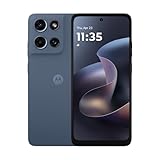
- Universal unlocked. Compatible with all major U.S. carriers, including Verizon, AT&T, T-Mobile and other prepaid carriers.
- Super-bright, super-smooth 6.7" display. See your screen clearly even outdoors in sunlight, and enjoy seamless views with a fast-refreshing 120Hz display.*
- AI-powered camera system. Take stunning photos in any light with the 50MP camera**, look your best with a 32MP selfie cam*****, and capture extreme close-ups.
- Superfast 5G performance. Unleash your entertainment at 5G speed*** with the MediaTek Dimensity 6300 chipset and up to 12GB of RAM with RAM Boost****.
- Long-lasting battery + TurboPower charging. Power through day after day with a 5200mAh battery, then get hours of power in just minutes.****
Counterpoint-related coverage also put Apple ahead of Samsung for 2025, but estimates from different trackers should not be combined into a single ranking or table. Their databases, definitions and revisions can differ. This article uses Omdia for the full-year 2025 lead and reports IDC and Omdia separately when discussing Q1 2026.
Three different leaderboards
- Units: Apple led the full-year 2025 ranking in Omdia’s shipment estimates. A unit ranking needs a named tracker and period.
- Revenue: Apple’s premium-heavy mix helps it generate substantial revenue per device. Revenue leadership is not the same as unit leadership.
- Profit: Shipment and revenue figures alone do not establish which company earns the most profit. That requires comparable profit estimates and cost data.
Why Apple can lead despite premium pricing
Apple’s position is not explained by low prices. Strong demand for the iPhone 17 family during the 2025 holiday period, a mix that includes higher-priced Pro and Pro Max models, and a large installed base all support its ability to compete on value as well as volume. The iOS ecosystem can also make an upgrade feel less costly to existing users who rely on Apple devices and services. Industry coverage cited strength in Japan, India, Southeast Asia and other markets, though regional results vary.
Apple reported fiscal 2025 iPhone net sales of $209.586 billion, up from $201.183 billion in fiscal 2024. These are company-reported iPhone sales, not total smartphone-market revenue or an independent estimate of shipments. Apple’s fiscal 2025 financial statements also show that Greater China revenue fell from $66.952 billion in fiscal 2024 to $64.377 billion in fiscal 2025, even as total iPhone revenue increased. That is a useful counterweight to any claim that Apple is winning in every region.
Apple reported record iPhone revenue in fiscal Q1, Q2 and Q3 2026. Its total company revenue was $143.8 billion, $111.2 billion and $109.4 billion, respectively; those totals are not iPhone-only figures. Apple’s fiscal quarters do not align exactly with calendar quarters, and its quarterly reporting does not disclose current iPhone unit sales. See the company’s fiscal Q1 2026 results, fiscal Q2 2026 results and fiscal Q3 2026 results.
Quick wins for a faster PC:
Repair Windows errors before they cause bigger problemsFix Now →Scan for outdated or missing drivers - takes under a minuteDriver Scan →Rank #2

- YOUR CONTENT, SUPER SMOOTH: The ultra-clear 6.7" FHD+ Super AMOLED display of Galaxy A17 5G helps bring your content to life, whether you're scrolling through recipes or video chatting with loved ones.¹
- LIVE FAST. CHARGE FASTER: Focus more on the moment and less on your battery percentage with Galaxy A17 5G. Super Fast Charging powers up your battery so you can get back to life sooner.²
- MEMORIES MADE PICTURE PERFECT: Capture every angle in stunning clarity, from wide family photos to close-ups of friends, with the triple-lens camera on Galaxy A17 5G.
- NEED MORE STORAGE? WE HAVE YOU COVERED: With an improved 2TB of expandable storage, Galaxy A17 5G makes it easy to keep cherished photos, videos and important files readily accessible whenever you need them.³
- BUILT TO LAST: With an improved IP54 rating, Galaxy A17 5G is even more durable than before.⁴ It’s built to resist splashes and dust and comes with a stronger yet slimmer Gorilla Glass Victus front and Glass Fiber Reinforced Polymer back.
How Samsung scales across price tiers
Samsung’s strategic strength is not just its flagship phones. Its Galaxy S and Z families target premium buyers, while Galaxy A devices give it a route into mainstream and entry-level demand. That breadth matters when one segment weakens: the company can pursue higher-value customers without giving up the scale that comes from a broad range and wide distribution.
Premium phones and foldables
Galaxy S-series demand can support higher average prices and profitability; Galaxy Z foldables give Samsung a differentiated premium category. Samsung’s 2026 strategy emphasized AI-enabled phones and broader market expansion. These priorities are company plans, not proof that AI features have already translated into a particular shipment gain. Samsung’s FY2025 fourth-quarter investor presentation discusses its mobile business and strategy.
Mainstream and entry-level reach
Galaxy A-series models provide an important counterweight to flagship dependence. Omdia said A-series devices supported Samsung’s emerging-market shipments in Q1 2026, alongside demand for the Galaxy S26 at the premium end. Samsung has also been trying to regain ground in entry-level and mainstream tiers after pressure from Chinese competitors.
What its results say about scale
Samsung’s own FY2025 results described double-digit annual profit growth for its mobile business, supported by flagship performance. The company also said smartphone sales declined in Q4 as new-model launch effects normalized. Scale across price tiers therefore does not make Samsung immune to product cycles or market weakness. Its FY2025 results provide the company’s account of those results.
The Tool Desk
Outbyte PC Repair FREERepair Windows errors before they cause bigger problemsFix Now →Outbyte Driver Updater FREEScan for outdated or missing drivers - takes under a minuteDriver Scan →Rank #3

- Charger NOT Included, 6.7" Super AMOLED FHD+, 90Hz Refresh Rate, 385 ppi, 800 nits (HBM), 1080x2340px, 5000mAh Battery
- 128GB, 4GB RAM, microSDXC, Exynos 1330 (5nm), Octa-Core, Mali-G68 MP2 or Mali-G57 MC2 GPU
- Rear Camera: 50MP, f/1.8 (wide) + 5MP, f/2.2 (ultrawide) + 2MP, f/2.4 (macro), LED flash, panorama, HDR; Front Camera: 13MP, f/2.0, Android 14, up to 6 major Android upgrades, One UI 6.1
- 3G: HSDPA 850/900/1700(AWS)/1900/2100; 4G LTE: 1/2/3/4/5/7/12/13/14/20/25/26/28/29/30/38/39/40/41/48/66/71, 5G: 2/5/25/41/66/71/77/78 SA/NSA/Sub6/mmWave - Nano-SIM + eSIM
- US Model – Global Connectivity – Compatible with Most GSM Carriers like T-Mobile, AT&T, MetroPCS, etc. Will Also work with CDMA Carriers Such as Verizon, Straight Talk.
Why Xiaomi targets emerging markets—and why that is risky
Xiaomi uses value-oriented devices and the Redmi and POCO sub-brands to compete for buyers who are more price-sensitive than typical flagship customers. Its reach across Latin America, India, Southeast Asia, the Middle East, Africa and parts of Europe makes it a consequential volume competitor. Omdia estimated that more than half of Xiaomi’s shipments were concentrated below $200, leaving the company especially exposed to memory-cost inflation and pressure on margins. The estimates include Redmi and POCO when stated by Omdia.
Latin America shows the difference between reach and premium mix
Omdia’s Q1 2026 estimates put the Latin American smartphone market at 34.8 million units, up 3% year over year. Samsung shipped an estimated 12.9 million units for 37% share, up 9%; Xiaomi shipped 6.0 million for 17% share, up 3%; Apple shipped 1.8 million for 5% share, up 31%. Xiaomi’s estimate includes Redmi and POCO. These are regional sell-in estimates, not revenue shares. Omdia’s regional report provides the figures.
The comparison illustrates why unit share is not a complete measure of commercial strength. Samsung’s broad portfolio and distribution help it reach more price tiers in the region. Xiaomi has meaningful scale, but its lower-price exposure can make each cost increase harder to absorb. Apple’s smaller unit share may still matter in premium revenue and ecosystem terms; the shipment shares do not establish those outcomes.
Emerging markets are not one market
These regions contain different demand conditions. Price-sensitive countries can offer large first-phone and replacement opportunities but lower margins. Fast-upgrading urban buyers may trade up to premium models. Carrier financing and retail availability can shape purchases, while currency weakness, import costs and inflation can change local affordability quickly. Warranty access, repair networks and software support also influence whether a low sticker price is good value.
Do these 3 things before closing this tab:
1Fix the driver behind crashes, sound loss and screen glitches2Repair Windows errors before they cause bigger problems3Scan for outdated or missing drivers - takes under a minuteRank #4

- YOUR CONTENT, SUPER SMOOTH: The ultra-clear 6.7" FHD+ Super AMOLED display of Galaxy A17 5G helps bring your content to life, whether you're scrolling through recipes or video chatting with loved ones.¹
- LIVE FAST. CHARGE FASTER: Focus more on the moment and less on your battery percentage with Galaxy A17 5G. Super Fast Charging powers up your battery so you can get back to life sooner.²
- MEMORIES MADE PICTURE PERFECT: Capture every angle in stunning clarity, from wide family photos to close-ups of friends, with the triple-lens camera on Galaxy A17 5G.
- NEED MORE STORAGE? WE HAVE YOU COVERED: With an improved 2TB of expandable storage, Galaxy A17 5G makes it easy to keep cherished photos, videos and important files readily accessible whenever you need them.³
- BUILT TO LAST: With an improved IP54 rating, Galaxy A17 5G is even more durable than before.⁴ It’s built to resist splashes and dust and comes with a stronger yet slimmer Gorilla Glass Victus front and Glass Fiber Reinforced Polymer back.
IDC warned that regions with many sub-$200 devices—including the Middle East and Africa, Central and Eastern Europe, and Asia-Pacific excluding Japan and China—could face especially severe declines as memory costs rise. Emerging markets remain strategically important, but they are not guaranteed growth engines in every quarter.
Independent reader supportYour contribution helps us test, update, and keep practical guides available for everyone.What changed in Q1 and Q2 2026?
Q1: credible trackers disagreed on market direction
IDC reported 293.8 million global smartphone shipments in Q1 2026, down 2.9% year over year. Omdia reported 298.5 million, up 1% year over year, describing its figures as sell-in shipments. Neither estimate should be treated as interchangeable with the other.
| Tracker | Global Q1 2026 estimate | Reported year-over-year change |
|---|---|---|
| IDC | 293.8 million units | Down 2.9% |
| Omdia | 298.5 million units | Up 1% |
The firms may use different shipment databases, channel timing, inventory treatment, geographic coverage or model classifications; preliminary estimates may also be revised. The available figures do not identify one single cause for the gap. The right conclusion is that Q1’s exact market size and growth rate depend on the tracker, not that one estimate can be substituted for the other. IDC’s market-share page and Omdia’s Q1 report set out their respective estimates.
Both accounts point to a market where premium demand and low-end economics diverge. IDC noted resilience among Apple and Samsung and attempts by Xiaomi, OPPO and vivo to move into higher price bands. Omdia pointed to Galaxy S26 demand at the premium end and Galaxy A-series support in emerging markets.
Recommended Free Tools
Best Value

- Carrier: This phone is locked to Tracfone, which means this device can only be used on the Tracfone wireless network. Tracfone plan required, activating is easy, just 3 steps.
- DISPLAY: Immersive viewing on a 6.7-inch super-bright 120Hz display with powerful stereo speakers and Bass Boost for cinematic entertainment.
- CAMERA SYSTEM: Advanced 50MP Quad Pixel camera captures sharp, detailed photos and videos in any lighting condition
- PERFORMANCE: Lightning-fast 5G connectivity paired with a powerful processor and RAM Boost for smooth multitasking.
- BATTERY LIFE: Long-lasting 5000mAh battery with TurboPower charging technology delivers hours of power in minutes.
Q2: Apple’s share rose in a shrinking market
Omdia reported that the global smartphone market declined 4% year over year in Q2 2026, while Apple reached a record 20% share for the quarter and Xiaomi retained third place with 11%. The figures are quarterly shipment shares, not revenue shares. They show that market concentration can increase while total demand falls; they do not establish that Apple led every tracker’s unit ranking in Q2. Omdia’s Q2 report gives its account of the quarter.
Why 2026 could be harder for the whole market
Memory-component inflation raises bill-of-materials costs, a particular challenge for phone makers selling at low prices. Supply constraints and macroeconomic pressure can also leave buyers less willing or able to accept price increases. Vendors may respond by adjusting prices, reducing entry-level model availability or trying to sell more premium devices, but those moves can limit affordability or fail to preserve volume.
In 2026, IDC forecast a 13.9% decline in global smartphone shipments to 1.09 billion units. Omdia separately described downside risk of roughly 15%. These are forecasts published during 2026, not final full-year results, and their different estimates should not be merged. IDC attributed its outlook to memory constraints and broader geopolitical and macroeconomic pressures; its forecast explains the projection.
A shrinking market can still produce share gains for Apple or Samsung if competitors contract faster. Conversely, a vendor such as Xiaomi can remain a major global player while shipping fewer devices or facing greater margin pressure. Premiumization may lift average prices even as unit demand declines; it is not, by itself, evidence of healthy growth across the market.
How to read the rankings as a consumer or business reader
A global shipment leader is not automatically the best phone for a buyer, nor does a unit ranking tell an investor which company has the strongest economics. Use the measure that matches the question:
- For market scale: Check the tracker, period and whether figures are shipments, sell-in or sell-through.
- For customer demand: Look for sell-through or channel inventory evidence, not shipments alone.
- For pricing power: Compare ASP and product mix alongside units.
- For financial strength: Use company-reported revenue and comparable profit measures; do not infer profit from market share.
- For regional prospects: Check country-level competition, local pricing, financing, currency and import conditions rather than assuming a global ranking applies locally.
- For phone value in a specific market: Verify official availability, network compatibility, warranty and repair coverage, software-support terms and financing costs. Global product portfolios do not guarantee local sale or service.
What the rankings mean for Apple, Samsung and Xiaomi
Apple’s full-year 2025 lead in Omdia’s shipment estimates sits alongside unusually strong revenue per device and an ecosystem that supports premium demand; its regional performance is not uniform. Samsung’s advantage is portfolio breadth, letting it compete in flagships, foldables and mainstream phones as the market shifts. Xiaomi remains a major volume force in emerging markets, but its concentration below $200 makes margin resilience and the ability to move buyers upmarket central tests.
The headline “leader” therefore needs a label: units, revenue or profit; year or quarter; global or regional; and which tracker. Without those qualifiers, a smartphone ranking can obscure more than it reveals.
Quick Recap
Product prices and availability are accurate as of the date/time indicated and are subject to change. Any price and availability information displayed on Amazon at the time of purchase will apply.




