Intel CEO Lip-Bu Tan said on February 3, 2026, that Intel had hired a chief GPU architect and plans to build GPUs. Reuters identified the hire as Eric Demmers, a former Qualcomm GPU engineering leader with earlier ATI/AMD experience, and reported that the initial effort will focus on data centers. That is a meaningful strategic move—not evidence of a finished Nvidia rival: Intel has disclosed no product, launch date, specifications, benchmarks, customers, or pricing.
What Intel confirmed—and what it did not
At the Cisco AI Summit in San Francisco on February 3, 2026, Tan said Intel would make GPUs and had hired a chief GPU architect. He did not name the person in those remarks. Reuters’ account of Tan’s announcement records the public statement.
Reuters later identified the hire as Eric Demmers and reported that he joined Intel in January 2026, leading GPU engineering with an AI focus and reporting to Data Center chief Kevork Kechichian. The identity and reporting line are reported details, not an appointment Intel announced in a dedicated public release. Reuters’ follow-up report, reproduced by Sahm Capital, is the source for those details.
Intel has not publicly specified an architecture, chip name, manufacturing process, memory system, software stack, performance target, customer, price, or launch schedule. “Challenge Nvidia” therefore describes the strategic ambition implied by the move; it is not a claim that Intel has demonstrated a competing product.
#1 Best Overall

- Next-Gen Intel Arc Graphics: Powered by Intel Arc A580 GPU with Intel Xe HPG microarchitecture, featuring 384 XMX engines for enhanced AI acceleration and content creation.
- High-Performance Memory: 8GB GDDR6 on a 256-bit interface running at 16 Gbps, delivering excellent bandwidth for 1440p gaming and creative workloads.
- Factory Overclocked: Engine clock set at 2000 MHz out of the box, providing optimized performance for smooth gameplay and multimedia tasks.
- Advanced Dual-Fan Cooling: Features a dual-fan design with striped axial fans and an ultra-fit heatpipe for efficient thermal management. 0dB Silent Cooling stops fans completely at low temperatures for silent operation.
- Durable Construction: Includes a stylish metal backplate for enhanced PCB rigidity and a premium aesthetic, backed by ASRock's Super Alloy components for long-term reliability.
Who is Eric Demmers?
Demmers brings experience from more than one kind of GPU business. He joined ATI in 2000 and later held senior GPU roles at ATI/AMD. He then spent roughly 14 years at Qualcomm, where he led GPU engineering associated with the Adreno organization. Tom’s Hardware’s career profile provides background on that history.
That record makes Demmers a notable engineering hire, but it does not establish that he personally designed every ATI, AMD, or Adreno GPU. Nor does a senior appointment show what Intel’s eventual hardware will deliver. The practical significance is that Intel has recruited an experienced leader for a renewed GPU push, while the architecture and execution remain to be demonstrated.
Data-center GPUs are not the same as gaming cards
The strongest available reporting says Intel’s initial GPU effort is aimed at data centers. That is distinct from announcing a new Arc gaming card. “GPU” spans markets with different buyers and success criteria:
Rank #2

- System Compatibility Note: This 2-slot card measures 271 x 112 x 39 mm and requires a single 12V-2x6-pin power connector. Please verify chassis and PSU compatibility before purchase.
- Dedicated Support: Please contact us directly through Amazon for any product questions or assistance you may require.
- Professional Intel Arc Pro B70 GPU: Built on the Intel Xe2-HPG architecture, it features 32 Xe cores and 256 XMX engines, designed to accelerate AI, rendering, and complex visualization workloads.
- Massive 32GB GDDR6 VRAM: Equipped with 32GB of high-speed GDDR6 memory on a 256-bit bus, running at 19 Gbps, which allows for handling large AI models and complex datasets locally.
- High-Performance Engine Clock: Delivers an engine clock of 2540 MHz, providing the compute power needed for demanding professional applications and AI inference.
| Market | Typical workloads | What buyers need |
|---|---|---|
| Consumer gaming | Games, rendering, ray tracing, image upscaling | Reliable drivers, game compatibility, performance, price, and retail availability |
| Professional visualization | CAD, media production, simulation, workstation tasks | Application support, certified drivers, and reliability |
| Data-center AI | Model training and inference | Memory capacity and bandwidth, software frameworks, interconnects, and dependable supply |
| HPC and scientific computing | Simulation, modeling, research | Specialized compute performance, libraries, and cluster integration |
| Edge and industrial AI | Robotics, computer vision, embedded inference | Power efficiency, developer tools, and long support cycles |
A data-center accelerator could compete with Nvidia in AI workloads without being a GeForce gaming-card rival. The initial focus matters because a product’s architecture, software, and sales strategy depend on the market it is built to serve.
How this fits with Intel Arc, Xe, and Gaudi
This is not Intel’s first GPU effort. Intel makes integrated graphics, has shipped discrete Arc graphics, and has developed Xe and Xe2 graphics architectures. It also sells Gaudi AI accelerators. Intel’s account of its move into discrete GPUs emphasizes that competing in graphics takes software and application support alongside hardware.
Reuters’ report that Demmers’ work is focused on data centers suggests a distinct AI-oriented push, but it does not establish whether Intel will maintain separate product teams, share an architecture across markets, or consolidate parts of its GPU strategy. There is no public basis to say Arc is being abandoned or that Demmers is replacing Arc leadership. The relationship among a new data-center GPU effort, Arc, and Gaudi remains unclear.
Rank #3
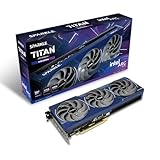
- OC Edition Boost Clock: 2760MHz
- TORN Cooling 2.0
- Metal Backplate
- Blue Breathing Light
- Graphic card sag bracket
Why Nvidia is difficult to challenge
Matching a GPU’s raw compute capability is only one part of winning data-center deployments. Buyers also need memory capacity and bandwidth, fast links between accelerators, networking, system-level integration, mature compilers and libraries, framework support, profiling tools, and hardware available in sufficient volume. They must also be willing to port, optimize, validate, and maintain their applications on a different platform.
Nvidia’s position rests on more than silicon: its data-center business combines GPUs, software, and systems. Its annual-report materials describe that broader platform and the role of its software and networking. Nvidia’s annual report provides company-reported context; it should not be mistaken for independent proof that every customer or workload is locked in.
Intel’s earlier Gaudi effort is a cautionary precedent. Gaudi was presented as an alternative for AI workloads, but industry coverage reported that it did not gain enough traction against Nvidia and AMD. That history shows how hard adoption can be; it does not determine whether a new GPU effort will succeed. Data Center Dynamics’ coverage discusses the data-center context and Gaudi.
Rank #4

- System Compatibility Note: 2‑slot ITX card, 169.9x123.5x39.2mm, single 8‑pin power, recommended 500W PSU. Verify chassis clearance before purchase.
- Dedicated Support: Please contact us directly through Amazon for any product questions or assistance you may require.
- Intel Arc A380 GPU: Powered by Intel Xe architecture with 6GB GDDR6 on 96‑bit bus – ideal for compact gaming, HTPC, and media builds.
- 2250MHz GPU Clock: Factory overclocked core delivers solid performance for esports titles and everyday creative tasks.
- Small Form Factor ITX Design: Compact 2‑slot card fits easily into mini‑ITX and small form factor cases without sacrificing performance.
What Intel could bring—and what it must prove
Intel has potential strategic assets: established CPU and server relationships, experience in chip design and packaging, and the ability to pursue integrated systems. Some data-center customers may also value a credible second source for accelerator capacity. Those factors could help Intel get a hearing, but they do not demonstrate price, performance, or software competitiveness.
The test is whether Intel can turn the hire into a product customers can deploy without unacceptable engineering risk or migration cost. A lower hardware price, if one is eventually offered, would not alone settle the economics: porting and optimizing software, operating a cluster, and maintaining a second platform can affect total cost. Likewise, strong results on a narrow benchmark would not establish broad usefulness across customer workloads.
Intel and Nvidia are both partners and competitors
The relationship is not a straightforward rivalry. On September 18, 2025, Intel and Nvidia announced collaboration on custom data-center CPUs and PC system-on-chips integrating Nvidia RTX GPU chiplets. Nvidia also announced a planned $5 billion investment in Intel at $23.28 per share. The companies can cooperate on CPUs and chiplet products while competing in parts of the accelerator market. Intel’s announcement describes the collaboration and planned investment.
Free tools Windows power users keep installed
One-click scans. No signup required.
What to watch for next
A credible assessment will require product evidence, not just leadership news. The most useful signals are:
- A formal architecture and product announcement, including whether Intel is describing a general-purpose GPU, an AI accelerator, or both.
- Memory type, capacity, bandwidth, and the design of links between accelerators.
- The programming model, framework integrations, libraries, compilers, and tools—and how existing workloads would be ported.
- Customer deployments, production and availability dates, and independently verifiable benchmarks on representative workloads.
- How the product fits with Arc and Gaudi, and whether Intel can sustain a clear roadmap and supply at scale.
Until those details appear, the hire is best read as a strategic commitment to GPU development. Intel has not yet shown that it can match Nvidia’s product, software ecosystem, or customer adoption.
Quick Recap
Product prices and availability are accurate as of the date/time indicated and are subject to change. Any price and availability information displayed on Amazon at the time of purchase will apply.




