Crashes, No Sound, or Screen Glitches?
Random freezes, missing sound and display glitches usually trace back to one bad driver. Find and replace yours safely.Free scan · under a minuteWindows Errors? Fix Them Before They Spread
Repair common Windows errors and clear accumulated junk for a smoother, more stable PC - no reinstall needed.Free scan · no reinstallIn a 2019 interview with CRN, AMD executive Forrest Norrod described a workload-led strategy: use second-generation EPYC, code-named Rome, to win first where performance and other technical attributes mattered most, then build broader enterprise demand. His case centered on up to 64 cores, single-socket systems and an open hardware ecosystem—but the headline performance and cost advantages were AMD’s period claims, not independent findings or current comparisons.
AMD’s strategy: win the workloads where technical advantages matter
Norrod said AMD would focus on markets where buyers make decisions heavily influenced by the product’s technical characteristics. He identified high-performance computing (HPC), machine intelligence, cloud computing, virtualization, big-data analytics, software-defined infrastructure and large scale-out deployments as targets.
He described adoption as moving at two speeds. AMD expected to gain traction sooner in segments where its advantage was most pronounced and technical buyers could see the case clearly. Broader enterprise adoption, he said, would take longer, developing over the next several quarters as organizations became familiar with EPYC and evaluated it for their needs. Norrod put the adoption challenge plainly: “When we get a part like [second-generation EPYC] ‘Rome,’ the thing that will slow us down more than anything else at this point is unfamiliarity.”
What EPYC Rome was meant to offer
Rome was AMD’s second-generation EPYC server processor. CRN reported that it offered up to 64 cores. AMD also claimed Rome-based systems could deliver 25–50% lower total cost of ownership (TCO) than systems using Intel’s second-generation Xeon Scalable processors. Those are 2019-era claims about a specific product generation and comparison; they should not be read as current specifications, independently verified savings, or a promise that every workload would cost less.
Recommended Free Tools
#1 Best Overall

- [CPU] AMD Ryzen 7 5700G Processor (8 Cores, 16 Threads, 3.8 GHz Base Clock Speed up to 4.6 GHz Max Boost Clock Speed) for Gaming and Content Creation with 7nm Leading Edge Technology | [STORAGE] 1TB PCIe NVMe M.2 SSD - Experience Hyper-Fast Bootup and Data Transfer thats up to 30x Faster Performance than a Traditional Hard Drive.
- Graphics: Integrated AMD Radeon Graphics | [RAM] 32GB DDR4 RAM 3200 Gaming Memory for Seamless Multitasking from Multiple Web Pages to Playing Games Online Simultaneously | [OS] Windows 11 Pro x64
- 2x 3.5" Drive Bays | 4x Expansion Slots | mATX Motherboard | ATX PSU
- [BUY WITH CONFIDENCE] Empowered PCs are Assembled in the USA, Rigorously Stress-Tested Before Shipping, and Supported with Lifetime Technical and Diagnostic Support and 3-Year Limited Hardware Warranty.
TCO is broader than a processor’s purchase price. A server buyer may also weigh performance for the target workload, power use, system configuration and operating needs. Norrod argued that Rome could improve the economics of some deployments by consolidating work into fewer sockets and components. The interview does not establish a universal cost calculation or provide a buyer-independent benchmark applicable to every configuration.
The single-socket argument—and its limits
Norrod made a bold case for one-socket Rome systems against Intel dual-socket servers, saying they could provide better performance with lower power consumption and capital expense, as well as fewer components. He summarized it this way: “I don’t care what Intel dual-socket server you’re talking about. I can beat that performance with a single-socket Rome, offering much lower power consumption, much lower capex, better reliability because there’s fewer things to fill.”
Rank #2

- 【Powerful Load-bearing】12U Network Rack Open Frame is constructed from durable cold rolled steel; Rack shelf supports enhance stability, wall-mounted capacity of 130lbs, the ground-mounted up to 260lbs
- 【Considerate Designs】Open-frame layout, including a top panel adding space, anti-slip shelf stops fixing devices and compatible racks for stack and expansion to meet requirements of home server rack
- 【Complete Accessories】A 12U open frame server rack, two ventilated shelves, four shelf stops, four velcro straps and a set of equipment mounting screws
- 【Versatile Application】Ideal for space-efficient multi-device setups in warehouses, retail, classrooms, offices and more; Excellent choices as AV Rack/IT Rack
- 【Effortless Setup】 Network Rack includes hardware, a comprehensive manual, mounting hole drilling template and an online assembly video to simplify setup
This was an AMD executive’s competitive claim, not an independent benchmark result. Whether a single-socket design is preferable depends on the particular server configurations and workload being compared. Fewer components may simplify a system, but the interview does not quantify reliability gains. Buyers evaluating such a claim would need workload-specific performance data, system pricing and power figures for the configurations under consideration.
Why ecosystem support and customer familiarity mattered
AMD also presented EPYC as an open ecosystem, emphasizing support for technology from Mellanox, Micron, Samsung and Broadcom. Norrod said, “We’re going to make sure that world-class technology from those companies is extremely well supported on the open EPYC ecosystem, and I think generally that wins.” His argument was that processor performance alone was not enough: customers also needed compatible components and support across the surrounding server platform.
Rank #3
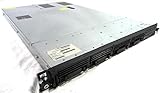
- Up to 2 Six-Core Intel Xeon CPUs 5600 Series
- 18 x slots DDR3 memory
- Up to four SFF Hot-Swappable Hard Drives 2.5" SAS or SATA
- HP Smart Array P410i-512MB FBWC RAID
- 4 x NC382i GigaBit NIC
Norrod offered an automotive manufacturer as an example of adoption beginning with a focused use case. The company started with HPC for product design and modeling, then expanded its EPYC deployment, including systems based on the earlier Naples generation. That example illustrates the staged adoption path he described, but CRN did not identify the customer or provide deployment scale or measured outcomes.
How to read the AMD-versus-Intel comparison
The interview framed the contest as workload-specific rather than a simple verdict that one vendor was better for every server. Analyst Patrick Moorhead told CRN that AMD’s advantages varied by workload, while Intel retained strengths in areas including low-latency inference and database use cases involving Optane persistent memory.
Rank #4
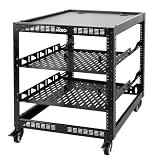
- 【Powerful load-bearing】12U Network Rack Open Frame is constructed from durable Cold Rolled Steel; Rack Shelf Back Support enhances stability; load-bearing capacity of 260lbs
- 【Sliding&Considerate】Open-frame layout, including four wheels easy to move, a top panel adding space, anti-slip shelf stops fixing devices and compatible racks for stack and expansion to meet requirements of home server rack
- 【Complete Accessories】A 12U open frame server rack, two ventilated shelves, four shelf stops, four casters, four velcro straps and a set of equipment mounting screws
- 【Versatile Application】Ideal for space-efficient multi-device setups in warehouses, retail, classrooms, offices and more; Excellent choices as AV Rack/IT Rack
- 【Effortless Setup】Server rack with wheels includes hardware, a comprehensive manual, mounting hole drilling template and an online assembly video to simplify setup
| Factor | What the 2019 interview established |
|---|---|
| Performance | Norrod claimed one-socket Rome could beat Intel dual-socket performance; this was not presented as an independent, workload-by-workload benchmark. Moorhead said AMD’s advantages varied by workload. |
| Ownership cost and power | AMD claimed 25–50% lower TCO than second-generation Xeon Scalable and argued that some single-socket Rome systems could reduce power and capital expense. These were period claims, not universal savings. |
| Socket count and components | Norrod argued that fewer sockets and components could benefit cost and reliability. The interview did not quantify reliability improvement. |
| Software, OEM and component support | AMD emphasized an open EPYC ecosystem and named Mellanox, Micron, Samsung and Broadcom; the interview did not provide a comparative measure of support coverage. |
| Buyer familiarity | Norrod identified unfamiliarity as a constraint on adoption and expected enterprise uptake to build more gradually than technically driven wins. |
For a server decision, the useful lesson is to compare systems against the intended workload and configuration—not to apply Rome’s launch-era claims to all EPYC and Xeon products, or to assume that core count alone determines value.
Independent reader supportYour contribution helps us test, update, and keep practical guides available for everyone.Who Forrest Norrod was at the time—and what the article does not establish
Norrod was AMD’s senior vice president and general manager when CRN published the interview in 2019. AMD’s 2025 proxy says he joined the company in November 2014 and has served as executive vice president and general manager of the Data Center Solutions Business Unit since January 2023. That later role provides context for his position today, but it does not make the interview’s Rome-era claims current.
Best Value

- Spacious Chassis: This massive 4U server case has 8 internal 3.5" HDD bays plus room for 3 additional 5.25" devices
- Expandable & ATX/CEB Compatible: 7 PCI expansion slots and ATX and CEB motherboard compatibility give you growth options for all of your needs
- Quiet Cooling: 4 pre-installed cooling fans provide excellent airflow and heat protection at reduced noise. 2 front 120mm PWM fans and 2 rear 80mm fans ensure your drives and chassis avoid overheating
- Desired Features: Front panel LED indicators for power, HDD, and LAN status monitoring allow quick, easy visual assessment. Additional utility with 2 x USB 3.0 port and built-in front panel lock provides extra security for your server case
- Rackmount Design: Standard 4U rackmount form factor allows easy installation in server racks and data center environments with included mounting hardware for professional deployment
The CRN interview is a historical account of AMD’s competitive pitch around EPYC Rome. It does not establish current processor pricing, availability, market share, or how newer AMD and Intel server generations compare.
Quick Recap
Product prices and availability are accurate as of the date/time indicated and are subject to change. Any price and availability information displayed on Amazon at the time of purchase will apply.




