Cloudflare CEO Matthew Prince urged the UK Competition and Markets Authority (CMA) to let publishers permit Google to index their sites for ordinary search while separately restricting use of their content in AI-generated answers. The CMA later required Google to give publishers effective controls over use of search content in generative AI, along with information, engagement metrics and attribution. It did not order a literal technical breakup of Google’s crawlers.
What Matthew Prince asked the CMA to do
In an interview reported on October 21, 2025, Prince said he had spoken with the CMA and argued that Google should not be able to make access for AI use ride on publishers’ need to appear in ordinary search. His proposal was to separate those permissions: a publisher should be able to allow search indexing while saying no to use in AI-generated search answers or other AI purposes. TechCrunch reported Prince’s appeal and Google’s response.

“Unbundle” here does not mean breaking up Google as a company. It can describe several different remedies: distinct crawler systems, separate publisher controls for search and AI, a rule against conditioning AI access on search access, or separate commercial licensing for AI uses. Prince’s argument primarily concerns separating access and control; those ideas are related, but none automatically establishes a right to payment or requires a corporate split.
Why Cloudflare says Google has an advantage
Cloudflare’s case is an antitrust and market-structure argument, not a finding that Google violated competition law. Its logic is that Google has a powerful position as a gateway to web traffic, publishers rely on that discovery, and content collected through search access can also support AI features that may answer a query without a click to the original site. Rival AI companies, Cloudflare argues, may have to build their own crawling systems or negotiate separately for content.
Windows Errors? Fix Them Before They Spread
Repair common Windows errors and clear accumulated junk for a smoother, more stable PC - no reinstall needed.Free scan · no reinstallOutdated Drivers Are Slowing You Down
One free scan finds every outdated or missing driver and matches the right update for your exact hardware.Free scan · exact hardware match#1 Best Overall

- Attention-grabbing design meets the latest evolution of the Google Pixel Camera on the new Google Pixel 11 Pro XL; Gemini Intelligence helps manage details so you can live in the moment[1]; and the phone is available in two sizes
- Unlocked Android phone gives you the flexibility to change carriers and choose your own data plan: Works with Google Fi, Verizon, T-Mobile, AT&T, and other major carriers[2]
- Stay informed without looking at your screen: When your phone is face down, Pixel HiLight gently alerts you with subtle glowing lights when your favorite contacts are calling or you’re talking with Gemini; exclusive to Google Pixel 11 Pro phones
- Magic Capture catches the moment as you live it: With just one tap, Pixel 11 Pro captures video and photos, and automatically edits, crops, and unblurs a curated collection, ready to share – and you get the memory of how it felt to be in the moment
- Two new cameras for more brilliant photos: A larger telephoto sensor captures 30% more light for clear, beautiful photos and videos, even in the dark[3]; Pixel’s longest zoom ever helps you capture details from impressive distances[4]
The result, in Cloudflare’s view, is that Google can combine the value of search distribution with the value of access to content for AI. The CMA’s final materials refer to Cloudflare evidence on crawler scale and crawl-to-click ratios, but such evidence does not by itself prove that Google’s conduct is unlawful or that all AI firms face the same licensing terms. The CMA’s supporting document discusses evidence it considered.
The publisher’s bind
Publishers may want their pages indexed so people can find them in Google Search while objecting to their material being used to generate AI answers. Prince argued that blocking Google’s crawler could cost publishers about 20% of revenue. That is his estimate, not a universal industry benchmark. He also said blocking could affect advertising-related functions, including ad-safety systems; that claim should not be taken as a guaranteed consequence for every publisher or Google advertising setup. TechCrunch’s report attributes those claims to Prince.
Search crawling, AI training and AI answers are different uses
A crawler can fetch a page for search indexing, while a company may also use content in model development, retrieval, or a generative answer. These purposes are not interchangeable. A publisher might allow ordinary indexing, decline model training, and still want separate control over whether material appears in AI Overviews or AI Mode. A rule that addresses one use does not necessarily cover all the others or every Google AI product.
Rank #2

- Google Pixel 10a is a durable, everyday phone with more[1]; snap brilliant photography on a simple, powerful camera, get 30+ hours out of a full charge[2], and do more with helpful AI like Gemini[3]
- Unlocked Android phone gives you the flexibility to change carriers and choose your own data plan; it works with Google Fi, Verizon, T-Mobile, AT&T, and other major carriers
- Pixel 10a is sleek and durable, with a super smooth finish, scratch-resistant Corning Gorilla Glass 7i display, and IP68 water and dust protection[4]
- The Actua display with 3,000-nit peak brightness shows up clear as day, even in direct sunlight[5]
- Plan, create, and get more done with help from Gemini, your built-in AI assistant[3]; have it screen spam calls while you focus[6]; chat with Gemini to brainstorm your meal plan[7], or bring your ideas to life with Nano Banana[8]
Google’s response, as reported by TechCrunch, pointed to Google-Extended, which publishers can use to opt out of certain AI-training uses without affecting inclusion in Google Search. That addresses a narrower question than whether a publisher can remain in ordinary search while excluding content from generative features in Search. Google-Extended should not be treated as a complete veto over AI Overviews, AI Mode, Gemini, or every other AI-related use.
Recommended Free Tools
Robots.txt is a technical signal to crawlers, not a complete licensing agreement. Even when a publisher can specify a crawler preference, the practical questions remain: which product and purpose does it cover, how is the instruction interpreted, and what happens to the content after it is fetched? A crawler’s name identifies the requesting bot; it does not alone settle what Google may do with collected content.
Why the CMA could address AI features within search
On October 10, 2025, the CMA designated Google as having strategic market status (SMS) in general search services. The designation covered Google’s general search activity and search advertising, rather than Google’s entire business. In its decision, the CMA treated AI Overviews and AI Mode as features of Google Search, bringing them within the activity under consideration. The CMA’s final SMS decision sets out the scope.
Rank #3

- Google Pixel 10 Pro is the ultimate Pixel experience, featuring advanced AI with Gemini, unbelievable camera quality, impeccable design in two sizes, and the next-gen Google Tensor G5 chip[1]
- Unlocked Android phone gives you the flexibility to change carriers and choose your own data plan[2]; it works - Google Fi, Verizon, T-Mobile, AT&T, and other major carriers
- Get a head start on syncing your data before it even arrives: After you purchase your new Pixel, look for an email that explains how to transfer your photos, videos, passwords, and more in just a few quick steps[11]
- Pixel’s pro camera system makes everything look amazing, even in low light; capture more of the scene with advanced Google AI models, and bring out incredible details with 100x Pro Res Zoom, stunning 50 MP images, and super steady videos in 8K[10]
- Pixel 10 Pro is built with durable aluminum and Corning Gorilla Glass Victus 2 for scratch and drop resistance; the 6.3-inch Super Actua display with 3,300-nit peak brightness is easy on the eyes, even in direct sunlight[3,13,18]
The UK digital-markets regime lets the CMA designate a firm in a particular digital activity and impose conduct requirements intended to improve competition and protect businesses and consumers. The regulator could therefore address publishers’ relationship with generative features of Search without trying to regulate AI in the abstract.
What the CMA required on June 3, 2026
The CMA imposed a publisher conduct requirement requiring Google to provide effective controls over publishers’ search content use in generative AI. It also requires Google to explain how that content is used, provide detailed user-engagement metrics for publisher content in search generative-AI features, take reasonable steps to ensure attribution is clear and accurate, and give users a clear way to access attributed content. The obligations are described in the CMA’s publisher conduct requirement.
The CMA called the remedy a world first in enabling publishers to opt out of having content used to power AI features in Google Search while retaining normal search visibility. That is the regulator’s characterization of the remedy; the practical value will depend on how the controls are implemented and what information and metrics publishers actually receive. The announcement is at the CMA’s June 3, 2026 news release.
This is a publisher-facing conduct remedy: choice, transparency, metrics and attribution. The official materials describe requirements on Google, but do not establish that the CMA ordered Google to deploy wholly separate technical crawlers. The CMA’s supporting document discusses the costs associated with crawler separation, one reason a control-based remedy may differ from a technical mandate. See the supporting document.
What the dispute means for different sites
- News publishers: They may rely on search discovery while worrying that summaries reduce visits that support subscriptions and advertising. Attribution and engagement metrics can help them assess whether visibility in an AI answer produces useful visits, but a citation does not guarantee meaningful referral traffic.
- Small businesses and commercial sites: They may want search visibility and AI discovery, while having limited resources to negotiate individual licenses or manage granular technical rules. For product pages, reviews and pricing, the concern may be reuse without a useful referral rather than model training alone.
- Reference and informational sites: They may welcome being cited in AI answers but need data to determine whether that exposure helps their business or mission.
- Nonprofits and archives: Broad blocking can have collateral effects on research, preservation, accessibility and discovery. Cloudflare’s approach to anti-AI-bot policies has itself drawn criticism over the difficulty of distinguishing unwanted scraping from beneficial automated access. Ars Technica examined that tension.
Google’s interests include maintaining Search and developing AI features; rival AI companies seek content access; publishers seek control, compensation or both; and users may value useful answers as well as links to reliable sources. A remedy changes bargaining power among these groups, but no single access rule resolves every interest.
Independent reader supportYour contribution helps us test, update, and keep practical guides available for everyone.Cloudflare’s role is relevant to its argument
Cloudflare operates infrastructure used by publishers and AI companies, provides bot-management and traffic-control services, and has promoted tools for identifying and blocking AI crawlers. It has a direct commercial interest in products and services that help sites manage, analyze and potentially monetize content access. Prince said about 80% of AI companies were Cloudflare customers; that figure is his characterization, not an independently verified market share. Cloudflare’s policy argument is published on its blog.
What’s actually slowing this PC down?
Pick the symptom - the matching free tool is one click away.
Best Value
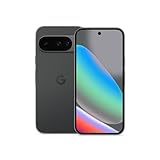
- Google Pixel 10 is the everyday phone unlike anything else; it has Google Tensor G5, Pixel’s most powerful chip, an incredible camera, and advanced AI - Gemini built in[1]
- Unlocked Android phone gives you the flexibility to change carriers and choose your own data plan[2]; it works with Google Fi, Verizon, T-Mobile, AT&T, and other major carriers
- Unlocked Android phone gives you the flexibility to change carriers and choose your own data plan[2]; it works - Google Fi, Verizon, T-Mobile, AT&T, and other major carriers
- The upgraded triple rear camera system has a new 5x telephoto lens - up to 20x Super Res Zoom for stunning detail from far away; Night Sight takes crisp, clear photos in low-light settings; and Camera Coach helps you snap your best pics[3]
- Pixel 10 is designed - scratch-resistant Corning Gorilla Glass Victus 2 and has an IP68 rating for water and dust protection[21]; plus, the Actua display - 3,000-nit peak brightness is easy on the eyes, even in direct sunlight[4]
That commercial interest does not make Cloudflare’s argument wrong, but it is useful context when weighing its claims and evidence. Infrastructure providers could become intermediaries between publishers and AI firms, while the underlying question—who has permission to use content, and on what terms—remains a policy and commercial issue.
What remains unsettled
The June 2026 requirement establishes publisher controls and related duties, but the supplied official materials do not settle every implementation question: how finely publishers can distinguish training from AI Overviews or AI Mode, whether the controls reach broader Google AI products, what geographic reach applies in practice, or how useful the engagement metrics will be. Nor does the remedy itself guarantee licensing revenue, eliminate the technical difficulty of identifying automated access, or ensure that attribution sends traffic.
Those distinctions matter beyond Google. “AI crawling” can include fetching pages for training, retrieval, generated search answers, or automated agents that take actions. A rule for one company’s search features may not govern other products, and blocking broad categories of automated access can also restrict legitimate discovery. The CMA’s remedy answers a specific UK competition concern about Google Search; it is not a universal framework for every publisher-AI relationship.
Quick Recap
Product prices and availability are accurate as of the date/time indicated and are subject to change. Any price and availability information displayed on Amazon at the time of purchase will apply.
Free tools Windows power users keep installed
One-click scans. No signup required.




