Ross Ulbricht is no longer in prison: President Donald Trump pardoned him on January 21, 2025. The pardon changed the outcome of his federal case, but it did not erase the underlying conviction or the debate over whether a life sentence was proportionate. The case is best understood by holding two facts together: Silk Road was a large illegal marketplace, and Ulbricht’s punishment was exceptionally severe for a case that did not include a homicide conviction.
What happened to Ross Ulbricht?
A federal jury convicted Ulbricht in February 2015 on seven counts arising from his creation and operation of Silk Road. The charges included narcotics-distribution offenses, continuing criminal enterprise, conspiracy to commit computer hacking, conspiracy involving false identification documents, and money-laundering conspiracy. On May 29, 2015, a federal court in the Southern District of New York sentenced him to life in prison. The U.S. Department of Justice also records a forfeiture order of $183,961,921 in 2015.
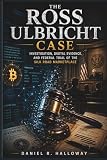


On January 21, 2025, the Justice Department’s clemency record says President Trump granted Ulbricht a pardon covering the federal sentence and convictions listed in the record. That is why the title’s image of Ulbricht dying in prison is now historical, not a description of his present status.
Why was Silk Road treated as a serious criminal enterprise?
The Justice Department described Silk Road as a hidden website designed to let users buy and sell illegal drugs and other unlawful goods and services anonymously and beyond law enforcement’s reach. Ulbricht operated it online under the name Dread Pirate Roberts, or DPR. The FBI likewise identified him as the operator known by that name.
Free tools Windows power users keep installed
One-click scans. No signup required.
#1 Best Overall
The government’s case treated Ulbricht not simply as a person who built a website, but as the owner and operator responsible for a criminal marketplace. Supporters have emphasized his role as a website creator and administrator. Those are competing characterizations of culpability: the jury’s convictions arose from the site’s creation and operation, while the government argued that his responsibility extended to the enterprise he ran. Calling Silk Road a marketplace does not make its activity lawful or harmless; treating it as an enterprise does not resolve by itself what punishment was proportionate.
Why did supporters say life in prison was too harsh?
The proportionality argument
The central argument for leniency was that life without parole was an extraordinary punishment for drug-market operation and related computer, identity-document, and financial offenses, where Ulbricht was not convicted of homicide. This is an argument about the fit between the crimes and the punishment—not a claim that the marketplace caused no harm or that its illegal sales should be excused.
There is an important distinction between the severity of the sentence and the seriousness of the conduct. The Justice Department described a platform built to facilitate anonymous unlawful sales; the proportionality objection asks whether that conduct, even at substantial scale, justified keeping one person in prison for life. The existence of multiple serious convictions supports a severe sentence. It does not automatically settle whether the harshest possible outcome was warranted.
Deaths attributed to drugs sold on the site
A Congressional Record item reports prosecutors’ assertion that drugs bought on Silk Road were linked to at least six deaths. That figure should be attributed to prosecutors, not presented as a judicially established death toll. Ulbricht was not convicted of homicide, and the available case record does not establish that he personally caused a particular death or ordered a murder.
What did the appeal decide?
Ulbricht challenged the handling of evidence, the fairness of his trial, and the reasonableness of his sentence. On May 31, 2017, the U.S. Court of Appeals for the Second Circuit affirmed the judgment after reviewing those issues. The appellate court’s decision left the convictions and sentence in place; it did not grant a new trial or reduce the punishment.
That ruling matters to the clemency debate. Supporters could continue to argue that the sentence was excessive as a matter of justice, but the appeal did not establish that the conviction or sentence should be overturned under the legal challenges presented. Presidential clemency, not appellate reversal, later changed the federal outcome.
How the main arguments differ
| Question | Case for severe punishment | Case for a lesser sentence |
|---|---|---|
| What was Ulbricht’s role? | The government presented him as the owner and operator responsible for a large criminal enterprise. | Supporters emphasize that he created and administered an online marketplace, arguing that his role should not be equated with every act by every user. |
| How serious was the conduct? | The Justice Department described Silk Road as a venue for anonymous purchases of illegal drugs and other unlawful goods and services. | The proportionality argument accepts the seriousness of the offenses but questions whether life without parole was a fitting penalty, particularly without a homicide conviction. |
| What did the courts do? | A jury convicted Ulbricht on seven counts, and the Second Circuit affirmed after considering his challenges. | Supporters argued that the life sentence remained excessive even though the appellate court rejected the legal challenges before it. |
| What changed the result? | The conviction and appellate judgment remained part of the historical federal case record. | The president’s 2025 pardon changed the federal sentence through clemency, rather than through an acquittal or appellate reversal. |
What the seizure and forfeiture figures do—and do not—mean
The Justice Department’s 2015 case summary records a forfeiture order of $183,961,921. Separately, the FBI said in 2020 that law enforcement had seized more than $1 billion in digital currency connected to the case. These are different figures from different actions and dates: the FBI seizure amount is not the same thing as the 2015 forfeiture order, and neither number by itself measures the harm caused by Silk Road or establishes the right sentence.
Independent reader supportYour contribution helps us test, update, and keep practical guides available for everyone.What a pardon means here
A presidential pardon is an act of clemency, not a jury acquittal and not a court’s reversal of a conviction. In this case, the Justice Department’s clemency list records a pardon for Ulbricht on January 21, 2025; the Second Circuit’s affirmance remains the historical appellate result. The pardon changed the federal consequences of the case without changing what the jury decided in 2015.
That distinction allows a clear conclusion without rewriting the record: Ulbricht was convicted of serious offenses tied to running Silk Road, the courts left his life sentence intact on appeal, and the president later pardoned him. Whether life in prison was just remains a question of proportionality and executive judgment, not a question the pardon turned into an acquittal.
Quick Recap
Product prices and availability are accurate as of the date/time indicated and are subject to change. Any price and availability information displayed on Amazon at the time of purchase will apply.




