Corn ethanol plants can broaden revenue by improving the value of existing co-products, making lower-carbon ethanol, or developing adjacent fuels and bioproducts. These routes are at very different stages: some co-products are established, some diversification is operating commercially, and other ideas remain research projects. None is a proven formula for keeping every plant profitable; each depends on equipment, capital, infrastructure, buyers, and policy eligibility.
What an ethanol plant already sells
Diversification often builds on the products and processes already present at a plant, rather than replacing ethanol production. Nearly 90% of U.S. ethanol plants are dry mills, according to the U.S. Department of Energy’s Alternative Fuels Data Center page, accessed October 8, 2026; the reviewed page does not state when that statistic was published. Dry mills grind corn into flour and ferment it into ethanol, producing distillers grains and carbon dioxide as co-products. Wet mills primarily produce corn sweeteners as well as ethanol, and can also produce corn oil and starch. DOE Alternative Fuels Data Center: Ethanol Production
Those products establish a baseline for diversification. A plant may seek more value from a co-product, add a new product line, or make its fuel more attractive to a lower-carbon market. These are different business strategies: they can require different equipment and customers, and they do not carry the same level of commercial or technical risk.
Routes to diversification differ in maturity
| Route | What the cited evidence establishes | Key conditions to assess |
|---|---|---|
| Established co-products | DOE describes distillers grains and carbon dioxide from dry mills, and corn sweeteners, corn oil, and starch from wet mills. | Existing equipment, product specifications, nearby buyers, and exposure to product prices. |
| Higher-value feeds and dextrose | Green Plains reports commercial production of high-protein feeds and a commercial-scale dextrose system; that dextrose facility was later idled. | Capital, demand, utilization, product mix, and further infrastructure needs. |
| Carbon capture and lower-carbon operations | Green Plains reports operational carbon capture at three Nebraska facilities; other locations were committed to a separate project described as planned. | Capture and transport access, financing, permitting, carbon-intensity accounting, and program eligibility. |
| Ethanol-to-jet fuel and renewable diesel | DOE documents one commercial ethanol-to-jet facility and reported plans for its first-year output. | Conversion technology, eligible feedstocks and pathways, offtake, logistics, project scale, and financing. |
| Thin-stillage gas and biomass conversion | USDA describes research projects on converting stillage, corn stover, and corn fibers into fuel or other products. | Technology readiness, process integration, energy balance, and results from economic and life-cycle analysis. |
The sources do not provide comparable plant-level capital costs, margins, contract prices, or payback periods for these routes, so they cannot support a reliable profitability ranking.
#1 Best Overall
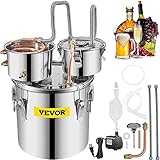
- Sufficient Capacity: This alcohol still provides you with a fermentation capacity of 3 gallons. Boiler barrel: 9.8" X 9.8" (25 x 25 cm), condenser: 7.9" X 4.3" (20 x 11 cm), thumper: 7" X 4" (18 x 10 cm), which can ferment up to 11.4 liters of raw materials. Perfect for family-together parties. All parts are made of food-grade materials, including silicone, stainless steel, and copper.
- Rapid Cooling: The distillery kit adopts an open cooling method. The copper coil has rapid thermal conductivity and has a large contact area with the coolant, providing a lower distillation temperature. A circulating water pump is attached to save cooling water. The rubber pad under the condenser can insulate and accelerate cooling.
- Easy to Operate: The alcohol still kit has a real-time thermometer on the lid, with a dual-display of Celsius and Fahrenheit, which is convenient for monitoring the temperature of the wine during the distillation process. The thumper keg helps discharge the hot water vapor, which helps to evaporate the alcohol for secondary distillation; it is very suitable for adding flavors.
- Durable & Tight Seal: Unlike regular tubes, we use food-grade silicone tubes, which are flexible and tough, and are not easy to bend to ensure a good seal. Four buckles and silicone gaskets inside the lid help to seal tightly. In addition, the package has a one-way exhaust valve, which can be easily used during the fermentation process.
- Versatile Application: There are many ways to use our alcohol still kit. According to your preferences, you can make Whiskey, Wine, Brandy, Rum, Tequila, Vodka, Water Distiller, Ethanol, etc. The thickened bottom allows various heating methods, including gas stoves, firewood, electric ceramic heaters, etc.
Adding value to co-products
One way to diversify is to sell a differentiated product from the same broad corn-processing base. Green Plains’ 2025 Form 10-K describes high-protein feeds and renewable corn oil alongside ethanol, as well as a commercial-scale dextrose system commissioned at its Shenandoah, Iowa, facility in 2024. The company says the system can produce food- and industrial-grade dextrose for food production, renewable chemicals, and synthetic biology. Green Plains Inc., 2025 Form 10-K
The filing also shows why a new product line is not a guaranteed source of earnings. Shenandoah’s dextrose facility has rated capacity of 60 million pounds per year, but Green Plains reported that it had been idled since the first quarter of 2025 while the company optimized its product mix and considered infrastructure improvements requiring additional investment. Capacity is not the same as output or sales: demand, operating choices, and the cost of making a product available to buyers all matter.
Rank #2

- This Corn Whiskey Mask kit contains all the ingredients needed, except spring water, to make a 5 gallon mash of traditional corn whiskey.
- What comes in the kit: 5 lbs. cracked corn, 5 lbs. sugar, yeast, yeast nutrient, amylase.
- We've included a packet of sanitizing powder to clean and sterilize all your mashing equipment to insure your mash doesn't become contaminated during the mashing process.
- Corn, traditionally used in Bourbons and Tennessee Whiskeys, provides a rich, sweet flavor. Robust flavors of vanilla and maple syrup as well as white sugar and cotton candy can be pulled through. Sweetness can be offset through maturing in oak barrels.
- A complete set of step by step instructions and list of all items required to make your mash.
Green Plains reported nine plants with capacity to process approximately 287 million bushels of corn annually when all plants are operating. At capacity, it reported approximately 850 million gallons of ethanol, 2.0 million tons of distillers grains and Ultra-High Protein, and 296 million pounds of renewable corn oil. These are company-reported figures for Green Plains, not industry totals or independently measured production. Green Plains Inc., 2025 Form 10-K
Reducing carbon intensity can open markets—but depends on more than capture
Carbon capture and operational improvements can be part of a strategy to lower a plant’s carbon intensity. Green Plains reports operational carbon capture at three Nebraska facilities connected to the Tallgrass Trailblazer CO2 pipeline. Its filing says its Iowa and Minnesota locations were committed to a separate Summit Carbon Solutions project, which the company described as publicly projected to begin operations in 2028. That date is the project projection reported in the 2025 filing, not confirmation of a current commissioning date.
Quick wins for a faster PC:
Clear out junk files and repair common Windows errorsFree Scan →Scan for outdated or missing drivers - takes under a minuteDriver Scan →Repair Windows errors before they cause bigger problemsFix Now →Rank #3
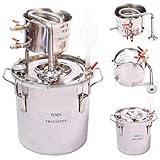
- Alcohol Distiller - complete distillation equipment, suitable for beginners or expert distiller, easy to handle and installation.
- Material and Construction - safe & non-toxic red copper and stainless steel material; There is NOT ANY lead in all the parts, all the parts are made of food-grade materials. The bottom of the fermenter pot is specially thickened. (Dimensions:capacity: 3Gal/12L, Height: 9.8inch, Diameter: 9.8inch)
- Build-in thermometer - Metal Thermometers show as: Celsius & Fahrenheit, so operator can inspect the temperature easily when running the distiller, free stainless steam plate and gauze bag, to prevent burn out, and has much better on distillation. Free temperature sticker on the fermenter, can inspect the temperature when use the big pot as a fermenter pot.
- Sufficient Capacity: Our Electric Alcohol Still owns 4 types: 10L/12L/20L/30L (2Gal/3Gal/5Gal/8Gal) able to distill a great deal of raw material by heating to selectively boil and then cooling to condense the vapor, meet different distillation needs of customers.
- Multipurpose usage - there are many different ways to use our taste of alcohol, alcohol still, home distiller can be used for seawater distillation, steam distillation and for distilling alcohol. According to your favorite, you can make different kinds of items in the alcohol stills such as Alcohol, Ethanol, Whiskey, Water Distiller, Wine Making, Essential Oils, Hydrosol, etc.
Green Plains says carbon capture, efficiency improvements, and renewable energy certificates can help reduce carbon intensity and support participation in clean-fuel programs. That describes the company’s strategy; it does not establish a guaranteed price premium or eligibility for every plant. A project’s prospects depend on site-specific capture and transport infrastructure, capital, permitting, carbon-intensity accounting, and the requirements of the relevant program. A pipeline connection or a recognized fuel pathway alone does not prove that a particular facility meets all requirements.
Ethanol-to-jet fuel is commercial, but the example is small
The U.S. Department of Energy reported that LanzaJet’s Freedom Pines Fuel Facility in Soperton, Georgia, opened in January 2024 as the first commercial facility converting ethanol to sustainable aviation fuel (SAF). DOE described it as a small, modular plant intended to validate engineering and operating assumptions and help reduce barriers to scaling up. Its 2024 article reported first-year plans for nine million gallons of SAF and one million gallons of renewable diesel; those are stated plans, not verified realized output. U.S. Department of Energy: World’s First Ethanol-To-Jet Fuel Plant Paves the Way for Commercial Production of SAF
Rank #4
- Brewer's Best American Cream Ale
- Clean, light and simple to brew
- Contents: Ingredients, Priming Sugar, Grain Bag(s), Bottle Caps, Brewing Procedures
This facility demonstrates a commercial pathway; it does not show that SAF can absorb the output of the U.S. corn-ethanol industry or that an existing ethanol plant can retrofit economically. DOE’s 2024 article also reported SAF Grand Challenge goals of producing three billion gallons of SAF by 2030 and meeting 100% of U.S. aviation fuel demand by 2050. Those are goals reported in that article, not achieved production or a current forecast.
Independent reader supportYour contribution helps us test, update, and keep practical guides available for everyone.Stillage and crop residues remain research pathways
Thin stillage to fuel gas
Thin stillage is a liquid by-product of ethanol production. USDA’s Agricultural Research Service describes research into converting it to fuel gas that could substitute for fossil natural gas used in manufacturing. The project includes a proposed low-temperature hydrothermal process, integration with plant operations, and techno-economic and life-cycle analysis. USDA lists the project period as July 1, 2024, through June 30, 2027, so this is research in progress, not an off-the-shelf plant solution. USDA Agricultural Research Service: Decarbonization of Corn Bioethanol via Renewable Fuel Gas Production from Byproducts
Best Value

- Brewer's Best American Amber
- Pale Ale malt combined with medium caramel malt creates a rich, copper color
- Contents: Ingredients, Priming Sugar, Grain Bag(s), Bottle Caps, Brewing Procedures
- Manufactured in united states
Corn stover and fibers
Another USDA research project describes integrating corn stover and corn fibers with grain processing, producing sugars from biomass mixtures, and investigating lignin-derived fuels, chemicals, or renewable materials. The project outlines objectives and process development; it does not establish broad commercial deployment or realized plant margins. USDA Agricultural Research Service: Integrated Biological/Chemical Biorefining for Production of Chemicals and Fuels
Policy recognition is not a project-level guarantee
The Environmental Protection Agency’s Renewable Fuel Standard approved-pathways listing includes corn-starch ethanol pathways, distillers-corn-oil pathways for downstream renewable fuels, and a LanzaJet Soperton pathway using sugarcane ethanol for jet fuel and renewable diesel. A listing shows that regulators have recognized specified feedstock and fuel pathways under the program. It does not automatically mean that a particular facility qualifies for every program, has the required equipment, or will earn a particular return. EPA: Approved Pathways for Renewable Fuel
How to assess a diversification proposal
Plant owners, lenders, and investors can evaluate a proposed route by asking what must be in place before it can produce saleable output—not just what the product might be worth.
- Plant fit: Can existing equipment handle the process, or would the project need new equipment, utilities, or major modifications?
- Commercial readiness: Is the route an established co-product business, a commercial installation with limited scale evidence, or a research objective?
- Infrastructure and capital: Are feedstock handling, energy supply, carbon transport, storage, and financing available at the specific site?
- Market access: Are there buyers, product specifications, logistics, and offtake arrangements for the output?
- Policy and carbon accounting: Does the relevant facility, feedstock, and product meet the rules of the intended program? A recognized pathway is not a substitute for project-specific eligibility.
- Operating exposure: Can the plant operate the new process reliably and adjust product mix if demand or costs change?
- Evidence of returns: Are capital requirements, operating costs, expected utilization, and revenue assumptions supported by project-specific analysis? The cited sources do not provide comparable figures for estimating payback across routes.
Diversification gives an ethanol plant possible ways to earn more from its inputs or reach additional markets. Whether a route helps a particular facility depends on its costs, equipment, infrastructure, customers, and eligibility; no route in the cited evidence guarantees survival.
Quick Recap
Product prices and availability are accurate as of the date/time indicated and are subject to change. Any price and availability information displayed on Amazon at the time of purchase will apply.




