Calculate percentage change by subtracting the starting value from the new value, dividing by the starting value, and multiplying by 100. For an investment, that result describes the change relative to the starting amount; it is not necessarily the investment’s total return.
How to calculate percentage change
Percentage change = ((new value − old value) ÷ old value) × 100. The old value is the base of comparison. A positive result is an increase; a negative result is a decrease.
For example, if a stock price rises from $95 to $105, the change is $10. Divide $10 by the starting price of $95, then multiply by 100: the price increased by approximately 10.5%. This is an illustrative calculation, not a statement about a particular stock’s market performance. Corporate Finance Institute explains the equivalent formula and spreadsheet approach.
Use the formula in a spreadsheet
Divide the new value by the old value, then subtract 1: new value ÷ old value − 1. Format the result as a percentage. For instance, a result of 0.10526 displays as about 10.5% when formatted as a percentage.
#1 Best Overall

- 10-digit display; for general math, pre-algebra, algebra 1 and 2, trigonometry and biology
- Performs trigonometric functions, logarithms, roots, powers, reciprocals, and factorials
- Also add, subtract, multiply and divide fractions; 1-variable statistics (mean / standard deviation)
- Conversions: fractions/decimals, degrees/radians/grads, DMS/decimal/degrees, and polar/rectangular
- Battery-powered; includes slide case
When the starting value is zero
The ordinary formula is undefined if the old value is zero, because it requires division by the starting value. Report the actual change or explain the context instead of presenting a conventional percentage change.
How to interpret an increase or decrease
A percentage change is relative to its starting value, not a fixed number of dollars. That is why equal dollar gains can represent different rates: FINRA illustrates a $5 gain as 16.67% of a $30 investment, but 8.33% of a $60 investment. FINRA’s rate-of-return guide explains how the investment base affects comparisons.
Rank #2

- 2 in 1with Calculator,Notepad,Stylu: This basic calculator comes with a LCD writing pad and stylus, so you can jot down steps or notes while calculating. Suit for school or office use, it’s a great office desk accessories for both calculations and writing.⚠Note: The erase button work only once the lock key is unlocked
- Practical Desktop Calculator: This calculators desktop will meet most needs, including basic arithmetic operations like addition, subtraction, multiplication, division, and more.Can meet the computing needs of middle school students. It’s a sleek, practical addition to your desk, ideal for basic office calculations or everyday tasks at home and school
- Ergonomic Design for Easy Use: Display angled to suit your sight and has a larger size and a clearer display making it easy to see whether you are holding it or laying it flat on a table.Large, well-spaced, responsive keys more comfortable to use and the clearance key is conveniently placed above the notepad for quick erasing, while the textured surface not only enhances the look but also prevents slipping. A smart addition to your aesthetic office supplies
- Dual Power: Solar & Battery: This pocket calculator is powered by both a solar panel and a replaceable coin battery, ensuring you’ll never run out of power. Say goodbye to battery worries with this eco-friendly solar calculator, perfect for everyday use in any setting
- Slim, Portable, and Durable Design: Weighing just 5 ounces and designed to be compact like an iPhone 15, this foldable small calculator is easy to carry around. It features a drop-proof body and a built-in stylus that slides neatly into the side prevent loss making it ideal for the office, classroom, or business environments. It’s a cute school or office supplies for you
Percentages also use a changing base over time. A 10% rise followed by a 10% fall does not bring a value back to where it started: after a 10% rise, a 10% decline is calculated from the higher value.
Price change versus investment return
A stock’s percentage price change measures the movement in its quoted price. It does not automatically include dividends, interest, fees, or taxes. FINRA describes total return as the gain or loss in an investment’s value plus investment earnings; costs can affect the investor’s net result.
Free tools Windows power users keep installed
One-click scans. No signup required.
Rank #3

- Natural Textbook Display presents formulas and results exactly as written in textbooks for intuitive learning.
Simple holding-period return
When there are no additional cash flows, calculate the holding-period return as (ending value − beginning value) ÷ beginning value. To calculate total return, include income received during the period, such as dividends or interest. State whether fees and taxes are deducted or treated separately. FINRA discusses rate of return and investment earnings, and Corporate Finance Institute explains holding-period return.
Annual return and CAGR
Investor.gov defines annual return as profit or loss over a one-year period. Multiplying a monthly return by 12 expresses a simple annual rate often called APR; it does not account for compounding. Investor.gov’s annual-return definition distinguishes this convention.
Rank #4
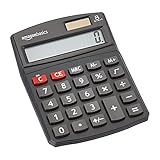
- 8-digit LCD provides sharp, brightly lit output for effortless viewing
- 6 functions including addition, subtraction, multiplication, division, percentage, square root, and more
- User-friendly buttons that are comfortable, durable, and well marked for easy use by all ages, including kids
- Designed to sit flat on a desk, countertop, or table for convenient access
For a multiyear period, the compound annual growth rate (CAGR) is the smoothed annual rate implied by the beginning and ending values:
CAGR = (ending value ÷ beginning value)^(1 ÷ number of years) − 1.
Crashes, No Sound, or Screen Glitches?
Random freezes, missing sound and display glitches usually trace back to one bad driver. Find and replace yours safely.Free scan · under a minutePC Slower Than It Used to Be?
A free scan shows the junk files, broken settings and background clutter dragging Windows down - then fixes them in one click.Free scan · Windows 10 & 11Best Value

- Profitability calculations; cash flow function Calculates NPV and IRR for uneven cash flows
- Time-value-of-money and Amortization keys solve problems including: pension calculations, loans, mortgages, etc.
- Ideal calculator for students, managers and statisticians
- Built-in functionality : List-based one- and two-variable statistics with four regression options: linear, logarithmic, exponential and power
- The BA II Plus calculator is approved for use on the following professional exams: Chartered Financial Analyst exam. GARP Financial Risk Manager (FRM) exam. Certified Management Accountants exam
CAGR reflects compounding and is not the cumulative percentage change divided by the number of years. It describes the constant annual rate that would connect the two endpoints; it does not show the investment’s actual year-by-year path. This endpoint formula also does not fully account for interim deposits or withdrawals, where the timing of cash flows affects the result. Corporate Finance Institute explains CAGR.
Independent reader supportYour contribution helps us test, update, and keep practical guides available for everyone.How to compare investment performance fairly
Before comparing two investments, make sure the figures use the same kind of return and a comparable period. A percentage without its measurement period, calculation basis, and treatment of costs can give a misleading impression.
- Period: Compare the same holding periods, or identify the annualization method.
- Return measure: Distinguish price-only change from total return that includes investment income.
- Costs: State whether figures are gross or net of fees and taxes.
- Base: Show the amount invested or the reference value behind the percentage.
- Comparison: Identify the relevant benchmark or comparison group when making a performance claim.
The SEC’s Investor Bulletin advises readers to understand how performance claims are calculated and presented. It also cautions that “Past performance does not necessarily predict future results.” SEC Investor Bulletin: Performance Claims (September 15, 2022).
Quick Recap
Product prices and availability are accurate as of the date/time indicated and are subject to change. Any price and availability information displayed on Amazon at the time of purchase will apply.
What’s actually slowing this PC down?
Pick the symptom - the matching free tool is one click away.




