G. Edward Griffin’s The Creature from Jekyll Island starts from a real event: six men met privately in 1910 to discuss U.S. banking reform. That fact supports the book’s account of a secret planning meeting, but it does not by itself prove its broader claims about who controls the Federal Reserve or how central banking causes wars, inflation, and depressions. The book is best read as a forceful critique whose historical starting point is documented and whose wider conclusions require claim-by-claim scrutiny.
What the book argues
G. Edward Griffin’s The Creature from Jekyll Island: A Second Look at the Federal Reserve is a long-form critique of the U.S. Federal Reserve and monetary system. Its publisher presents it as an exposé and attributes broad consequences—including boom-bust cycles, inflation, depression, and war—to the system. Those are the book’s thesis and promotional framing, not findings established by the description itself.


For a personal-finance reader, the core question is whether the book offers a reliable account of how the Fed came into being and a persuasive explanation of what it does. The answer differs by claim: the private Jekyll Island meeting is well documented; arguments about motives, ownership, control, and economic causation need evidence beyond the meeting’s existence.
What happened at Jekyll Island
Federal Reserve History’s account by Gary Richardson and Jessie Romero says that in November 1910 six men met at the Jekyll Island Club, off Georgia’s coast, to write a plan for banking reform. The participants were Nelson Aldrich, A. Piatt Andrew, Henry Davison, Arthur Shelton, Frank Vanderlip, and Paul Warburg. They kept both the meeting and its purpose confidential. Federal Reserve History, “The Meeting at Jekyll Island”.
That secrecy and the participants’ influence make the meeting significant. They do not establish that every later interpretation of the meeting is true. A documented gathering is evidence of a gathering and its stated purpose; claims about a comprehensive conspiracy, a particular ownership structure, or a direct line from the meeting to specific wars or economic crises require separate support.
How the meeting relates to the Federal Reserve Act
The Jekyll Island group’s plan became a foundation for later proposals, but it was not the final law. The Aldrich plan was presented to Congress. Political change and further work by Carter Glass, Robert Owen, Woodrow Wilson, and others shaped the legislation that became the Federal Reserve Act. President Wilson signed the Act on December 23, 1913. Federal Reserve History characterizes the final system’s political and decision-making structure as materially different from the Aldrich proposal. Federal Reserve History, “Federal Reserve Act Signed into Law”.
That distinction matters to the book’s central historical narrative: the private meeting influenced debate, but it did not simply produce an unchanged blueprint that Congress enacted. The law emerged through a larger political process.
How the modern Fed is structured
The Federal Reserve’s structure is not simply a single central bank created in the form proposed at Jekyll Island. Federal Reserve History describes a central Board of Governors alongside multiple Reserve Banks. Its structure page identifies the Board as a government agency and describes it as overseeing 12 Reserve Banks. The page summarizes the 1913 design this way: “The Federal Reserve Act of 1913 called for a central banking system with a central governing Board and a decentralized operating structure of multiple Reserve Banks.” Federal Reserve History, “The Fed’s Structure”.
The Tool Desk
Outbyte Driver Updater FREEScan for outdated or missing drivers - takes under a minuteDriver Scan →Outbyte PC Repair FREEClear out junk files and repair common Windows errorsFree Scan →This institutional description helps correct a simple picture of the Fed as one privately controlled bank. It does not settle every debate about the Fed’s accountability, policy choices, or economic effects. The institution’s own history is authoritative for its description of its founding and structure, but it is not an independent adjudication of every criticism.
Is the book accurate?
The most defensible verdict is mixed and specific rather than all-or-nothing. The historical fact at the book’s point of departure—the secret 1910 meeting of six men planning banking reform—is corroborated by Federal Reserve History. The legislative history also shows that the 1913 Act followed a broader process and produced a structure that differed materially from the Aldrich proposal.
Those findings neither prove nor disprove every argument in Griffin’s book. The sources available here do not provide a detailed independent scholarly review of the complete book or adjudicate its claims about the Fed’s ownership, motives, control, or causal role in wars, inflation, depressions, and other outcomes. To assess those arguments, each would need to be tested against relevant primary documents and independent academic histories or economic evidence.
Independent reader supportYour contribution helps us test, update, and keep practical guides available for everyone.Which edition is this review about?
Edition and format details vary across bibliographic listings. Google Books records an American Media edition from 2010. An Amazon listing identifies a fifth-edition paperback published September 3, 2018, with 626 pages and ISBN-13 9780912986456. That page count belongs to that listed edition, not every version of the book. Apple Books lists a digital edition and an audiobook-store option; availability can vary by market. Google Books listing; fifth-edition paperback listing; Apple Books listing.
Best Value
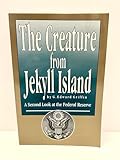
- Used Book in Good Condition
Should you read it?
Read it if you want a sustained, strongly critical argument about the Federal Reserve and are prepared to distinguish documented history from interpretation. It can serve as a starting point for questions about banking reform, institutional design, and monetary policy, but not as a substitute for checking consequential historical and economic claims against independent sources.
If your priority is a neutral account of the Fed’s founding, pair the book with histories of the Aldrich plan, the legislative process, and the system’s structure. In particular, compare the Jekyll Island meeting with what happened between that meeting and the Act’s passage rather than treating the meeting as the whole story.
Quick Recap
Product prices and availability are accurate as of the date/time indicated and are subject to change. Any price and availability information displayed on Amazon at the time of purchase will apply.




