Recommended Free Tools
Boeing’s original plan called for the 787 Dreamliner’s first delivery in 2008. Its first flight came in 2009, and certification followed in August 2011. Boeing’s work was spread across a global supplier network, but the available government reports document development-process and production challenges without establishing that outsourcing alone caused the delays—or calculating its total financial effect.
Why did Boeing outsource so much of the 787?
The 787 was built through a distributed production model: major fuselage sections were fabricated in several locations and then brought together for final assembly. The Congressional Research Service (CRS) identifies fuselage fabrication locations in Japan, South Korea, Italy, and Wichita, Kansas, with sections joined at Boeing’s Charleston, South Carolina, plant. That geography demonstrates how widely production was spread; the CRS passage does not specify the exact contractual responsibilities of each supplier.
The documented arrangement also meant Boeing had to coordinate work across locations and integrate the sections into a finished aircraft. The reports cited here do not quantify the cost or time attributable to that coordination, nor do they provide a verified statement from a Boeing decision-maker explaining the original outsourcing rationale. It would therefore be too strong to claim, on this evidence, that a particular cost-saving motive or management expectation drove the choice.
Did outsourcing cause the Dreamliner delays?
The delay is documented; outsourcing as its sole cause is not. The U.S. Government Accountability Office (GAO) says Boeing extended its certification application four times because of delays tied to development processes and production challenges. The original plan scheduled first delivery for 2008; the aircraft first flew in 2009, and the FAA and EASA certified it in August 2011. The GAO account identifies broad challenges, but does not isolate the effect of the supplier model or apportion responsibility among Boeing, suppliers, and other factors. GAO’s 2011 review of the 787 certification provides the chronology and agency findings.
Quick wins for a faster PC:
Clear out junk files and repair common Windows errorsFree Scan →Fix the driver behind crashes, sound loss and screen glitchesFind Drivers →Repair Windows errors before they cause bigger problemsFix Now →#1 Best Overall

- Realistic airplane model: Officially licensed by Boeing 787 with authentic, highly detailed markings and designs accurate to the real plane
- Toy airplane for kids: This must-have for the young aviator in your life includes a single toy plane with rolling wheels and authentic livery
- Size: Plane model measures approximately 5.75 inches in length with a 5- inch wingspan, perfectly sized for easy display and handling
- Quality materials: Die-cast metal airplanes with plastic parts, no assembly required
- Let your imagination fly: Daron airplanes have brought smiles to kids and collectors since 1990 as America’s source of aviation-related collectibles and transportation themed toys
How composites added a separate engineering and certification challenge
Composite construction was a defining technical feature of the 787, not proof that outsourcing failed. GAO reported that composites made up about 50% of the 787-8’s weight excluding engines. Because existing airworthiness standards were often based on metallic aircraft, the composite fuselage and wings required specific certification attention.
GAO found that the FAA followed its certification process, using five special conditions and an equivalent level of safety finding in its composite certification work. That establishes that the aircraft presented certification challenges associated with its materials and design; it does not establish that suppliers caused a regulatory failure or that outsourcing caused the composite-related work.
Rank #2

- Realistic airplane model: Officially licensed by KLMwith authentic, highly detailed markings and designs accurate to the real plane
- Toy airplane for kids ages 3+. This must-have for the young aviator enthusiast in your life. Includes a single toy plane with rolling wheels and authentic livery.
- Size: Plane model measures approximately 5.75 inches in length with a 5 inch wingspan, perfectly sized for easy display and handling
- Quality materials: Die-cast metal airplanes with plastic parts, no assembly required
- Let your imagination fly: Daron airplanes have brought smiles to kids and collectors since 1990 as America’s source of aviation-related collectibles and transportation themed toys
What later quality-oversight issues do—and do not—show
Later oversight concerns provide context for the continuing demands of manufacturing control, but they should not be treated as proof of the cause of the original schedule delays. In a 2024 report, CRS said the 787 had recorded more than 1,100 deliveries since entering service in 2011. CRS also reported that Boeing’s authority to issue airworthiness certification for completed 787s had been removed in 2022 pending improvements in quality control and manufacturing processes. The delivery figure is as reported in 2024, not a current total. CRS’s 2024 overview of the 787 program describes the supplier geography and later oversight context.
Independent reader supportYour contribution helps us test, update, and keep practical guides available for everyone.What the 787 case supports—and what remains unproven
- Established: Boeing distributed major fuselage fabrication across locations in four countries and the United States, then joined sections at Charleston.
- Established: the original first-delivery schedule slipped, and GAO attributed application extensions to development-process and production challenges.
- Established: composite materials required specialized certification attention, and GAO concluded that the FAA followed its process.
- Not established by these reports: that outsourcing by itself caused the delays, the net financial cost or savings of the model, or how much time and money the distributed arrangement added compared with a different production model.
The defensible conclusion is that the 787 combined geographically distributed manufacturing with significant development, production, and certification demands. The available reports document those facts, but do not provide a complete causal or financial accounting that would make outsourcing alone the explanation for the program’s difficulties.
What’s actually slowing this PC down?
Pick the symptom - the matching free tool is one click away.
Quick Recap
Rank #4
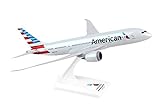
- Purpose & Use – Perfect for collectors, aviation enthusiasts, or as a display piece, this snap-fit model assembles quickly without glue and includes a sturdy display stand
- Perfect Size – At 1/200 scale, the model measures approximately 13 inches long with a 12 ½-inch wingspan—large enough to impress while fitting neatly on shelves or desks
- Quality Materials – Made from durable solid injection-molded plastic for long-lasting quality, smooth finishes, and detailed realism
- Brand Excellence – From SkyMarks by Daron, a trusted leader in collectible aircraft models, delivering officially licensed replicas that celebrate modern aviation design and engineering
Rank #3

- High-quality 1:200-scale plastic model
- Simple snap-fit design
- Authentic markings
- The model measures 7"H x 12"L x 15.25"W
- Recommended age is 14 and up
Product prices and availability are accurate as of the date/time indicated and are subject to change. Any price and availability information displayed on Amazon at the time of purchase will apply.




