Hulu grew by making online television work for both viewers and the companies that owned the shows. Its early mix of current TV, free ad-supported viewing and network-backed programming became a hybrid business of advertising and subscriptions. Originals, live TV and Disney’s distribution strategy later expanded its reach.
Hulu began as television’s answer to online viewing
When Hulu was founded in 2007, television companies faced a growing challenge: viewers were moving online, but networks and studios still depended on controlling distribution and selling advertising. A legal streaming service offered a way to reach those viewers without abandoning the economics of television.
Hulu was not simply a technology startup with a clever player. It was a joint venture built around content and distribution. News Corporation and NBC Universal were the original media-company founders, with Providence Equity Partners also part of the ownership group. Disney joined as an equity owner in 2009, an endorsement of a project already underway—not the start of Hulu. Disney’s announcement described its entry into the existing venture.
Hulu launched publicly in 2008 as a free, ad-supported service. That arrangement gave the media owners a legal online outlet, a way to learn about digital viewing and a chance to preserve advertising revenue as audiences changed how they watched.
#1 Best Overall

- HD streaming made simple: With America’s number 1 TV streaming platform,* exploring popular apps—plus tons of free movies, shows, and live TV—is as easy as it is fun. *Based on hours streamed—Hypothesis Group
- Compact without compromises: The sleek design of Roku Streaming Stick won’t block neighboring HDMI ports, and it even powers from your TV alone, plugging into the back and staying out of sight. No wall outlet, no extra cords, no clutter.
- No more juggling remotes: Power up your TV, adjust the volume, and control your Roku device with one remote. Use your voice to quickly search, play entertainment, and more.
- Shows on the go: Take your TV to-go when traveling—without needing to log into someone else’s device.
- TV, simplified: With setup that only takes minutes, a simple-to-navigate Home Screen, and an uncluttered remote control that does all you need—Roku makes it easier to watch the TV you love.
Current television made Hulu different
Hulu’s early distinction was access to recent television, including current-season episodes and, in some cases, episodes available shortly after broadcast. It was useful to people who wanted to catch up on the shows they were already following, rather than only browse a library of older titles.
| Service’s early appeal | What viewers came for |
|---|---|
| Netflix | A bingeable catalog of films and television programming. |
| Hulu | Current television and programming connected to broadcast and cable networks. |
The distinction was strategic: Hulu could bridge scheduled television and on-demand viewing. Its access depended on licensing deals, rights, geography, device and plan, so next-day availability was never universal. The advantage came from the relationships that made timely network programming possible, not from a guarantee that every show would appear on the same schedule.
Free viewing lowered the barrier to trying Hulu
The free tier made Hulu easy to sample without asking viewers to commit to a monthly subscription. Advertising gave the service a revenue source and made the model familiar to broadcasters and advertisers. “Free” meant viewers paid with attention to ads; it did not mean the service had no business model or costs.
This approach also let Hulu serve people who were not ready to pay for streaming while building an audience valuable to advertisers. Hulu’s bet was that online television could combine the convenience of the internet with a central feature of traditional TV economics: advertising alongside programming.
Recommended Free Tools
Rank #2

- Ultra-speedy streaming: Roku Ultra is 30% faster than any other Roku player, delivering a lightning-fast interface and apps that launch in a snap.
- Cinematic streaming: This TV streaming device brings the movie theater to your living room with spectacular 4K, HDR10+, and Dolby Vision picture alongside immersive Dolby Atmos audio.
- The ultimate Roku remote: The rechargeable Roku Voice Remote Pro offers backlit buttons, hands-free voice controls, and a lost remote finder.
- No more fumbling in the dark: See what you’re pressing with backlit buttons.
- Say goodbye to batteries: Keep your remote powered for months on a single charge.
Hulu Plus added recurring subscription revenue
In 2010, Hulu introduced Hulu Plus, a paid service intended to offer broader access, fuller seasons and availability on more devices. The change expanded the business without discarding the ad-supported foundation. Hulu could earn subscription revenue from viewers who wanted more access while continuing to monetize advertising.
That hybrid model helped move Hulu beyond an experiment in online catch-up TV. Its company history records the launch of Hulu Plus and later service milestones. In 2011, Hulu reached 1 million subscribers; by 2016, it reported 12 million.
Originals gave Hulu a brand of its own
Licensed network programs brought viewers to Hulu, but original programming gave them a reason to associate the service with shows they could not get in the same way elsewhere. Hulu began releasing original programming with A Day in the Life in 2011. The larger shift came when its originals became cultural and awards assets.
The Handmaid’s Tale was a defining moment. In 2017, it won Outstanding Drama Series at the Emmys, the first time a streaming service won that award, according to Hulu’s corporate timeline. The win gave Hulu prestige beyond its role as a place to catch up on network shows. Originals could attract subscribers, strengthen the brand and encourage existing viewers to stay—though producing them also meant taking on the expense and risk of programming that might not become a hit.
The Tool Desk
Outbyte PC Repair FREEClear out junk files and repair common Windows errorsFree Scan →Outbyte Driver Updater FREEScan for outdated or missing drivers - takes under a minuteDriver Scan →Rank #3

- 4K streaming made simple:With America’s number 1 TV streaming platform,* exploring popular apps—plus tons of free movies, shows, and live TV—is as easy as it is fun. *Based on hours streamed—Hypothesis Group
- 4K picture quality: With Roku Streaming Stick Plus, watch your favorites with brilliant 4K picture and vivid HDR color.
- Compact without compromises: Our sleek design won’t block neighboring HDMI ports, and it even powers from your TV alone, plugging into the back and staying out of sight. No wall outlet, no extra cords, no clutter.
- No more juggling remotes: Power up your TV, adjust the volume, and control your Roku device with one remote. Use your voice to quickly search, play entertainment, and more.
- Shows on the go: Take your TV to-go when traveling—without needing to log into someone else’s device.
More plan choices broadened Hulu’s appeal
Hulu added a commercial-free on-demand plan in 2015, alongside its ad-supported option. The choice allowed price-sensitive viewers to tolerate ads while giving others the option to pay more to remove most on-demand advertising. Hulu also added Showtime as its first premium network add-on that year, creating another way for subscribers to buy more entertainment through the service.
“Commercial-free” needs a qualification: treatment can vary for live or linear programming, promotional material and content governed by particular rights. The plan label does not mean every program or interruption is necessarily ad-free.
Live TV brought Hulu closer to cable replacement
Hulu + Live TV launched in 2017, combining Hulu’s on-demand library with live broadcast and cable channels, including news and sports, plus DVR functionality. The offer targeted households that wanted to cut or supplement cable but still needed scheduled channels.
It expanded Hulu’s reach but brought a different set of economics and limitations. Live-TV services must deal with channel carriage costs, local affiliates, blackouts and location-specific rights. Channel lineups and local availability depend on the viewer’s location and plan, so Hulu + Live TV was an alternative for some households—not a universal cable replacement. Hulu’s Live TV page describes the current offering and its location-related qualifications.
What’s actually slowing this PC down?
Pick the symptom - the matching free tool is one click away.
Rank #4
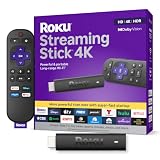
- Stunning 4K and Dolby Vision streaming made simple: With America’s number 1 TV streaming platform,* exploring popular apps—plus tons of free movies, shows, and live TV—is as easy as it is fun. *Based on hours streamed—Hypothesis Group
- Breathtaking picture quality: Stunningly sharp 4K picture brings out rich detail in your entertainment with four times the resolution of HD. Watch as colors pop off your screen and enjoy lifelike clarity with Dolby Vision and HDR10+.
- Seamless streaming for any room: With Roku Streaming Stick 4K, watch your favorite entertainment on any TV in the house, even in rooms farther from your router thanks to the long-range Wi-Fi receiver.
- Shows on the go: Take your TV to-go when traveling—without needing to log into someone else’s device.
- Compact without compromises: Our sleek design won’t block neighboring HDMI ports, so you can switch from streaming to gaming with ease. Plus, it’s designed to stay hidden behind your TV, keeping wires neatly out of sight
Disney turned Hulu into a core part of its streaming strategy
Disney’s involvement grew over time. It became an owner in 2009, then gained majority control after acquiring 21st Century Fox and assumed full operational control of Hulu in 2019. Disney was not responsible for Hulu’s original model, but its scale, programming and distribution made the service more valuable within a larger streaming portfolio.
For Disney, Hulu offered a U.S. general-entertainment brand alongside Disney+, which is more closely associated with family and franchise programming. The combination gave the company a way to package different kinds of viewing, reach more households and sell subscriptions across services. Hulu also brought an established audience, advertising inventory and relationships with current television programming.
Disney and Hulu’s U.S. bundle page displayed these prices in the August 16, 2026 snapshot: $12.99 per month for the Disney+, Hulu bundle with ads and $19.99 per month for the Premium bundle. Those are a dated commercial snapshot, not permanent prices; eligibility, content access and ad treatment are subject to the terms on the page. Bundling can make the combined offer more appealing, though it can also make it harder to tell which service is driving a subscription.
Independent reader supportYour contribution helps us test, update, and keep practical guides available for everyone.Disney became Hulu’s sole owner, while Live TV changed hands
Disney agreed in 2023 to acquire Comcast’s remaining 33% Hulu stake for at least $8.6 billion. After the valuation process, Disney’s 2025 filing recorded an additional payment of approximately $438.7 million. The transaction made Disney Hulu’s sole owner; the SEC filing sets out the redemption and payment details.
Best Value
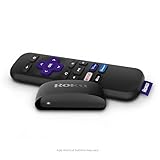
- Streaming made easy: Roku Express lets you stream free, live and premium TV over the Internet—right to your TV. It’s perfect for new users, secondary TVs and easy gifting—but powerful enough for seasoned pros
- Quick and easy setup: Just plug it into your TV with the included High Speed HDMI Cable and connect to the internet to get started
- Tons of power, tons of fun: Compact and power-packed, you’ll stream your favorites with ease; from movies and series on Apple TV, Prime Video, Netflix, The Roku Channel, HBO, Showtime and Google Play to cable alternatives like Hulu with Live TV and PlayStation Vue, enjoy the most talked about TV across free and paid channels
- Low cost, no extra fees: For under $30, Roku Express streaming device includes a High Speed HDMI Cable—and there’s no monthly equipment fee; with access to free TV on hundreds of channels, there’s plenty to stream without spending extra
- Simple remote: Incredibly easy to use, this remote features shortcut buttons to popular streaming channels
Hulu’s on-demand service and Hulu + Live TV should not be treated as one unchanged business. On October 29, 2025, Disney and Fubo completed a combination of Hulu + Live TV with Fubo’s existing operations. Hulu retained a wholesale distribution relationship for the Live service, while the combined company became a separate virtual multichannel platform. The companies describe the transaction in Disney’s announcement and a related SEC filing.
What Hulu’s scale means
Hulu is a streaming giant not just because of its subscriber total, but because it brings together a large audience, current and original programming, subscriptions, advertising and distribution through Disney’s broader U.S. streaming ecosystem.
Disney reported 64.1 million total Hulu subscribers as of September 27, 2025: 59.7 million SVOD-only subscribers and 4.4 million subscribers associated with Hulu Live TV. This is a dated figure, not a current live count. The categories describe subscriptions, not necessarily unique households; bundled customers may have access to both Hulu and Disney+. See Disney’s 2025 financial report for the breakdown.
Hulu is principally a U.S. service, and its catalog and experience are not necessarily identical across the Hulu app and Hulu programming integrated into Disney+. Availability and branding differ by country.
Quick wins for a faster PC:
Fix the driver behind crashes, sound loss and screen glitchesFind Drivers →Clear out junk files and repair common Windows errorsFree Scan →The combination—not one breakthrough—made Hulu a giant
Hulu’s rise came from several advantages reinforcing one another: media-company access to valuable television, timely programming, an easy-to-try ad-supported service, subscriptions for broader access, originals that built prestige, a live-TV offer and, ultimately, Disney’s ownership and bundling power. Each step addressed a different audience need or business problem.
The model had trade-offs. Licensing rights can be costly and temporary; network ownership can complicate governance; advertising can frustrate viewers; originals require investment; and live television adds carriage and local-channel complexity. Disney’s integration increases Hulu’s reach, but also leaves an open strategic question: how distinct the standalone Hulu destination will remain as it functions increasingly as Disney’s general-entertainment layer.
Hulu’s lasting importance is that it helped make legal, premium, ad-supported current television online a mainstream proposition. It began as a way for traditional media companies to adapt to changing viewing habits and became a central part of how Disney distributes general entertainment in the United States.
Quick Recap
Product prices and availability are accurate as of the date/time indicated and are subject to change. Any price and availability information displayed on Amazon at the time of purchase will apply.




