Do these 3 things before closing this tab:
1Scan for outdated or missing drivers - takes under a minute2Repair Windows errors before they cause bigger problems3Fix the driver behind crashes, sound loss and screen glitchesThe 43rd Annual Conference of the International Organization of Securities Commissions (IOSCO) took place in Budapest, Hungary, from 7 to 11 May 2018. Hosted by the Magyar Nemzeti Bank, Hungary’s central bank, the event brought together approximately 650 securities regulators, financial firms, investors and other market participants.
Its public sessions, held on 10 and 11 May, focused on four issues that directly affect personal investors: unsuitable high-risk products, financial technology, passive investing and small-business access to capital. IOSCO’s work in Budapest did not create one binding global rulebook. Instead, members agreed to develop practical frameworks, toolkits, reviews and information-sharing networks for national regulators.
What IOSCO is and why the conference mattered
IOSCO is the international body that brings together securities regulators. Its work is built around three broad objectives:
- protecting investors;
- keeping markets fair, efficient and transparent; and
- reducing systemic risk.
IOSCO recommendations are not automatically laws in every country. Individual regulators and governments decide how to implement them. However, cooperation between regulators is important because investors can access overseas brokers, trading platforms and financial products from a laptop or phone.
Recommended Free Tools
#1 Best Overall

- 100 yards - 600 Total Ribbons
- Red with Metallic Gold Print
- Easy to Cut Ribbon Roll
- Made in USA
The Budapest conference therefore dealt with problems that cross national borders. A retail trader might be approached by an offshore CFD provider, buy a cryptocurrency through an internet platform, invest in an ETF listed in another country or hold a fund whose fees and strategy are difficult to understand.
The four public-session subjects
| Subject | Why it matters to individuals |
|---|---|
| Unsuitable products for retail investors | Complex or highly leveraged products can produce rapid and substantial losses. |
| FinTech and digitalization | Online platforms and automated services can make investing easier, while creating new operational, data and fraud risks. |
| Active versus passive funds | Investors need to understand fees, benchmark tracking and whether an allegedly active fund is really active. |
| SME access to capital markets | Better funding options for smaller businesses may support growth, but investors must assess higher business and liquidity risks. |
1. Unsuitable products and retail-investor protection
The first discussion examined where responsibility should sit between investors and regulators. Individuals are expected to make informed decisions, but regulators also have to consider whether products are being marketed to people who cannot reasonably understand their risks.
Examples discussed included:
- contracts for difference, or CFDs;
- binary options;
- cryptocurrencies;
- highly leveraged foreign-exchange products; and
- other retail over-the-counter leveraged products.
These products were a concern because they were widely available through internet platforms, often accompanied by aggressive marketing. Leverage can magnify both gains and losses. A small movement in an underlying asset may wipe out a trader’s investment, and in some arrangements losses may exceed the amount initially deposited.
The panel also considered how warnings should be delivered. A long risk disclosure that a customer clicks past may satisfy a formal requirement without improving understanding. IOSCO’s discussion emphasized communications that are clear, comprehensible and cost-effective.
What’s actually slowing this PC down?
Pick the symptom - the matching free tool is one click away.
What investors can take from this
- Check whether the provider is licensed in your jurisdiction.
- Understand whether the product uses leverage, margin or automatic liquidation.
- Find out how much you could lose in a worst-case scenario.
- Be skeptical of claims that a product is easy, guaranteed or suitable for everyone.
- Do not assume that an overseas website is covered by the same investor protections as a domestic firm.
2. FinTech, automation and cybersecurity
The FinTech session covered a wide range of developments: peer-to-peer lending, automated investment advice, automated portfolio management, artificial intelligence, machine learning and distributed-ledger technology.
The regulatory challenge was not simply whether technology was good or bad. Regulators had to avoid rules so restrictive that they blocked useful innovation, while also preventing technology firms from gaining an unfair advantage by operating outside rules that apply to traditional financial businesses.
For consumers, the practical questions include who is responsible for an automated recommendation, how an algorithm handles unusual market conditions, and whether a platform’s marketing accurately describes its service. An automated portfolio may still involve investment risk; “automated” does not mean “safe” or “guaranteed.”
Rank #2
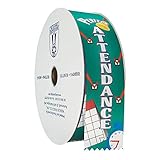
- 8" Pull 100 Yards - 450 Ribbons
- Multicolor Ribbon Roll
- Easy to Cut Ribbon Roll
- Made in USA
Cybersecurity and cyber resilience were also central concerns. As brokers, exchanges and investment services become more dependent on software and networks, a cyberattack or system outage can affect access to accounts, trading and personal data.
Participants included IOSCO Chair Ashley Alder, Reinier Pollmann of the Dutch Authority for the Financial Markets, Nutmeg chief investment officer Shaun Port and Eric Pan of the U.S. Commodity Futures Trading Commission.
3. Passive funds, ETFs and closet indexing
The third session considered the rapid growth of passive investment strategies and exchange-traded funds. Passive funds generally aim to track an index rather than select securities in an attempt to outperform it. Their appeal often includes lower management fees, broad diversification and relatively straightforward exposure to a market.
That does not mean every passive fund is identical or risk-free. Investors still need to check the fund’s benchmark, tracking method, charges, liquidity and exposure. An ETF that tracks a narrow sector or a volatile asset class may be inexpensive but still carry significant risk.
The panel also discussed closet indexing, sometimes called index hugging. This occurs when a fund is presented as actively managed, and charges active-management fees, while its holdings closely follow a benchmark. The concern is that investors may pay for genuine security selection without receiving much difference from a cheaper index fund.
Before choosing a fund, investors can compare:
- the ongoing management fee;
- the fund’s performance against its benchmark;
- how closely its holdings resemble the benchmark;
- transaction and trading costs; and
- the fund’s stated strategy and actual portfolio.
4. Helping SMEs raise capital
Small and medium-sized enterprises often depend heavily on bank lending. The conference examined whether transparent, well-functioning capital markets could provide these businesses with another source of funding.
More access to shares, bonds or other market-based financing can help smaller companies grow. It can also create investment opportunities outside large, established companies. But SME investments may involve limited trading volume, less public information, greater dependence on a small number of customers or executives, and a higher risk of business failure.
Rank #3

- Pack Size: 25
- 2" x 8" Pinked Top and Bottom
- Made in USA
The policy question is how to reduce unnecessary barriers without weakening investor protection. Lower compliance costs may help smaller issuers reach the market, but investors still need reliable financial information, understandable disclosures and fair treatment.
Decisions and work advanced in Budapest
Initial coin offerings
The IOSCO Board agreed to develop a Support Framework to help members address domestic and cross-border issues connected with initial coin offerings, particularly investor and consumer protection concerns. This was a coordination initiative, not a declaration that all ICOs were securities or that a single worldwide ICO regime had been adopted.
Free tools Windows power users keep installed
One-click scans. No signup required.
Binary options and leveraged products
IOSCO reported progress on measures to protect retail investors from binary options and other over-the-counter leveraged products, especially where unlicensed firms offered them across borders. The Board reviewed two proposed toolkits:
- a policy-measures toolkit for regulating how intermediaries offer and sell these products; and
- an investor-education toolkit explaining the products and the firms offering them.
ETFs, fund leverage and money-market funds
The Board discussed risks associated with ETFs and reviewed IOSCO work on measuring leverage in investment funds. This work formed part of the response to Financial Stability Board recommendations concerning structural vulnerabilities in asset management.
IOSCO also supported an assessment of how consistently members had implemented reforms based on its 2012 money-market-fund recommendations. A separate proposal concerned a third implementation review of the 2011 Principles for the Regulation and Supervision of Commodity Derivatives Markets.
GDPR and regulator cooperation
With the European Union’s General Data Protection Regulation due to apply on 25 May 2018, the Board considered how data-protection requirements might affect information sharing between securities regulators.
Quick wins for a faster PC:
Scan for outdated or missing drivers - takes under a minuteDriver Scan →Repair Windows errors before they cause bigger problemsFix Now →IOSCO identified its Multilateral Memorandum of Understanding, or MMoU, as the main cooperation instrument for exchanging information and combating cross-border misconduct. At the time, 118 of 146 eligible IOSCO members were MMoU signatories.
Rank #4

- Whether you’re an employee, freelancer, or small business owner, our Custom Photo Business ID provides a professional way to identify yourself. Personalize it with your photo, name, title, email, and contact number for a clear and sleek display. Perfect for those who need affordable professional identification without the fuss of branding or logos.
- Designed for businesses and individuals who want a clean and branded look without needing expensive designs. Ideal for self-employed tradespeople, small teams, or businesses working face-to-face with customers. The Custom Photo Business ID creates instant trust and professionalism.
- This professional identification badge is the same size as a credit card (3.4 x 2.1 inches), making it easy to carry in a wallet, holder, or lanyard. Made from biodegradable plastic, it’s durable, lightweight, and mindful of the environment.
- From office settings to remote workers, freelancers, and event staff, this professional identification tag is highly versatile. Whether you work in retail, construction, corporate settings, or customer-facing roles, this personalized badge helps you present yourself in a professional, organized way.
- Each Custom Photo Business ID is professionally designed and created by The Card Project US. Support American-made products while enjoying a high-quality, personalized identification solution. Show your professionalism wherever you go.
Sustainable finance and FinTech cooperation
Members shared approaches to non-financial reporting, sustainability disclosures and other sustainable-finance issues. The Board agreed to establish an information-sharing network covering sustainability matters, including issuer disclosure and the information investors use when making decisions.
It also agreed to launch an IOSCO FinTech Network for exchanging knowledge and experience about technology developments, regulatory issues, emerging trends and risks.
Changes to IOSCO’s Board and cooperation agreements
A new IOSCO Board was inaugurated in Budapest. Ashley Alder, then chief executive of Hong Kong’s Securities and Futures Commission, was confirmed as chair. Jean-Paul Servais, chairman of Belgium’s Financial Services and Markets Authority, was confirmed as vice chair.
The Tool Desk
Outbyte PC Repair FREERepair Windows errors before they cause bigger problemsFix Now →Outbyte Driver Updater FREEFix the driver behind crashes, sound loss and screen glitchesFind Drivers →Three authorities were recognized as new MMoU signatories:
- the Central Bank of Armenia;
- the Superintendencia del Mercado de Valores of the Dominican Republic; and
- the Securities and Exchange Commission of Zambia.
Five authorities were recognized as signatories to the Enhanced Multilateral Memorandum of Understanding, or EMMoU:
- Australian Securities and Investments Commission;
- British Columbia Securities Commission;
- Hong Kong Securities and Futures Commission;
- Monetary Authority of Singapore; and
- United Kingdom Financial Conduct Authority.
Introduced in 2017, the EMMoU was designed to expand enforcement cooperation and the powers available to participating regulators when protecting market integrity, investors and financial stability.
Independent reader supportYour contribution helps us test, update, and keep practical guides available for everyone.Why this 2018 conference remains relevant to personal finance
The issues discussed in Budapest are not limited to professional market participants. They affect everyday decisions about choosing a broker, buying a fund, using a digital investment service or responding to an online trading advertisement.
Best Value
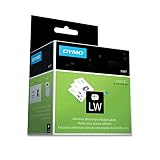
- Sold as 1/Box.
- Non-adhesive visitor badge labels for workspace use.
- Direct thermal printing process, so there's no need for messy, expensive ink or toner cartridges.
- Packed in rolls, so you can print one label or hundreds with ease.
- Available in a variety of sizes for mailing, shipping and specialty applications.
The central lesson is that access does not equal suitability. A product can be available through a regulated-looking app and still be too complex or risky for a particular investor. Similarly, a low-cost fund may be appropriate for one goal but unsuitable for money needed soon.
Investors should therefore focus on four checks:
- Product: What exactly is being bought, and how can it lose money?
- Provider: Is the firm authorized, and what protections apply if it fails?
- Cost: Are fees, spreads, commissions and financing charges clear?
- Information: Can the investor explain the strategy, risks and exit conditions in plain language?
These checks reflect the conference’s core concerns without suggesting that IOSCO itself approved particular investments.
FAQ
When and where was the IOSCO Annual Conference on Key Challenges Facing Securities Regulators held?
The 43rd IOSCO Annual Conference was held in Budapest, Hungary, from 7 to 11 May 2018. The public-facing sessions took place on 10 and 11 May, and the event was hosted by the Magyar Nemzeti Bank.
What were the four main subjects at the conference?
The public sessions covered unsuitable products for retail investors, FinTech and digitalization, active versus passive collective investment schemes, and small and medium-sized enterprise access to capital-markets funding.
Did IOSCO adopt binding global regulations at the 2018 conference?
No. The conference advanced support frameworks, policy and investor-education toolkits, implementation reviews, networks and information-sharing arrangements. National regulators remained responsible for implementing rules in their own jurisdictions.
What products were identified as risks for retail investors?
The discussions included CFDs, binary options, cryptocurrencies, highly leveraged foreign-exchange products and other retail over-the-counter leveraged products. Risks included aggressive marketing, complexity, leverage and cross-border offers from unlicensed firms.
What is closet indexing?
Closet indexing, or index hugging, is when a fund marketed as actively managed holds a portfolio that closely follows a benchmark. Investors may pay active-management fees without receiving much difference from a lower-cost index fund.
What is the IOSCO MMoU?
The IOSCO Multilateral Memorandum of Understanding is a framework used by securities regulators to cooperate and exchange information when investigating cross-border misconduct and enforcing securities laws.
The Bottom Line
The 2018 Budapest conference treated investor protection as a practical cross-border problem. Its agenda covered risky retail products, automated investing, fund fees and transparency, SME investments, cybersecurity and the ability of regulators to share information. For personal investors, the useful takeaway is simple: verify the provider, understand the product, check the total cost and never treat easy online access as proof that an investment is suitable.
Quick Recap
Product prices and availability are accurate as of the date/time indicated and are subject to change. Any price and availability information displayed on Amazon at the time of purchase will apply.




