In a card purchase, the issuer serves the cardholder and decides whether to approve the payment; the acquirer serves the merchant and helps route and settle accepted transactions; the processor handles the technical transmission of transaction data. These are different functions, but a single provider may perform more than one.
How the three roles differ
| Role | Whom it serves | Main job | Plain-language shorthand |
|---|---|---|---|
| Issuing bank (issuer) | Cardholder | Issues card products, maintains the cardholder’s account or credit relationship, and evaluates authorization requests. | The customer’s card issuer |
| Acquiring bank (acquirer) | Merchant | Provides acquiring services and supports routing, clearing, and settlement of accepted transactions. | The merchant’s acquiring side |
| Payment processor | Merchant or payment-service arrangement | Technically handles and routes transaction data between participants. | The transaction-data route |
These short descriptions are useful distinctions, not complete legal or technical definitions. Visa describes an acquirer as an entity that provides merchants or payment facilitators services related to clearing and settlement of accepted transactions, and an issuer as a network member that contracts with a cardholder for card products. Visa’s glossary provides those terms. Stripe likewise distinguishes the processor’s technical role from acquiring and merchant-account services, while noting that providers may combine functions: Stripe’s guide to acquiring banks.
What happens during a card purchase
For a typical card payment, the authorization message travels from the merchant side to the issuer and the answer comes back. If the transaction is accepted and submitted for processing, clearing and settlement follow as later stages. The exact message and funds flows can vary with network rules and provider arrangements.
- The customer presents a physical card or digital wallet at a point of sale, or enters card details online.
- The merchant’s payment system and processor send the transaction data into the acquiring side.
- The acquirer routes an authorization request through the card network to the issuer.
- The issuer checks the cardholder’s account or available credit and approves or declines the request.
- The response travels back through the network and the acquiring or processing path to the merchant.
- If the merchant accepts and submits the transaction, clearing and settlement move funds through the payment system so the merchant can receive its proceeds.
A card network is a separate participant: it connects payment-system participants and carries transaction messages. It is not the issuer or acquirer. Stripe’s issuer-versus-acquirer explainer describes the roles and transaction flow. The sources here do not establish a universal settlement timeframe.
Quick wins for a faster PC:
Fix the driver behind crashes, sound loss and screen glitchesFind Drivers →Clear out junk files and repair common Windows errorsFree Scan →#1 Best Overall

- With Square Terminal, you can ring up sales, accept payments, and print receipts, all with one device. Use it at the counter or ring up customers anywhere in your store.
- Accept all major credit and debit cards and pay one low rate with no hidden fees and no long-term contracts.
- Process chip cards in just two seconds.
- Get your money as soon as the next business day.
- Use it cordlessly with the built-in battery, designed to last all day.
Authorization, clearing, and settlement are different stages
- Authorization is the decision to approve or decline a transaction request. Visa defines it as a card-payment process in which an issuer or authorized processor approves a transaction.
- Clearing is a later processing stage in which transaction information is exchanged and used to determine amounts owed between participants.
- Settlement is the funds stage in which those obligations are paid. Mastercard’s rules distinguish authorization from clearing and settlement; the terms are not interchangeable.
Visa’s definitions are in its payment acceptance glossary; Mastercard’s Transaction Processing Rules, dated June 10, 2025, provide network-rule context.
Why one company may appear to do several jobs
The roles describe functions, not necessarily separate companies. A merchant may use one provider for processing, technical routing, acquiring, and a merchant account, or work with separate providers for some of those services. The processor is not automatically the bank that holds the merchant relationship. A payment facilitator is one possible arrangement: Mastercard defines it as a service provider registered by an acquirer to facilitate acquiring transactions for sponsored merchants. That does not describe every merchant’s setup.
When reviewing a provider agreement, identify the actual services and relationships rather than relying on a brand name or the word “processor.” Check which entity supplies processing and any gateway or technical routing, which provides acquiring and the merchant account, and how settlement and support are handled. The arrangement can vary by provider, contract, network, and geography.
Rank #2

- Get your money as soon as the next business day.
- Get set up quickly with no long-term commitments. Download the Square Point of Sale app for free, create an account, and start taking payments anywhere.
- Run your business all in one place with the free Square Point of Sale app. Track your sales, manage inventory, accept tips, send receipts digitally, and more.
- Works with Apple devices with a Lightning connector.
How fees fit into the picture
Visa defines an interchange reimbursement fee as a transfer fee between acquirers and issuers during clearing and settlement. It also defines the merchant discount rate as the percentage fee a merchant pays its acquirer for card-brand transactions; interchange can be one component alongside other acquirer fees. These terms help explain why “processing cost” may include more than a processor’s technical service. The cited sources do not establish current prices or a universal fee schedule.
What to compare when choosing merchant services
For a business deciding how to accept card payments, compare the provider’s actual package and terms across these points:
Rank #3
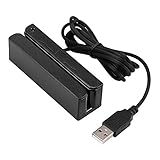
- MSR90 is a USB emulation keyboard interface that not need any driver or software,USB simply plug and play
- Reads up to 3 tracks of information,can reads ISO7811, AAMVA, CA DMV and most other card data formats
- Threaded inserts for mounting. LED indicator, green light is on when connecting,green light blinks when cards swiped
- Bi-directional swipe reading, superior reading of high jitter, scratched, and worn magstripe cards, reliable for over 1,000,000 card swipes
- Configuration software makes configuration changes easy,works with: Windows OS and Mac OS
- Included functions: Determine whether the offer includes processing, gateway or other technical routing, acquiring, a merchant account, and settlement services.
- Merchant relationship: Find out whether your business has a direct merchant-account relationship or uses an integrated platform or facilitator arrangement.
- Coverage: Confirm supported sales channels, such as in-person and online payments, and the geographies in which the service operates.
- Eligibility and underwriting: Check business eligibility requirements and the provider’s underwriting process.
- Fees: Ask how interchange, network costs, and acquirer or provider fees are represented and charged.
- Disputes and operations: Clarify who handles dispute workflows and what operational support is included.
For in-person acceptance, a point-of-sale (POS) terminal is the electronic device used to authorize and process card transactions at the point of sale, according to Visa’s glossary. The terminal is hardware; it does not replace the issuer, acquirer, or processor roles.
Independent reader supportYour contribution helps us test, update, and keep practical guides available for everyone.Where these distinctions apply
These descriptions concern card payments. They should not be assumed to map exactly onto bank transfers, ACH payments, real-time payments, or every digital-wallet flow. Even within card payments, network rules, geography, contracts, and provider arrangements affect how responsibilities are divided.
Quick Recap
Best Value

- Pay one transparent rate per swipe for Visa, Mastercard, Discover and American Express.
- Works in conjunction with most downloadable Square point-of-sale apps on your device. Customers can pay, tip and sign directly on your device. Track payments in cash, gift cards and more. Also lets you send receipts via e-mail or text message, makes it easy to apply discounts, keeps a data and sales history log and more.
- Accepts magstripe credit card payments, including those from Visa, Mastercard, Discover and American Express (fees apply).
- App sends deposits to your bank account within 1 to 2 business days, or enjoy instant deposits (fees apply).
Rank #4
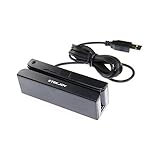
- USB interface, keyboard emulation, no need to install software to read, configuration software for changing settings available.
- Read data from all 3 tracks, high and low coercivity cards, ISO7811, AAMVA, CA DMV and most magnetic card data formats.
- Work on Windows, Mac and other USB capable systems. Work with TXT, notepad, Word, Excel, POS systems and son on.
- Compact size, with 145cm USB cord, two 3mm-diameter screw holes for fixing at the bottom, a LED indicator light
- Perfect for POS, Banking, Loyalty, Access Control, ID verification and other applications.
Product prices and availability are accurate as of the date/time indicated and are subject to change. Any price and availability information displayed on Amazon at the time of purchase will apply.




