For most home gardeners, the most financially rewarding plants are the ones they already buy and can use before they spoil. Culinary herbs, salad greens, microgreens and garlic have the clearest case for grocery savings; tomatoes, berries and a locally suitable specialty crop can also make sense, depending on your climate, space and shopping habits. This is a conditional shortlist, not a universal ranking: saving on groceries and earning cash from sales are different calculations.
How to judge whether a plant is financially rewarding
Count only the produce you would otherwise buy and actually use. A generous harvest left to wilt has no grocery value to your household. Compare the likely value of usable harvest with seeds or planting stock, containers, water, other materials and your time. For crops you sell, also account for harvesting, packing, delivery, spoilage and access to buyers.
UF/IFAS explains that home gardening can save money, but labor, equipment and materials add up, and the economics vary by crop and location. Its 2025 average prices for non-organic fresh produce in the southeastern United States are market references, not a promise of what a gardener will save or earn; the page notes prices vary by store and season. See UF/IFAS’s crop-price and home-gardening guidance.
Seven plants to consider
1. Culinary herbs
Basil, cilantro, mint, rosemary, thyme, tarragon, lemon balm, sage and parsley are among the fresh-market herbs listed by NC State Extension. For household savings, start with herbs you use often and tend to buy in small, perishable bunches. Grow only what you can harvest and use, or preserve safely. Commercial growers may sell to restaurants or specialty shops, but repeated small deliveries can become uneconomical as delivery time grows. Products such as pesto, herb vinegars and jellies involve additional processing and food-business considerations. NC State Extension’s herb production and marketing guidance.
#1 Best Overall
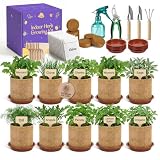
- Complete Indoor Herb Garden Kit: Includes 10 jute fabric pots, 10 drainage trays, 10 plant labels, 10 packs of herb seeds, 7 coco coir soil blocks, a wide trowel, narrow trowel, cultivator, pruning shears, and spray bottle. Detailed planting guidance helps you get started.
- Fresh Flavors for Your Table: Grow basil, chives, cilantro, dill, oregano, parsley, mustard, sage, lemon balm, and arugula. Create a window herb garden with suitable sunlight and grow fresh additions to salads, sauces, and meals. Enjoy bringing your own harvest to the table.
- Quality Seeds & Supportive Growing Materials: Selected U.S.-sourced seeds offer high germination rates. Coco coir blocks help retain moisture, breathable jute fabric pots allow airflow around roots, and drainage trays collect excess water to help keep your growing space tidy. Perfect for home, balcony, or kitchen gardening.
- Beginner-Friendly Growing: Detailed planting guidance helps you get started, while plant labels keep varieties easy to identify. Use the included tools and spray bottle for planting and daily care, helping you tend your herbs from sowing seeds through harvest.
- A Gift to Grow & Enjoy: Beautifully packaged for hands-on fun. Choose gardening gifts for women, plant lover gifts, gifts for mom, birthday gifts for women, Christmas gifts for women, or housewarming gifts for a new home.
2. Salad greens and cut-and-come-again lettuce
Leafy greens are a strong small-space option if they are regulars on your shopping list. Maryland Extension says salad greens can typically be cut twice during a growth cycle before replacement, with new leaves appearing about 25–30 days after the first cut under its guidance. A standard Salad Table harvest is estimated at 1–2 pounds.
For its Maryland example, the University of Maryland Extension estimates $16–$32 in store-equivalent value per Salad Table per approximately eight-week growth cycle, or $48–$96 annually under its stated assumptions. These figures describe grocery-equivalent value, not net profit, and should not be treated as a forecast for other locations or setups. Read the Maryland Extension guidance on containers and Salad Tables.
Rank #2

- HERB PLANTS & SEEDS - Start an indoor herb garden from seed with basil, chives, dill, cilantro and parsley, each in its own burlap pot.
- COMPLETE HERB KIT - This indoor garden kit includes five seed packets, coconut coir, five burlap pots, markers, water tray, wooden planter and gardening tools.
- BEGINNER FRIENDLY - Expand the coir, fill the pots, sow the seeds and mist as directed; the included growing guide walks first-time growers through the process.
- KITCHEN OR WINDOWSILL - Keep this window herb garden in a suitable bright spot and grow herbs indoors for easy access when cooking at home.
- FRESH HERBS FOR COOKING - Harvest mature basil, parsley, cilantro, dill or chives as needed for salads, sauces and everyday meals.
3. Microgreens
Microgreens can suit a bright indoor growing area and allow successive small sowings rather than one large harvest. The Associated Press’s May 12, 2026 guide describes shallow-tray growing and sowing every few days to maintain a steady supply. The practical financial test is whether you regularly buy the varieties you grow and can use each tray’s harvest promptly. See the AP guide to microgardening in small spaces.
Do not treat historical production estimates as a current home-profit forecast. Penn State Extension’s microgreen yield observations averaged 14–28 crop cycles from 2016–17; conditions, inputs and selling prices for a present-day grower may differ. Penn State Extension’s microgreens guidance.
Free tools Windows power users keep installed
One-click scans. No signup required.
Rank #3

- Complete All-In-One Kit - No need to buy separate supplies. This herb starter set comes with 4 plastic planter pots, 4 soil discs, 4 plant markers 4 heirloom herb seed packets, and essential planting tools—everything you need to start your indoor herb garden immediately.
- NON-GMO, Heirloom Varieties - Carefully selected culinary herb collection includes Cilantro, Genovese Basil, Common Chives, and Italian Giant Parsley. Perfect for home cooking enthusiasts who want to snip fresh, flavorful herbs straight from their kitchen garden to elevate pastas, pizzas, salads, and sauces.
- Premium Quality - Each herb seed packet is sourced from the latest growing season to ensure maximum viability. Enjoy a bountiful harvest of herbs right from your windowsill with our high-germination seeds.
- Incredibly Easy to Grow - This kit comes with simple, step-by-step growing instructions. Just add soil, water, and place your pots on a sunny windowsill. Most herbs sprout within 7–14 days. Whether you're a first-time gardener, a busy parent, or an apartment dweller, you'll enjoy fresh homegrown herbs with minimal effort.
- PERFECT GIFT - Whether it’s a housewarming gift, birthday surprise, Mother‘s Day present, or a thoughtful treat for your favorite cook, this herb garden kit brings joy and fresh flavor to any home.
4. Garlic
Garlic may be worthwhile if you cook with it regularly, have suitable outdoor growing conditions and can wait through a long growing cycle. Maryland Extension’s home-garden guidance gives an approximate yield of 5–9 pounds per 10-foot row and 250–270 days to maturity for fall planting. Those figures are specific to its Maryland guidance; cultivar and regional conditions matter. It recommends reputable, disease-free planting bulbs and cautions against using grocery-store garlic as planting stock. Read Maryland Extension’s garlic planting and care guidance.
For context—not a home-garden profit calculation—Rutgers lists retail commodity garlic at $1.50–$2.50 per pound and estimated production costs of $1.00–$1.25 per pound for small commercial growers. The publication date was not shown in the retrieved page excerpt, and Rutgers notes that costs vary substantially by variety and production method. See Rutgers NJAES’s commercial garlic overview.
Rank #4
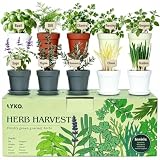
- Complete Starter Kit: LYKOCLEAN indoor herb kit includes 10 pots in 4 colors (3 white, 3 gray, 2 terracotta, 2 light green). Enjoy fresh gourmet herbs year-round for cooking and teas. Fits kitchen, windowsill, balcony, patio.
- 10 Herb Starter Kit: Including Basil(Ocimum basilicum), Dill(Anethum graveolens), Cilantro(Coriandrum sativum), Parsley(Petroselinum crispum), Oregano(Origanum vulgare), Sage(Salvia officinalis), Thyme(Thymus), Rosemary(Salvia rosmarinus), Chives(Allium schoenoprasum) and Scallion(Allium cepa). All organic, non-GMO.
- Premium Quality Guarantee: An American Business Promise. Includes 10 pots & trays, 10 plant markers, 3 gardening tools, 10 nutrient-rich soil discs expand 6-8x for optimal growth.
- No Green Thumb Needed: Instruction booklet included. Step-by-step guide covers soaking tips, sowing instructions, and herb-specific care routines for beginners and seasoned gardeners.
- More Than a Gift & Family Fun: Beautifully packaged for Mother's Day, Birthday, Christmas, Thanksgiving, housewarming, and more. Unique gift for women, men, mom, her. Also parent-child gardening: learn skills, teach kids nature, sustainability, healthy living, create lasting memories.
5. Tomatoes
Tomatoes can be a reasonable choice when they grow well in your local conditions, you have enough sun and space, and your household uses the harvest. Their place on this shortlist is conditional: the available regional produce-price framework does not establish tomatoes as a universal high-return home crop, and no single yield or savings figure applies across gardens.
6. Berries
Berries may offer a useful home-use value where climate and space suit them, particularly if you already buy fresh berries. UF/IFAS notes that strawberries are delicate, difficult to ship and quick to perish; commercial sale prices reflect overhead and losses. That makes growing them for your own table a possible fit, not a guaranteed return.
Best Value

- Complete Herb Garden Kit – Grow Joy Indoors! Everything you need to nurture fresh herbs: 8 non-GMO seeds (Basil, Dill, Thyme, Oregano, Coriander, Parsley, Mint, Chives), nutrient-rich soil disc, burlap pots, plant markers, clipper and gardening tool sets, and easy instructions. Just unpack, plant, and watch your little green oasis bloom!
- Easy to Grow – No green thumb? No worries, our step-by-step guide with expert tips takes the difficulties out of gardening. Perfect for beginners, it turns "I can’t keep a plant alive" into "Look at my thriving herbs!" No matter if you're a beginner, a pro, or just passionate about gardening, this is a rewarding, cozy hobby in life
- Premium High germination Seeds – We handpick high-germination, non-GMO seeds (sealed to stay fresh!) and nutrient-packed soil discs that expand with water. These little seeds grow into fragrant, flavorful herbs – a tiny piece of nature to brighten your days and meals.
- Fresh Flavors & Cozy Home Decor – Double the Joy! Snip fresh Basil for pasta, Mint for calming tea, or Chives for eggs – right from your kitchen window! This compact herb garden isn’t just useful, it’s a charming home decor & kitchen decor piece that adds soft greenery to your space, making every corner feel warmer.
- The Unique Thoughtful Gift – It’s a heartfelt present for plant lover, friends, family, lover, husband, wife, kids, adults, olders, grandparents, or teachers, special gifts for mom and dad, as a Mothers Day Gifts, Fathers Day Gifts, house warming gift for new homeowners, Christmas gifts and birthday gifts for women and men! Perfect for anniversaries, holidays, Christmas, Thanksgiving Day, Valentines Day and more.
7. A locally suitable specialty crop
Choose a specialty crop that is expensive or hard to find where you live and that you already eat. Local prices and growing conditions determine whether it is worthwhile; there is no established universally most profitable specialty plant. UF/IFAS recommends considering specialty crops and selecting varieties suited to local conditions.
Independent reader supportYour contribution helps us test, update, and keep practical guides available for everyone.Choose by goal, not headline price
- For a small space: Start with herbs and salad greens in containers or a Salad Table. Repeated harvests can improve the value of greens when you use them.
- For indoor succession planting: Consider microgreens if you buy and eat them regularly. Current local costs and sales evidence would be needed to judge a commercial margin.
- For a longer outdoor crop: Consider garlic if its growing season suits your area and you are comfortable waiting for harvest.
- For possible sales: Find a likely buyer and calculate handling and delivery time before expanding. NC State Extension notes that frequent small herb deliveries can stop paying as delivery time increases.
Before planting, estimate what you buy and use, what the growing space can produce, how much of the harvest you can consume or preserve, and what inputs and labor will cost. A high store or wholesale price by itself does not establish a profit.
Quick Recap
Product prices and availability are accurate as of the date/time indicated and are subject to change. Any price and availability information displayed on Amazon at the time of purchase will apply.




