The Tool Desk
Outbyte PC Repair FREERepair Windows errors before they cause bigger problemsFix Now →Outbyte Driver Updater FREEFix the driver behind crashes, sound loss and screen glitchesFind Drivers →AI data centers are not causing a nationwide electric-grid collapse, but their fast-growing, concentrated demand is creating real regional pressure. The most immediate risks are tighter power supplies, congested transmission, expensive grid upgrades and disputes over whether data-center companies or ordinary customers will pay. PJM’s independent market monitor attributed 74.7% of the increase in capacity-market revenues for the 2025/2026 auction to data-center load and estimated that load raised wholesale power prices by $11.26 per megawatt-hour, or 24.4%, during the first five months of 2026. Those are findings for one regional market, not a measure of every household’s electric bill or proof of a national blackout.
What “grid meltdown” gets wrong—and what is genuinely at risk
The U.S. electric system is a collection of regional grids and markets, not one national pool of electricity that can move power anywhere on demand. A countrywide shortage is different from a data center being unable to connect in a particular county, or from a regional market paying more to secure enough dependable capacity for future peaks.
For data centers, the binding constraint can be generation, high-voltage transmission, a local substation or transformer, fuel delivery, permitting, or the time required to study and approve a connection. A region may have enough power in aggregate while lacking the wires to deliver it to a new campus. Conversely, available wires do not guarantee enough firm generation in extreme weather.
- Energy adequacy: Is there enough electricity over time?
- Capacity adequacy: Is enough dependable generation available during peak demand?
- Transmission and distribution: Can power reach the site through regional lines and local equipment?
- Real-time reliability: Can the system withstand outages, sudden load changes and severe weather?
- Affordability: Who pays for power and infrastructure built to serve new demand?
The strongest current evidence points to regional stress and higher costs if planning fails—not an inevitable national collapse. DOE’s 2025 reliability assessment warned that plant retirements and delayed additions of firm capacity could increase reliability risks, including in areas affected by AI data-center growth. That is the federal administration’s assessment, not a prediction that blackouts are certain. DOE’s reliability report describes those concerns.
Recommended Free Tools
#1 Best Overall

- Ultra-Lightweight: At only 7.5 lbs, the Explorer 300 delivers a robust 292Wh capacity while remaining 17% lighter than the industry average. The sleek, integrated handle makes it effortless to carry on long hikes or pack with your camping gear, providing reliable off-grid power without adding bulk to your load.
- Versatile Power for 6 Devices: Equipped with 2 AC outlets, a 100W USB-C PD port, 2 USB-A ports, and a 120W car port. With a 300W rated output (600W peak surge), it easily handles laptops, drones, and cameras, while also serving as a dependable cpap battery for camping or a robust solar powered generator when paired with panels.
- Built to Last: Upgraded with premium LiFePO4 chemistry, this portable generator delivers over 4,000 charge cycles before reaching 70% capacity. This ensures more than 11 years of reliable service life, making it a sustainable and durable energy partner for a decade of exploration.
- Fast Solar Charging: Perfect for off-grid use, this solar powered generator pairs seamlessly with Jackery panels. Reach 80% capacity in approximately 2.8 hours with a 100W solar panel, or maintain your gear with a portable 40W panel (80% in 7.5 hours), making it an essential part of your hunting essentials.
- WHAT YOU GET: 1* Jackery Explorer 300 Portable Power Station, 1*AC adapter, 1* car charger cable, 1* user guide (𝐒𝐨𝐥𝐚𝐫 𝐏𝐚𝐧𝐞𝐥 𝐍𝐨𝐭 𝐈𝐧𝐜𝐥𝐮𝐝𝐞𝐝.)
How large is data-center electricity demand?
The International Energy Agency (IEA) estimates that data centers worldwide used about 415 terawatt-hours (TWh) of electricity in 2024, around 1.5% of global electricity use. Its base case projects about 945 TWh in 2030 and roughly 1,200 TWh in 2035. These figures cover data centers, not AI alone; estimates of AI’s share are difficult to separate from other computing activity. The United States is the largest current data-center electricity user and is expected to see the largest absolute increase. The IEA’s executive summary sets out the estimates and projections.
U.S. electricity demand has already accelerated. EIA reports average annual growth of about 1.7% from 2020 through 2025, compared with about 0.1% annually from 2005 through 2019, and identifies data centers as a major driver—not the only one. Manufacturing, air conditioning, electrification and other sources also contribute. EIA’s 2026 outlook identifies data-center load as the dominant driver of long-term U.S. electricity growth in its scenarios. EIA’s demand and high-load analysis and its Annual Energy Outlook 2026 announcement provide the context.
AI facilities can use power at a scale comparable to energy-intensive factories, while occupying a much smaller area. Nearly half of U.S. data-center capacity is concentrated in five regional clusters, according to the IEA. That concentration is why a modest national share can have a much larger local effect: a city-scale load arriving in one county is a different engineering problem from the same demand spread among millions of customers.
AI facilities are not all the same load
“Data center” can mean a conventional enterprise facility, a cloud campus, an AI-training site, an inference facility serving users in real time, a colocation building hosting multiple customers or a proposed campus that has not yet been built. AI raises demand through dense accelerator-equipped server racks, computation, networking and storage, as well as cooling and redundant power systems. A large announced campus is not proof of current consumption.
When comparing claims, identify what the number measures: operating electricity, a forecast, a developer application, a queue position, contracted service or a proposed maximum load. A project described as a gigawatt facility should not be treated as already drawing one gigawatt from the grid.
Rank #2

- 【SLIM & POCKETABLE】This portable power bank is about the size of a smartphone (6.5×3.3×4 inches) and weighs only 2.54 pounds. It features an ergonomic soft handle for easy portability. It easily fits into a backpack for convenient portability. Pro Tip: Fully charge and discharge the battery twice initially for the best experience.(Solar panel and cable not included)
- 【DUAL INPUT/OUTPUT (AC + DC)】The portable power station comes with a 89.6Wh capacity LiFePO4 battery pack(not NCM) and 100W, features 7 output ports, including 2 AC sockets (100W),2 USB-C port (45W/15W), 2 USB-A port (18W/15W), and DC5521 ports (60W). The LED display can clearly show the working status and remaining power.(Please peel off the protective film on the screen after unboxing)
- 【Ultra Fast Charging】With unique fast charging technology,the portable generator can be charged from 0-80% just in 1.5hrs. The solar power bank power station has Four methods to charging: AC wall socket fast charging, USB-C DC two-way PD fast charging(AC and DC can be charged at the same time) ,car charging and solar panel charging.Fast charging solar power bank portable charger suitable for for emergency home backyard outdoor power outages off-grid camping essentials
- 【ULTRA-QUIET & EMERGENCY-READY POWER STATION】Experience silent, fanless operation perfect for sleeping, working, or camping, while the built-in 4-level LED flashlight (with steady/SOS modes) ensures emergency readiness. Its accidental-touch-proof design requires a long-press to activate, ideal for charging devices during outages or outdoor adventures without noise disruption.(Only suitable for powering devices within 100W).
- 【Long-Lasting & Safe LiFePO4 Battery】: 3500+ life cycles (far exceeding standard batteries). Durable LiFePO4 batteries last 3x longer than standard lithium batteries! Advanced BMS provides 12 safety protections, monitoring voltage, current & temperature. Powers your smartphone, laptop, mini-fridge, camera, and drone simultaneously.
Where the pressure builds: connections, wires and dependable supply
A large-load interconnection is the process of assessing and connecting a new customer to the power system. It can involve transmission-impact and reliability studies, distribution upgrades, cost allocation, equipment procurement, generation commitments, environmental approvals and state utility review. A long queue can delay a project even when power generation exists nearby.
In June 2026, the Federal Energy Regulatory Commission (FERC) ordered all six regional transmission organizations and independent system operators under its jurisdiction to justify or reform rules for connecting data centers and other large energy users. FERC said the changes should speed connections while protecting consumers. The action does not eliminate state authority over retail rates, generation choices or siting. FERC’s announcement explains the scope of the orders.
The Department of Energy’s draft National Transmission Needs Study, released July 9, 2026 for public comment, identifies data-center growth and industrial electrification as reasons to expand transmission. It notes that congestion can be concentrated in a small number of high-stress hours, rather than occurring evenly all year. DOE’s transmission study page provides the study and its status.
Crashes, No Sound, or Screen Glitches?
Random freezes, missing sound and display glitches usually trace back to one bad driver. Find and replace yours safely.Free scan · under a minuteWindows Errors? Fix Them Before They Spread
Repair common Windows errors and clear accumulated junk for a smoother, more stable PC - no reinstall needed.Free scan · no reinstall“There is no power” can therefore mean several different things: insufficient generation, inadequate transmission, a constrained local substation, an unfinished interconnection study, no guarantee of firm service, or upgrade costs that make the project uneconomic. The remedy depends on which constraint is binding. More generation will not solve a local bottleneck if the lines and substation cannot deliver it.
Can data centers cause blackouts or destabilize the grid?
A data center may use power steadily, but its size still matters to grid operations. A large campus that abruptly disconnects can remove hundreds of megawatts of demand; simultaneous reconnection after a disturbance can add a large load step. Similar control systems or protection settings across facilities could also produce correlated responses. Grid operators need accurate load forecasts and models of how facilities behave during disturbances.
Rank #3

- [288Wh On-the-Go Power] - Only 9.4 lbs lightweight, carry it anywhere during storms! 288Wh capacity meets daily & outdoor needs—camping, road trips, beach visits, or home emergencies. Extend your smart green energy life to every corner of your ideal lifestyle with this compact entry-level power station.
- [600W Continuous & 1500W Surge Power] - Get a full 600W output—twice as much as others. When you need serious power, activate Power Lifting Mode for 1500W power (vs. the typical 600W). It runs everything from essential camping lights, speakers, and car fridges to critical devices like laptops and CPAP machines and even a small kettle or toaster—ideal for stormy days at home or outdoor trips.
- [50% Lower Power Consumption] - Upgraded UltraCell tech & smart cooling system cut power consumption by 50%. Enhances overall energy efficiency, extends device runtime. Excellent durability & environmental adaptability for extreme outdoor climates and long-term operation.(Standby power only 4.5W, DC 5W, AC 8W)
- [8 Charging Modes & 380W Fast Wall Charge] - Supports AC wall charge (380W/200W adjustable), solar, car charging, etc. 0-80% in 45 mins, 0-100% in 70 mins (battery-safe). Match PV60L solar panel for on-the-go recharging. Flexible charging solutions for city, wilderness, daily or emergency scenarios.
- [Reliable UPS] - Never lose data or stop your devices during winter storms/blackouts! 10ms ultra-fast UPS switch protects CPAP, laptops, routers—critical for home emergencies when power cuts suddenly.
Risk rises when forecasts miss actual demand, new generation or transmission is delayed, plants retire, gas supplies are constrained, or extreme heat or cold raises demand at the same time. Those conditions can lead to emergency measures or local reliability problems. But claims that AI data centers are already causing nationwide blackouts require evidence tied to a specific event and grid operator; the evidence cited here does not establish that conclusion.
Workload flexibility is one possible reliability tool, not a universal ability to switch data centers off. Real-time inference and latency-sensitive services may need continuous operation. Batch computing, some training and scheduled data processing may be easier to delay or move. A study of gigawatt-scale AI data-center integration examines such options, but technical potential does not establish that operators routinely provide this flexibility today. The study’s abstract describes the modeled workloads and approaches.
Will data centers raise household electricity bills?
They can contribute to higher costs in some regions, but wholesale prices do not pass through to every retail customer at the same rate. Utilities may hedge or contract for power; retail rates are regulated; and infrastructure costs may be recovered over many years. A data center’s special tariff, the utility’s cost-allocation rules and the regional market all affect who pays.
PJM’s independent market monitor estimated that data-center load increased wholesale power prices by $11.26/MWh, or 24.4%, in the first five months of 2026. It also said data-center load accounted for 74.7% of the increase in capacity-market revenues for the 2025/2026 auction. Those are the monitor’s estimates for PJM and its stated periods; they are not a 24.4% increase in every customer’s retail bill and do not show that data centers caused every component of the market change. The monitor’s June 2026 report contains its analysis.
EIA’s high-demand scenario tested 2026 and 2027 load growth 50% above its baseline in regions with significant data-center development. With existing generation held constant, the additional demand would mainly increase use of natural-gas generation; transmission limits could prevent neighboring regions from fully offsetting local shortages. This is a scenario, not a forecast that every region will experience that outcome. EIA’s analysis explains the assumptions.
Rank #4

- Powerful yet Compact: Boasting a 1,500W AC output and a 3,000W surge peak, the Solar Generator 1000 V2 can power multiple appliances, including AC units, fridges, and electric pots. With a 1,070Wh capacity and a lightweight build of only 23.8 lbs, along with a foldable handle, it makes an excellent companion for outdoor camping, road trips, or emergencies.
- One Hour Fast Charging: Charge your Explorer 1000 v2 Portable Power Station from 0% to 100% battery level in just one hour with emergency charging activated via the Jackery App. It defaults to 1.7 hours for a full charge to optimize battery health. Engineered with advanced ChargeShield 2.0 technology, this power station charges safer, faster, and smarter.
- 10 Year Lifespan: The Explorer 1000 v2 portable power station is equipped with a durable LFP battery, maintaining over 70% of its original capacity even after 4,000 charge cycles, offering longevity exceeding 10 years.
- Tailored for Versatility: Featuring two USB-C ports, one USB-A port, one DC car port, and three pure sine wave AC ports, along with LED lights, the Solar Generator 1000 V2 is capable of charging multiple devices simultaneously, meeting power needs in various scenarios. PD 100W fast USB-C charging ensures a rapid charging speed, even without power adapters.
- Smart App Control: Effortlessly switch between different charging modes with Jackery’s App—including one hour emergency charging from 0 to 100%, 30 dB quiet overnight charging mode, and energy efficiency mode. Maximize the freedom to adjust the power station to meet your needs.
Who should pay for upgrades?
Costs may fall on the data-center developer, the utility’s large-load customer, other customers in the utility territory, wholesale-market customers, taxpayers or future customers through long-term rate recovery. The answer depends on tariffs, state commission decisions, regional market rules and whether upgrades serve only the project or the wider system.
Quick wins for a faster PC:
Scan for outdated or missing drivers - takes under a minuteDriver Scan →Repair Windows errors before they cause bigger problemsFix Now →Fix the driver behind crashes, sound loss and screen glitchesFind Drivers →FERC’s large-load action highlights consumer protection, but it does not establish one nationwide rule requiring data centers to pay every associated cost. PJM’s independent market monitor has argued that data-center-related costs should be borne by data centers; that is the monitor’s policy position, not a universal rule already in effect. Its filing states the argument.
For customers and regulators, the useful questions are whether the large customer pays the marginal cost of its connection, whether it guarantees minimum payments if a project is delayed or canceled, who bears the cost of stranded upgrades, and whether special contracts or discounts are transparent. A facility that uses less power than forecast—or never opens—can leave infrastructure costs behind unless contracts and rate rules address that risk.
Independent reader supportYour contribution helps us test, update, and keep practical guides available for everyone.What will supply the additional electricity?
No single technology is likely to meet every data center’s needs. The practical mix depends on when power is needed, the region’s generation and transmission, fuel availability, project timelines and emissions rules.
| Source | What it can contribute | Main constraints |
|---|---|---|
| Natural gas | Dispatchable generation that can support demand when variable renewable output is low; EIA and the IEA identify it as an important near-term source of additional U.S. supply. | Fuel-price volatility and pipeline constraints, carbon emissions, local air pollution and the risk of long-lived assets conflicting with decarbonization goals. |
| Wind and solar | Substantial energy supply and a growing share of new electricity; storage and flexible operations can help integrate output. | Transmission, storage or other firming, geographic and hourly variation, and the difference between annual contracts and power physically available at a particular hour. |
| Existing nuclear | Firm, low-carbon generation that may support the grid where available and deliverable. | Location, available capacity and connection arrangements; power allocated to a campus may not be available to other grid customers. |
| New nuclear and small modular reactors | Potential future firm, low-carbon power. | Development, licensing, construction and supply-chain timelines. The IEA expects the first relevant SMR capacity around 2030, too late for most immediate 2026–2028 connection constraints. |
| Hydropower and geothermal | Can offer firm or relatively firm low-carbon electricity in suitable places. | Geography, resource limits, permitting and project timelines restrict how widely or quickly they can scale. |
| On-site generation and microgrids | Can provide backup or reduce reliance on a grid connection through generators, batteries, fuel cells or other local resources. | Fuel, emissions, permitting, noise, maintenance and the question of whether the site remains dependent on the grid during emergencies. |
The IEA’s supply analysis distinguishes electricity that physically serves a facility from electricity procured through contracts. A power-purchase agreement for renewable energy may match a data center’s annual consumption without supplying renewable power at every hour it uses electricity. That distinction matters when evaluating claims about clean power. The IEA’s energy-supply analysis explains the difference.
Do these 3 things before closing this tab:
1Repair Windows errors before they cause bigger problems2Scan for outdated or missing drivers - takes under a minute3Clear out junk files and repair common Windows errorsBest Value
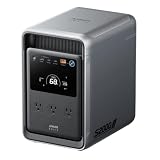
- 𝐔𝐩 𝐭𝐨 𝟑𝟓-𝐇𝐨𝐮𝐫 𝐅𝐫𝐢𝐝𝐠𝐞 𝐁𝐚𝐜𝐤𝐮𝐩: With 6W idle power draw and 10% higher efficiency, this power station runs 20% longer than other 2kWh systems, keeping your fridge powered for 35 hours.
- 𝟏𝟎,𝟎𝟎𝟎-𝐂𝐲𝐜𝐥𝐞 𝐋𝐅𝐏 𝐁𝐚𝐭𝐭𝐞𝐫𝐲: Powered by 314Ah LFP cells, S2000 has a 15-year lifespan, equivalent to 10,000 charge cycles.
- 𝐒𝐦𝐚𝐥𝐥𝐞𝐬𝐭 𝐚𝐧𝐝 𝐋𝐢𝐠𝐡𝐭𝐞𝐬𝐭 𝟐𝐤𝐖𝐡 𝐏𝐨𝐰𝐞𝐫 𝐒𝐭𝐚𝐭𝐢𝐨𝐧: 30% smaller and 25% lighter than the industry average, this power station measures just 8.2 × 11.1 × 12.7 in and weighs only 35.7 lbs.
- 𝐏𝐨𝐰𝐞𝐫𝐬 𝟗𝟗% 𝐨𝐟 𝐇𝐨𝐦𝐞 𝐄𝐬𝐬𝐞𝐧𝐭𝐢𝐚𝐥𝐬: 1,500W continuous output and 3,000W peak output keep nearly every essential appliance running. Actual runtime will vary depending on your refrigerator model, usage habits, and ambient temperature.
- 𝟔 𝐖𝐚𝐲𝐬 𝐭𝐨 𝐑𝐞𝐜𝐡𝐚𝐫𝐠𝐞: Supports up to 400W solar input. Power up via AC + solar, a wall outlet, a generator, solar panels, an alternator charger, or a car outlet—anytime, anywhere.
Can efficiency and demand response close the gap?
Efficiency can lower electricity use per computation, but total consumption can still rise if computing demand expands faster than efficiency improves. Relevant measures include better server utilization, more efficient accelerators and cooling, workload scheduling and model efficiency. Power Usage Effectiveness (PUE) compares a facility’s total energy use with energy used by its IT equipment; it is useful for facility overhead, not a complete measure of the energy or environmental impact of a particular AI service. EIA’s 2026 analysis models higher server power draw and a larger installed server stock as drivers of long-term data-center electricity use. EIA’s server-energy analysis presents its 2050 scenarios.
Some loads may be shifted or curtailed if the facility, grid operator and customer agree on enforceable terms. FERC’s 2025 demand-response assessment discusses mechanisms through which large customers, including data centers, could optimize consumption and contribute to peak management. The assessment describes the frameworks.
- More likely to be flexible: batch training, scheduled retraining, some data processing, battery charging and workloads that can move between locations.
- Less likely to be flexible: real-time inference, customer-facing services with strict uptime commitments, and latency-sensitive or safety-critical computing.
A meaningful demand-response agreement should specify how much load can be reduced, how quickly, for how long, with what notice and compensation, and whether curtailment is voluntary or mandatory. Operators must demonstrate performance, and grid planners should not count on flexibility that is not contractually available. On-site batteries can help with short-duration peaks or disturbances, but they do not replace transmission expansion or dependable energy through a prolonged shortage.
Three plausible paths for the grid
Managed expansion
Transmission, local equipment, generation and storage keep pace with projects that actually proceed. Forecasts distinguish operating facilities from proposed capacity, and large customers pay costs assigned to their load. Some workloads and storage provide verifiable flexibility.
Expensive expansion
The system remains reliable, but customers and businesses face higher infrastructure costs, more use of gas generation and greater competition for equipment and construction. The burden depends on rate design and cost allocation.
Disorderly growth
Load arrives faster than planning and construction can keep up. Congestion, volatile prices, emergency curtailment and delayed connections become more likely, while overestimated or canceled projects can leave customers exposed to stranded costs.
The central policy question is not simply whether the grid can serve AI. It is whether utilities and regulators can identify real projects, build the right infrastructure in time, and assign costs and reliability obligations fairly.
Quick Recap
Product prices and availability are accurate as of the date/time indicated and are subject to change. Any price and availability information displayed on Amazon at the time of purchase will apply.
Free tools Windows power users keep installed
One-click scans. No signup required.




