Gasoline prices can rise or fall while crude oil stays steady because crude is only one part of what drivers pay. Finished gasoline has its own supply and demand, refining costs, seasonal fuel requirements, inventories, transportation expenses, taxes and local retail conditions. A change at any stage between crude oil and the pump can move the price.
Why crude oil and gasoline prices can move differently
Crude oil is the main raw material for gasoline, but the two are separate products with separate market prices. The price of crude does not dictate the price of finished gasoline gallon for gallon. Refiners turn crude into gasoline, then the fuel must meet applicable specifications and move through pipelines, terminals and other distribution channels before a station sells it.
That means a stable crude benchmark can coexist with a changing wholesale price for gasoline. Retail prices reflect that wholesale value along with taxes, distribution and marketing costs, and station-level costs and margins. The U.S. Energy Information Administration (EIA) summarizes one seasonal cause this way: “Even when crude oil prices are stable, gasoline prices fluctuate because of seasonal changes in demand and in gasoline specifications.” (EIA, Gasoline price fluctuations.)
What can change gasoline prices when crude is stable?
Summer driving raises demand
U.S. gasoline demand generally increases in summer as people drive more. If demand rises faster than available supply, buyers compete for gasoline and wholesale prices can climb even without a corresponding change in crude oil. Historically, EIA found that average U.S. retail regular gasoline prices in August were about 40 cents per gallon higher than in January over 2004–2023. That is a comparison of monthly averages across those years—not a forecast, and not a pattern guaranteed in every year or region. (EIA.)
#1 Best Overall

- ENZYME TECHNOLOGY - Uses enzyme technology designed to help engines start more reliably and run cleaner, even after periods of inactivity
- SAY GOODBYE TO ETHANOL-RELATED PROBLEMS - Prevents and cures most ethanol-related issues, including poor performance, rough idling, and decreased fuel economy, giving you peace of mind on the road or on the water
- MAXIMIZE FUEL ECONOMY - By removing and preventing gum, carbon deposits, and varnish build-up, Star Tron keeps your fuel delivery system clean, resulting in improved fuel economy
- WORKS FOR ALL ENGINES AND FUEL TYPES - Whether you have a car, boat, RV, or lawn mower, Star Tron works in all engines and all fuels, making it the ideal fuel treatment and stabilizer for any vehicle
- PREVENT WATER BUILD-UP - Helps prevent phase separation by dispersing water throughout fuel as submicron-sized droplets that are safely eliminated while the engine operates, keeping your engine running smoothly in humid or wet conditions
Summer gasoline has different specifications
U.S. environmental rules require summer gasoline to be less prone to evaporate in warm weather. Refiners adjust the blend by replacing some cheaper, more evaporative components with less evaporative, more expensive ones. The transition can also temporarily disrupt supply as refiners, distributors and marketers shift to the seasonal formulation. Those costs or short-term imbalances may affect gasoline prices while crude remains steady. (EIA; Federal Trade Commission.)
Refinery, pipeline and import disruptions restrict supply
Refinery maintenance or an unexpected outage can reduce the amount of gasoline available. Pipeline problems or lower imports can have a similar effect. The impact depends on where the disruption occurs and which markets can be supplied from elsewhere.
Rank #2

- CLEANS FUEL SYSTEM: Hot Shot’s Secret Gasoline Extreme is designed to thoroughly clean, lubricate, and safeguard all components of a gasoline engine & fuel system, such as valves, pumps, injectors, rings, pistons, and upper cylinders.
- BOOSTS FUEL ECONOMY: By thoroughly cleaning the fuel system, this fuel additive boosts MPG up to 7.9%, ensures combustion efficiency, & engine power, resulting in a smoother & more efficient driving experience.
- FIXES ISSUES: This fuel treatment addresses common issues associated with rough-running engines in a single treatment. Designed to improve fuel economy, smooth out idling, & unclog fuel injectors, this will have your engine running great again!
- RESTORES PERFORMANCE: High-performance cleaner that utilizes P.E.A. technology to deeply clean & restore engine power, dissolve gum & varnish buildup, removes deposits from the combustion chamber, resulting in improved overall engine performance.
- EASY TO USE: With a simple application of 12 oz. for every 20 gallons of gasoline, this product is easy to use! Just pour it into your fuel tank during your next fill up or every 10,000 miles
The West Coast is especially exposed to some disruptions: EIA notes that refinery outages there have caused significant price swings because the region depends heavily on limited refinery capacity and has few rapid alternatives for gasoline that meets its specifications. (EIA, Gasoline prices explained.)
Inventories and expectations affect wholesale prices
Gasoline inventories help absorb short-term mismatches between supply and demand. U.S. stocks generally decline during the summer driving season and recover during winter. If inventories fall unexpectedly, wholesalers may pay more for available supply because they are concerned about whether future needs can be met. Prices can also respond to expected tightness before a local shortage appears at stations. (EIA.)
Quick wins for a faster PC:
Repair Windows errors before they cause bigger problemsFix Now →Scan for outdated or missing drivers - takes under a minuteDriver Scan →Rank #3
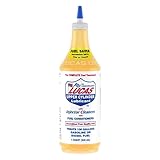
- The world’s #1 fuel additive for both gasoline and diesel engines
- A great tune-up in a bottle – treats gasoline, diesel fuel and increases MPG
- Cleans and lubricates the fuel system, including fuel injectors, carburetor and combustion chamber
- Improves fuel economy by burning excess exhaust emissions
- Increases power and acceleration by improving fuel flow and reducing deposit buildup
Other ingredients and refining economics matter
Gasoline prices reflect more than crude: they also reflect refining costs and profits and the cost of blending ingredients such as ethanol. So even with steady crude prices, the value of gasoline relative to crude—or the cost of producing the finished fuel—can change.
In its analysis of the 2006 spring and summer price increases, the Federal Trade Commission identified ethanol prices, refinery outages, demand and capacity reductions during a fuel-additive transition among the contributing factors in that episode. Those findings describe that particular period, not a universal explanation for every price increase. (FTC.)
Rank #4

- DESIGNED TO EXCEED EXPECTATIONS: Red Line complete SI-1 fuel system cleaner treatment for cleaning and preventing corrosion in fuel systems
- PERFORM AND PROTECT: Fuel additive cleans injectors, carburetors, valve and combustion chamber deposits with a powerful, concentrated blend of high-temp and low-temp detergents
- EFFICIENT FUEL BURN: Gas treatment that enhances gasoline stability, while reducing the build up of gum and varnish formation
- EASY TO USE: Use one bottle per tank for most effective treatment, additive cleans nearly 100% efficiency in one treatment
- 15 Ounce (2 Pack)
Why prices differ by location and station
Even when wholesale gasoline costs are similar, pump prices can differ because taxes and local distribution and retail conditions vary. The price includes federal, state and sometimes local taxes, as well as the costs and margins involved in delivering and selling fuel. A station’s rent, wages, equipment, insurance, local fees, suppliers, traffic and nearby competition can all affect its pricing. That is why stations close to one another may charge different amounts, and why local prices can move for reasons unrelated to a current crude-oil change. (EIA; EIA, Motor Fuel Taxes.)
For a dated U.S. reference, EIA reports that as of January 2026 the federal motor-gasoline tax was 18.40 cents per gallon, including an 18.30-cent excise tax and a 0.1-cent-per-gallon Leaking Underground Storage Tank fee. EIA’s average state gasoline taxes and fees were 33.55 cents per gallon as of that date; state rates vary, and sales or local taxes can add more in some places. These figures are not a substitute for checking the tax applicable in a specific location. (EIA.)
Best Value
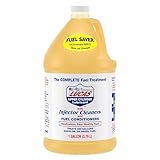
- The world’s #1 fuel additive for both gasoline and diesel engines
- A great tune-up in a bottle – treats gasoline, diesel fuel and increases MPG
- Cleans and lubricates the fuel system, including fuel injectors, carburetor and combustion chamber
- Improves fuel economy by burning excess exhaust emissions
- Increases power and acceleration by improving fuel flow and reducing deposit buildup
How to tell which part of the price chain is changing
When crude looks unchanged but gasoline costs more, compare the movement in the relevant stages rather than treating “oil” and “gas” as the same price:
- Crude input: Check which crude benchmark and time period you are comparing; a stable quote for one benchmark does not establish that every input or market is unchanged.
- Wholesale gasoline: A rise here points to changing gasoline-specific supply, demand, refining economics or expectations, even if crude is flat.
- Regional availability: Refinery operations, pipeline constraints, imports and local fuel specifications can make the effect stronger in one region than another.
- Retail price: Taxes, delivery costs, station expenses and competition help explain why pump prices vary across places and stations.
The FTC has analyzed the relationship between crude and retail gasoline prices, wholesale adjustment timing and refinery margins. It reported that crude-price changes explained 85 percent of changes in U.S. retail gasoline prices over the 20 years covered by its 2005 report. That is a historical finding for the period studied—not a current estimate, and not evidence that crude is the only driver. (FTC.)
These mechanisms explain how prices can diverge; without local market data, they do not establish which one caused a particular station’s latest price change.
Quick Recap
Product prices and availability are accurate as of the date/time indicated and are subject to change. Any price and availability information displayed on Amazon at the time of purchase will apply.




