To manage expiration-day risk, verify the exact contract and your broker’s deadlines, then decide in advance what exposure you will accept if the option expires, is exercised, or is assigned. These outcomes differ: a stock option can deliver shares, while SPX index options are cash-settled. A spread can still leave settlement exposure, and a broker’s customer cut-off may be earlier than an exchange or clearing deadline.
This guide focuses on U.S. listed options. Contract terms, account procedures, and deadlines vary, so check the current specifications for your option and your broker’s instructions rather than relying on a general expiration time.


What happens to options on expiration day?
An option’s value can change sharply near expiration as the underlying price moves. A long option that expires out of the money can lose its entire premium. A written option can create a larger loss than the premium received, depending on the position and resulting obligation. The SEC’s Investor.gov bulletin, updated July 16, 2026, warns that extreme volatility near expiration can cause price changes that leave an option worthless.
At expiration, the contract may expire without value, be exercised, or result in assignment of a short position. What exercise means depends on the product: stock and exchange-traded product (ETP) options can deliver securities, while SPX options settle in cash. Exercise style also matters. American-style options may be exercised before expiration; SPX options are European-style and exercisable only at expiration, according to Cboe.
Check the position’s possible end states
- Long option: Establish whether exercise could result in shares or a cash settlement, and whether you have the funds or capacity for the resulting position. If it expires out of the money, the premium paid may be lost.
- Short option: Plan for assignment and identify the resulting share or cash obligation. Do not assume a short option will expire simply because it is near, or appears to be just out of, the money.
- Multi-leg position: Evaluate each leg and its settlement process independently. A long leg does not guarantee that its value, settlement amount, or timing will match the obligation created by a short leg.
Can I be assigned on expiration day?
Yes. A short option can be assigned, subject to the contract’s exercise and assignment procedures. For American-style options, early exercise is also possible; Cboe distinguishes this from SPX, which has no early assignment because it is European-style. The exact process and timing depend on the contract, clearing procedures, and broker.
Expiration does not eliminate uncertainty for a short position. After-hours price moves or information arriving after the regular session can change the economic case for exercise. The procedures for submitting exercise or do-not-exercise instructions, and the relevant customer deadlines, are specific to the contract and broker. Confirm them before the final trading session.
Why a spread can still have settlement risk
With cash-settled index options, the short leg may be assigned and create a cash obligation before the long leg’s exercise or settlement value is known. If the index moves between those events, the long leg’s proceeds may not cover the short leg’s obligation. The Options Clearing Corporation (OCC) describes this potential shortfall risk for index-option spreads. Treat each leg’s settlement value and timing as separate exposures rather than assuming the spread will settle as one guaranteed, offsetting transaction.
What time do I need to close an option before expiration?
There is no single universal customer cut-off that applies to every U.S. option. The last time the contract can trade, exchange or clearing deadlines, and the broker’s deadline for customer exercise or do-not-exercise instructions are distinct matters. Brokers may require instructions earlier than an exchange deadline. Nasdaq and the SEC both emphasize checking the applicable procedures; do not infer your broker’s customer deadline from an exchange’s schedule.
What’s actually slowing this PC down?
Pick the symptom - the matching free tool is one click away.
Before the final trading session, check the current contract specifications and your broker’s expiration procedures. Find the exact last trading date and time, exercise style, settlement method, and customer instruction cut-offs. If you intend to close or reduce a position, account for the fact that the option’s price can change quickly near expiration; a general deadline is not a guarantee that you can trade at a particular price.
Expiration checklist
- Identify the contract: Confirm the exact root or product, expiration date, and last trading date and time in current contract specifications.
- Confirm exercise and settlement: Determine whether it is American- or European-style and whether exercise delivers securities or settles in cash.
- Read your broker’s instructions: Check customer exercise and do-not-exercise deadlines, how to submit instructions, and what the broker may do under its procedures.
- Map the obligation: For each leg, estimate the shares, cash debit, or cash credit that could result from exercise or assignment.
- Set an exposure limit and action: Before holding through expiration, decide the maximum exposure you will accept and what action would reduce or close it. The appropriate action depends on the contract, account, and position.
How do stock and index options differ at expiration?
The table describes the general distinction Cboe makes between ETP options and SPX options. These are representative examples, not universal terms for every listed stock, ETP, or index option. Check the specifications for the exact series.
Rank #4
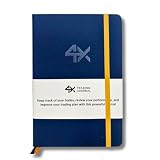
- BUILT FOR YOUR MARKET, FUTURES, STOCKS, FOREX, OPTIONS & CRYPTO: 4X is a mindset and process journal, not a strategy tool tied to one instrument. The plan, the trade log, the deep dive and the weekly review work the same whether you trade ES, EURUSD, SPY or BTC. Traders use it across all five markets every day.
- THE 2026 EDITION, REBUILT FROM TRADER FEEDBACK: Same trusted system, better in every way. An extra daily page for more room to log the session. Weekly reviews now grouped with each week's trades, so no more flipping back and forth. Crisp, darker print that's easy on the eyes after hours on a screen. A Quick-Start QR that scans straight to step-by-step instructions.
- NOT A NOTEBOOK, A COMPLETE 12-WEEK SYSTEM: Start with a one-time 9-part Trading Plan (your market, setups, risk rules and discipline checklist). Then twelve identical weeks: five Daily Logs, five Deep Dive trade pages, and a two-page Weekly Review. 189 guided pages, roughly 80 trades. Guided prompts walk you through every step. You never stare at a blank page.
- RATE YOUR EXECUTION, NOT YOUR RESULT: Your platform tracks the P&L. Nothing tracks the why. Log energy, sleep and mindset before the open; grade every trade A to F on whether you followed your plan, not on whether it won; then face the pattern every weekend with START / STOP / IMPROVE / CONTINUE. That review habit is the edge. You're 42% more likely to hit a goal you've written down.
- BUILT TO LAST, ARRIVES GIFT-READY: Vegan-leather hardcover, 100gsm bleed-resistant paper, two ribbon markers and an elastic closure band. Bound to lay flat so you're not fighting the spine while you write. 189 pages, 5.75" x 8.5", carries in a bag. Ships in a premium gift box: the gift every trader in your life actually wants.
| Feature | Stock and ETP options | SPX index options |
|---|---|---|
| Settlement | Physical delivery of securities, according to Cboe’s general description | Cash settlement, according to Cboe |
| Exercise style | ETP options are American-style in Cboe’s general description; verify the exact stock series | European-style; exercisable only at expiration |
| Early exercise or assignment | Possible for American-style contracts | No early assignment for SPX |
| Potential expiration result | Shares may be delivered or received | Cash debit or credit based on the settlement value |
For a physically settled option, plan for the possibility of receiving or delivering shares and the associated account obligation. For a cash-settled index option, plan for a cash debit or credit based on the applicable settlement value. Do not assume all index options use SPX terms or that every stock or ETP series follows the same details.
Independent reader supportYour contribution helps us test, update, and keep practical guides available for everyone.What is the difference between AM-settled and PM-settled index options?
The key difference is the settlement reference and its timing—not simply whether a quote is visible at the open or close. An AM-settled index option may use opening prices of the index constituents. OCC notes that the definitive settlement value can differ from initially disseminated index readings, may arrive later, and that some AM-settled contracts do not trade on their expiration date.
For any index option, verify how its final settlement value is calculated, which session is the last trading session, and when the definitive value is determined. Do not treat an initially displayed index reading or the last visible quote as necessarily equal to an AM-settled contract’s final settlement value. PM settlement follows the applicable contract’s expiration procedure; check that product’s specifications rather than assuming all products use the same closing reference or timing.
Why does 0DTE require close attention?
Zero-days-to-expiration (0DTE) options have very little time remaining. Cboe says near-the-money options become extremely sensitive to index movements as expiration approaches. That sensitivity means a small move in the underlying can materially change the option’s value, while the remaining time to respond is limited. A position’s risk depends on its structure and the underlying move, so a 0DTE label alone does not define the maximum loss or the appropriate action.
For a 0DTE position, know the contract’s settlement and exercise terms, monitor the exposure you actually hold, and have a predetermined limit and response. Avoid relying on a general assumption that a near-the-money option will finish out of the money, or that a spread’s legs will settle at matching values and times.
Quick Recap
Product prices and availability are accurate as of the date/time indicated and are subject to change. Any price and availability information displayed on Amazon at the time of purchase will apply.




