The Tool Desk
Outbyte Driver Updater FREEScan for outdated or missing drivers - takes under a minuteDriver Scan →Outbyte PC Repair FREEClear out junk files and repair common Windows errorsFree Scan →SEC Form S-3 is a registration statement that eligible companies use to register certain securities offerings under the Securities Act of 1933. It can support a primary offering or a shelf offering, but a company must meet requirements for both the issuer and the specific transaction. Some smaller issuers may qualify under a limited pathway; automatic shelf registration is reserved for qualifying well-known seasoned issuers (WKSIs). Filing Form S-3 is not SEC approval of an investment or a judgment that the issuer is financially sound.
What Form S-3 does
A company files Form S-3 with the U.S. Securities and Exchange Commission (SEC) to register specified securities for an offering under the Securities Act of 1933. The form is governed by issuer and transaction eligibility conditions; simply being a public company does not establish that a particular offering can use it. The current SEC Form S-3 instructions set out those conditions.


Registration is a legal disclosure process, not an SEC endorsement of the securities, a guarantee of their value, or a finding that buying them is safe. Investors still need to assess the company, the offering terms, and the risks described in its filings.
Who can use Form S-3?
The relevant route depends on the issuer’s facts and the type of offering. The form’s general registrant requirements apply alongside the conditions for the transaction. For a primary offering, the main routes include the ordinary public-float pathway, a limited pathway for some smaller issuers, and—in a separate category—automatic shelf registration for qualifying WKSIs.
What’s actually slowing this PC down?
Pick the symptom - the matching free tool is one click away.
#1 Best Overall
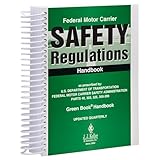
- FMCSR handbook gives drivers easy access to word-for-word Federal Motor Carrier Safety Regulations.
- Includes Parts 303, 325, 350-399, and 40 of the FMCSRs, with interpretations inserted immediately following the regulation
- Includes intermodal equipment requirements minimum periodic inspection standards, medical regulatory criteria, regulatory histories
- 8.5 x 11" English spiral bound handbook with 608 pages.
| Route | Who may qualify | Key condition |
|---|---|---|
| Ordinary primary offering (General Instruction I.B.1) | An issuer that satisfies the form’s registrant and transaction requirements | The form sets a $75 million public-float threshold for this route, alongside other conditions. See the Form S-3 instructions. |
| Limited primary offering (General Instruction I.B.6) | Certain issuers below the $75 million public-float threshold | Requires, among other conditions, common equity listed and registered on a national securities exchange and compliance with a one-third-of-public-float sales cap over the preceding 12 calendar months. Shell-company conditions also apply. See the Form S-3 instructions and the SEC’s smaller-company eligibility guide. |
| Automatic shelf (General Instruction I.D) | Issuers that qualify as WKSIs and meet Form S-3’s conditions | WKSI status is a distinct eligibility requirement; not every Form S-3 filer qualifies. See the Form S-3 instructions. |
Ordinary primary offerings
For the ordinary primary-offering route, the $75 million threshold refers to public float, not simply the company’s total market value or the amount it wants to raise. Meeting that threshold alone is not enough: the issuer and transaction must satisfy the form’s other applicable requirements.
Limited primary offerings for some smaller issuers
General Instruction I.B.6 can allow certain companies below the ordinary public-float threshold to register a limited primary offering. The pathway is constrained: the issuer must meet the applicable general requirements, have common equity listed and registered on a national securities exchange, satisfy shell-company conditions, and keep covered sales within one-third of its public float during the preceding 12 calendar months. The SEC’s guide to smaller-company eligibility describes this route; the current form instructions govern an actual filing.
I.B.6 eligibility is not a general pass for every purpose under SEC rules. The form expressly cautions: “A registrant’s eligibility to register a primary offering on Form S-3 pursuant to General Instruction I.B.6. does not mean that the registrant meets the requirements of Form S-3 for purposes of any other rule or regulation of the Commission apart from Rule 415(a)(1)(x).”
Automatic shelves for WKSIs
An automatic shelf registration is a distinct Form S-3 pathway for issuers that meet the WKSI definition and the form’s conditions. It is not a benefit available to every company that can file Form S-3, and ordinary S-3 eligibility should not be confused with WKSI status.
What a shelf registration means
A shelf registration lets an eligible issuer register securities that may be offered later, rather than completing every offering at the moment of registration. This can give the issuer flexibility over the timing of subsequent offerings. The applicable eligibility route and offering rules still matter; “shelf” does not remove Form S-3 requirements or make a registered offering risk-free.
An automatic shelf is the WKSI-specific form of this mechanism. A company should not assume that qualifying for a limited I.B.6 primary offering also qualifies it for an automatic shelf or for unrelated regulatory provisions.
Rank #4

- Vehicle Inspections Handbook provides step-by-step information CMV drivers need to conduct successful pre-trip, en-route, and post-trip inspections, so they can avoid breakdowns, citations, fines, repair bills, and crashes.
- Information is presented graphically within the vehicle safety handbook so that it's easy to find, with call-outs that address real-life situations drivers may experience during inspections.
- Vehicle inspection book features checklists that drivers can use to ensure successful vehicle inspections.
- Major topics covered include: The importance of vehicle inspections; Key regulations; Preparing for inspections; The inspection process; Vehicle inspection reports (DVIRs); Common inspection violations; and more!
- Softbound handbook measures 5.25" x 8.25", has 76 pages, and is written in English. Copyright 2020.
When a company uses Form S-3
A company considers Form S-3 when it plans a securities offering and appears to meet the form’s requirements for the issuer and transaction. Depending on the route, the form may be used for a primary offering, a later offering under a shelf registration, or an automatic shelf if the issuer qualifies as a WKSI. Which route is available must be determined from the current form and the issuer’s circumstances; no route is automatic merely because the company is public or has filed S-3 before.
Independent reader supportYour contribution helps us test, update, and keep practical guides available for everyone.Eligibility can change
Eligibility is not necessarily fixed at the initial filing. SEC Corporation Finance staff says an issuer must reassess its eligibility each time it updates a registration statement under Securities Act Section 10(a)(3). If an issuer no longer meets the transaction requirements for the I.B.1 primary-offering route, it cannot continue using that route and should determine whether another route, including I.B.6 where applicable, is available. See the SEC’s Corporation Finance interpretations.
Windows Errors? Fix Them Before They Spread
Repair common Windows errors and clear accumulated junk for a smoother, more stable PC - no reinstall needed.Free scan · no reinstallOutdated Drivers Are Slowing You Down
One free scan finds every outdated or missing driver and matches the right update for your exact hardware.Free scan · exact hardware matchBest Value
General eligibility guidance also describes at least 12 calendar months of Exchange Act reporting history and timely filing of required reports, subject to details and exceptions in the form and staff guidance. The precise requirements should be checked against the issuer’s facts rather than reduced to a blanket rule about any late filing.
How Form S-3 filings are accessed
Registration statements and reports are filed through EDGAR and generally can be viewed on the SEC website. The SEC’s registration statement filing guide, updated September 28, 2026, says initial filings and most subsequent-offering filings may be made confidentially. Public access and confidentiality depend on the filing and applicable process.
Quick Recap
Product prices and availability are accurate as of the date/time indicated and are subject to change. Any price and availability information displayed on Amazon at the time of purchase will apply.




