Yes, tariffs can raise prices for U.S. consumers, but a 25% tariff does not mean a product’s shelf price will rise 25%. Importers and businesses can absorb some of the charge, and the effects may spread gradually through supply chains and domestic competition. A Federal Reserve Bank of New York staff report, revised in September 2026, estimates that about 26% of the 2025 U.S. tariff increase passed through to consumer prices relative to less-exposed goods. That is an economy-wide estimate—not a forecast for any particular Canadian or Mexican product.
How tariffs can affect the prices consumers pay
A tariff is a charge on imported goods. The importer is responsible for paying it, but the eventual cost can be divided among importers, foreign suppliers, retailers, U.S. producers, and consumers. How much reaches a shopper depends on the product, competition, supply contracts, and how businesses respond; the tariff rate alone does not determine the retail-price change.
In its analysis of the 2025 U.S. tariff increases, the New York Fed estimated that about 26% passed through to consumer prices compared with less-exposed goods, holding aggregate conditions fixed. The authors also caution that standard estimates can miss effects on prices of goods made in the United States. Their report says tariffs can raise domestic prices as well as the prices of taxed imports. Read the New York Fed report.
Direct effects can arrive before indirect ones
The report attributes 64% of the measured increase to direct effects, such as higher prices for foreign varieties of a product. The other 36% came through indirect channels, including higher costs for imported inputs used by U.S. manufacturers and higher markups by domestic producers facing less competition from pricier imports.
What’s actually slowing this PC down?
Pick the symptom - the matching free tool is one click away.
#1 Best Overall

- 𝗘𝗳𝗳𝗼𝗿𝘁𝗹𝗲𝘀𝘀 𝗪𝗲𝗶𝗴𝗵𝗶𝗻𝗴: Supports 5 units (oz/lb:oz/fl'oz/g/mL), tare function, and includes 2 AAA batteries for hassle-free operation
- 𝗣𝗿𝗲𝗰𝗶𝘀𝗲 𝗥𝗲𝘀𝘂𝗹𝘁𝘀: Accurately weighs up to 11 lb/5 kg with 1 g increments
- 𝗦𝗶𝗺𝗽𝗹𝗲 & 𝗖𝗼𝗺𝗽𝗮𝗰𝘁: The small and sleek scale is a perfect fit for most kitchens, occupying little space and easily storable in cabinets
- 𝗘𝗮𝘀𝘆 𝘁𝗼 𝗖𝗹𝗲𝗮𝗻: Just wipe down the 304 food-grade stainless steel surfaces to keep clean
- 𝗟𝗖𝗗 𝗗𝗶𝘀𝗽𝗹𝗮𝘆: Backlit LCD screen with large fonts for easy reading
In the report’s analysis, direct price effects appeared quickly as import prices rose, while indirect effects took nine to twelve months to work through supply chains. These are findings about the 2025 tariff changes, not guaranteed timing or pass-through rates for a future tariff or an individual item.
Which Canada and Mexico tariffs apply?
Coverage depends on the specific trade action, its effective date, the product’s tariff classification and origin, and any applicable exclusions. A product’s country of origin by itself is not enough to determine whether a duty applies.
Rank #2
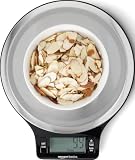
- Digital kitchen scale with food-safe, BPA-free plastic components
- Stainless steel platform with wide LCD screen
- Weighs up to 11 pounds (2 grams minimum, up to about 5000 grams); displays results in pounds, ounces, grams, fluid ounces, and ml
- Tare button for measuring just the food, minus the container weight
- Battery operated; (2) AAA batteries included
March 2025 action on Canada and Mexico
A White House fact sheet dated March 6, 2025 described 25% tariffs on Canadian and Mexican goods that did not satisfy USMCA rules of origin. It described a 10% rate for specified Canadian energy imports and a 10% rate for potash from either country outside the USMCA preference. Under that action, goods that claimed and qualified for USMCA preference were not subject to the tariffs described in the fact sheet. These details describe that dated action; they should not be read as a complete account of every later U.S. measure. See the White House fact sheet.
Additional Canadian tariffs described in July 2026
A July 20, 2026 White House fact sheet said President Trump had signed three proclamations imposing additional 50% tariffs on certain Canadian imports, including goods such as wine, hockey sticks, and cement. The administration said the measures applied whether or not a good qualified as originating under USMCA, with exclusions for energy, potash, goods subject to Section 232 tariffs, and certain other goods, including fish and critical minerals. Those are the administration’s descriptions; a product-specific determination requires checking the relevant proclamation and the product’s classification. Read the July 2026 fact sheet.
Do these 3 things before closing this tab:
1Clear out junk files and repair common Windows errors2Scan for outdated or missing drivers - takes under a minute3Repair Windows errors before they cause bigger problemsRank #3

- Contemporary Slim Design: Made of Stainless Steel Material; It is easy to use and clean; Provides accurate weight data with a user-friendly control panel and system; With high precision sensors to ensure correct performance and readouts
- Multiple Unit Conversion Setting: You can easily switch to any unit that you need; It can show units in the following: g / kg/lb/oz/ml/milk ml; Yes! It includes milk volume measurement
- Low Energy Consumption with Included Battery: This unit comes with batteries and doesn’t consume too much power; Plus it has an auto shut off feature
- Backlit Display (Easy to See and Read Panel): The unit has a negative white digital display so it is easy to read and see even in not well-lit rooms
- After Sales Support, and Trusted Customer Support Team assist you with any questions that might arise about your kitchen scale. We take pride in our work and want you to have a great experience from beginning to end
USMCA entered into force on July 1, 2020, according to the Office of the U.S. Trade Representative. The agreement’s preference is relevant where a particular tariff action makes it relevant; it does not establish that every product from Canada or Mexico is exempt from every later measure. USTR’s Mexico trade summary and USTR’s Canada trade summary provide country-level trade context.
What the evidence says—and what it does not
U.S. estimate for the 2025 tariff increases
The New York Fed’s 26% estimate covers the broader set of 2025 U.S. tariff increases. It is not limited to tariffs on Canada and Mexico and cannot tell a shopper how much a particular product will cost. It is best understood as evidence that some tariff costs reached consumers, alongside other channels and timing effects.
Rank #4

- 【Precise Weight Food Scale】Our Food Kitchen Scale equips four high-precision load sensors, waterproof Anti-collision glass weighing panel. Large measuring capacity with 1g precise graduation from 0.1oz/3g to 33 lbs/15kg.
- 【Pratical and Durable Kitchen Scale】5 commonly used measurement units(g/kg/lb:oz/oz/ml). Screen touch and LCD display make it easy to use and read. 7.5" x 5.5" in stainless steel panel provide more stability and space for larger containers.
- 【Weight Control Scale -Easy Tare】 The Tare button allows you to subtract the weight of mug, plate, or different sized bowl, making it easy to achieve accurate readouts of nuts, grains, powder, fruit, milk and more food.
- 【Smart Design Baking Scale 】With a 2min Auto-off function, no need to worry about power consumption. Power-low alarm and overload remind. Hanging hook and 4 no-slip rubbers. Easy to clean and store.
- 【12 Months Support】We cherish every customer, your satisfaction are priority. Feel free to contact us, we will take every consultation and question seriously.
Observed Canadian prices after Canada’s counter-tariffs
A Bank of Canada study examined daily online prices for more than 110,000 products at seven Canadian retailers from February through December 2025. Researchers compared U.S. products subject to Canada’s counter-tariffs with domestic and non-tariffed controls. By mid-June, tariffed prices were about 6% above the control group—roughly one-quarter of Canada’s 25% counter-tariff. After most Canadian counter-tariffs were removed on September 1, prices moved back toward the control group; the researchers said the reversal for groceries and appliances was nearly complete within three months. Read the Bank of Canada’s analysis.
This is evidence about Canadian counter-tariffs and Canadian retail prices, not a direct estimate of U.S. price effects from U.S. tariffs on Canadian or Mexican goods. The study also found that expectations about how long tariffs would last affected some pricing: one appliance retailer’s relative prices rose sharply after the April 2, 2025 U.S. global-tariff announcement, even though no new Canadian counter-tariff took effect that day. The researchers suggested the announcement may have changed expectations about the duration of the trade conflict. They also observed faster and larger increases for some products visibly labeled “Tariffed.” The article notes that it was produced independently of the Bank of Canada’s Governing Council and its views may differ from official Bank views. See the study and its qualifications.
The Tool Desk
Outbyte Driver Updater FREEScan for outdated or missing drivers - takes under a minuteDriver Scan →Outbyte PC Repair FREEClear out junk files and repair common Windows errorsFree Scan →Best Value

- 【Precise Weight】 10kg/22lb capacity, 1g/0.1oz resolution, Great for cooking, baking, weight loss, Meal Prep, Coffee, Package, Postage.
- 【Multifunction Scale】This digital kitchen scale has 6 measurement unit: g, kg, lb, oz, ml, milk ml.
- 【Easy Tare】Remove the weight of any container to get more precise results.
- 【Portable Design】- Small Scale Dimensions:7.4 x 5.5 x 0.6 inches. The digital kitchen scale’s convenient size makes it easy to store in your kitchen.
- 【LCD Display】Big bright LCD display easy to read. The cute gram scale to turn off after 3 minutes inactivity.
An older proposal model is not a current forecast
A January 2025 Budget Lab at Yale model estimated that the then-proposed 25% tariffs on Canada and Mexico plus a 10% tariff on China would raise the PCE price level by 0.72% to 0.76% before consumer substitution, depending on retaliation. That was a modeled scenario for a proposal at the time, not measured inflation or an estimate of the policy now in force. Read the Budget Lab analysis.
Independent reader supportYour contribution helps us test, update, and keep practical guides available for everyone.Could groceries, cars, or appliances get more expensive?
U.S. trade with both neighbors includes many consumer goods and production inputs. USTR lists vehicles, machinery, electrical machinery, medical devices, and agricultural products among U.S.-Mexico trade categories; Mexican exports to the United States include fresh vegetables, beer, distilled spirits, and fresh fruit. Those categories show why tariffs can affect both finished goods and the parts or ingredients used in U.S. production. They do not establish that any named grocery, car, appliance, or other item is covered or will rise by a particular amount.
Product-level exposure depends on details such as tariff classification, origin rules, the measure in force, and listed exclusions. A manufacturer may also source components from several countries, so a tariff on an input can affect a U.S.-made product even if that finished product is not itself imported from Canada or Mexico.
How to assess a price claim about a specific product
- Identify the exact product and its origin. A brand’s home country or the place a product is sold does not necessarily identify its customs origin.
- Check the applicable measure and date. Use the relevant proclamation or official tariff information rather than applying a rate from an older announcement to current goods.
- Check classification, USMCA eligibility, and exclusions. These determine whether a particular import falls within a tariff action; general country-level descriptions cannot settle the question.
- Separate the tariff rate from the retail-price claim. Evidence that a tariff applies does not show how much of its cost a supplier, importer, or retailer will pass on.
- Look for product-specific price evidence. Aggregate estimates can explain likely channels, but they cannot establish the future shelf price of an individual item.
What the trade figures do—and do not—show
USTR reports that U.S. goods imports in 2025 were $534.3 billion from Mexico and $381.9 billion from Canada. These figures show the scale of trade between the countries, not the share of imports covered by a particular tariff or the share of any tariff cost that will reach consumers. Mexico trade data and Canada trade data provide the underlying country summaries.
Quick Recap
Product prices and availability are accurate as of the date/time indicated and are subject to change. Any price and availability information displayed on Amazon at the time of purchase will apply.




