What’s actually slowing this PC down?
Pick the symptom - the matching free tool is one click away.
Manage risk in prediction markets by checking the contract’s settlement rules, limiting your potential loss to money you can afford to lose, and assessing whether you could exit at a realistic price. A YES or NO price is not a guarantee of the event’s true probability—or of the price you will receive if you sell. Before placing a trade, understand what outcome counts, who decides it, what costs apply, and what could prevent an exit.
Start with the contract, not the forecast
A contract headline can hide details that determine whether a trade wins or loses. Read the full specification before buying or selling. The CFTC says customers should receive transparent information about trading rules, contract terms, payouts, and settlement decisions in the regulated context it describes; its consumer guidance on prediction markets and event contracts recommends reviewing those details.


- Outcome definition: What exactly makes the contract resolve YES or NO? Check thresholds, dates, time zones, and any stated exclusions.
- Resolution authority and source: Identify who determines the result and which data source or agency controls. Do not assume a news report, unofficial estimate, or similar market will determine settlement.
- Timing and updates: Find the expected report or settlement time and learn how delayed, corrected, missing, or inaccurate source data is handled.
- Disputes and emergencies: Check the contract’s procedures for challenges, unusual events, or disruptions to normal settlement.
These are risk factors, not fine print: a delayed report can keep capital tied up, and a correction or source-data problem can affect how the contract resolves.
Set a loss limit you can afford
Decide your maximum loss before entering a position. The CFTC advises using risk capital—money left after ordinary expenses and savings needs—and warns against pressure or enticements to risk more. ForecastEx’s filed risk disclosure says participants should be prepared to lose their entire investment. Treat the amount committed to a position as potentially lost, rather than relying on a forecast or planned exit to protect it.
#1 Best Overall

- My Trading Journal for Stock Market, Forex, and Crypto: Precisely track and analyze every trade. This log book is essential for improving your trading performance and decision-making skills.
- Comprehensive Day Trading Planner: Record and review 80 guided trades with 8 review sections, perfect for traders aiming to refine their strategies and maximize profits.
- Customizable Trading Setup: Tailor your trading approach by documenting your setups, analyzing results, and adjusting strategies based on market conditions.
- For All Types of Traders: Whether you're trading stocks, forex, or crypto, My Trading Journal supports your unique trading style and helps you achieve consistent success.
- Premium Quality and Durability: Made with high-quality materials, this A5-sized journal is perfect for daily use and designed to withstand the rigors of active trading.
There is no universal safe position size established by the cited consumer guidance and disclosures. Your limit depends on your finances and the contract’s risks; a recent win, promotion, or confident forecast is not a reason to exceed it.
Check whether the price is tradable at your size
An event-contract price may reflect market participants’ beliefs, but it is not necessarily a reliable estimate of the event’s true probability. ForecastEx’s disclosure warns that prices may not accurately reflect probabilities. Nor is a displayed price or last trade a promise that you can exit there: the CFTC notes that order books generally show customer bids and asks, while limited opposing interest can make an offset difficult or costly.
Before entering, inspect the bid, ask, spread, and available order-book depth at the size you expect to trade. Consider what it might cost to close the whole position, not just the price shown for a small trade. If depth is thin, a large order may fill at worse prices, fill only in part, or remain open. Trading out before settlement is possible on some markets, but never assured.
Rank #2
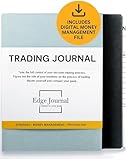
- FOR SERIOUS TRADERS: Track every entry, exit, position size, P&L, and setup with a structured layout designed for forex, stocks, options, futures, and crypto traders who want to identify what actually works in their strategy. NEUROSCIENCE-BASED DESIGN that encourages Growth Mindset and accountability
- TRADER PSYCHOLOGY FOCUS: Built on proven cognitive science principles, each page guides you through emotion tagging, bias recognition, and post-trade reflection to rewire reactive decision-making and build the disciplined mindset top-performing traders rely on
- COMPLETE 2026 TRADING LOG BOOK: Undated 12-month layout with performance summaries and goal tracking for day traders, swing traders, and long-term investors building consistent and serious results
- PERFORMANCE METRICS THAT DRIVE GROWTH: Dedicated sections for win rate, risk-reward ratio and strategy backtesting help you turn raw data into actionable insights, so every losing trade becomes a lesson and every winning trade becomes a repeatable system
- DIGITAL MONEY MANAGEMENT FILE INCLUDED : calculate your risk/reward ratio and win rate to find out whether you have a mathematical edge on the market, or not.
Include every cost in the decision
Estimate the result after commissions, fees, penalties, spreads, and any other transaction costs the venue discloses. Costs can turn a seemingly favorable price move into a loss or reduce a gain. Rates and fee structures vary by platform and contract, so check the current terms for the specific trade rather than assuming a figure applies elsewhere. The CFTC’s consumer guidance also advises customers to review fees and other costs.
Watch the position and understand exit orders
Reassess an open position when new information changes your view, the time remaining, market liquidity, or the likely cost of closing. The CFTC recommends closely monitoring open positions. If you use a stop-loss or another exit order, learn how the venue triggers and executes it, including what happens during fast markets or an outage.
A stop order is not a guaranteed loss cap. Insufficient liquidity can lead to a worse fill or no fill, and a trading halt can prevent an order from being placed or executed. ForecastEx’s filed risk disclosure describes liquidity constraints and trading halts as risks. A delay in the settlement source can also leave a position open longer than expected.
Rank #3
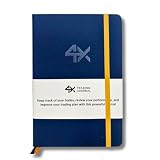
- BUILT FOR YOUR MARKET, FUTURES, STOCKS, FOREX, OPTIONS & CRYPTO: 4X is a mindset and process journal, not a strategy tool tied to one instrument. The plan, the trade log, the deep dive and the weekly review work the same whether you trade ES, EURUSD, SPY or BTC. Traders use it across all five markets every day.
- THE 2026 EDITION, REBUILT FROM TRADER FEEDBACK: Same trusted system, better in every way. An extra daily page for more room to log the session. Weekly reviews now grouped with each week's trades, so no more flipping back and forth. Crisp, darker print that's easy on the eyes after hours on a screen. A Quick-Start QR that scans straight to step-by-step instructions.
- NOT A NOTEBOOK, A COMPLETE 12-WEEK SYSTEM: Start with a one-time 9-part Trading Plan (your market, setups, risk rules and discipline checklist). Then twelve identical weeks: five Daily Logs, five Deep Dive trade pages, and a two-page Weekly Review. 189 guided pages, roughly 80 trades. Guided prompts walk you through every step. You never stare at a blank page.
- RATE YOUR EXECUTION, NOT YOUR RESULT: Your platform tracks the P&L. Nothing tracks the why. Log energy, sleep and mindset before the open; grade every trade A to F on whether you followed your plan, not on whether it won; then face the pattern every weekend with START / STOP / IMPROVE / CONTINUE. That review habit is the edge. You're 42% more likely to hit a goal you've written down.
- BUILT TO LAST, ARRIVES GIFT-READY: Vegan-leather hardcover, 100gsm bleed-resistant paper, two ribbon markers and an elastic closure band. Bound to lay flat so you're not fighting the spine while you write. 189 pages, 5.75" x 8.5", carries in a bag. Ships in a premium gift box: the gift every trader in your life actually wants.
Do not assume a related market or financial product will hedge your position effectively. ForecastEx cautions that a perceived relationship does not ensure corresponding prices; the two prices can diverge.
Account for risks beyond the event outcome
A correct forecast does not remove execution, settlement, or operational risk. The main failure modes to consider are:
- Outcome risk: The event resolves against your position, potentially costing the full amount committed.
- Pricing risk: The contract price does not track the event’s actual likelihood, or a changing market view does not produce a price at which you can profitably offset.
- Liquidity and liquidation risk: Too few willing counterparties or too little bid depth makes an exit expensive or unavailable.
- Resolution and source risk: Source data is late, inaccurate, compromised, or handled under rules you did not anticipate.
- Trading-halt risk: The exchange or regulator halts trading, blocking a planned exit.
- Operational and intermediary risk: Hardware or software failures, an intermediary’s insolvency, or order-transmission problems disrupt a trade.
- Concentration and manipulation risk: Outcomes controlled by a few actors, or a settlement price that a participant can influence, may be especially vulnerable. A July 2, 2026 working-paper version, “Settlement Manipulation in Prediction Markets”, reports settlement-time order-flow effects in the Polymarket five-minute Bitcoin contracts it studied and says the reported effect was largely absent in its studied fifteen-minute contracts. This is a narrow working-paper finding, not evidence that all prediction markets or contracts are manipulated.
Compare contracts and venues on the same criteria
When considering more than one option, compare like with like. Venue protections, fees, eligibility, and contract rules are not necessarily the same.
| What to compare | Questions to check |
|---|---|
| Contract clarity | Is the outcome precisely defined? Who resolves it, which source controls, and how are corrections or disputes handled? |
| Execution and liquidity | What are the bid and ask, spread, and depth at your intended size? What can halt trading or prevent an exit? |
| Total cost | What commissions, fees, spreads, penalties, or other charges apply to entry and exit? |
| Risk controls | Which order types and position limits are available, and how do orders behave during outages or fast markets? |
| Regulatory and geographic fit | Which entity and exchange operate the venue, who is eligible, and what restrictions apply where you live? |
The reviewed official guidance and disclosures do not establish a current, like-for-like fee or platform comparison. Verify each venue’s current terms and your eligibility before trading.
Independent reader supportYour contribution helps us test, update, and keep practical guides available for everyone.Keep records and review the actual result
After an exit or settlement, compare the outcome with your original plan. Include actual fills and all fees, and note whether the position could have been closed at the price you assumed. Keeping the contract wording, source updates, order execution details, and your reason for entering and exiting can help you judge whether you followed your risk limit. One successful outcome does not establish a repeatable edge.
What the current U.S. regulatory context means
The CFTC’s consumer guidance describes event contracts commonly structured as swaps with YES or NO outcomes and explains responsibilities of CFTC-regulated exchanges, including rule enforcement and surveillance. That description does not establish that every product marketed as a prediction market has the same regulatory status or protections.
The Tool Desk
Outbyte Driver Updater FREEFix the driver behind crashes, sound loss and screen glitchesFind Drivers →Outbyte PC Repair FREEClear out junk files and repair common Windows errorsFree Scan →On March 16, 2026, the CFTC published an advance notice of proposed rulemaking on prediction markets, seeking public comment on questions including listings, position limits, margin, risk management, and operational safeguards. It is a proposal for comment, not a final rule. Check current rules, venue terms, and location-specific eligibility rather than treating a broad availability claim as legal advice.
The notice reports an average of approximately five event contracts listed per year by designated contract markets from 2006 through 2020, 131 in 2021, and approximately 1,600 certified event contracts in 2025. These are the notice’s figures for listed or certified contracts, not counts of active markets or trades.
Quick Recap
Product prices and availability are accurate as of the date/time indicated and are subject to change. Any price and availability information displayed on Amazon at the time of purchase will apply.




