Recommended Free Tools
There is no verified evidence here that a crash in Sandisk Corporation (Nasdaq: SNDK) is expected. Its FY2026 filing does, however, describe risks that could drive a sharp decline in earnings or shares—especially a downturn in NAND memory prices, weaker demand, or problems meeting customer commitments. Those are disclosed risks, not a dated forecast that a sell-off will happen.
Why do investors worry that SNDK could fall?
The central concern is the memory business’s exposure to supply-and-demand cycles. Sandisk sells NAND flash memory and storage products. When supply outpaces demand, manufacturers may have to cut prices or carry excess inventory; when demand is strong and supply is constrained, pricing and margins can improve. A change in that balance can therefore affect both Sandisk’s results and investors’ expectations for those results.
In its FY2026 Form 10-K, Sandisk says storage markets “have in the past experienced, and may continue to experience, periods of excess capacity.” The filing describes possible consequences including inventory liquidation and write-downs, underutilization charges, lower average selling prices, and weaker revenue and gross margins. It also identifies volatile demand, competition, technology changes, and industry consolidation as risks. These disclosures explain how a downturn could hurt the business; they do not establish that one is imminent.
Strong results can make expectations more sensitive
Sandisk’s recent growth is important context, but it does not show that the same pace will continue. If investors have come to expect unusually strong prices or growth, even a slowdown could disappoint them. That is a possible market reaction, not a forecast of a particular share-price decline.
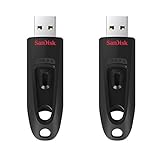
#1 Best Overall

- High-speed USB 3.0 performance of up to 150MB/s(1) [(1) Write to drive up to 15x faster than standard USB 2.0 drives (4MB/s); varies by drive capacity. Up to 150MB/s read speed. USB 3.0 port required. Based on internal testing; performance may be lower depending on host device, usage conditions, and other factors; 1MB=1,000,000 bytes]
- Transfer a full-length movie in less than 30 seconds(2) [(2) Based on 1.2GB MPEG-4 video transfer with USB 3.0 host device. Results may vary based on host device, file attributes and other factors]
- Transfer to drive up to 15 times faster than standard USB 2.0 drives(1)
- Sleek, durable metal casing
- Easy-to-use password protection for your private files(3) [(3)Password protection uses 128-bit AES encryption and is supported by Windows 7, Windows 8, Windows 10, and Mac OS X v10.9 plus; Software download required for Mac, visit the SanDisk SecureAccess support page]
What do Sandisk’s latest results show?
Sandisk reported FY2026 net revenue of $12.893 billion, up 175% from FY2025. The company said datacenter growth reflected higher sales and pricing. FY2026 ended July 3, 2026, and covered 53 weeks. These are company-reported historical comparisons, not guidance for the next year.
| Business area | FY2026 revenue change versus FY2025 | Attribution and period |
|---|---|---|
| Total net revenue | Up 175% | Sandisk Corporation, FY2026 versus FY2025; FY2026 ended July 3, 2026, and had 53 weeks. |
| Datacenter | Up 437% | Sandisk Corporation, FY2026 versus FY2025; company cited higher sales and pricing as drivers of datacenter growth. |
| Edge | Up 195% | Sandisk Corporation, FY2026 versus FY2025. |
| Consumer | Up 29% | Sandisk Corporation, FY2026 versus FY2025. |
The growth is counterevidence to the idea that the business was already collapsing in FY2026. It does not remove the risk that demand, prices, or margins could weaken later.
How could memory prices and margins turn against the company?
Sandisk says average selling prices and gross margins may decline if its product mix shifts toward lower-priced products or if selling prices fall faster than costs. In a cyclical business, a price reversal can pressure revenue and profitability at the same time that investors reassess how long strong results can last. The FY2026 filing describes that sensitivity; it does not forecast a specific price decline or earnings peak.
Rank #2
- Transfer speeds up to 10x faster than standard USB 2.0 drives (4MB/s); up to 130MB/s read speed; USB 3.0 port required. Based on internal testing; performance may be lower depending upon host device. 1MB=1,000,000 bytes
- Backward compatible with USB 2.0
- Secure file encryption and password protection(2)
Industry commentary in 2026 also discussed the risk that a memory boom could be followed by a cyclical reversal. That context is a reason to examine supply and pricing trends, not proof that a reversal has begun. The company’s annual filing remains the primary source for Sandisk’s stated risk factors.
Do these 3 things before closing this tab:
1Clear out junk files and repair common Windows errors2Fix the driver behind crashes, sound loss and screen glitches3Repair Windows errors before they cause bigger problemsDo customer contracts protect Sandisk from a downturn?
Sandisk’s New Business Models (NBMs) include multi-year commitments with Datacenter and Edge customers for stated product volumes and pricing mechanisms. The company says these arrangements are intended to reduce some elements of industry cyclicality and support its long-term objectives. They may give the business more visibility than relying only on spot-market sales, but they are not a guaranteed earnings floor.
NBMs also create execution obligations. Sandisk says it must deliver the required volumes and specifications, which depend on manufacturing capacity, yields, supply chains, and raw materials. If it misses those requirements, customers may seek damages or penalties, terminate agreements, or reduce business. Conversely, if a customer defaults or cuts a commitment, Sandisk may have to find another buyer for the volume—potentially at a lower price or not at all. The company warns that these outcomes could result in excess inventory, lower margins, or write-downs.
Rank #3
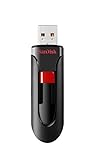
- Reliable storage for photos, videos, music and other files
- Available in capacities from 8GB to 256GB (1GB = 1,000,000,000 bytes - Actual user storage less)
- Transfer with confidence when moving images and other content
- Retractable design keeps the connector safe
- SanDisk SecureAcces software with 128-bit AES encryption and password protection(1)
How important is Kioxia to Sandisk’s manufacturing?
Sandisk says it procures flash-memory wafers through Flash Ventures, its joint ventures with Kioxia. The arrangement supports manufacturing, but it also makes operational coordination important: the companies share investments in capacity and technology transitions, and Sandisk says its ability to source elsewhere is limited. If their plans diverge, the company warns, responsiveness or technology progress could suffer. This is a dependency risk, not evidence that the partnership is failing.
Could competition or technology changes cause a decline?
Sandisk identifies competitive products and pricing, product development and launches, technology transitions, supply-chain disruption, and changes in customer relationships among its risks. A company that cannot keep products and production aligned with customer needs may face pressure on sales or margins.
The Tool Desk
Outbyte PC Repair FREEClear out junk files and repair common Windows errorsFree Scan →Outbyte Driver Updater FREEScan for outdated or missing drivers - takes under a minuteDriver Scan →An August 2026 247WallSt commentary raised Chinese competition as a concern. That is a media-reported bear-case issue; it does not establish how much market share a particular competitor will gain or quantify the effect on Sandisk’s revenue. The available company risk disclosures support treating competition as something to monitor, not asserting a specific future outcome.
Rank #4
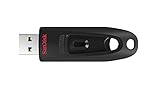
- Transfer speeds up to 10x faster than standard USB 2.0 drives (4MB/s); up to 130MB/s read speed; USB 3.0 port required. Based on internal testing; performance may be lower depending upon host device. 1MB=1,000,000 bytes
- Backward compatible with USB 2.0
- Secure file encryption and password protection(2)
Does a business risk mean SNDK stock is expected to crash?
No. A risk disclosure explains what could go wrong, not what the company or market expects to happen. The materials reviewed do not establish a current consensus forecast, a crash probability, or a timetable. Nor do they establish whether SNDK is overvalued: that judgment requires a dated share price and a defensible view of future, preferably normalized, earnings.
A stock can fall even while a company is growing if its results fail to meet expectations, if investors conclude that peak conditions are near, or if the broader market weakens. Conversely, a cyclical business can keep producing strong results longer than skeptics expect. Sandisk’s FY2026 growth and its disclosed exposure to pricing cycles both matter; neither determines the next share-price move on its own.
What should an investor monitor?
Use company filings and results to check whether operating conditions are changing, rather than treating a risk statement or a dramatic headline as a prediction.
- Supply and demand: Watch capacity additions, utilization, inventory levels, and customer demand for signs that supply is catching up with sales.
- Prices and margins: Track NAND selling-price direction, product mix, and gross-margin trends. Falling prices or a weaker mix could matter even if revenue remains substantial.
- Customer commitments: Look for updates on NBM volumes, pricing mechanisms, customer concentration, delivery performance, and changes to customer commitments.
- Manufacturing execution: Follow Flash Ventures output, Kioxia coordination, technology transitions, and investment needs.
- Valuation assumptions: Compare the share price with earnings expectations that account for the possibility that unusually favorable memory pricing will not persist. A current valuation requires current market data; no price, multiple, or implied downside is established here.
What is the most defensible conclusion?
The case for caution is that Sandisk’s earnings can be exposed to NAND supply, pricing, and execution cycles, while its FY2026 results were exceptionally strong. A reversal could pressure both financial performance and investor expectations. The case against assuming an imminent collapse is equally important: FY2026 revenue rose sharply, the company has multi-year customer arrangements, and the reviewed sources do not provide a dated forecast that SNDK will crash. The evidence supports monitoring the cycle and the stock’s valuation—not treating a crash as an established expectation.
Quick Recap
Product prices and availability are accurate as of the date/time indicated and are subject to change. Any price and availability information displayed on Amazon at the time of purchase will apply.




