Music Visualizers for Streams: Tools & Loop-Ready Exports
Free tools Windows power users keep installed
One-click scans. No signup required.
Adding a visual element to a continuous music stream transforms it from background audio into something viewers can actually watch. A static image or silent visualization that loops cleanly keeps CPU usage low, keeps the stream stable, and gives your channel the polish that makes people stay tuned instead of scrolling past.
The distinction matters: a true visualizer tool reacts to the music in real time, while a loop-ready export is a pre-rendered video file that plays continuously without eating processor cycles. For 24/7 streaming on YouTube, the export approach is the practical path because your stream source lives in the cloud, not on your machine.
Building a Visualization: The Tools That Work
The most popular visualizer generators fall into two categories: desktop software that creates reactive graphics in real time, and online generators that produce static or semi-animated loop files you can upload once and use forever.
Winamp, despite its age, still ships with visualization plugins that were designed to loop cleanly. If you have archive footage or pre-recorded music, you can capture Winamp’s output through a screen recorder, save it as a video file, and loop it for weeks. The downside is that every second of video takes up disk space and has to be processed during upload.
What’s actually slowing this PC down?
Pick the symptom - the matching free tool is one click away.
#1 Best Overall
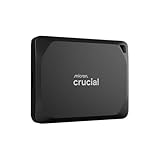
- Ultra-fast Speeds: Designed for professional creators, this external SSD delivers fast data access with up to 2,100MB/s read and 2,000MB/s write speeds for a seamless workflow. Unlike a hard drive, SSDs offer significantly faster performance
- Built to Last: Perfect for field work and all-weather shoots with IP55 water and dust resistance. Plus, drop resistant up to 7.5 ft (2 meters). This portable drive includes a lanyard loop, activity light, and SSD password protection for on-the-go security.
- Broad Compatibility: External drive connects effortlessly with Windows, Mac, iPad Pro, Chromebooks, Android, Linux, PS4, PS5, and Xbox via USB-C and USB-A for easy and fast file transfers
- Massive Storage Capacity: Store high-resolution photos, 4K/8K videos, and current projects with this compact 2TB SSD, offering secure and reliable storage for professionals and content creators
- Bonus Software Included: Enjoy three months of Mylio Photos plus and Acronis True Image when you purchase and register your external drive
OpenGL-based tools like Shadertoy and GLSL sandbox let you write code that generates animations. These produce hypnotic geometric patterns, particle effects, and color shifts that feel alive without being tied to specific songs. Artists often port their Shadertoy visualizers to video format and loop them. The learning curve is real, but the CPU cost on playback is zero because it is just a video file.
Processing, the Java-based creative coding framework, has a strong community around generative art and music visualization. Code you write in Processing can capture frames and export as MP4 or QuickTime. This approach is popular with musicians who want a signature visual style that matches their brand.
Python libraries like Librosa and Matplotlib can analyze an audio file’s frequency spectrum and generate a frame-by-frame visualization. Artists have open-sourced scripts that turn an MP3 into a video of bouncing bars, waveforms, or color gradients. The entire process runs on your laptop in minutes, and the output is a single video file ready to loop.
Web-based generators like MotionBro and Zood Visual Music let you upload a song and render a visualization in your browser. You download the result as a video and upload it to your stream. These are the lowest-effort option because you do not install anything, but the visual quality is often more limited than custom code.
PC Slower Than It Used to Be?
A free scan shows the junk files, broken settings and background clutter dragging Windows down - then fixes them in one click.Free scan · Windows 10 & 11Outdated Drivers Are Slowing You Down
One free scan finds every outdated or missing driver and matches the right update for your exact hardware.Free scan · exact hardware matchFrom Visualization to Loopable Video
The critical step is exporting your visualization in a format that YouTube will accept and that will loop frame-perfectly without stuttering. H.264 video codec at 1080p or 720p, 24 or 30 frames per second, stored in an MP4 container, is the safest choice. YouTube will re-encode it anyway, but starting with broadcast-quality source material ensures no loss.
Make sure your export resolution matches your stream bitrate and your target audience’s devices. A 1080p visualization paired with a 720p audio stream creates a mismatch in metadata that some playback software stumbles on. If your music is stereo and you want a reactive visualization, encode the audio track twice (once as mono analysis, once as stereo for actual listening) so your visualizer tool can read frequency data without altering the output.
File size matters for upload time but not for playback. A 24-hour loop at 1080p 30fps occupies about 500 GB of raw video data. That is why you do not actually render or store a full 24-hour file. Instead, you create a 1-to-5-minute visualization segment, encode it as a self-contained video, and let the streaming platform loop it. Your upload bandwidth only has to push the short segment once.
Rank #2

- X9 2 TB PORTABLE SOLID STATE DRIVE - EXTERNAL
Keeping Your Visualization Running With Your Stream
Once you have a loopable video file, the next step is getting it onto YouTube as a 24/7 stream without requiring your computer to stay powered on. Uploading the video manually and then streaming it from your desktop means your machine becomes a single point of failure. A reboot, a network hiccup, or an OS update kills the stream until you restart it.
StreamNeo removes that local failure point: upload the video and paste your YouTube stream key once, then the broadcast runs in the cloud while your PC stays off. It checks health every 30 seconds and automatically restarts a dropped stream, making the free 24-hour 720p/30fps trial a practical unattended test with no card at signup.
Run Your Loopable Visualization on YouTube 24/7 Without a PC
StreamNeo is built for this exact workflow: upload your loop-ready video, paste your YouTube stream key, and let the stream run in the cloud while your PC stays off.
Stream health is checked every 30 seconds, and dropped streams restart automatically. That keeps a reboot, local network issue, or encoder failure from requiring you to relaunch the broadcast manually.
Upload your short visualization loop and use StreamNeo’s free 24-hour 720p/30fps trial, with no card required at signup, to verify that your channel remains live unattended before committing to a longer-running setup.
Leaving a desktop encoding around the clock is the part that breaks first—one Windows update at 3am and the channel is dark until you notice. StreamNeo removes that dependency: you upload the video once, paste your YouTube stream key, and the stream runs from the cloud with your own machine switched off, restarting itself if the connection drops. There is a free 24-hour trial and no card required, which is long enough to see whether it survives a night unattended.
Exporting Without Quality Loss
When you export your visualization to video, the settings in your encoder matter as much as the source quality. Use constant bitrate (CBR) encoding rather than variable (VBR) because it produces a more predictable file size and avoids bitrate spikes that can cause playback stalls on slower connections. Set the bitrate to 8–12 Mbps at 1080p or 4–6 Mbps at 720p.
Rank #3
- Ultra-fast Speeds: Designed for professional creators, this external SSD delivers fast data access with up to 2,100MB/s read and 2,000MB/s write speeds for a seamless workflow. Unlike a hard drive, SSDs offer significantly faster performance
- Built to Last: Perfect for field work and all-weather shoots with IP55 water and dust resistance. Plus, drop resistant up to 7.5 ft (2 meters). This portable drive includes a lanyard loop, activity light, and SSD password protection for on-the-go security.
- Broad Compatibility: External drive connects effortlessly with Windows, Mac, iPad Pro, Chromebooks, Android, Linux, PS4, PS5, and Xbox via USB-C and USB-A for easy and fast file transfers
- Massive Storage Capacity: Store high-resolution photos, 4K/8K videos, and current projects with this compact 1TB SSD, offering secure and reliable storage for professionals and content creators
- Bonus Software Included: Enjoy three months of Mylio Photos plus and Acronis True Image when you purchase and register your external drive
Enable scene detection and keyframe intervals. A keyframe every 2 seconds is the standard for streaming; any longer and seeking through the video becomes sluggish. Most encoding software defaults to this already, but double-check before you export a 2-hour visualization only to discover it has no keyframes.
If your visualization includes text, subtle anti-aliasing artifacts can show up after re-encoding. Render text slightly larger than you think you need so that it survives the compression pass. YouTube applies its own re-encoding on top of your source, so starting with clean, crisp source material gives it more information to work with.
The Tool Desk
Outbyte PC Repair FREEClear out junk files and repair common Windows errorsFree Scan →Outbyte Driver Updater FREEFix the driver behind crashes, sound loss and screen glitchesFind Drivers →Why Visualizers Drive Viewer Retention
A static image might satisfy copyright rules, but it does not hold attention. Music channels with visualizations see significantly higher watch duration because the human eye tracks motion and colors. A bouncing bar chart, a smoothly rotating shape, or a particle effect that pulses with bass creates the sense that something is happening, even if the event loop is only 10 seconds long.
Channels that put a 2-minute visualization on repeat for 24 hours often see viewer comments asking where the full video came from. That is free word-of-mouth marketing. The visualization becomes your channel’s visual signature.
Handling Sync Between Audio and Video
If you are creating a reactive visualization that responds to the music, timing is everything. Librosa and similar tools can analyze an MP3 file and output the analysis data in JSON format, frame by frame. You then read that data in Processing or Python, draw the visualization to match, and export the frames in sync with the audio.
The danger is exporting the audio and video separately and then recombining them. Frame-rate mismatches are easy to introduce. Always export audio and video together in a single container file from your visualization tool if it supports it. If you have to mux them afterward, use FFmpeg with -c:v copy -c:a copy to avoid re-encoding.
Do these 3 things before closing this tab:
1Clear out junk files and repair common Windows errors2Scan for outdated or missing drivers - takes under a minute3Repair Windows errors before they cause bigger problemsTools for Beginners: The Fast Path
If you do not want to learn Processing or write Python, start with a commercial tool like Milkdrop (which works with desktop media players) or Adobe Audition’s built-in visualizer. Capture the output with OBS Studio running on your machine, export to MP4, and you have a ready-to-use loop file.
Rank #4

- MADE FOR THE MAKERS: Create; Explore; Store; The T7 Portable SSD delivers fast speeds and durable features to back up any endeavor; Build your video editing empire, file your photographs or back up your blogs all in an instant
- SHARE IDEAS IN A FLASH: Don’t waste a second waiting and spend more time doing; The T7 is embedded with PCIe NVMe technology that brings fast read and write speeds up to 1,050/1,000 MB/s¹, making it almost twice as fast as the T5
- ALWAYS MAKE THE SAVE: Compact design with massive capacity; With capacities up to 4TB, save exactly what you need to your drive – from large working files to game data and everything in between
- ADAPTS TO EVERY NEED: Whether using a PC or mobile phone, count on the T7 for extensive compatibility²; It’s a true team player when it comes to heavy-duty application usage or file-saving
- HI RESOLUTION VIDEO RECORDING: Record Ultra High Resolution (4K 60fs) videos directly onto the T7 Portable SSD with your favorite camera or mobile devices; Supports iPhone 15 Pro Res 4K at 60fps video and more³
For pure simplicity, Doodly and Animaker let you build motion graphics and background animations through a web interface. You add music, set the timeline, and export the result as video. Quality is lower than bespoke code, but setup time is under an hour.
File Organization for Long-Running Streams
Keep your visualizations organized by duration. A 10-minute loop can be looped 144 times in a 24-hour period. A 2-hour loop repeats 12 times. Shorter loops mean less storage, faster uploads, and more opportunities to swap in new content without restarting the stream.
Label your files with their duration and resolution: chillwave_10min_1080p_30fps.mp4. When you eventually upload a second visualization to your stream or need to troubleshoot which file is playing, clear naming saves hours of guessing.
Quick wins for a faster PC:
Scan for outdated or missing drivers - takes under a minuteDriver Scan →Clear out junk files and repair common Windows errorsFree Scan →Fix the driver behind crashes, sound loss and screen glitchesFind Drivers →Version your visualization files. If you update the colors or animation style, save it as chillwave_v2.mp4 rather than overwriting the original. If the new version has a playback issue, reverting is one upload away.
Codec Compatibility and Browser Playback
H.264 is the most widely supported codec for web playback. Some browsers on older devices struggle with HEVC (H.265) even though it is more efficient. Always test your finalized visualization on a smartphone or tablet using a YouTube player before marking it live. Play it for at least 5 minutes to catch any stuttering, color banding, or audio sync issues.
If viewers report buffering on your 24/7 visualization, the issue is rarely the visualization itself. It is usually bitrate mismatch between your audio and the video container, or your ISP throttling your upload. Check your encoder settings before you assume the visualization is the problem.
Quick Recap
Product prices and availability are accurate as of the date/time indicated and are subject to change. Any price and availability information displayed on Amazon at the time of purchase will apply.
Recommended Free Tools




