In a Citizens survey, 55% of U.S. credit-card users said perks mattered more to them when choosing a card than they did three years earlier, and 41% said perks always or often influenced where they spent. Those answers show that many respondents say rewards factor into their choices; they do not prove rewards caused spending to rise or changed anyone’s overall finances.
What Citizens’ survey found
Citizens reported results from an online survey of 1,499 U.S. credit-card users age 18 and older, fielded August 6–12, 2026. In the survey, 55% said perks mattered more than three years earlier when deciding which card to use. Separately, 41% said perks always or often influenced where they spent. The two figures describe reported attitudes and frequency, not a measured change in purchases. Citizens’ September 29, 2026 release presents the findings.



Respondents also connected perks with household budgets and lifestyle choices:
- 34% said they used perks to free up cash and pay down debt.
- 27% said perks enabled them to put more toward savings or investments.
- 24% said perks helped them make a major purchase sooner.
- 39% said perks helped them afford dining out, 33% travel, and 25% gifts they felt expected to participate in.
These are respondents’ accounts of how perks fit into their finances. The survey did not independently verify outcomes or establish that rewards caused debt repayment, additional saving, earlier purchases, or spending on those activities.
#1 Best Overall
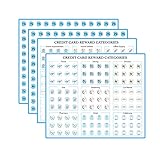
- Easy to apply: Fit on your cards perfectly and these decals are die cut,super easy to peel and apply
- Organized: Work perfectly to keep your cards organized.Make it so easy to track which card to use for which category to maximize points and miles
- Premium materials: Made with waterproof paper ,Clear print,long-lasting inks,bubble-free and removable
- Variety of categories and multipliers: There are 15 categories. And come with some blank labels,so you can write my own categories and X/%'s on them, pen or sharpie write well on the paper
- Includes: 502 lables.Size:0.39 inch/1cm in diameter,perfect size for credit cards
Do rewards affect where people spend?
Many people in the Citizens survey said they do: 41% reported that perks always or often influenced where they spent. That is evidence of a reported consideration, not proof that a reward program made a purchase happen, increased total spending, or shifted spending from one merchant to another.
Citizens also found that 88% of respondents saw some form of status in credit-card perks, while 51% viewed perks as a way to get more from spending they were already doing. These answers suggest that respondents can see rewards as both a benefit attached to existing purchases and as something that may influence choices. The survey summary does not provide the full question wording, so the figures should be read as reported rather than as precise measures of spending behavior.
Rank #2

- Amazon.com Gift Cards never expire and carry no fees.
- Multiple gift card designs and denominations to choose from.
- Redeemable towards millions of items store-wide at Amazon.com or certain affiliated websites.
- Available for immediate delivery. Gift cards sent by email can be scheduled up to a year in advance.
- No returns and no refunds on Gift Cards.
How priorities and confidence differed by income
Households earning $150,000 or more were more likely than households earning under $50,000 to say they prioritized rewards rate or cash back on the card they used most often: 76% versus 58%. The higher-income group was also more likely to prioritize travel and lifestyle rewards, at 36% compared with 16%.
Yet only 11% of the $150,000-or-more group said they were extremely confident they captured the full value of their perks, compared with 26% of households earning under $50,000. That contrast points to a possible gap between seeking rewards and feeling sure they are fully used. Citizens did not explain why confidence differed, so the figures do not establish that income, card complexity, or any other factor caused the gap.
Citizens additionally reported that 47% of higher-income households said rewards helped them continue prioritizing travel as costs increased. This describes respondents’ perceptions; it does not show that rewards lowered the overall cost of travel.
What the survey can—and cannot—show
The results come from a cross-sectional, issuer-published online survey. Citizens says higher-income households were oversampled and results were weighted to represent the U.S. population across nine demographic variables. The release does not provide a margin of error or the full questionnaire. Without those details or independent replication, the percentages are best treated as Citizens’ reported survey results, not as definitive estimates of every U.S. cardholder’s behavior.
Because the survey captures responses at one point in time rather than tracking purchases before and after a change in rewards, it cannot establish that perks caused people to spend more, save more, pay down debt, or choose a particular merchant. It also does not compare named cards or verify the value of any card’s terms.
Independent reader supportYour contribution helps us test, update, and keep practical guides available for everyone.Credit-card balances need separate context
The Federal Reserve’s 2026 Report on the Economic Well-Being of U.S. Households in 2025 offers broader context, not a direct test of Citizens’ survey. The report says credit-card ownership and repayment behavior were similar to prior years, while confidence in getting credit had fallen from its 2021 level. It cautions that rising balances alone are difficult to interpret: they can reflect stronger spending and income, or financial strain. Its linked survey and credit-record analysis found larger balance increases among people reporting hardship than among those living comfortably.
Recommended Free Tools
That distinction matters when interpreting claims that rewards support household finances. A respondent may report using perks to pay down debt or save, but that response does not establish whether their total debt or financial well-being improved. Balance trends and personal circumstances require evidence beyond a rewards survey.
What Citizens says about the results
In the September 29, 2026 release, Courtney Mitchell, Citizens’ Head of Credit Card and Unsecured Lending, said consumers are “more intentional about looking for meaningful value on everyday spending, rewards they can use in ways that matter to them and a simple experience that helps them manage their money and work toward their financial goals.” That is the issuer executive’s interpretation of the findings, not an independent conclusion established by the survey. Mitchell also said consumers increasingly expect more from a primary credit card than access to credit alone.
Quick Recap
Product prices and availability are accurate as of the date/time indicated and are subject to change. Any price and availability information displayed on Amazon at the time of purchase will apply.




