There is no established global market-size estimate or forecast specifically for hydrogen made by steam methane reforming of biogas. The International Energy Agency (IEA) reports growth and supply potential for the broader biogas and biomethane sector, while European project records document reformer development and demonstration plans. Those indicators provide context, not a route-specific hydrogen market valuation.
What the biogas-to-hydrogen market includes
Biogas is produced by processes such as anaerobic digestion and is also collected from landfills. It typically contains methane and carbon dioxide. In steam methane reforming (SMR), methane reacts with steam to produce a hydrogen-rich gas, which is then processed to separate hydrogen. A facility may reform raw biogas directly, or use biomethane—biogas upgraded to a methane-rich fuel—in equipment designed for that feed.

The distinction matters for market estimates. Hydrogen made from upgraded biomethane is not necessarily counted as direct biogas reforming, and broad biogas, biomethane or hydrogen market totals cannot establish the size of the narrower biogas-SMR segment. The available IEA outlooks do not give a standalone global value, production volume or forecast for that segment.
What the market indicators do—and do not—show
IEA publications show activity and potential in the wider biogas and biomethane sector. These figures help describe possible feedstock context; they are not measures of hydrogen output, revenue or project sales from biogas SMR.
Crashes, No Sound, or Screen Glitches?
Random freezes, missing sound and display glitches usually trace back to one bad driver. Find and replace yours safely.Free scan · under a minuteWindows Errors? Fix Them Before They Spread
Repair common Windows errors and clear accumulated junk for a smoother, more stable PC - no reinstall needed.Free scan · no reinstall#1 Best Overall
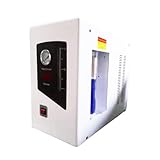
- 【Simple Operation】The hydrogen generator is designed for effortless operation; simply turn the switch on to produce hydrogen gas. During regular use, only distilled water needs to be replenished, allowing for continuous or intermittent usage.
- 【High Purity Output】This hydrogen H2 generator delivers hydrogen with a purity of 99.999%, featuring a large electrolysis area, low pool temperature, high hydrogen production capacity, and exceptional purity levels. It effectively replaces high-pressure cylinders as an essential laboratory instrument.
- 【Stable Performance】The pressure of released hydrogen remains stable, with an LED real-time display showing the flow rate. This allows for visualized operations and compatibility with various gas chromatographs.
- 【Versatile Parameters】The generator supports adjustable output flow rates ranging from 0-300ml/min, ensuring flexibility in different experimental conditions while maintaining consistent performance.
- 【Advanced Safety Features】Equipped with a specialized device to prevent liquid return, this ensures smooth operation without frequent replacements of color-changing silica gel, enhancing both safety and longevity of the instrument.
| Indicator | Reported figure | What it measures |
|---|---|---|
| Combined biogas and biomethane production | Projected to increase 23% from 2025 to 2030 in the IEA’s Renewables 2025 main case | Sector production, not hydrogen made from biogas by SMR |
| Germany’s combined biogas and biomethane production | 329 PJ in 2024, according to the IEA’s 2025 reporting | National biogas and biomethane output; Germany remains the largest market, while France, Italy and Denmark are among the faster-growing markets |
| Sustainable biogas potential by region | 80% is in emerging market and developing economies, according to the IEA’s 2025 outlook | Potential feedstock supply, led by Brazil, China and India; not a hydrogen market share |
| Biomethane potential at a stated cost level | Around 45 bcm-equivalent could be exploited at or below prevailing wholesale natural-gas prices, according to the IEA’s 2025 key findings | Potential biomethane supply, not a forecast of hydrogen volume or project economics |
The IEA also reports that industry stakeholders are considering biomethane as a feedstock for low-emissions hydrogen and methanol. That signals interest, but does not quantify demand or establish how much hydrogen will be made by SMR rather than another route.
What project records say about technology and maturity
Official European project records show development of direct-biogas reforming systems, but their targets and project descriptions should not be read as proof of routine commercial availability or fleet-wide performance.
Rank #2
- 【Hydrogen Generator】Boasting a large electrolysis area and low electrolytic cell temperature, this product achieves substantial hydrogen output with high purity (99.99%) and 0~300ml/min output flow rate, meeting the high demands of laboratories.
- 【Carefully Designed】The water-filling hole ensures convenient water adding, the water level observation window reminds you of prompt adding water, and the drying hose filled with allochroic silica gel ensures that the output gas is dry.
- 【Precise and Stable】The product offers an output pressure range of 0 to 0.4 MPa with exceptional stability of ≤±0.001 MPa, which ensures consistent and reliable performance and maximizes accuracy.
- 【Simple Operation】The product features an intuitive interface that simplifies operation, requiring only the press of a power switch to initiate hydrogen production. During daily use, the instrument only needs to be replenished with distilled water, and can be used continuously or intermittently.
- 【Enhanced Safety】The product is equipped with an overpressure protection device, and its unique gas circuit design prevents liquid backflow, enhancing the safety and reliability during operation.
| Project | Configuration and stated status | Reported target or result |
|---|---|---|
| CARMA-H2 | EU-funded project aiming to demonstrate a protonic membrane reformer using biogas at a wastewater treatment plant in Navarra, Spain | The project describes a single-stage concept integrating steam methane reforming, water-gas shift, hydrogen separation, heat management, CO2 capture and compression. Targets are greater than 85% HHV efficiency at the bioPMR level and delivery at 30 bar; these are project targets, not independently verified commercial results. |
| BIOROBURplus | Clean Hydrogen Partnership describes development of a pre-commercial direct-biogas fuel processor | Design target: 50 Nm3/h (107 kg/day) of 99.9% hydrogen for different biogas types. These are project specifications, not evidence of general market availability. |
| BioH2Ref | German project on decentralized hydrogen production from biogas through steam reforming; the project page gives a duration of 1 January 2022 to 31 December 2024 | The project page reports hydrogen-plant efficiency above 60%, compared with 40% for combined heat and power (CHP). This is the project’s comparison and system context, not a universal result for all plants. |
The European Commission’s CORDIS results summary for BIOROBURplus describes development of a direct-biogas oxidative steam reformer. Project coordinator Debora Fino characterized the project as delivering “an advanced direct biogas fuel processor for robust and cost-effective decentralised hydrogen production.” She also said regulatory support, including subsidies on par with those for water electrolysis, was needed. These are project-perspective statements, not independent cost verification.
How reformer designs differ
Not every biogas-to-hydrogen project uses the same process. A useful comparison starts with the actual feed and system design rather than assuming that one reforming route is best for every site.
Rank #3
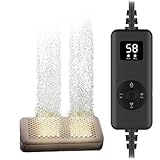
- ➤SPA Bath Generator: Turns your foot bath into a hydrogen-rich environment, delivers microbubble and nanobubble hydrogen into your bathtub, and the hydrogen concentration can reach more than 5000ppb
- ➤Reliable material: The hydrogen water bath generator uses proton membrane + platinum titanium electrolysis, and the shell is made of ABS; very reliable and powerful
- ➤Timing adjustment, three-speed hydrogen production: The foot bath spa machine has three-speed hydrogen production modes and 4 timing settings (10/20/40/60 minutes), easily enjoy
- ➤Whole body hydrogen bath: Not only suitable for foot bath, but also can be used for hands or other body parts hydrogen bath to help the whole body relax and care
- ➤Benefits of hydrogen bath and spa: Compared with ordinary water baths, hydrogen baths have many benefits, which can fade spots, deeply cleanse the skin, improve skin conditions
- Steam reforming: Uses steam with methane feedstock. For direct biogas use, the system must accommodate the feed’s composition and integrate reforming with downstream gas processing.
- Autothermal reforming: BIOROBUR selected this route. Project materials describe intended advantages for handling changing biogas composition, coking resistance, heat management and process control. Those descriptions are design objectives, not a universal finding that autothermal reforming outperforms steam reforming.
- Membrane-enhanced reforming: CARMA-H2 describes integrating reforming and water-gas shift with hydrogen separation in a protonic membrane reformer, alongside heat management, CO2 capture and compression. Its cited efficiency and pressure are targets for that project concept.
For a real project comparison, examine raw biogas versus upgraded biomethane feed; tolerance to changing gas composition and contaminants; coking control and heat integration; hydrogen purity, recovery, pressure and compression; CO2 capture, use or storage; scale and connection to the biogas plant or hydrogen buyer; and whether the cited performance comes from demonstrated operation or a project target. The reviewed project records do not establish a like-for-like commercial performance comparison.
Independent reader supportYour contribution helps us test, update, and keep practical guides available for everyone.Emissions: biogenic feedstock does not settle the carbon claim
Hydrogen made from biogas should not automatically be called carbon neutral or carbon negative. Biogenic origin alone does not determine lifecycle emissions. Feedstock sourcing, methane leakage, process heat, electricity, treatment or capture of biogenic CO2, and the lifecycle boundary used in an assessment can all affect the result. The available sources do not provide a route-specific lifecycle emissions factor for biogas-SMR hydrogen.
Rank #4

- 3-IN-1 HYDROGEN INHALATION & WATER GENERATOR – Delivers 240 mL/min total flow with Brown’s Gas option, perfect for home, travel, and car use.
- 99.996% ULTRA-PURE HYDROGEN – SPE/PEM technology with DuPont Nafion N117 and platinum electrodes ensures chlorine- and ozone-free output.
- VERSATILE 1600 PPB HYDROGEN INFUSION – Nano diffuser rod infuses hydrogen into any liquid, like beverages, cola, or beer, reaching 1600 ppb in 1-5 minutes.
- QUIET & LONG-LASTING – Low-noise, 10,000+ hour lifespan, 500 mL BPA-free tank, and 4-hour night mode for seamless operation.
- PORTABLE & USER-FRIENDLY – Features touch display, car adapter, safety alarms, test kits, and comprehensive guides for easy use anywhere.
The IEA’s 2025 outlook reports evidence that current biogas and biomethane plants emit methane in a range of 2% to 5.5% of output. This is a sector-wide range, not a measured value for every facility. It makes leakage a material variable when evaluating the climate performance of a specific supply chain.
For comparison only, the IEA’s Global Hydrogen Review 2024 reports 10–12 kg CO2-equivalent per kg of hydrogen for unabated hydrogen from natural-gas SMR. That figure must not be reassigned to biogas-derived hydrogen. The IEA also warns that upstream and midstream emissions need attention alongside capture at the production site.
Free tools Windows power users keep installed
One-click scans. No signup required.
Best Value
How to read future market forecasts
A credible forecast for this specific route would need to distinguish hydrogen made from direct biogas from hydrogen made using upgraded biomethane, and specify geography, plant scale, feedstock, operating status and the forecast period. It would also need to make clear whether a figure covers project announcements, installed capacity, actual hydrogen production, revenue or the value of the underlying gas supply.
Until a source provides those boundaries and a route-specific estimate, broad biogas or hydrogen market totals are not substitutes. The strongest supported outlook is that the wider biogas and biomethane sector is growing and that reformer projects are under development; the scale and commercial trajectory of biogas-SMR hydrogen remain unquantified in the cited IEA outlooks and project records.
Quick Recap
Product prices and availability are accurate as of the date/time indicated and are subject to change. Any price and availability information displayed on Amazon at the time of purchase will apply.




