Free tools Windows power users keep installed
One-click scans. No signup required.
Buying from Temu can expose shoppers to risks involving product safety, seller information and consumer terms—but regulatory findings and selected product tests do not show that every Temu item is unsafe. The clearest warnings are specific: EU regulators found serious gaps in Temu’s assessment of risks from illegal products, consumer-protection authorities raised concerns about sales practices, and a U.S. case alleged shortcomings in seller disclosures and reporting tools.
What makes buying from Temu risky?
Temu is a marketplace, so the risks are not limited to whether a particular product works as advertised. Shoppers may also need to judge who is selling the item, whether it meets applicable safety rules, what the return terms actually allow, and whether they can identify or contact the seller if something goes wrong.


Regulatory findings provide reasons to check those details carefully, but they are not proof that every listing is unsafe or that every shopper will have a problem. The evidence is also jurisdiction-specific: the European Commission’s Digital Services Act (DSA) decision concerns risks to consumers in the EU, while the Federal Trade Commission (FTC) action concerns U.S. seller-information and reporting requirements.
What have regulators found?
| Date and authority | What the action concerns | Status and scope |
|---|---|---|
| 8 November 2024 — European Commission’s Consumer Protection Cooperation (CPC) Network | Practices including discount and scarcity claims, gamification, return information, reviews, minimum order thresholds and contact details | The CPC Network notified Temu of practices it considered contrary to EU consumer law. The Commission page describes the coordinated action as ongoing; this is an enforcement process, not a court ruling on every concern. |
| September 2025 — U.S. Federal Trade Commission | Seller-identification disclosures and reporting tools required under the INFORM Consumers Act | The FTC announced allegations and a proposed order with a $2 million civil penalty. The release said court approval was needed for the order to take force; the release alone does not establish whether a judge later approved it. |
| 28 May 2026 — European Commission | Temu’s assessment of systemic risks from illegal products and resulting consumer harm in the EU | The Commission announced a €200 million fine under the DSA, finding that Temu had failed diligently to identify, analyze and assess those risks. |
The EU product-safety findings
In its 2026 decision, the European Commission said evidence indicated that EU consumers were very likely to encounter illegal products on Temu. The Commission said Temu’s 2024 risk assessment relied on general e-commerce information rather than evidence specific to Temu and seriously underestimated the risk of consumers encountering illegal items.
#1 Best Overall
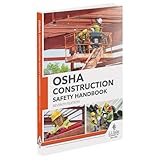
- 2024 OSHA Construction Safety Book is the seventh edition with the new OSHA HazCom final rule on 5/20/24. While the rule takes effect 7/19/24, the compliance dates don’t begin until 1/19/26 per 29 CFR 1910.1200(j).
- Construction Site Book offers quick access to essential OSHA regulations, jobsite hazards, and practical safety tips. It also helps employees identify hazards and prevent injuries and illnesses.
- Features easy-to-read format, full-color images, chapter quizzes with answer key, and comes in a compact size making it a convenient reference for employees.
- Critical topics include Confined Space Entry; Cranes & Derricks; Electrical Safety; Emergency Response; Ergonomics & Back Safety; Excavations; Fall Protection; First Aid & Bloodborne Pathogens; HazCom; Health & Wellness; Jobsite Exposures; Lockout/Tagout; Ladders & Stairways; Materials Handling/Storage; Motor Vehicles; PPE; Scaffolds; Site Safety & Security; Slips, Trips & Falls; Tool Safety; Welding, Cutting & Brazing; and Work Zone Safety.
- Specifications: 5 1/4” x 7 1/4", English, Soft bound. 7th Edition. Copyright 2024.
The Commission described mystery-shopping tests of selected products. It said a very high percentage of selected chargers failed basic safety tests, and a high percentage of tested baby toys posed medium-to-high severity risks. Hazards included chemicals above legal limits and detachable parts that could create a suffocation risk. The Commission page summarized here does not state an exact percentage or sample size, so these findings should not be turned into a failure rate for Temu products as a whole.
The separate EU consumer-law concerns
The CPC Network’s November 2024 notification raised concerns about sales practices rather than the DSA risk assessment. It cited impressions of fake discounts, false limited-supply or deadline pressure, and “spin the fortune wheel” gamification that concealed reward conditions. It also identified incomplete or incorrect return and refund information, a minimum order threshold not disclosed in advance, suspected unauthentic reviews and hard-to-find contact details.
The network also requested information about how Temu presents seller status, reviews and rankings, calculates discounts and makes environmental claims. These are the CPC Network’s assessments and requests in an ongoing coordinated process, not a finding that every allegation has been adjudicated.
The U.S. seller-information allegations
The FTC’s September 2025 release said Whaleco, Inc., which operates Temu, would pay a proposed $2 million civil penalty to resolve allegations under the INFORM Consumers Act. The FTC says the law requires marketplaces to provide a way to report suspicious activity involving listings from high-volume third-party sellers and to disclose identifying information for many such sellers.
Recommended Free Tools
The complaint alleged, among other things, that reporting tools were absent from gamified listings until November 2024 and that seller disclosures were not clear and conspicuous in some formats. The proposed order would require specified fixes. Because the release says court approval was necessary, describe this as a proposed order and allegations—not as a final judgment established by that announcement.
What do independent product tests show?
BEUC, the European consumer organisation, compiles product testing by national consumer groups. Its compilation, updated 30 January 2026, includes tests involving toys, chargers, jewellery, shoes and clothing. One clearly described group of tests, conducted in October 2025 in Denmark, France and Germany, covered 81 products: 27 toys, 27 chargers and 27 jewellery items.
Those 81 products were selected mostly through risk analysis because they were expected to have a higher risk of non-compliance. BEUC explicitly says they were not a representative sample of Temu listings. The findings can signal hazards worth taking seriously, but they cannot establish what share of all products sold on the marketplace is unsafe. Separate tests from different countries, categories and dates should not be combined into one overall failure rate.
Independent reader supportYour contribution helps us test, update, and keep practical guides available for everyone.How can shoppers reduce the risk?
A few checks before and after purchase can help you make a more informed decision and preserve options if a product proves problematic:
Do these 3 things before closing this tab:
1Scan for outdated or missing drivers - takes under a minute2Repair Windows errors before they cause bigger problems3Fix the driver behind crashes, sound loss and screen glitches- Identify the seller and the item. Check the seller information, exact product identity and any available contact details. A product page or safety claim is not, by itself, proof that a product complies with the rules where you live.
- Read the terms before paying. Check return and refund conditions and confirm whether there is a minimum order threshold. If the displayed terms or total cost are unclear, do not assume a return will be simple or free.
- Use extra caution with higher-stakes products. Pay particular attention to chargers and products intended for children, given the EU Commission’s findings on selected chargers and tested baby toys. The findings do not determine whether an individual listing is safe.
- Check recalls and report suspected hazards. In the United States, the Consumer Product Safety Commission (CPSC) provides a recall search and directs consumers to SaferProducts.gov to report online purchases they believe are hazardous.
- Use the correct charger for micromobility devices. For an e-bike, e-scooter or similar device, use the supplied charger or ask the device manufacturer to confirm that a replacement has been tested and approved for that device. CPSC warns against assuming a “universal” charger is safe.
CPSC reported receiving 156 fire and thermal incident reports involving “universal” micromobility chargers from 1 January 2023 through 16 May 2024. That figure is general safety context about micromobility chargers; it is not a Temu-specific statistic.
Quick Recap
What the evidence does—and does not—say
- The EU DSA decision and product findings concern the platform’s risks to EU consumers and selected items, not every Temu product or every country.
- The U.S. FTC release describes allegations and a proposed order. It does not, by itself, establish that the order received court approval.
- Consumer-group tests identify hazards in selected products, but risk-based selections cannot measure the prevalence of unsafe goods across the marketplace.
- These sources do not establish that every reported listing remains available or that every product carrying a safety mark is unsafe. They also do not validate any particular listing or marketplace-wide safety guarantee.
Product prices and availability are accurate as of the date/time indicated and are subject to change. Any price and availability information displayed on Amazon at the time of purchase will apply.




