To grow a business faster, focus on a few measurable opportunities that fit your customers, budget, and capacity—not every growth tactic at once. “Fast” depends on your market, offer, available cash, and time horizon, and no approach guarantees results. Start by validating demand, choosing a clear sales goal, and testing actions you can measure.
Start with a growth plan, not a pile of tactics
The U.S. Small Business Administration (SBA) recommends defining a target market, competitive advantage, sales plan, goals, marketing actions, and budget, then measuring results and updating the plan. Its guidance is broad U.S. small-business advice, not a prescription for every industry. Use it as a framework, and account for your location, business model, and legal obligations.


For context, the SBA Office of Advocacy reported in its February 3, 2026 announcement that the United States had 36,207,130 small businesses. It also reported that small businesses employed 62.3 million people, or 45.9% of private-sector workers, and accounted for 43.5% of GDP and 38.7% of private-sector payroll. Those figures describe the sector’s scale; they do not show that any particular growth tactic works. SBA Office of Advocacy, 2026 Small Business FAQ announcement.
15 practical ways to grow your business
1. Define the customer you want to reach
Describe the people or organizations most likely to buy, including the traits that affect their needs and purchase decisions. A sharper audience definition helps you choose a useful offer, message, and channel instead of spending broadly. The SBA recommends researching demographics and trends as part of understanding a target market. SBA marketing and sales guidance; SBA market research and competitive analysis.
#1 Best Overall
2. Validate demand and market size
Before increasing promotion or inventory, check whether customers want the product or service, how many potential buyers exist, and what economic conditions could influence demand. Evidence might include actual inquiries, orders, repeat purchases, or customer conversations; choose measures suited to your business. Avoid treating general interest as proof that a market is large enough to support your growth goals. SBA market research and competitive analysis.
3. Study competitors and alternatives
Look at direct competitors and other ways customers solve the same problem. Compare their strengths, weaknesses, pricing, and positioning. Also consider market saturation and barriers to entry. The point is not to copy a competitor’s channels or prices, but to identify where your offer can credibly stand out. SBA market research and competitive analysis.
4. Make your value proposition specific
State the distinct benefit customers get and why your intended audience should choose your business. A useful value proposition connects a customer need to a concrete advantage—not just a broad claim such as “great service.” Use what you learn about demand and alternatives to make the difference meaningful and supportable. SBA market research and competitive analysis.
Rank #2
5. Choose a sales path customers can follow
Decide how customers will buy: for example, through a retail location, wholesale relationships, an online store, or another route. Map the steps from first interest to payment, and look for points where people get confused, delayed, or unable to complete a purchase. Your channel should fit both the audience and your ability to fulfill orders. SBA marketing and sales guidance.
6. Set a small number of measurable goals
Choose goals with a clear outcome and time period. The SBA gives increasing email subscribers, market share, or sales by a defined percentage as examples. A goal should make it possible to tell whether an action helped; “get more customers” is less useful than a defined target tied to a time frame. SBA marketing and sales guidance.
7. Pick channels that fit your audience
Select a manageable mix of ways to reach likely buyers, then adjust based on what you learn. The SBA lists online advertising, radio, and billboards as examples of channels, not as a universal recommendation. Compare options by customer fit, cost, time to learn, ability to connect activity with sales, and your capacity to serve resulting demand. SBA marketing and sales guidance; SBA market research and competitive analysis.
Rank #3
8. Tie marketing actions and offers to a goal
For each campaign, promotion, or offer, identify the intended audience, the action you want customers to take, and the goal it supports. Make sure the offer fits the sales process and can be fulfilled profitably. Advertising and labeling rules can apply to particular products; the SBA notes that federal regulation covers a number of consumer products, and requirements vary by business type and location. SBA marketing and sales guidance.
9. Set a budget before scaling promotion
Record the costs of marketing actions and track them once they are underway. Do not assume a universal marketing-spend percentage applies to every business: the useful budget depends on your finances, channel costs, expected outcome, and ability to fulfill added demand. The SBA recommends comparing marketing costs with revenue when reviewing a plan. SBA marketing and sales guidance.
What’s actually slowing this PC down?
Pick the symptom - the matching free tool is one click away.
10. Make buying and payment straightforward
Review the buying process from the customer’s point of view, including how they can pay. Consider payment methods that are secure and cost-effective for your business and convenient for customers. Payment setup affects the sales experience as well as marketing and the bottom line, so weigh fees and operational fit rather than adding options without a reason. SBA marketing and sales guidance.
Rank #4
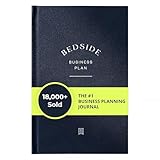
- TURN IDEAS INTO REALITY – Feeling stuck with your idea and not sure where to start? This guided journal helps you write a complete business plan so you can gain clarity and move forward with confidence as an entrepreneur.
- SIMPLE DAILY PRACTICE – 13 guided journaling sections with over 100+ business planning prompts. Make this business planner part of your routine to build momentum and work toward your business goals in just 5 minutes a day.
- BUSINESS PLANNER FOR ENTREPRENEURS – Use this guided journal to define your vision, understand your customers, evaluate competitors, plan expenses, and create a clear roadmap for launching your business.
- PERSONAL GROWTH – Designed as a personal growth workbook to help you reconnect with your purpose, prioritize well-being, and build a business plan centered around meaningful impact.
- PREMIUM ECO-FRIENDLY JOURNAL – Crafted with 100% FSC-certified recycled paper, a recycled cardboard cover, and wrapped in luxurious linen. This entrepreneur planner blends sustainability with thoughtful design.
11. Improve the experience after the sale
The customer experience does not end when money changes hands. Product origin, staff presentation, and the way returns are handled can shape customers’ impressions. Review the operational details that matter most to your customers and make sure your team can deliver them consistently as order volume changes. SBA marketing and sales guidance.
12. Give existing customers reasons to return
Build retention through relationships, reliable service, and loyalty programs where they suit the business. SCORE recommends systematic retention, but its page states that acquiring a new customer costs five to seven times more than keeping an existing one without identifying an original study or year for that comparison. Treat that figure as a SCORE-published assertion, not a universal independently established ratio. SCORE on customer retention.
13. Track indicators that can guide decisions
Measure progress toward your goals with a mix of quantitative and qualitative indicators appropriate to the business. Possible examples include sales, products sold, customer satisfaction, employee retention, and sales channels. A useful measure helps you decide whether to continue, adjust, or stop an action; tracking numbers without a decision attached adds work without clarifying what to do next. SCORE on key performance indicators.
Windows Errors? Fix Them Before They Spread
Repair common Windows errors and clear accumulated junk for a smoother, more stable PC - no reinstall needed.Free scan · no reinstallOutdated Drivers Are Slowing You Down
One free scan finds every outdated or missing driver and matches the right update for your exact hardware.Free scan · exact hardware match14. Review the plan and change what is not working
Compare marketing costs with revenue and assess whether actions produced the intended results. The SBA recommends maintaining the marketing plan at least annually; you can also review sooner when results or business conditions call for a change. Keep actions that are working, revise weak ones, and reassess whether your goals and budget still fit. SBA marketing and sales guidance.
15. Match operations and capacity to growth
More demand is useful only if the business can serve it well. Consider whether staffing, finances, compliance, payment processes, and day-to-day operations can support additional customers without damaging the experience or cash position. Funding needs and appropriate actions differ by business and owner circumstances, so evaluate financing in the context of a specific plan rather than assuming growth always requires borrowing. SBA market research and competitive analysis; SBA marketing and sales guidance.
Independent reader supportYour contribution helps us test, update, and keep practical guides available for everyone.How to choose which ideas to try first
Do not launch all 15 at once. Choose a small number of actions and compare them using the same questions:
- Does this action fit the customers and demand you have evidence for?
- What customer or sales outcome do you expect, and by when?
- What is the total cost, and can your budget absorb it?
- How long will it take to learn whether the action is working?
- Can you connect the result to revenue or another defined goal?
- Can your operations support the additional business?
- Will the change improve or compromise the customer experience?
Write down the action, its cost, the measure you will watch, and the point at which you will review it. This turns growth from a collection of guesses into decisions you can revise based on results. The SBA recommends connecting goals, marketing actions, budget, and measurement, and reviewing costs against revenue. SBA marketing and sales guidance.
Quick Recap
Product prices and availability are accurate as of the date/time indicated and are subject to change. Any price and availability information displayed on Amazon at the time of purchase will apply.




