In September 2018, AI processor startup ThinCI said it had closed a $65 million Series C to expand its operations and advance its Graph Streaming Processor (GSP). The round was a financing milestone, not proof that the company’s planned processor products were commercially available or had demonstrated competitive performance.
What was ThinCI’s $65 million Series C for?
ThinCI described the oversubscribed round as growth financing. CEO Dinakar Munagala said the company planned to expand offices and facilities in the U.K., Silicon Valley, Utah, India and El Dorado Hills, California. He also said ThinCI had raised about $20 million before the Series C; that earlier total was his estimate as reported at the time.
EE Times reported Denso, NSITEXE and Temasek as lead investors. Temasek led a consortium that included GGV Capital, Wavemaker Partners and SGInnovate. The report also named Mirai Creation Fund, Daimler and an unnamed major Asia-based electronics company in connection with the round. These are the investor relationships reported in 2018, not evidence that any of those organizations bought ThinCI products.
What ThinCI said it was building
Founded in 2010, ThinCI described its Graph Streaming Processor as an architecture for artificial intelligence, machine learning, neural networks and vision processing. The company’s stated approach was to process tasks and data in parallel and reduce intermediate buffering compared with sequential processing. Those were company explanations of its design, not independently established performance results.
Recommended Free Tools
#1 Best Overall
![Arduino® UNO™ Q 4GB [ABX00173]- Hybrid Board, Qualcomm Dragonwing QRB2210 microprocessor (MPU) & STM32U585 Microcontroller(MCU), AI Vision, Voice, IoT, Robotics, Linux Debian OS, Wi-Fi 5, USB-C](https://m.media-amazon.com/images/I/51cl4xygwGL._SL160_.jpg)
- Dual-Brain Hybrid Power: Combines the Qualcomm Dragonwing QRB2210 MPU (Quad-core Arm Cortex-A53 @ 2.0 GHz CPU, Adreno GPU, AI acceleration) and the real-time, low-power STM32U585 MCU for advanced applications like object recognition, voice commands, and motion detection.
- AI & Linux Capabilities: Unlocks AI-powered vision and sound solutions; runs Linux Debian OS for coding in Python and supports the Arduino ecosystem with libraries and Sketches; quick start with Arduino App Lab.
- Advanced Features: Equipped with 4 GB LPDDR4 RAM, 32 GB eMMC built-in storage, ideal for single-board computer (SBC) mode, running multiple simultaneous high-level processes, more complex AI or ML models, extensive logs. Dual-band Wi-Fi 5 (2.4/5 GHz), Bluetooth 5.1, and high-speed headers for vision, audio, and display peripherals.
- Seamless Expansion & Connectivity: Features the classic UNO form factor for shields compatibility, an 8x13 LED matrix, and a Qwiic connector for easy expansion with Modulino nodes; power and connect via the USB-C connector.
- Intended Use & Development: The perfect platform for prototyping robotics or IoT projects, empowering innovators with a unified development experience to mix Arduino Sketches, Python scripts, and containerized AI models in a single interface.
ThinCI said its software kit supported TensorFlow, Caffe2, PyTorch, C and C++. Its target applications included automotive, surveillance and security, retail, industrial systems, edge computing and broader AI and vision workloads. Chief software architect Val Cook described its intended market position this way: “We see our sweet spot in the middle,” between low-cost edge ASICs and data-center AI.
What the funding report established—and what it did not
EE Times reported that ThinCI’s first working silicon, fabricated on a 28-nanometer process, was with customers for validation and benchmarking. The report also said the company had revenue from automotive design-ins, but it did not identify those customers as confirmed. It speculated that the design-ins might be Denso’s; Munagala declined to comment, so Denso should not be treated as a verified ThinCI customer on that basis.
Rank #2
- Dual-Brain Hybrid Power: Combines the Qualcomm Dragonwing QRB2210 MPU (Quad-core Arm Cortex-A53 @ 2.0 GHz CPU, Adreno GPU, AI acceleration) and the real-time, low-power STM32U585 MCU for advanced applications like object recognition, voice commands, and motion detection.
- AI & Linux Capabilities: Unlocks AI-powered vision and sound solutions; runs Linux Debian OS for coding in Python and supports the Arduino ecosystem with libraries and Sketches; quick start with Arduino App Lab.
- Advanced Features: Equipped with 2 GB LPDDR4 RAM, 16 GB eMMC built-in storage, ideal to develop in PC-connected mode, running the OS, Python scripts, and basic network services (SSH) without a demanding GUI or heavy multitasking; great for lightweight AI and memory-optimized TinyML applications, needing local storage for basic OS and core libraries. Dual-band Wi-Fi 5 (2.4/5 GHz), Bluetooth 5.1, and high-speed headers for vision, audio, and display peripherals.
- Seamless Expansion & Connectivity: Features the classic UNO form factor for shields compatibility, an 8x13 LED matrix, and a Qwiic connector for easy expansion with Modulino nodes; power and connect via the USB-C connector.
- Intended Use & Development: The perfect platform for prototyping robotics or IoT projects, empowering innovators with a unified development experience to mix Arduino Sketches, Python scripts, and containerized AI models in a single interface.
Customer evaluation of working silicon is different from published, independently verifiable benchmarks. Analyst Linley Gwennap noted that ThinCI had not disclosed performance per watt and had released too few architectural and product details to assess the design’s advantages and disadvantages. Kevin Krewell of Tirias Research said: “I cannot corroborate ThinCI claims at this point, but I will allow that data flow (graph processing) architectures will be major competitors for machine-learning designs.” Krewell also pointed to development tools and Nvidia’s CUDA ecosystem as important competitive factors.
A buffer comparison in the article should not be mistaken for a measured result: analyst Rob Lineback offered an approximately 1% figure as his own supposition, qualifying it with “At least that’s what I think.” It was not a verified finding that ThinCI had reduced memory use by 99%.
What’s actually slowing this PC down?
Pick the symptom - the matching free tool is one click away.
Rank #3
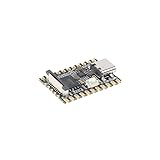
- Single core ARM Cortex-A7 32-bit core, integrated with NEON and FPU
- Built in Micro's self-developed 4th generation NPU, with high computational accuracy and support for mixed quantization of int4, int8, and int16. Among them, int8 has a computing power of 0.5 TOPS and int4 has a computing power of up to 1.0 TOPS
- Built in self-developed 3rd generation ISP3.2, supports 4 million pixels, and supports various image enhancement and correction algorithms such as HDR, WDR, and multi-level denoisin
- It has powerful encoding performance, supports intelligent encoding, adapts to save bit rates according to the scene, and saves more than 50% of the bit rate compared to conventional CBR mode, making the captured images high-definition, smaller in size, and doubling the storage space
- The design with built-in RISC-V MCU supports low-power fast startup, 250ms fast capture, and simultaneous loading of AI model library, enabling facial recognition to be completed within 1 second
Products were a roadmap, not a retail launch
The 2018 account described possible GSP system-on-chip modules, PCIe cards, M.2 cards and appliances as roadmap products. It did not establish that these products were available for ordinary purchase. Nor does the report provide enough common benchmark data to compare ThinCI’s silicon fairly with other accelerators on workload speed, performance per watt or memory behavior.
ThinCI’s financing and ambitions were part of a fast-moving accelerator market. Gwennap characterized the field as “at the frontier of processor design — a Wild West, if you will.” For a prospective customer, the useful questions would have been whether a product was shipping, which workloads had been independently benchmarked, what performance per watt it delivered, how well the development tools worked, and whether customer evaluations converted into deployments. The 2018 report did not answer those questions with independently confirmed results.
Rank #4

- 【POWERFUL ESP32‑S3 CONTROLLER】Built‑in Xtensa 32‑bit LX7 dual‑core processor, 512KB SRAM, 8MB PSRAM, 16MB Flash for stable AI voice computing and multitask processing.
- 【Preloaded Dual AI Platforms】Comespre-installed with complete Deepseek and OpenAI voice dialogue projects.Experience intelligent voice interaction instantly. (Note: OpenAI functionality requires your own API key.)
- 【STABLE WIRELESS & CLEAR AUDIO】Integrated 2.4GHz Wi‑Fi + Bluetooth 5 (LE); dedicated audio decoding module for natural, responsive voice interaction.
- 【USER‑FRIENDLY VISUAL & PLUG‑AND‑PLAY】2” TFT‑SPI color screen shows real‑time chat; modular design, no extra wiring, ready to use after setup.
- 【FULL LEARNING SUPPORT】45 programmable GPIOs, rich interfaces, online web tutorials, free technical support for beginners & developers.
Historical figures in context
The figures below are the figures EE Times reported in September 2018. They describe the company and financing at that time, not its current status.
| Item | 2018 reported figure or status |
|---|---|
| Series C | $65 million |
| Funding before Series C | About $20 million, according to CEO Dinakar Munagala as reported by EE Times |
| First working silicon | 28-nanometer process; reported to be with customers for validation and benchmarking |
| Employees | About 180 worldwide, including 30 in the U.K. |
EE Times’ September 5, 2018 report also quoted SGInnovate founding CEO Steve Leonard on the investment rationale: “In the last few decades, we have seen an explosive growth in data collected and increasingly sophisticated algorithms to derive meaningful information from this data more quickly. Unfortunately, the evolution of hardware has progressed at a much slower pace.” The quote explains the broad market case for specialized AI hardware; it does not establish ThinCI’s eventual commercial outcome.
Quick wins for a faster PC:
Clear out junk files and repair common Windows errorsFree Scan →Fix the driver behind crashes, sound loss and screen glitchesFind Drivers →Source: Junko Yoshida, “With $65M, ThinCI Joins Elite AI Startup Club,” EE Times, September 5, 2018.
Quick Recap
Product prices and availability are accurate as of the date/time indicated and are subject to change. Any price and availability information displayed on Amazon at the time of purchase will apply.




