PC Slower Than It Used to Be?
A free scan shows the junk files, broken settings and background clutter dragging Windows down - then fixes them in one click.Free scan · Windows 10 & 11Crashes, No Sound, or Screen Glitches?
Random freezes, missing sound and display glitches usually trace back to one bad driver. Find and replace yours safely.Free scan · under a minuteYou can use a co-branded credit card for UPI payments on Google Pay only if it is an eligible RuPay credit card and its issuer supports RuPay credit cards on UPI. Add it through Google Pay’s dedicated RuPay-card option, verify it using the registered mobile number, and use the card’s UPI PIN for merchant payments. Co-branding alone does not make a card eligible.
Check that your co-branded card is eligible
Google Pay’s UPI-card feature is for supported RuPay credit cards. The issuing bank must support adding RuPay credit cards to UPI platforms, and support can depend on the particular card. If your bank or card does not appear in the app, confirm eligibility with the issuer. Google Pay’s RuPay setup guidance

![ക്രെഡിറ്റ് കാർഡ് [Credit card]: ഉപയോഗവും, ഉപകാരങ്ങളും [Uses and benefits] (Malayalam Edition)](https://m.media-amazon.com/images/I/317+JO6s0sL._SL160_.jpg)
Do not confuse a co-branded card with a particular card network. For example, Google says Flex by Google Pay is offered in partnership with Axis Bank and SBI Card and is available on RuPay and Visa networks; its UPI QR payments are for RuPay cards only. That does not establish UPI eligibility for every co-branded card—or for a Visa version of a co-branded product. Check the network printed on your card and ask the issuer whether that specific RuPay card works with UPI. Google Pay Flex information
Adding an ordinary credit card to Google Pay for tokenized card payments is a separate feature. For UPI, use the dedicated Add RuPay credit card flow rather than the general card-add instructions. Google Pay card instructions
Free tools Windows power users keep installed
One-click scans. No signup required.
#1 Best Overall
Add the RuPay card and set its UPI PIN
- Open Google Pay and tap your profile picture.
- Tap Add RuPay credit card.
- Select the issuing bank, then choose the eligible RuPay card.
- Complete the verification method shown in the app. The mobile number used with Google Pay must match the number registered with the card, and outgoing SMS service must be available for verification.
- Follow the prompts to create a UPI PIN, or enter the existing UPI PIN for that card. If Aadhaar verification is offered, Google says it is available only for a limited number of issuing banks, and the Aadhaar-linked mobile number must match the number registered to the card.
At an eligible merchant checkout, select the RuPay card as the payment method and enter its UPI PIN. This PIN may differ from your ordinary credit-card PIN. Google Pay card setup guidance Google Pay payment guidance
Where you can use the card—and where you can’t
Google describes RuPay credit-card UPI payments for online merchant purchases and merchant business accounts reached by scanning a UPI QR code. A merchant may not accept RuPay credit-card payments, so have another payment method available if the transaction is declined. Google Pay’s RuPay payment guidance
Rank #2
- Not for person-to-person payments: you cannot pay friends or family or receive money from them using this card.
- Not for self-transfers: you cannot transfer money from the RuPay card to your savings account.
- Not for investing: Google lists stock-market investment payments among the unsupported uses.
The RuPay-linked virtual payment address is intended for merchant checkout; attempts to use it for person-to-person transactions fail. Google Pay use guidance
Understand limits and possible merchant fees
There is no universal UPI credit-card transaction cap stated in Google Pay’s guidance. The issuer manages the limits, taking into account the card’s approved credit limit, its own UPI risk controls, and any limit you set in the bank’s mobile-banking app. Check with your issuer or in its app for the limit applicable to your card. Google Pay limit guidance
What’s actually slowing this PC down?
Pick the symptom - the matching free tool is one click away.
Rank #3
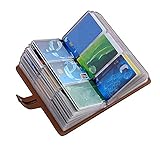
- Genuine PU Leather
- 【RFID Blocking】The credit card holder has an anti-shield lining, which can effectively block the electronic scanning instrument from illegally scanning the credit card in the card holder to protect the security of your RFID chip card.
- 90 see-through card pockets - Provides ample room to store your credit cards, business cards, and more
- Size: 7.3" x 4.3" x 0.98"
- Great gift idea
Some merchants may charge a small processing fee, inclusive of GST, for RuPay credit-card payments. Google says any such fee goes to the merchant; it does not say every transaction carries one. Check the checkout screen and the merchant’s terms before confirming. Google Pay fee guidance
Independent reader supportYour contribution helps us test, update, and keep practical guides available for everyone.Troubleshoot common setup and payment failures
- Your bank or card is missing: the issuer may not support RuPay credit-card UPI, or your particular card may not be eligible. Ask the issuer to confirm card-specific support.
- Verification fails: check that Google Pay uses the mobile number registered to the card, the correct SIM is selected, outgoing SMS works, and the details or OTP are correct. If Aadhaar verification is unavailable, Google advises contacting the issuer.
- A merchant payment is declined: confirm the merchant accepts RuPay credit-card payments and that the transaction is a merchant purchase, not a person-to-person payment or self-transfer. Check issuer-set limits and any UPI limit in the bank app.
- The PIN is rejected: enter the UPI PIN set for the RuPay card; do not assume it is the same as the card’s ATM or credit-card PIN.
Google’s setup and payment instructions describe these requirements and restrictions. Setup help Use and restrictions
If you are choosing between co-branded cards
Verify eligibility before comparing rewards: check that the card is on RuPay and that its issuer confirms UPI support for that specific card. Then compare the card’s own annual and transaction fees, issuer-controlled UPI limits, and rewards. Google’s help pages do not provide an issuer-by-issuer eligibility matrix or a basis for ranking individual cards. The guidance here applies to Google Pay in India; confirm current support and terms with the issuer because eligibility and app options can change.
Quick Recap
Product prices and availability are accurate as of the date/time indicated and are subject to change. Any price and availability information displayed on Amazon at the time of purchase will apply.
Recommended Free Tools