Quick wins for a faster PC:
Scan for outdated or missing drivers - takes under a minuteDriver Scan →Repair Windows errors before they cause bigger problemsFix Now →Rising Treasury yields can put upward pressure on mortgage and auto-loan offers, but they do not set those rates by themselves. Credit-card APRs usually follow a different route: many variable-rate cards are tied to the prime rate, which is linked to Federal Reserve policy. The effect depends on the loan’s benchmark, market spreads, lender pricing and whether the debt is new, fixed-rate or variable-rate.
Why Treasury yields matter—and why there is more than one Treasury rate
Treasury yields are market rates that vary by maturity. The U.S. Treasury describes its par yield curve as connecting the yield of a security to its time to maturity, based on market prices for recently auctioned securities. A five-year yield and a 10-year yield are therefore distinct benchmarks, not interchangeable versions of a single “Treasury rate.” U.S. Treasury: Interest Rate Statistics
Yields influence borrowing costs through different channels. Lenders also account for the risk of lending, the loan’s term and structure, and market conditions. A benchmark move can affect the direction of an offer without determining the precise rate a borrower receives.
How do Treasury yields affect mortgage rates?
For a new fixed-rate mortgage, longer-term market rates are more relevant than the federal funds rate alone. Mortgage pricing reflects expectations about the future path of short-term rates, the term premium in longer-term Treasury yields, risk spreads and the pricing of mortgage-backed securities (MBS). Federal Reserve Governor Michelle W. Bowman described these factors as part of the setting of longer-term private fixed rates. Bowman, Federal Reserve Board, March 7, 2025
Windows Errors? Fix Them Before They Spread
Repair common Windows errors and clear accumulated junk for a smoother, more stable PC - no reinstall needed.Free scan · no reinstallOutdated Drivers Are Slowing You Down
One free scan finds every outdated or missing driver and matches the right update for your exact hardware.Free scan · exact hardware match#1 Best Overall
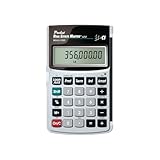
- Loan Amortization and Remaining Balances
- Instant Principal, Interest, Interest Only and Total Payments
- Future Values
- Date math function
The 10-year Treasury yield is often used as a reference point because it is a long-term market rate, but a mortgage is not simply priced as the 10-year yield plus a universal, fixed margin. The Federal Reserve’s July 2026 Monetary Policy Report calls agency MBS yields an important factor in mortgage-rate setting and discusses their spread relative to the average of five- and 10-year Treasury yields. MBS pricing and spreads can change independently of Treasury yields. Federal Reserve, Monetary Policy Report, July 2026
That is why mortgage rates can rise even if the Fed has not just raised its policy rate. Markets price expectations about future policy and longer-term risks in advance; Treasury yields and MBS pricing can move as those expectations or spreads change. The Federal Reserve sets its policy rate, but it does not directly set the mortgage rate a lender offers.
Rank #2

- SPEAKS YOUR LANGUAGE: Keys clearly labeled in residential mortgage finance terms like Loan AMT, Int, Term, PMT. This industry-standard calculator is super easy to use on all realty financing matters from finding a loan that works for your client to considering trust deeds investments, or finding remaining balances or balloon payments and much more
- CONFIDENTLY AND EASILY SOLVES: All your clients' financial questions whether they are buyers, sellers, investors or renters. Increase your perceived professionalism as a new agent, experienced broker or seasoned loan officer. Close more home sales and impress your clients with fast, accurate answers to all their real estate finance questions
- DEDICATED BUYER QUALIFYING KEYS: Enter client's income, debt and expenses to pre-qualify them to only show properties they can afford. Include tax, insurance and mortgage insurance then compare loan options and payment solutions to give your client choices before they make an offer to buy
- FIGURE OUT THE RIGHT LOAN: At the press of a button for jumbo, conventional, FHA/VA, or even 80:10:10 or 80:15:5 combo loans; check to see if ARMs or bi-weekly loans, quarterly payments or if interest-only payments are the answer; giving your client more choices; easily perform what if loan or tvm calculations Find loan amount, term, interest or PITI or PI payments
- BECOME AN INVALUABLE RESOURCE: Reduce your clients' confusion and uncertainty; ensuring they are able to make a purchase offer; knowing they can afford the down payment; and determining which is the right loan for them. Date-math for listings and contracts too. Comes with a protective slide cover, quick reference guide, pocket User's Guide, and long-life batteries
What a rising yield means for a homebuyer or refinancer
A rise in relevant long-term yields can raise pressure on new fixed-rate mortgage offers, but the resulting quote depends on the lender’s pricing and the borrower’s and loan’s characteristics. Credit risk, loan-to-value, term, points and fees, and product structure can all matter. Compare offers with the same loan amount, term, rate-lock period, points and fees rather than treating the Treasury yield as a quote.
An existing fixed-rate mortgage does not automatically reset when Treasury yields rise. A refinance is a new loan, however, and its offered rate reflects conditions when the borrower applies and locks a rate.
Recommended Free Tools
Rank #3

- DEDICATED FUNCTION KEYS for Quick Financial Solutions: Clearly labeled function keys enable you to quickly and confidently provide financial answers and options for your clients, whether in the office, in the car or at an open house. Compare loan options and provide payment solutions to give your client choices
- INSTANT FINANCIAL PROBLEM SOLVING: Solve the financial questions your clients have whether they are buyers, investors or renters; increase your perceived professionalism and close more home sales by quickly answering real estate finance problems including remaining balances
- RESIDENTIAL REAL ESTATE FINANCE TERMS: Keys labeled in residential real estate finance terms like Loan AMT, Int, Term, PMT; Calculator is super easy to use to determine a mortgage loan that works for your client
- VERSATILE LOAN CALCULATION OPTIONS: Calculate 80:10:10 or 80:15:5 combo loans at the press of a button; check to see if ARMs or bi-weekly loans, quarterly payments or if interest-only payments are the answer; giving your client more choices
- COMES COMPLETE: Comes with a protective slide cover, quick reference guide, pocket user's guide, two long-life batteries, and 1-year warranty
Do rising Treasury yields make auto loans more expensive?
Auto-loan rates are influenced by shorter-maturity Treasury yields as well as the risk spreads lenders charge to account for delinquencies and defaults. Federal Reserve Vice Chair Philip N. Jefferson noted that both inputs matter. Jefferson, Federal Reserve Board, February 19, 2025
Those components can move in opposite directions. Jefferson observed that auto-loan rates had declined at that point largely because risk spreads fell, illustrating why a Treasury increase alone cannot tell a borrower exactly how an offer will change. A lender’s assessment of repayment risk and the specific loan terms still affect the rate.
Rank #4

- SPEAKS YOUR LANGUAGE: Keys clearly labeled in residential mortgage finance terms like Loan Amt, Int, Term, Pmt; this industry-standard calculator is super easy to use on all realty financing matters from finding a loan that works for your client to considering trust deeds investments, or finding remaining balances or balloon payments and more
- CONFIDENTLY AND EASILY SOLVE: Clients' financial questions whether they're buyers, sellers, investors or renters. Increase your perceived professionalism as a new agent, experienced broker or seasoned loan officer. Close more home sales and impress your clients with fast, accurate answers to all their real estate finance questions from PITI Payments to IRR, NPV and Cashflows
- DEDICATED BUYER QUALIFYING KEYS: Enter client's income, debt and expenses to pre-qualify them to only show properties they can afford. Include tax, insurance and mortgage insurance then compare loan options and payment solutions to give your client choices before they make an offer to buy
- FIGURE OUT THE RIGHT LOAN: For your client at the press of a button for jumbo, conventional, FHA/VA, or even 80:10:10 or 80:15:5 combo loans; check to see if ARMs or bi-weekly loans, quarterly payments or if interest-only payments are the answer; giving your client more choices; easily perform what if loan or TVM calculations find loan amount, term, interest or PITI or PI payments
- BECOME AN INVALUABLE RESOURCE: To your clients by reducing their confusion and uncertainty; ensuring they are able to make a purchase offer; knowing they can afford the down payment; and determining which is the right loan for them. Date-math for listings and contracts too. Comes with a protective slide cover, quick reference guide, pocket user's guide, and long-life battery
The Federal Reserve’s July 2026 report said auto-loan rates had fallen slightly on net through May 2026 but remained somewhat above 2019 levels; it did not give a numerical rate for that comparison. Federal Reserve, Monetary Policy Report, July 2026
As with a fixed mortgage, an existing fixed-rate auto loan generally does not reprice simply because Treasury yields rise. The change is more relevant when shopping for a new loan or refinancing.
Best Value

- Extra large 12-digit angled display.
- Loan Wizard.
- Automatic Tax Keys.
- Selectable decimal setting.
- Input any three loan variables to compute the fourth.
Do Treasury yields affect credit-card rates?
Usually not as a direct Treasury-plus-margin calculation. Many credit-card APRs are variable and contractually set as a margin over the prime rate. Jefferson described the convention that prime equals the upper end of the Federal Open Market Committee’s federal funds target range plus 3 percentage points; the cardholder agreement determines the applicable margin and repricing terms. Jefferson, Federal Reserve Board, February 19, 2025
So a change in Treasury yields does not by itself require a matching change in a variable card APR. The more direct reference is the prime rate and, through it, Federal Reserve policy. Fixed-rate card terms and issuer practices may differ; check the agreement for the rate type, margin and how changes take effect.
As an example of the distinction between a benchmark and a consumer APR, the Federal Reserve’s H.15 release dated October 2, 2026 displayed a bank prime loan rate of 7.00%. That figure is the prime benchmark, not a credit-card APR or an individual cardholder’s rate. Federal Reserve: H.15 Selected Interest Rates
How the three borrowing types compare
| Borrowing type | Main rate channel | What can alter the offer or APR | Effect on existing fixed-rate debt |
|---|---|---|---|
| New fixed-rate mortgage | Long-term market rates, including Treasury yields; agency MBS yields and spreads | Market spreads, lender pricing, borrower and loan characteristics, points and fees | Does not automatically reprice |
| New auto loan | Shorter-maturity Treasury yields plus lender risk spreads | Delinquency and default risk, lender pricing and loan terms | Does not automatically reprice |
| Variable-rate credit card | Typically prime rate plus a contractual margin; prime is linked by convention to the federal funds target range | Card agreement, contractual margin and issuer repricing terms | Not applicable in the same way; variable APR terms govern changes |
The figures and benchmarks are not directly comparable as borrowing costs: a Treasury yield is a market benchmark, prime is a bank benchmark, and a mortgage, auto-loan or card APR is a product-specific borrowing rate.
Quick Recap
How to read rate headlines when you are borrowing
- Check the maturity and benchmark. A headline about the 10-year yield is not a statement about every Treasury maturity or every loan rate.
- Identify the product’s rate structure. A new fixed mortgage, a new auto loan and a variable card APR do not share the same transmission channel.
- Separate market direction from your quote. Your APR depends on the lender, borrower risk, product structure and, for loans, terms and fees; a benchmark alone cannot predict it.
- Distinguish benchmarks from loan rates. For example, prime is not the APR on a credit-card account, and a Treasury yield is not a mortgage quote.
- For market context, use consumer-credit data carefully. The CFPB’s Consumer Credit Trends dashboards, last updated September 17, 2026, track mortgage, auto-loan and credit-card originations and inquiries. The CFPB says the dashboards use a nationally representative sample from one nationwide consumer reporting agency and cannot control for changes in that agency’s market share relative to others. They provide context, not a standalone causal test of Treasury-yield changes. CFPB: Consumer Credit Trends
Product prices and availability are accurate as of the date/time indicated and are subject to change. Any price and availability information displayed on Amazon at the time of purchase will apply.