California has tested charging drivers by miles traveled, including a 2024–25 pilot that collected payments from participants. That is not the same as adopting a statewide mileage tax: the state’s Fall 2025 action plan still anticipated a final pilot report by December 31, 2026, and the legislative records available through May 2026 describe proposals, not a confirmed permanent program.
What California means by a “mileage tax”
California generally calls the idea a road charge or road usage charge. Caltrans defines it as a “user pays” system in which drivers contribute to road maintenance according to how much they drive, rather than how much gasoline they buy. A per-mile charge is therefore a different way to raise transportation revenue from the state’s fuel-tax model.
The label “mileage tax” is convenient shorthand, but it does not settle whether a future program would be legally structured as a tax or a fee. Nor does it establish that California has enacted one. The state materials describe pilots and policy development, not a permanent statewide charge.
Why consider charging by distance?
Fuel taxes connect road funding to fuel purchases. As vehicles use less gasoline per mile—and as more drivers use electric vehicles—that connection can weaken. Caltrans frames the long-term concern this way: “Even if we keep increasing the gas tax, with Californians buying less and less gas the funding will eventually disappear.” That is the agency’s rationale for studying alternatives, not a finding that a specific revenue shortfall has already occurred or that a mileage charge is the only solution.
Outdated Drivers Are Slowing You Down
One free scan finds every outdated or missing driver and matches the right update for your exact hardware.Free scan · exact hardware matchPC Slower Than It Used to Be?
A free scan shows the junk files, broken settings and background clutter dragging Windows down - then fixes them in one click.Free scan · Windows 10 & 11#1 Best Overall
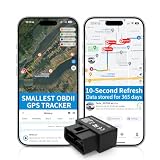
- 【5-day Free Trial】After the trial, continue subscription for $6.49/month with a 1-year plan ($77.88 total) or $8.99 month-to-month. SIM & data included.
- 【Plug & Play OBD2 GPS Tracker】Installs in seconds by plugging into your car’s OBDII port. Compact and lightweight (1.53" x 1.77" x 0.87", 1.2 oz), it’s a discreet hidden GPS tracker that won’t interfere with legroom or drain your car battery.
- 【Track Speed and Driver Behavior】Receive instant alerts for speeding, geo-fence breach, vehicle crashes, hard braking or rapid acceleration. Speeding threshold is customizable. Ideal teen driver GPS or elderly vehicle tracker.
- 【10-Second Real time, No Extra Charge】The fast refresh provides fleet manager or parents with accurate and real time location. Color-coded routes show speed changes visually.
- 【12-month Data History】All tracking data is securely stored with full confidentiality, allowing you to review up to 1 year of trip history.
What California’s pilots have tested
The state’s work has moved from examining possible ways to report mileage toward testing the collection of actual payments. The chronology matters: a pilot can demonstrate that a process can be tried without deciding its permanent rate, legal authority, or statewide design.
| Year or period | Program milestone | What it established |
|---|---|---|
| 2014 | SB 1077 directed a road-charge pilot. | California began studying mileage-based revenue collection as an alternative to fuel taxes, with privacy considerations including safeguards for location data. (Caltrans Road Charge FAQ) |
| 2017 | The first major pilot reported on its work. | It explored reporting options ranging from odometer readings to GPS-enabled methods and considered viability, data collection, privacy, and implementation. Caltrans says private account managers could report miles and charge amounts to the state without other information. (Caltrans Road Charge FAQ) |
| 2021 | SB 339 established another pilot and assigned design recommendations to the Transportation Agency’s Technical Advisory Committee (TAC). | The next stage focused on designing and testing revenue collection. (California Transportation Commission, or CTC; Caltrans) |
| July 2023 | Design recommendation criteria were finalized. | The CTC’s Fall 2025 action plan says Caltrans implemented some of those criteria in the later pilot. |
| July 1, 2024 | An interim report was submitted to the Legislature. | This was an interim milestone, not the final evaluation. (CTC Fall 2025 action plan) |
| August 2024–January 2025 | The SB 339 revenue-collection pilot operated. | Participants paid road charges. The CTC’s Fall 2025 action plan describes it as the first California road-charge pilot to collect revenue from participants. |
| By December 31, 2026 | The final report was anticipated. | The date is a projection in the Fall 2025 action plan; it is not confirmation that the report has been issued. |
What the 2.8-cent study rate does—and does not—tell drivers
The CTC’s Fall 2025 action plan says the TAC adopted a study rate of 2.8 cents per mile in May 2024, using an inflation-adjustment method in its design recommendations. The figure updated an earlier study rate of 2.5 cents per mile. It is a pilot study rate, not an enacted statewide rate or proof of what a driver would owe under a permanent program.
The cited action plan does not establish a final permanent-rate recommendation, a completed program cost analysis, or a final evaluation of participants’ payments after exemptions, refunds, or other adjustments. Multiplying the study rate by annual mileage would therefore create a hypothetical figure, not a reliable estimate of a household bill.
Rank #2

- Brand new updated 5G model in 2025. GPS tracks your mileage logs and works eveywhere, the built-in cellular connection uploads automatically to our cloud-based service.
- 100% Accurate Audit Compliant Mileage Logs are created automatically to give you total peace of mind. Just install it, and forget about it.
- Ready in 30 seconds! Built-in global 5G cell connection means absolutley no setup or tech skills are needed.
- 100% Secure Cloud mileage logs the IRS trusts, all backed up for years to protect your deduction from an audit. Includes GPS tracking paths for every trip.
- Flexible service payments with no contracts as low as $14.99/mo for tracking, plus $0.19/day for built-in cell line.
How a permanent system would affect privacy, administration, and households
The policy debate is not just about the number of cents per mile. Any durable system would need to answer how mileage is measured, who handles payments, what information is collected, and how costs and burdens fall across different drivers. The state materials identify these as design questions; they do not provide a conclusive independent assessment of every option.
| Design question | Why it matters | What the state materials establish |
|---|---|---|
| How is mileage reported, and what data are shared? | Odometer readings, devices, and GPS-enabled methods can involve different levels of verification and location information. | The 2017 pilot tested approaches from odometer reporting to GPS-enabled devices. Caltrans describes account managers transmitting miles and charge amounts to the state; it does not say that every participant’s location was tracked. |
| Who bills, collects, and remits the charge? | Administration, compliance steps, and collection costs would shape how a system works for drivers and government. | SB 339 was intended to test revenue collection. The cited Fall 2025 action plan anticipates a final report, rather than establishing a completed evaluation of a permanent collection system. |
| How would different households be affected? | Mileage, vehicle efficiency, geography, and ability to pay could produce different effects across households. | Caltrans identifies equity, lower-income households, and rural impacts as study considerations. Its statements about anticipated effects are agency expectations, not definitive independent impact findings. |
| Would the charge replace or supplement fuel taxes? | The funding purpose determines whether drivers might face a new charge alongside existing taxes or a change in how road funding is raised. | State materials describe road charging as a potential gas-tax alternative; the pilot itself is not an adopted permanent funding package. |
| What legal authority and public process would be needed? | A pilot does not by itself create durable authority for a statewide system. | SB 339’s pilot requirements, a scheduled sunset, and proposals to extend or revise provisions illustrate an ongoing legislative pathway. The eventual status depends on subsequent legislative action. |
Why has California not moved from pilots to a permanent charge?
“Permanent policy inertia” is a useful way to describe the repeated cycle of legislation, advisory work, pilots, and further consideration. It is an analytical description, not an official finding or a proven account of why lawmakers have not adopted a permanent system.
The record points to several questions a permanent proposal would have to resolve: authority to collect revenue over the long term, administration and compliance, protection of private information, fair treatment of households with different incomes and travel needs, and public and political acceptance. Those are plausible governance and design challenges reflected in state materials. The available evidence does not establish that any one of them—or any single political event—caused the absence of statewide adoption.
Rank #3

- NEW MODEL - 100% Accurate Audit Compliant Mileage Logs are created automatically to give you total peace of mind. Just install it, and forget about it.
- WiFi Uploading from the car means absolutely no interaction is required. Optional manual Business Button to set trips to Business on-the-fly.
- 100% Online Tamper-Proof mileage logs the IRS trusts, all backed up for years to protect your deduction from an audit. Includes GPS tracking paths for every trip.
- 14 Days free mileage tracker service included, then $13.99/month when paid annually (other payments available). Compare to $25/month or more with real-time trackers.
- Made in the USA with 100% US-based customer support. Support US manufacturing and good paying jobs for American families!
What the legislative snapshots say about status
The CTC’s Fall 2025 action plan projected the final SB 339 pilot report by December 31, 2026. That is a forward-looking deadline, not evidence of the report’s publication or findings.
A California State Treasurer’s Office bill matrix dated May 2026 listed AB 1421 as passed by the Assembly on January 29, 2026, and referred to Senate Rules. It described a proposed report on road-user-charge research and recommendations and said relevant provisions were scheduled to sunset on January 1, 2027. Separately, CalMatters Digital Democracy’s tracker displayed the proposal as in progress and summarized amended text that would extend provisions until 2035. These are dated accounts of proposed legislation; they do not establish that an extension was enacted. Legislative status can change after those snapshots.
Quick wins for a faster PC:
Repair Windows errors before they cause bigger problemsFix Now →Scan for outdated or missing drivers - takes under a minuteDriver Scan →Clear out junk files and repair common Windows errorsFree Scan →What to look for in the final report
The final SB 339 report, when published, is the next important evidence for assessing what the revenue-collection pilot actually demonstrated. For drivers evaluating the proposal, its most useful answers would go beyond the study rate:
- How participants reported mileage and how the methods performed.
- What the state learned about payment collection, administration, and compliance.
- What privacy protections applied and what information was transmitted.
- How the program evaluated household impacts, including rural and lower-income drivers.
- Whether the report recommends a permanent rate, a funding structure, or further testing—and what qualifications accompany those recommendations.
Until those findings and any subsequent legislation are established, California’s mileage-based road charge is best understood as a policy under study, not a new statewide bill drivers should budget for.
Quick Recap
Product prices and availability are accurate as of the date/time indicated and are subject to change. Any price and availability information displayed on Amazon at the time of purchase will apply.




