What’s actually slowing this PC down?
Pick the symptom - the matching free tool is one click away.
Businesses should invest in the Internet of Things (IoT) when connected data can improve a measurable outcome—such as reducing equipment downtime, energy use, spoilage, or service costs—and the improvement is worth more than the full cost of the system. The case is not “more devices are better.” It is whether a specific signal will lead someone or something to take a useful action.
For a finance-minded decision-maker, that means establishing a baseline, pricing the whole lifecycle, and testing a defined use case before committing to a fleet-wide rollout. Sensors, connectivity, integration, cybersecurity, maintenance, and staff time all belong in the investment calculation.
What IoT means in a business
Business IoT is a connected operating system, not simply a collection of smart devices. It can include sensors that observe temperature or vibration, actuators that change a physical condition, network links such as Wi-Fi, Ethernet, cellular, Bluetooth, or industrial protocols, and edge or cloud computing. Applications then turn data into dashboards, alerts, analytics, or automated actions—and ideally connect those outputs to existing workflows such as maintenance work orders, inventory systems, or manufacturing execution software.
NIST describes IoT devices as combining sensing or actuation, processing, and communications; analysis may happen on a device, at the edge, or in the cloud. The business value comes from completing a loop: sense a condition, transmit reliable data, interpret it quickly enough to matter, trigger a response, and measure the outcome. A sensor that reports a problem no one can act on is an expense, not an operating improvement.
#1 Best Overall

- Build a 37-Module Sensor Lab: Add motion, distance, light, sound, temperature, touch, display and control functions to compatible UNO, MEGA, Nano, ESP-32 or STM32 projects for prototyping, classroom experiments and maker builds
- Explore Input Sensors and Motion: Experiment with GY-521 motion sensing, PIR detection, ultrasonic ranging, temperature and humidity, DS18B20, flame, Hall, touch, light, sound, tilt, tracking and obstacle-avoidance modules
- Add Displays, Timing and Control: Use the LCD1602, DS1307 real-time clock, joystick, rotary encoder, relay, buzzers, RGB LEDs and infrared modules to build clocks, alarms, counters, status displays and automated projects
- Follow Guided Projects Materials: Use digital tutorial materials, datasheets, wiring diagrams and example code for compatible UNO R3, MEGA 2560 and Nano boards, then adjust thresholds, timing and logic to create custom experiments
- Module-Only Expansion Kit: Controller board, USB cable, breadboard and jumper wires are not included; use 6.5–9 V DC only with the included power module, verify pin requirements before wiring and keep the laser emitter away from eyes
Where IoT can create business value
Operational efficiency and maintenance
Connected monitoring can make abnormalities visible between manual inspections. Equipment sensors may track vibration, temperature, pressure, electrical current, flow, humidity, or operating cycles. That information can support condition-based maintenance: servicing equipment when its condition indicates a need rather than relying only on a fixed schedule or waiting for failure.
Potential financial benefits include avoided downtime, fewer unnecessary maintenance visits, better spare-parts planning, and improved asset utilization. But sensors do not automatically deliver predictive maintenance. A useful prediction depends on accurate sensor placement, sufficient relevant data, a meaningful failure signal, validated analytics, and a maintenance process that responds to alerts. Track false alarms and missed failures alongside any reduction in downtime.
Energy, water, and facilities
Connected meters and environmental sensors can reveal peak demand, equipment left running, leaks, inefficient HVAC settings, refrigeration problems, or mismatches between building occupancy and energy use. A business can compare consumption before and after a change, such as adjusting schedules or repairing equipment, and calculate savings against installation, calibration, connectivity, analytics, and support costs.
Asset tracking and inventory
Location and condition monitoring can help find vehicles, tools, pallets, containers, high-value inventory, rental equipment, or cold-chain shipments. The operational value may be less time spent searching, fewer lost assets, better dispatch decisions, or less spoilage. Real-world constraints matter: indoor positioning can be imprecise, metal and concrete can interfere with signals, batteries need replacement, and worker tracking can raise privacy concerns. Location events are most useful when they update an inventory, dispatch, or service workflow rather than sit in a separate dashboard.
Windows Errors? Fix Them Before They Spread
Repair common Windows errors and clear accumulated junk for a smoother, more stable PC - no reinstall needed.Free scan · no reinstallOutdated Drivers Are Slowing You Down
One free scan finds every outdated or missing driver and matches the right update for your exact hardware.Free scan · exact hardware matchQuality, safety, and customer service
IoT records can help document whether conditions stayed within specified thresholds—for example, temperatures during storage, production parameters, or environmental conditions. A sensor log alone does not establish regulatory compliance. Organizations may also need calibrated devices, controlled access, retention rules, auditability, validated processes, and applicable sector-specific controls.
Rank #2

- 37 Sensors kit
- 37 Sensors Assortment Kit for Arduino MCU Education
- Touch sensor moduleHeartbeat detection module
- Infrared sensor receiver module
Connected monitoring can also detect hazards such as gas exposure, excessive heat, equipment proximity, or conditions in a confined space. Where a faulty reading or lost connection could cause injury, production loss, or unsafe control, the system needs an explicit fail-safe design, suitable redundancy, testing, and human override. A cloud-dependent alert should not be the only safeguard against an immediate life-threatening hazard.
For products and services, remote diagnostics, performance monitoring, automated replenishment, and usage-based offerings may improve customer experience or create new revenue. The commercial test is whether customers value and will pay for the resulting service—not whether a device can produce data.
Which industries may benefit—and what to check
| Industry | Potential applications | Key considerations |
|---|---|---|
| Manufacturing | Machine-condition monitoring, production telemetry, quality monitoring, tool tracking, energy measurement, and inventory replenishment. | Coordinate with operational technology networks and systems such as PLCs, SCADA, MES, or historians. Establish downtime and quality baselines, assign engineering and maintenance owners, and prevent monitoring systems from disrupting production. |
| Logistics and transportation | Fleet telematics, trailer and container tracking, cold-chain monitoring, route and utilization analysis, and predictive vehicle maintenance. | Assess cellular coverage, roaming charges, battery life, tampering, weather exposure, and whether alerts can be distinguished from normal route or temperature variation. |
| Retail and hospitality | Refrigeration monitoring, occupancy analysis, energy management, queue monitoring, loss prevention, and facilities maintenance. | Address customer and employee privacy, especially when sensors could track identifiable people or behavior. |
| Healthcare and life sciences | Equipment location, laboratory asset tracking, temperature and humidity monitoring, remote monitoring, and chain-of-custody records. | Assess sensitive personal information, clinical risk, validation needs, and sector-specific regulation. A generic IoT platform is not automatically appropriate for clinical use. |
| Agriculture | Soil and weather monitoring, irrigation control, livestock tracking, greenhouse automation, and equipment telematics. | Connectivity, power, harsh environments, and seasonal economics can determine whether the investment is practical. |
| Buildings and facilities | HVAC optimization, indoor-air-quality monitoring, leak detection, access control, and predictive maintenance. | Connect alerts to work-order processes; an attractive dashboard is not a substitute for facilities action. |
Build the investment case using total cost of ownership
Compare the expected value of a specific business outcome with all costs over the period you expect to operate the system. Avoid comparing a sensor’s purchase price with projected savings while leaving deployment and ongoing work out of the calculation.
Benefits to estimate
- Avoided downtime and improved asset utilization.
- Reduced maintenance labor, spare-parts use, and service visits.
- Lower energy or water consumption and less product spoilage.
- Reduced inventory carrying costs, asset-search time, or manual inspection labor.
- Fewer safety incidents or reduced exposure to hazardous conditions.
- New service revenue, improved customer retention, or faster audit and reporting work.
Costs to include
- Sensors, gateways, installation, commissioning, and replacement hardware.
- Network service, cellular connectivity, edge hardware, and cloud ingestion, storage, processing, and analytics.
- Application licenses, integration with existing systems, security tooling, and device identity or certificate management.
- Calibration, batteries, field service, employee training, data governance, and change management.
- Model development and monitoring, ongoing support, decommissioning, data migration, and vendor-exit costs.
Evaluate payback period, net present value, internal rate of return, recurring annual costs, cost per monitored asset, and benefit per site, production line, vehicle, or device. Operational measures can include avoided downtime hours, alert-to-action conversion, false-positive rate, usable telemetry coverage, mean time to detect or repair, energy per unit produced, and first-time fix rate. Select measures that connect directly to the problem being funded.
NIST estimated a 10–20× return on federal investment in IoT infrastructure research in a 2025 study. That is an estimate for federal research investment in infrastructure, not a commercial return forecast for an individual company. NIST also discusses adoption concerns about cost and ROI, including a manufacturing survey conducted in 2021; those survey results are historical context, not a current universal measure of business outcomes. NIST’s summary of the study and its full report should not be read as evidence that a particular deployment will pay back.
Rank #3

- Ultimate Sensor Kit for Arduino Beginners: The kit features the original Arduino Uno R4 Minima board, 30+ high-quality sensors and modules, and free video lessons co-created with educator Professor Joselito. With over 50 engaging projects (30 basic, 17 IoT, and 10 advanced fun projects), beginners aged 8+ can dive into the world of electronics and programming with ease. Certified RoHS compliant, it guarantees safety and quality for all learners, making it the perfect choice for both education and innovation
- Powered by the Arduino Uno R4 Minima: R4 Minima is a major upgrade from the Uno R3. With a 32-bit ARM Cortex-M4 processor, 256 KB Flash memory, and 48 MHz clock speed, it offers faster performance and greater memory. It also features higher-precision ADC (14-bit), a built-in DAC, CAN bus support, and a wider power input range (6-24V), making it more powerful and versatile for all users
- 30+ Sensors for Infinite Creativity: With 30+ high-quality sensors and modules, plus a battery for portable applications, this kit is ideal for IoT, environmental monitoring, and smart automation projects. It includes step-by-step tutorials, sample codes, and progressive online lessons, making learning seamless for beginners and advanced users alike. Fully compatible with other Arduino boards like Uno R3 and Nano, it offers endless customization and innovation opportunities
- Engaging Projects for Every Skill Level: Featuring 50+ projects (30 basic, 17 IoT, 10 advanced fun), this kit supports IoT platforms like Blynk and IFTTT, enabling smart automation and real-world applications. With Arduino C++ programming, step-by-step guidance, and hands-on coding exercises, it’s perfect for students, teachers, and engineers to learn, build, and innovate at any level
- Dedicated Support for Beginners: Alongside online resources and video tutorials, SunFounder provides technical support and troubleshooting forums to help beginners solve programming challenges with ease
Choose cloud, edge, or a hybrid architecture
| Approach | Advantages | Trade-offs |
|---|---|---|
| Cloud-first | Can accelerate deployment, provide managed scaling and remote administration, and make broad analytics services available without building as much infrastructure. | Creates recurring usage costs and dependence on connectivity; data transfer, integration, latency, and data-residency considerations may matter. |
| Edge-first | Supports lower-latency decisions, local operation during outages, reduced bandwidth use, and local handling of sensitive data. | Requires hardware and software maintenance across sites, distributed security operations, and fleet-management capability; local computing resources may be limited. |
| Hybrid | Can keep control and safety functions local while using cloud services for fleet management, central analytics, and reporting. | Requires a clear division of responsibility, defined offline behavior, and integration between local and central systems. |
Choose based on the job the system must do. Monitoring that can tolerate delayed data may work with a different latency and resilience profile than control of a production process. Keep safety-critical behavior local where appropriate, and specify what happens during power, network, or cloud failure.
Protocol support is not a complete interoperability guarantee. MQTT, HTTP, CoAP, OPC UA, Modbus, BACnet, LoRaWAN, and Bluetooth Low Energy each have different characteristics, and two products that share a protocol can still differ in payload schemas, identity, device management, and business semantics. Assess integration and replacement paths rather than treating a protocol label as proof of plug-and-play compatibility.
Recommended Free Tools
Account for security, privacy, and lifecycle obligations
IoT devices interact with the physical world, so a compromised device or bad reading can have consequences beyond ordinary data loss. NIST’s IR 8228 discusses cybersecurity and privacy risks that differ from conventional IT risks. Security needs to be designed into acquisition, onboarding, operation, support, and retirement—not added after devices are installed.
Minimum security and lifecycle questions
- Can every device be uniquely identified and strongly authenticated, with access limited to the actions it needs?
- Are communications protected, default credentials removed, and networks segmented?
- Can firmware be securely updated and verified, and can vulnerabilities be reported and addressed?
- Are devices inventoried, monitored, logged, and included in incident response and recovery plans?
- How are keys and certificates rotated, devices reset, and data securely removed at decommissioning?
- How long will the vendor provide software updates and support, and what happens when the product reaches end of life?
NIST’s SP 800-213 recommends that organizations establish IoT cybersecurity requirements during acquisition and deployment. Its April 2026 revision of IR 8259 expands manufacturer guidance across pre-market and post-market activities, including maintenance, support, customer communications, and end of life. NIST’s technical capability catalog identifies capabilities such as device identification and authorized configuration changes; the broader NIST IoT cybersecurity program notes that a single security baseline does not suit every device and deployment.
For larger fleets, plan secure onboarding that provisions unique credentials and establishes trust at scale. NIST’s secure-onboarding publications describe trusted network-layer approaches. Shared passwords and spreadsheet-only device registration are poor foundations for a growing fleet.
Rank #4

- Complete Project-Based Learning Path – Build 13 progressive projects (LED blink → button control → PIR motion sensor → music playback → motorized doors/windows → SK6812 RGB lighting → fan control → LCD display → gas alarm → temperature/humidity monitor → RFID door unlock → Morse code access → WiFi control → mobile APP remote control). Each project builds on the previous one, ensuring you understand both the electronics and the programming logic behind every smart home feature.
- Master Two Industry-Standard Languages – Learn to code in both Arduino C++ and MicroPython with 13 detailed tutorials for each language. Compare how the same hardware behaves under different programming approaches – a valuable skill for any aspiring engineer. Perfect for classrooms teaching multiple coding languages or self-learners who want flexibility.
- Build a Real WiFi-Controlled Smart Home – Assemble the wooden house structure and integrate sensors to create a functioning smart home system. Control lights, fans, door servos, and RGB lighting directly from your mobile APP (iOS/Android) . Experience how IoT works in real life – from manual control to automated responses based on temperature, humidity, motion, and gas detection.
- Comprehensive Online Wiki with No Guesswork – Our detailed online tutorials (also accessible via the packaging) include wiring diagrams, full code explanations, and step-by-step assembly guides for every project. Whether you're a complete beginner or a teacher preparing lessons, the structured content eliminates confusion and helps you succeed from project 1.
- Everything You Need to Get Started – (TIPS: Batteries are NOT Included)This kit includes the ESP32 development board, expansion board, wooden house parts, all sensors and modules (DHT11, PIR motion, gas sensor, RFID, SK6812 RGB, servo motors, fan, LCD1602, etc.), and connection cables. NOTE: 6x AA batteries are required (NOT Included). The kit is unassembled – you'll build it yourself following our online tutorials, making the learning experience truly hands-on.
Privacy review should identify whether data can reveal employees, customers, patients, drivers, visitors, household members, or specific locations and behavior. Define data minimization, notice or consent where required, retention, access, vendor use, cross-border transfers, deletion, and audit procedures.
A managed cloud service can supply useful security mechanisms without taking over the customer’s responsibilities. For example, AWS says IoT Core uses TLS for traffic while customers manage device credentials, identities, and permissions in its IoT security documentation. The same diligence applies to any provider: clarify the shared-responsibility boundary and validate the configuration your deployment actually uses.
Independent reader supportYour contribution helps us test, update, and keep practical guides available for everyone.Run a pilot that can disprove the business case
A useful pilot tests both whether the technology works and whether it changes an outcome. Keep the scope representative but limited enough to learn before fleet-wide spending.
- Select the problem. Start with a recurring, material cost or risk—not a preferred sensor or cloud feature. Identify who owns the response and whether a connected signal could change the result.
- Set a baseline. Record relevant current performance, such as downtime, maintenance events, energy use, scrap, temperature excursions, dispatch time, search time, inspection labor, or safety near misses.
- Specify the test. Document asset types and count, sensor placement, collection interval, connectivity, users, thresholds, response time, and the period needed to evaluate the result.
- Define success and exit criteria. Set business metrics, a maximum acceptable false-alert rate, security requirements, expansion conditions, and a clear reason to stop if the result is negative.
- Design the system and procure carefully. Define device identity, network segmentation, edge or cloud destination, data formats, integration, retention, roles, backups, update mechanisms, and end-of-life processes. NIST’s acquisition guidance is a useful reference for turning cybersecurity expectations into procurement requirements.
- Test difficult conditions. Include intermittent connectivity, power loss, inaccurate readings, delayed or duplicate messages, device replacement, and a security incident exercise. Measure operational outcomes, not just device uptime.
- Connect alerts to work. Give each actionable alert an owner, severity, response deadline, prescribed action, disposition record, escalation rule, and feedback path. Suppress duplicates where appropriate.
- Decide whether to scale. Expand only if benefits exceed all-in cost, onboarding and security can work at fleet scale, data quality is adequate, support ownership is clear, and the operating team can handle the resulting work.
Do not project pilot savings across thousands of devices without accounting for site-to-site installation differences, network load, support staffing, integration complexity, and security operations.
Assess vendors and alternatives on the full commitment
The right choice depends on the use case and existing skills. A cloud platform may suit a team with the engineering capacity to assemble services; a vertical product may get a facilities or fleet application running faster but make later migration harder. Industrial automation vendors may fit plant systems closely, while self-hosted or open-source options shift more security, upgrades, reliability, and support work to the buyer. A systems integrator or managed provider can help when installation and operational technology integration are the hard parts, but define deliverables, knowledge transfer, references, and exit support.
Best Value
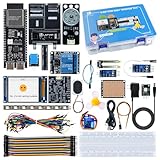
- 【High-Performance ESP32-S3 Microcontroller】 Equipped with revolutionary MCP protocol technology, the kit delivers a native AI voice control experience, perfectly adapting to various AIoT application scenarios, suitable for beginners, educators and makers.
- 【8 Versatile Hardware Modules Included】Comes with RGB LED module (full-color dimming, breathing light effect), WS2812 smart light strip (8 programmable LEDs), DHT11 sensor (real-time temperature and humidity monitoring), SG90 servo, DC fan, dual relay, raindrop and soil sensor, meeting diverse project needs.
- 【Zero-Threshold AIoT Control】Adopts innovative MCP protocol, allowing AI models to directly recognize hardware functions without complex programming. Pre-compiled firmware supports plug-and-play after burning, with an extensible architecture for secondary development.
- 【Multi-Scenario Application Coverage】Widely applicable to STEM education (learning IoT, AI interaction, embedded programming), smart home prototype verification, maker project development, and smart agriculture (soil monitoring, automatic irrigation systems).
- 【Comprehensive Learning & Technical Support】Provides an online document center with detailed quick-start guides and free professional technical support to answer questions and assist in problem-solving, helping users get started quickly.
When comparing suppliers, request a five-year cost model based on an explicit workload: devices, message frequency and size, connection duration, storage and retention, processing, region, edge nodes, and expected growth. Include installation, connectivity, support plans, data transfer, replacement hardware, and professional services. Usage-based cloud charges can be only one part of the bill. Verify current regional pricing and contract terms directly; a headline rate or free-tier description cannot predict the cost of an unspecified workload.
- Ask for unique identity, authentication, authorization, update, vulnerability-disclosure, logging, and support-period details.
- Confirm data ownership, raw-data export, documented APIs, hosting regions, subprocessors, incident notification, termination terms, and migration assistance.
- Check end-of-life commitments, secure reset and disposal procedures, and who handles device replacement.
- Request a responsibility matrix covering the device maker, platform provider, integrator, and your own teams.
- Separate the device, data, and application layers where practical, and test whether you can export useful data or replace a component.
Common reasons IoT investments disappoint
Sensors produce data but no return
Typical causes include no baseline, no response owner, poor sensor placement, too many alerts, or data that never reaches a work-order or operating system. A technically successful installation can still fail commercially if it does not alter a decision.
Predictive alerts are noisy
Limited failure history, sensor drift, changing operating conditions, inconsistent failure labels, and unvalidated thresholds or models can all reduce usefulness. Track false positives, missed failures, alert latency, and resulting maintenance outcomes, then adjust or discontinue a model that does not improve decisions.
The pilot works, but scaling costs too much
Installation labor, subscriptions, message volume, storage, integration, replacement devices, batteries, security operations, site-specific configuration, and support tickets can all grow with deployment. Model these costs before expanding, not after the budget is committed.
Connectivity or ownership breaks down
Remote sites and mobile assets may have unreliable coverage. Systems may need local buffering, store-and-forward delivery, retries, clock synchronization, duplicate-message handling, offline behavior, or cellular failover. Assign ownership for procurement, installation, network access, data quality, application support, security monitoring, physical maintenance, incident response, and retirement to avoid disputes between operations and IT.
When not to invest
Do not fund IoT simply because the technology is available. A manual inspection, simpler software change, or redesigned process may address the issue more cheaply. Pause or reject a proposal when the problem is immaterial, no one can act on the information, no credible baseline exists, the five-year cost exceeds measurable benefits, or the deployment would create unacceptable safety or privacy exposure.
A vendor that cannot explain updates, support duration, vulnerability handling, data portability, and end-of-life arrangements creates a lifecycle risk that should be resolved before purchase. Likewise, if the business cannot define what happens when connectivity fails—or who owns the response when an alert arrives—the project is not ready to scale.
Quick Recap
Product prices and availability are accurate as of the date/time indicated and are subject to change. Any price and availability information displayed on Amazon at the time of purchase will apply.
Free tools Windows power users keep installed
One-click scans. No signup required.




