Recommended Free Tools
Short answer: The Business Council of New York State, Inc. (BCNYS) reported that an unauthorized party accessed a limited number of internal systems on February 24–25, 2025. The incident, detected on August 4, 2025 and publicly reported on August 20, affected 47,329 individuals, according to reporting based on a Maine Attorney General notification. Reported data categories included Social Security numbers, financial and payment-card information, and medical and health-insurance data, but not every person necessarily had every category exposed.
What happened in the BCNYS breach?
BCNYS is a private business-advocacy organization representing New York employers and member organizations, not a New York state government agency. Its website describes a network of more than 3,000 member organizations, including trade groups, chambers, professional organizations and businesses. BCNYS official website

According to reporting based on the organization’s regulatory notification, an unauthorized party accessed a limited number of BCNYS internal systems during a two-day period in February 2025. BCNYS detected the activity on August 4, 2025—approximately six months after the reported access window—and later identified 47,329 affected individuals.
The public report does not establish that all member employees were affected. People may have been included because their information was handled through a member organization, an insurance-related arrangement or another BCNYS administrative program.
Quick wins for a faster PC:
Scan for outdated or missing drivers - takes under a minuteDriver Scan →Clear out junk files and repair common Windows errorsFree Scan →Fix the driver behind crashes, sound loss and screen glitchesFind Drivers →#1 Best Overall
What information was exposed?
The reported data involved “some combination” of the following categories. That wording matters: it does not mean every affected person had every type of information exposed.
Identity and tax information
- Names and dates of birth
- Social Security numbers
- State identification numbers
- Taxpayer identification numbers
- Electronic-signature information
Financial and payment information
- Financial-institution names
- Bank-account and routing information
- Payment-card numbers, PINs and expiration dates
Medical and insurance information
- Medical-provider names
- Diagnoses or medical conditions
- Prescription information
- Medical treatments or procedures
- Health-insurance information
The available public account does not describe the precise record structure or establish that every listed item was exfiltrated. It is more accurate to say that these data categories were reportedly present in information associated with affected individuals.
Source: Cybernews incident report.
Has identity theft or fraud been confirmed?
At the time of the cited report, BCNYS said it had not received reports of identity fraud resulting from the incident. That is not a finding that no one will experience fraud. Social Security numbers, taxpayer identifiers, bank details, card data and medical information create different risks, including new-account fraud, tax fraud, account takeover, payment-card misuse, phishing and medical-identity theft.
What assistance is BCNYS offering?
The reported notification said BCNYS planned to provide free credit-monitoring memberships to people whose Social Security numbers were exposed. It also advised affected individuals to monitor account statements and obtain free credit reports.
Free tools Windows power users keep installed
One-click scans. No signup required.
Rank #2
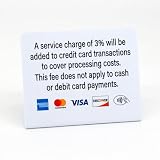
- PROFESSIONAL DISPLAY: 3pk of Service Charge signs clearly communicates credit card payment policies and the 3% service charge for crerdit card transactions to customers. No fee for cash or debit card payments
- PAYMENT OPTIONS: Displays acceptance of major credit cards including Visa, Mastercard, American Express, Discover, and contactless payment symbol
- VERSATILE USE: Perfect for retail counters, payment stations, cash registers, and point-of-sale areas. Freestanding, easy to display signs can be displayed on any flat surface such as a counter or desk
- MULTI-PACK VALUE: Includes three identical signs for multiple location display or backup use
Use the actual breach letter to verify the monitoring provider, activation code, enrollment deadline, coverage period and whether restoration or medical-identity services are included. Those details were not established in the available public material. Use contact information from the letter or an independently verified BCNYS channel rather than an unsolicited email or text.
What affected people should do now
- Read the notice closely. Confirm which categories—Social Security, bank, card, tax or health information—applied to you.
- Enroll in free monitoring before its deadline. Save the confirmation and terms. Monitoring alerts you to changes; it does not prevent every form of fraud.
- Freeze your credit with all three nationwide bureaus. A freeze generally blocks prospective creditors from accessing your file and is stronger preventative protection than monitoring alone. Temporarily lift it when a legitimate lender, insurer, landlord or employer-related check needs access. You may also place a one-year fraud alert through one bureau, which should notify the other two. The FTC explains the options at IdentityTheft.gov.
- Review your credit reports. Use the federally authorized site AnnualCreditReport.com and dispute unfamiliar accounts or inquiries.
- Monitor bank and card accounts. Report unauthorized transactions promptly. Replace payment cards or credentials if your notice says those data were involved. Do not automatically close a bank account unless your bank recommends it or suspicious activity appears.
- Protect your tax identity. If a Social Security number or taxpayer identification number was exposed, consider an IRS Identity Protection PIN and watch for unexpected tax correspondence. The IRS explains enrollment at IRS.gov.
- Check medical activity. Review explanation-of-benefits statements, insurer notices and provider bills for unfamiliar services, prescriptions or claims. Contact the insurer through a known official number if anything is wrong.
- Expect phishing. Do not provide one-time codes, Social Security numbers, bank details or payment to someone claiming to activate protection. Be suspicious of pressure, unfamiliar phone numbers, mismatched domains or requests to install remote-access software.
- Report suspected identity theft. IdentityTheft.gov provides a recovery plan and documentation tools. Keep the breach notice, account correspondence, reports and records of expenses or lost time.
Timeline
| Date | Event |
|---|---|
| February 24–25, 2025 | Reported window in which an unauthorized party accessed a limited number of BCNYS internal systems. |
| August 4, 2025 | BCNYS detected the unauthorized activity. |
| August 20, 2025 | Public reporting identified 47,329 affected individuals and described the reported data categories. |
| August 18, 2026 | The latest date covered by the available account; no later confirmed incident facts were established there. |
What remains unverified
The available reporting does not establish a named attack group, the precise intrusion method, ransomware use, a ransom demand or payment, a public leak-site posting, a specific vendor as the cause, confirmed fraud cases, a regulatory fine, or a lawsuit or settlement. It also does not show that every BCNYS member or every employee of a member organization was affected.
A secondary summary contains conflicting 2024 dates and should not override the February–August 2025 timeline reported from the notification. The formal organization name is Business Council of New York State, Inc., commonly abbreviated BCNYS—not “New York Business Council.”
Independent reader supportYour contribution helps us test, update, and keep practical guides available for everyone.Should you buy additional identity protection?
Start with the free steps: a credit freeze, fraud alert when appropriate, credit reports, FTC recovery tools and any BCNYS monitoring. A paid service may add three-bureau alerts, restoration assistance, bank-transaction monitoring or medical-identity monitoring, but compare those features with the free coverage you already receive. Be skeptical of claims that stolen information can be permanently removed from criminal forums.
Do these 3 things before closing this tab:
1Repair Windows errors before they cause bigger problems2Scan for outdated or missing drivers - takes under a minute3Clear out junk files and repair common Windows errorsFrequently Asked Questions
How many people were affected by the BCNYS breach?
The reported count is 47,329 individuals.
Was this a New York state government breach?
No. BCNYS is a private business-advocacy organization, not a state agency.
Should I freeze my credit if I receive a notice?
A freeze is generally the strongest preventive step against new-credit fraud. It can be lifted temporarily when a legitimate credit check is needed.
What if I never received a breach letter?
Not receiving a notice does not prove you were unaffected, but membership alone does not prove inclusion. Contact BCNYS or your employer through independently verified channels.
Quick Recap
Product prices and availability are accurate as of the date/time indicated and are subject to change. Any price and availability information displayed on Amazon at the time of purchase will apply.




