Investigators reported on February 19, 2025 that previously used Seagate hard drives—including Exos enterprise models and some IronWolf and IronWolf Pro NAS drives—were being resold as new. Reported tactics included resetting visible SMART counters, altering labels or serial numbers, and making warranty records appear consistent. A clean “zero hours” screen or valid warranty lookup therefore cannot, by itself, prove that a drive is new.
For buyers, the safest response is immediate evidence collection, direct testing, and a return if the drive’s history or identity does not add up.
What investigators reported
The reported supply chain began with high-capacity drives that had already seen substantial service, including drives associated in some cases with Chia cryptocurrency-mining operations. Investigators said some sellers reset ordinary usage records, cleaned or repackaged the hardware, and listed it as new through marketplace channels. Later examples were reportedly harder to recognize because production labels, serial numbers and Seagate warranty results could also look plausible. The reporting covered Exos data-center drives and later IronWolf and IronWolf Pro examples, including reported 8TB and 16TB units; it does not establish that every capacity, firmware version or regional model is affected. Network World’s report attributes the allegations to investigators and says Seagate acknowledged an IronWolf-related fraud issue, was investigating and was working with resellers.
Chia-related offloading is one reported source of used stock, not a proven explanation for every suspect drive. Nor is there a published industry-wide count showing how common fraudulent relabeling is.
#1 Best Overall

- Easily store and access 2TB to content on the go with the Seagate Portable Drive, a USB external hard drive
- Designed to work with Windows or Mac computers, this external hard drive makes backup a snap just drag and drop
- To get set up, connect the portable hard drive to a computer for automatic recognition no software required
- This USB drive provides plug and play simplicity with the included 18 inch USB 3.0 cable
- The available storage capacity may vary.
Why a normal SMART check is not enough
SMART is a monitoring and failure-prediction system, not an unused-product certificate. Seagate’s documentation explains that SMART covers only attributes a drive can monitor. A seller who resets or manipulates exposed counters may leave a drive showing low power-on hours, few start/stop cycles and no obvious error history even though it has operated for years. Seagate’s SMART documentation describes those limits.
Use each check for what it can actually establish:
| Check | What it can tell you | What it cannot prove |
|---|---|---|
| Label and date code | Whether the physical markings look plausible and match the listed model | That the mechanism was never used |
| SMART data | Reported health, counters, errors and self-test history | That counters were not reset or selectively altered |
| Seagate warranty lookup | Whether Seagate recognizes the submitted identifiers for a country and model | That the physical drive is the original unit associated with those identifiers |
| SeaTools | Identity information and results from supported diagnostics | New retail status |
| FARM data | Additional Seagate operational history where the model and connection support it | Universal authentication for every drive or interface |
| Packaging | Whether presentation resembles expected retail or OEM packaging | That the package contains the original, unused drive |
What FARM adds
Seagate’s vendor-specific Field Accessible Reliability Metrics (FARM) log can expose operational information that ordinary SMART readings do not. The open-source smartmontools FARM command definitions, smartctl documentation and FARM parser source document access to the ATA FARM log at General Purpose Log address 0xA6.
FARM is not available in the same way on every Seagate model. Firmware, operating system, tool version and the interface all matter. USB-to-SATA bridges and many NAS interfaces block or translate vendor-specific commands, so an absent FARM result is not proof of fraud. Conversely, a large mismatch between FARM history and visible SMART counters is a serious warning that merits a return and manufacturer review.
Inspection checklist for a newly delivered drive
1. Preserve the condition before installation
- Photograph the drive label, connectors, packaging, seals and any accessories.
- Record the listing, seller name, invoice and delivery date.
- Write down the model number, serial number, firmware revision and production-date code.
Look for dents or scuffs, worn SATA contacts, bubbling or misaligned labels, missing documentation and packaging unlike the seller’s description. These are circumstantial clues: regional packaging and normal handling can vary.
Recommended Free Tools
2. Compare identifiers through a direct connection
Where practical, connect the disk directly through SATA or a compatible HBA rather than a USB enclosure. In SeaTools, confirm the model and serial number; Seagate’s SeaTools for Windows instructions explain that the program displays drive identity and runs diagnostics. An external enclosure may report the internal disk’s identifiers rather than the identifier assigned to the external product as a whole.
3. Check the manufacturer warranty
Use Seagate’s warranty-validation process with the serial number, model or part number and country of purchase, as specified in the IronWolf Pro manual. Interpret the result carefully:
Rank #2
- Easily store and access 1TB to content on the go with the Seagate Portable Drive, a USB external hard drive.Specific uses: Personal
- Designed to work with Windows or Mac computers, this external hard drive makes backup a snap just drag and drop. Reformatting may be required for Mac
- To get set up, connect the portable hard drive to a computer for automatic recognition no software required
- This USB drive provides plug and play simplicity with the included 18 inch USB 3.0 cable
- The available storage capacity may vary.
- No record: could indicate a gray-market unit, wrong model, altered label or counterfeit, but is not conclusive alone.
- Expired warranty: conflicts with a listing that promised a genuinely new drive with full new-product coverage.
- Valid-looking warranty: useful corroboration, not authentication; reported serial-number reuse can make a lookup misleading.
- Wrong region or prior-claim concern: ask Seagate to verify the combination before relying on it.
4. Run SeaTools before storing important data
- Confirm model, serial number and firmware.
- Run the short diagnostic.
- Run the long or extended test before deployment.
- Save screenshots and logs.
- Do not erase or use destructive repair functions until evidence is preserved.
A passed test means the drive passed that diagnostic; it does not establish unused status. Seagate recommends checking warranty status if a drive fails testing.
5. Read SMART data
On Linux, a typical report is:
sudo smartctl -x /dev/sdXReplace /dev/sdX with the actual device. Review power-on hours, power cycles, start/stop counts, reallocated, pending and uncorrectable sectors, self-test history, error logs and temperature history where available. Check whether the relationships make sense—for example, a supposedly factory-new disk with extensive self-tests or years of operation.
Do not treat one attribute as definitive. Counters are vendor-specific, can wrap or be reset, and differ between models.
6. Attempt a FARM read
With a supported direct connection and current smartmontools build, try:
sudo smartctl -l farm /dev/sdXVerify options with smartctl --help and the project documentation. If the command is unsupported or blocked, document that limitation rather than treating it as a pass or fail. Compare any FARM history with SMART, the label date and the purchase timeline; there is no universal model-independent threshold that proves a drive is genuine.
Price and seller signals
- A price far below the normal range for the capacity.
- Enterprise or NAS drives presented as ordinary consumer stock.
- “New” units in generic anti-static bags without an explained OEM or bulk channel.
- Many identical high-capacity disks from a seller with little traceable history.
- Ambiguous terms such as “new pull,” “unused,” “OEM” or “factory sealed.”
- A seller-only warranty instead of manufacturer-backed coverage.
- Refusal to provide the exact model or explain return and serial-number policy.
- Listings that mix new, refurbished, recertified and open-box terminology.
These are risk signals, not proof. Legitimate liquidation, OEM and regional pricing can explain an unusual offer, but the seller should be able to document the condition and warranty.
Outdated Drivers Are Slowing You Down
One free scan finds every outdated or missing driver and matches the right update for your exact hardware.Free scan · exact hardware matchPC Slower Than It Used to Be?
A free scan shows the junk files, broken settings and background clutter dragging Windows down - then fixes them in one click.Free scan · Windows 10 & 11Rank #3
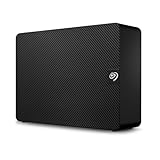
- Easy-to-use desktop hard drive—simply plug in the power adapter and USB cable
- Fast file transfers with USB 3.3
- Drag-and-drop file saving right out of the box
- Automatic recognition of Windows and Mac computers for simple setup (Reformatting required for use with Time Machine)
- Enjoy peace of mind with the included limited warranty and Rescue Data Recovery Services
Choosing a buying channel
Authorized or accountable retailer
You generally pay more, but receive clearer traceability, easier returns and a more credible manufacturer warranty. OEM or bulk packaging may still differ from consumer retail packaging.
Marketplace seller
Marketplaces can offer unusual capacities and lower prices, but supply-chain uncertainty, seller-only warranties and dispute friction are higher. A valid-looking serial number or many positive reviews does not replace documentation.
Honestly used or refurbished stock
A used drive can be reasonable when it is labeled accurately, priced for its condition, covered by explicit terms and deployed with independent backups. The problem is misrepresentation—not prior use by itself.
If the drive appears misrepresented
- Stop using it for important data.
- Preserve photos, packaging, listing details, correspondence, SMART and FARM output, and SeaTools logs.
- Do not wipe or modify the disk before documenting the evidence.
- Request a return or refund through the marketplace and payment provider.
- Ask Seagate to verify the model, serial combination and warranty eligibility.
- Report suspected counterfeit or altered hardware to the marketplace and relevant consumer-protection authority.
- Replace it through an accountable channel and confirm backups before deployment.
If the disk was installed in a RAID or NAS, do not rebuild merely because the array is currently healthy. Obtain a trustworthy replacement, verify an independent backup and account for the additional stress that a rebuild places on all remaining members.
Do these 3 things before closing this tab:
1Scan for outdated or missing drivers - takes under a minute2Repair Windows errors before they cause bigger problems3Fix the driver behind crashes, sound loss and screen glitchesWhat this means for buyers
A drive can pass diagnostics and still be unacceptable if it was sold as new after prior service. Prior use does not guarantee imminent failure, but it changes the unknown remaining life and may invalidate the expected warranty. The practical standard is therefore not one magic test: it is agreement among the seller’s description, physical evidence, identifiers, warranty record, SMART history and, where supported, FARM data.
For high-capacity Exos, IronWolf or IronWolf Pro purchases, an accountable seller, immediate testing and a documented return window provide more protection than the lowest advertised price.
Quick Recap
Product prices and availability are accurate as of the date/time indicated and are subject to change. Any price and availability information displayed on Amazon at the time of purchase will apply.




