“Let’s buy Commodore” was not a plan to recreate the original Commodore computer company overnight. It was Christian “Perifractic” Simpson’s effort to secure more sympathetic control of Commodore trademarks and create workable licences for new retrocomputing products. That could support credible C64-style hardware, parts and accessories, but a trademark deal would not automatically include Amiga, Commodore software, ROMs, chip designs, factories or the original engineering organisation.
What was actually proposed?
Hackaday’s June 7, 2025 report describes Simpson—creator of the Retro Recipes YouTube channel—starting with a licensing proposal and then exploring whether relevant Commodore rights could be acquired or consolidated. The project’s public explanation is Simpson’s video, “Can We Save COMMODORE? My Biggest Project Yet!”, embedded in Hackaday’s report.

The practical aim was a percentage-based arrangement that smaller manufacturers could afford when making new parts, computers and accessories. It also reflected concern that the Commodore name has appeared on disappointing licensed products. In that sense, “buying Commodore” is shorthand for putting the brand under better stewardship, not proof that the historic corporation has returned.
“Commodore” is a bundle of different assets
The original Commodore International business ceased operating decades ago. Since then, names, logos and related rights have moved among companies and jurisdictions. Owning or licensing one trademark registration does not establish ownership of every asset associated with the name.
Quick wins for a faster PC:
Fix the driver behind crashes, sound loss and screen glitchesFind Drivers →Clear out junk files and repair common Windows errorsFree Scan →Scan for outdated or missing drivers - takes under a minuteDriver Scan →#1 Best Overall

- High definition output at 720p via HDMI
- Pixel Perfect display, with US/Europe display modes and crt filter options
- Save game function. Supports software updates via USB flash drive
- 2 USB ports: plug in a USB keyboard and use as a fully functional home computer, or add a second joystick for 2-player games
- Included: The C64 Mini computer, Classic USB joystick, HDMI cable, USB cable for power, 64 preinstalled games, instruction manual. *AC USB adaptor not included
| Asset | Included automatically in a trademark deal? | What must be verified |
|---|---|---|
| Commodore word mark | Not necessarily | Territory, registration status and product classes |
| Chicken-head logo | Not necessarily | Each logo registration and its covered goods |
| C64 name | Not necessarily | Separate marks and licensing rights |
| Amiga name | No assumption | Different owners or registrations may apply |
| Commodore software and games | No | Copyright ownership and software licences |
| AmigaOS | No | Separate operating-system rights |
| C64 ROM images | No | Copyright and distribution permissions |
| Historic schematics, patents and tooling | No | Surviving records, terms, expiry and ownership |
| Factories and former staff | No | A trademark does not recreate an operating company |
Who is behind the effort?
Christian Simpson, known online as Perifractic, runs Retro Recipes and is a prominent retrocomputing creator. Hackaday says several people in the retrocomputing community were involved in pursuing more favourable licensing terms. That makes Simpson the public face of a proposal; it does not, by itself, make him the owner of every Commodore-related right.
What could the arrangement enable?
If the necessary marks were controlled and licensed, plausible products include:
- New C64-style computers or faithful replicas
- Replacement cases, keycaps, power supplies, cables and joysticks
- Disk-drive accessories and repair parts
- FPGA systems that reproduce classic hardware behaviour
- Modern retro-inspired computers with an approved Commodore identity
- Licences for established retro-hardware manufacturers
Brand permission would reduce legal friction and could fund quality control. It would not supply custom chips, original ROMs, AmigaOS, commercial game rights, manufacturing capacity or a modern software ecosystem. Those would require separate licences, new engineering or independent development.
Rank #2
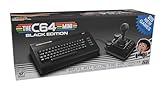
- A glorious half-size recreation of the iconic C64 in a striking black finish
- 25 of the highest rated new games, including; Sam’s Journey, A Pig Quest, Steel Ranger and Knight ‘n’ Grail
- High Definition output at 720p 50 or 60Hz
- Play in original 4:3 or pixel perfect aspect ratios, with or without CRT filters
- Save your progress in one of four save-game slots per game, and return at any time
Commodore is not automatically Amiga
Readers should treat Amiga as a separate rights question. Hackaday’s report and the community discussion at AmigaWorld underline that Commodore and Amiga branding have been separated legally. A Commodore-branded computer might be possible without permission to use the Amiga name, AmigaOS, Amiga software or Amiga imagery.
Free tools Windows power users keep installed
One-click scans. No signup required.
Any announcement that combines the two should identify the specific trademark, copyright and software licences involved. Nostalgic association is not legal authorization.
The business case is a niche licensing operation
The commercial challenge is not whether people remember Commodore. It is whether recurring revenue can pay for rights, product oversight and support in a fragmented international market.
Rank #3

- Vintage Computer design. Commodore - C64 - Uppercase Letter & Commodore - Lettering Blue/Red
- Commodore C64 Uppercase Letter & Commodore Blue / Red
- Lightweight, Classic fit, Double-needle sleeve and bottom hem
Potential revenue
- Royalties from approved hardware and accessories
- Direct sales of limited-edition or flagship products
- Parts and repair products for existing owners
- Partnerships with specialist retro-hardware vendors
- Community-backed projects, memberships or crowdfunding
Major costs
- Acquisition or licensing fees and legal review
- Trademark renewals, monitoring and enforcement across countries
- Industrial design, engineering and prototype work
- Manufacturing minimums, inventory and distribution
- Warranty service, returns and customer support
- Consistent approval standards for every licensee
A serious replica may cost more than casual buyers expect, while a cheap generic device may sell more units but weaken the brand. The project therefore has to choose between broad access and strict quality control rather than promising both without trade-offs.
What products are most realistic?
Licensed existing hardware
This is the lowest-risk path: an established manufacturer adds an officially approved Commodore identity under clear quality requirements.
What’s actually slowing this PC down?
Pick the symptom - the matching free tool is one click away.
Parts and accessories
Replacement keyboards, cases, power equipment and cables address practical problems for owners and may have a clearer market than a brand-new general-purpose computer.
Faithful replicas and FPGA systems
These can appeal to enthusiasts, but credibility depends on documented compatibility, keyboard feel, expansion ports, video output, safe power and repairability.
A modern retro-inspired computer
This would offer more differentiation but requires a compelling use case beyond a logo and nostalgia, plus developers, applications and long-term support.
Generic consumer electronics
Phones, televisions or inexpensive all-in-one boxes could generate licensing income quickly. Hackaday’s warning is that this strategy risks repeating the low-quality licensing that damaged the name.
Recommended Free Tools
Best Value

- Inspired by the classics. Compatible with Windows 10(1903) or above, and Android 9.0 or above.
- Programmable keys, Dual Super Buttons, and Super Stick, with independent control panel.
- 87 keys. Top mount style with Kailh Box White Switches.
- Double-Shot ABS keycaps with SA profile. (C64 Edition only)
- Hot-swappable PCB. Support n-key rollover.
How to judge whether the revival is credible
- Legal clarity: Published details should identify controlled marks, countries and product classes, rather than simply claiming “ownership of Commodore.”
- Product quality: A device should provide meaningful compatibility or design value, not merely a logo on generic electronics.
- Community value: Licensing should support repair, documentation and small manufacturers without abandoning approval standards.
- Financial sustainability: The plan should explain sales assumptions, warranty obligations and money reserved for trademark defence.
- Operational independence: A durable programme should not depend entirely on one creator or one crowdfunding campaign.
Current status and what remains unverified
Hackaday’s June 2025 account documents a licensing initiative and the possibility of acquiring relevant brand assets. A later German report said Simpson had acquired the Commodore brand and referred to Italian and European trademark registrations: Administrator.de report. That secondary account does not establish the complete scope of any transaction—such as every territory, Nice class, logo, product name or operating right—so it should not be read as proof that all Commodore intellectual property changed hands.
There is also no evidence here of a confirmed new C64, Amiga computer, operating system, factory or software catalogue resulting from the effort. Those would be separate announcements requiring separate evidence.
What would count as success?
A realistic success standard is narrower than “Commodore returns.” It would mean legally clear marks, transparent licences, products that meet published quality and compatibility standards, dependable parts and support, and enough recurring revenue to defend the brand. Rebuilding a mass-market computer company would require technology, talent, capital and distribution far beyond a trademark transaction.
The Bottom Line
Bottom line: “Buying Commodore” is best understood as an attempt to place the Commodore brand and its licensing programme under more sympathetic control. It could make credible retro hardware and replacement parts easier to launch, but it is not automatically a purchase of the original company, Amiga, software or historic technology.
Outdated Drivers Are Slowing You Down
One free scan finds every outdated or missing driver and matches the right update for your exact hardware.Free scan · exact hardware matchPC Slower Than It Used to Be?
A free scan shows the junk files, broken settings and background clutter dragging Windows down - then fixes them in one click.Free scan · Windows 10 & 11Quick Recap
Product prices and availability are accurate as of the date/time indicated and are subject to change. Any price and availability information displayed on Amazon at the time of purchase will apply.




