Recommended Free Tools
There is no single best digital signage platform for every deployment. For a low-cost first screen, start with Yodeck; for broad bring-your-own-device support and a large app catalog, compare OptiSigns; for more polished business workflows, consider ScreenCloud; and for schools, emergency alerts, or screen sharing, look at Rise Vision. Prices below reflect published information checked August 16–18, 2026, and can change.
The most useful comparison is not just the monthly license: it is whether the software runs on your hardware, keeps playing through an internet outage, gives the right people control, and fits the full cost of the deployment.
Best digital signage software at a glance
| Platform | Best for | Published entry price | Free option or demo | Main strength | Watch for |
|---|---|---|---|---|---|
| Yodeck | Small or budget-conscious deployments | Free for one screen; paid Basic shown at $8 per screen/month on displayed annual pricing | One-screen free plan; 30-day full-feature access for up to five screens | Low entry cost and broad player compatibility | Check annual billing and conditions on player bundles; free plan is limited to one screen |
| OptiSigns | General-purpose BYOD signage | Standard $10 per screen/month monthly, or $9 at displayed annual rate | Free tier for up to three supported screen types, with branding | Large app and integration catalog | Higher-tier features and some add-ons can raise the bill |
| ScreenCloud | Polished workflows and integrations | Core $20 per screen/month; Pro $30, plus VAT | Free trial | Templates, apps, dashboards, and analytics | Higher starting price; Enterprise is quote-based |
| Rise Vision | Schools, alerts, and screen sharing | Basic shown at $11 per display/month | Free demo | Education-oriented features and volume pricing | Confirm which alert and sharing features are in the selected plan |
| NoviSign | Visual content creation | Current public comparison figures conflict; confirm directly | Free trial promoted | Drag-and-drop authoring and varied deployment scenarios | Do not budget from an unconfirmed starting-price figure |
| TelemetryTV / TelemetryOS | Advanced deployments and custom applications | Not stated as a directly comparable figure on retrieved public materials | Pricing/demo paths available | Potential fit for more complex applications and enterprise needs | TelemetryOS is an application-platform proposition, not simply another CMS tier |
Prices are vendor-published signals, not a complete deployment quote. Billing terms, currency, taxes, minimums, hardware, and feature eligibility can vary. ScreenCloud’s published amounts exclude VAT where applicable; enterprise pricing and several add-ons require direct confirmation.
What digital signage software does—and what it does not include
A signage platform typically combines a browser-based content-management system with a player app or operating-system integration. It stores and syncs media, organizes playlists, schedules what appears and when, and provides some combination of layouts, templates, remote monitoring, and device management. Depending on the product and plan, it may also connect dashboards, calendars, weather, social feeds, RSS, QR interactions, kiosks, emergency alerts, or proof-of-play reporting.
Do these 3 things before closing this tab:
1Fix the driver behind crashes, sound loss and screen glitches2Repair Windows errors before they cause bigger problems3Scan for outdated or missing drivers - takes under a minute#1 Best Overall

- 【High-Quality Display】This MWE-QIXZOCV digital signage kiosk features an IPS display screen with FHD image and video quality, offering a wide 178° viewing angle. The vibrant and clear visuals ensure that the content is easily visible and appealing from various positions, making it ideal for attracting attention in busy environments.
- 【Versatile Input Options】It supports USB/HDMI input, allowing for easy plug and play via USB disk. After startup, it has an automatic loop playback feature, ensuring continuous display of content without manual intervention. Additionally, it supports HDMI input and WiFi connectivity, providing flexibility in content management and updates.
- 【MWE-QIXZOCV CMS Real-time Update】The Content Management System (CMS) enables real-time update of the displayed content. It supports synchronous remote publishing and management, allowing users to control and change the displayed images or information from a remote location. This feature is highly useful for businesses that need to update their promotions or messages frequently.
- 【Continuous Playback and Timed Settings】The MWE-QIXZOCV digital signage can operate continuously for 7 days and 24 hours, ensuring uninterrupted display of important information or advertisements. Moreover, it has timed power on/off settings, which helps in saving energy and managing the display schedule according to business hours or specific needs.
- 【Portable and Foldable Design】The MWE-QIXZOCV digital signage display is foldable, movable, and portable. It can be easily folded and moved around with the help of built-in wheels, making it convenient for transportation and setup in different locations. This portability makes it suitable for various events, exhibitions, and temporary promotional setups.
The license is not the screen. A deployment may also need displays, media players, mounts, cabling, network service, installation, content production, support, and replacement hardware. Consumer TVs and commercial displays can behave differently under long operating hours, so verify duty cycle, warranty, power settings, and software support for the exact model.
There are also two broad product categories. A conventional signage CMS is designed to manage media, playlists, schedules, and screen groups. An enterprise experience or application platform may add governance, retail experiences, workflow automation, IoT, or custom applications. TelemetryOS, for example, describes an application-oriented model that can run full React/JavaScript applications and connect with hardware and IoT; that is a different buying problem from scheduling a few menu boards. See TelemetryOS’s comparison for its framing.
How much does digital signage software cost in 2026?
Most comparable plans charge per screen or display, so the license scales with the fleet. A free tier, a time-limited trial, and a vendor-led demo are different offers: only the first may be usable indefinitely, and it may still carry screen, storage, feature, or branding limits.
Published pricing signals
- Yodeck: The pricing page shows free service for one screen and paid Basic, Premium, and Enterprise levels of $8, $12, and $16 per screen/month respectively on displayed annual pricing. Monthly billing may differ. Annual plans may include a player, subject to the vendor’s terms. The page also promotes 30 days of full-feature access for up to five screens without a credit card. Yodeck pricing.
- OptiSigns: Standard is shown at $10 per screen/month on monthly billing or $9 at the annual rate; Pro is $12.50, Pro Plus $15, Engage $30, and Enterprise $45 per screen/month, with a 25-screen minimum for Enterprise. Its free tier supports up to three supported screen types, 25 basic apps, and 1 GB of storage, and displays OptiSigns branding. Currency and annual terms can vary. OptiSigns pricing.
- ScreenCloud: Core is listed at $20 and Pro at $30 per screen/month, plus VAT where applicable. Enterprise is quote-based. ScreenCloud pricing.
- Rise Vision: Basic is shown at $11 per display/month. Pricing can depend on industry, display count, billing period, volume discounts, and features. Rise Vision pricing.
- NoviSign: Public comparison sources show conflicting starting prices, including figures around $10 and $14 per screen/month. Treat the price as unconfirmed and request a current quote or verify the live vendor page before budgeting. A free trial is promoted on its site, NoviSign.
- TelemetryTV: Its public pricing materials provide a pricing/demo path, but the retrieved information does not establish a simple comparable entry price. Ask the vendor for a quote for the intended plan and screen count. TelemetryTV pricing.
Illustrative annual software-only totals
These calculations apply the displayed annual-equivalent per-screen figures to ten screens. They are illustrative, not quotes, and exclude hardware, taxes, installation, add-ons, content, and plan-specific conditions.
| Platform and basis | Illustrative ten-screen annual license | Qualification |
|---|---|---|
| Yodeck Basic at $8 per screen/month | About $960 | Uses the displayed annual-plan monthly equivalent |
| OptiSigns Standard at $9 per screen/month | About $1,080 | Uses displayed annual rate |
| ScreenCloud Core at $20 per screen/month | About $2,400 before VAT | VAT may apply |
| Rise Vision Basic at $11 per display/month | About $1,320 before any volume discount | Actual pricing may vary by industry and plan |
For a real budget, use this model: first-year total = software licenses + players + displays + mounts and cabling + installation + content creation + connectivity + support + replacement allowance. Request the quote for the exact screen count and term, and ask what changes at renewal.
Which platform fits your deployment?
Yodeck: best value for a first screen or small fleet
Yodeck is the clearest value pick when the priority is a low-cost start, a free single-screen option, or broad player choice. Its published compatibility list includes Amazon FireOS devices, Android, BrightSign, LG webOS, Raspberry Pi 5, Samsung Tizen, Windows, web players, and custom resolutions. The pricing page also lists scheduling, layouts, templates, APIs, webhooks, kiosk functions, video walls, and screen-source switching. See Yodeck’s pricing and listed capabilities.
Rank #2

- 【Built-in Lifetime Free CMS & Remote Management】Control your digital signage display anytime through the free lifetime Cloud CMS using your PC, tablet, or smartphone. Upload content remotely, create playlists, schedule playback, manage multiple displays, split screens, and update promotions in real time. USB plug-and-play is also supported for quick local content changes.
- 【700 Nits Commercial Display for 24/7 Business Use】Designed for continuous commercial operation, this 18.5-inch desktop digital menu board delivers 700 nits of brightness for clear visibility in cafés, restaurants, reception areas, and retail stores. Powered by Android 12 with 2GB RAM and 32GB storage, it ensures stable, reliable playback every day.
- 【Designed for Countertops, Checkout Areas & Reception Desks】Includes a sturdy desktop stand with landscape and portrait display options to fit different business layouts. Perfect as a digital countertop display for coffee shops, bakeries, salons, hotel receptions, trade shows, retail counters, waiting rooms, and customer service desks.
- 【HD Display with Flexible Connectivity】Enjoy sharp 720P HD visuals with a wide viewing angle for menus, promotions, and advertisements. Supports HDMI, LAN, TF card, USB 2.0, USB 3.0, and DC connections, giving businesses flexible options for local or cloud-based content management.
- 【Built to Increase Customer Engagement】Transform your business with dynamic menus, promotional videos, product showcases, welcome messages, and advertising displays that capture customer attention better than printed signs. Ideal for restaurants, cafés, bakeries, retail stores, hotels, clinics, exhibitions, and other commercial environments.
The free tier is effectively a one-screen product, while enterprise governance is concentrated in higher tiers. Raspberry Pi can be economical, but a Pi-first deployment may require more technical ownership than a standardized commercial-player fleet. Compare annual and monthly terms, and confirm whether any bundled player is included for your specific plan.
Choose it when: cost, one-screen experimentation, or flexible player options matter most. Look elsewhere when: you need advanced governance, managed installation, or a complex interactive application environment.
OptiSigns: best general-purpose BYOD alternative
OptiSigns suits businesses that want to reuse supported devices and draw from a broad app and integration catalog. Its published Standard tier includes 100+ apps, alongside playlists, scheduling, templates, feeds, multi-user support, and split-screen zones; higher tiers list capabilities such as approval workflows, proof of play, remote OS troubleshooting, kiosks, QR interactions, and event-based analytics. Unlimited cloud storage is shown on paid tiers. Availability depends on plan. OptiSigns pricing and plan details.
The free option includes vendor branding, which can rule it out for customer-facing displays. Video walls and other capabilities may carry extra costs, and per-screen pricing can add up across a large fleet. Check exact support for each display and operating-system version, especially in Apple-centric environments; compatibility summaries are not a substitute for confirming a particular model. A vendor comparison from Rise Vision lists several supported device families, but buyers should validate their intended hardware directly.
Choose it when: app breadth and BYOD flexibility are more important than the very lowest license cost. Look elsewhere when: you need an unbranded free tier or a predictable low cost at very high screen counts.
ScreenCloud: premium choice for workflow and integrations
ScreenCloud’s Core and Pro plans emphasize templates, Quick Post, more than 80 apps and integrations, unlimited file storage, dashboards, analytics, and QR-code metrics. The higher price can make sense for communications or marketing teams that value polished publishing workflows and a larger integration set. Enterprise deployment and professional services are also available, but Enterprise pricing is not public. ScreenCloud pricing.
Free tools Windows power users keep installed
One-click scans. No signup required.
Rank #3

- 50-inch 4K UHD 3840 x 2160 display with a non-glare panel delivering 300 nits of brightness
- Easily connect up to two sources via HDMI, or play content directly from USB with the built-in media player
- Crystal 4K Processory provides Intelligent UHD upscaling and ensures the highest picture quality for both standard and high definition content
- Slim and elegant with 3 side bezel-less design; VESA 200 x 200 wall mountable in portrait or landscape mode
- Built to operate reliably for up to 16 hours a day, 7 days a week and includes an IP5X dust-proof rating 3-Year commercial warranty to ensure peace of mind
At $20 per screen/month for Core and $30 for Pro, plus VAT where applicable, it is a difficult fit for a one-screen buyer whose main requirement is basic playlists. Confirm that the integration and administrative features you need are included in the tier quoted, and budget separately for any hardware or services.
Choose it when: workflow quality and integrations justify a premium. Look elsewhere when: license cost dominates or your needs are limited to simple scheduled images and video.
Rise Vision: specialist for schools, alerts, and screen sharing
Rise Vision is worth shortlisting for K–12 schools, districts, and organizations that want signage alongside emergency alerts or screen sharing. Its published Basic plan is $11 per display/month, and the product materials describe templates, school-focused content, scheduling, playlists, offline playback, and user management. Volume discounts and feature options can affect the quote. Rise Vision pricing.
The vendor says Basic runs on any hardware and operating system; treat that as a starting claim, not proof that a particular player, OS version, or display will work in your environment. Ask which tier includes the specific alert, sharing, and support functions you need. A generic menu-board deployment may not benefit from the education-oriented feature set.
Quick wins for a faster PC:
Repair Windows errors before they cause bigger problemsFix Now →Fix the driver behind crashes, sound loss and screen glitchesFind Drivers →Choose it when: school communications, alerts, or screen sharing are central requirements. Look elsewhere when: you need only a minimal, general-purpose CMS.
NoviSign: visual-authoring alternative, with price to confirm
NoviSign is a reasonable demo candidate when drag-and-drop content creation and a visual editor matter. It is positioned for several deployment types and promotes a free trial. However, public comparisons conflict on its current starting price, so do not use a secondary listing to lock a budget. Confirm plan limits, compatible hardware, and the written price directly before comparing it against a published per-screen rate.
Rank #4
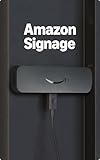
- Professional digital signage: The Amazon Signage Stick auto-launches your CMS in kiosk mode for seamless, unattended operation.
- Easy setup: Setup one or multiple Signage Sticks with the free Amazon Signage app. No tech skills needed.
- Works with CMS providers: Seamless integration with the leading content management software. (CMS subscription required).
- Secure by design: Secure boot, encrypted storage, and regular updates keep your signage protected and running smoothly.
- Manage on the go: Create profiles, organize by location, and monitor real-time right from your phone.
Choose it when: the editor feels like a better fit in a trial and the quote is clear. Look elsewhere when: you need transparent public pricing to estimate costs without a sales conversation. The cited review source shows a smaller sample than the leaders discussed below.
TelemetryTV and TelemetryOS: distinguish signage CMS from application platform
TelemetryTV appears in signage comparison and review coverage. TelemetryOS presents a more application-oriented model, including custom applications and connections to hardware and IoT. These should not be treated as interchangeable offerings or ranked as if both were basic playlist CMS products. A buyer who needs custom interactive experiences may want a consultation; someone who needs only low-cost scheduled content should first compare simpler plans. TelemetryTV pricing and TelemetryOS comparison.
What independent review scores can—and cannot—tell you
Software Advice’s digital-signage comparison page reported the following ratings and review counts when its 2026 snapshot was checked: Yodeck 4.85 from 4,744 reviews; OptiSigns 4.80 from 4,512; ScreenCloud 4.81 from 288; Rise Vision 4.67 from 289; NoviSign 4.88 from 120; and TelemetryTV 4.88 from 168. These figures are a dated snapshot, not controlled tests, and may change. Review volume, customer mix, product maturity, and scoring methods differ, so a higher score is not proof of better playback or fit. Software Advice digital-signage reviews.
G2’s 2026 roundup selected products appearing in its Summer 2026 Grid Report and required at least 100 verified reviews for the products it discussed; its selection differs from Software Advice’s. Use review sites to identify recurring themes about setup, support, administration, and reliability, then test your own hardware and workflows. G2’s 2026 roundup.
Independent reader supportYour contribution helps us test, update, and keep practical guides available for everyone.Choose by screen count, hardware, and operating conditions
One screen versus a fleet
- One screen: A free tier can be a sensible proof of concept if its branding, storage, scheduling, and feature limits are acceptable.
- Two to ten screens: Per-screen pricing may remain manageable, but standardizing players and planning support become more important.
- Dozens or hundreds: Ask for volume pricing, bulk provisioning, role management, location hierarchies, audit logs, fleet monitoring, and a written replacement process.
- National or global networks: Evaluate enterprise support and escalation, security review, deployment partners, regional data requirements, and service commitments.
Bring your own device or standardize on a player?
| Approach | Benefits | Risks to manage |
|---|---|---|
| Bring your own device | Lower initial cost; reuse existing TVs, displays, or mini-PCs; quick pilot | Device performance and lifecycle vary; app installation and updates may be manual; playback and network behavior are less consistent |
| Vendor-supplied or standardized player | More uniform fleet; simpler provisioning; clearer vendor support boundary; often better suited to offline media playback | Added hardware cost; possible lock-in; shipping and replacements; bundle may require an annual contract |
For any compatibility claim, verify the exact model, OS version, app installation method, update process, remote management support, and vendor support status. “Android,” “smart TV,” or “any hardware” is not enough detail to approve a fleet.
Offline playback and cloud dependence
Ask whether media is cached locally, how long it remains playable, whether live web apps and feeds work without a connection, what happens to expired media, whether schedule changes wait for reconnection, and whether the CMS reports last sync and player health. Caching a video does not mean a live dashboard or a newly published emergency message will continue to work offline.
What’s actually slowing this PC down?
Pick the symptom - the matching free tool is one click away.
Best Value

- 【Ideal for Advertising and Promotion】MWE-QIXZOCV Floor Standing Digital Signage Display is designed with durability and sturdiness in mind. Its simple design and easy operation make it suitable for diverse indoor locations such as retail stores, restaurants, malls, airports, hospitals, and commercial centers. Stand out in the competition with this powerful and versatile LCD Advertising Display Kiosk
- 【Multifunctional Display Equipment】Advertising Display: Showcase advertisements for products, and promotional campaigns. Attracts attention, increase brand exposure, and drive consumer purchasing behavior; Brand Display: Showcasing brand logos, product information, brand stories, brand vision and more, effectively displays and enhances brand image
- 【MWE-QIXZOCV Intelligent solutions】Information Communication: Convey various types of information, such as announcements, public messages, transportation directions, event schedules, and more, to help people access the information they need; Wayfinding: Provide detailed maps and route instructions. In large venues like shopping centers, exhibition halls, hotels, LCD digital signage serves as a navigation system to guide people to their destinations
- 【Advantage Features】Slim Design: Ultra screen bezel. We're using the recent popular slim design, not heavy old design Kiosks; Stable Open Cell technology: Low-power consumption with lower heat generation. Make the screen life long time longer; Compatibility Design: Supported with other media player box installation and power connected insdie; Andriod Stable System: User friendly interface, Support app installation.
- 【High-Quality Visual Experience】Enjoy stunning image and video quality with the FHD IPS display screen, providing crisp and vibrant visuals. The wide 178° viewing angle of MWE-QIXZOCV Digital Signage ensures maximum visibility from various perspectives, while customizable display settings optimize viewing in different environments
For unreliable networks, test the player disconnected and after reconnection. Keep mission-critical messages in local media where appropriate, and ask what continues during a cloud outage. Maintain more than one administrator, preserve original content outside the service, document credentials and deployment steps, and review cancellation and data-retention terms.
Content and feature requirements
- Static images and short videos: Basic playlists and schedules may suffice.
- Live dashboards or web pages: Confirm authentication persistence, browser requirements, data-source access, and behavior when the network drops.
- Interactive kiosks: Test touch support, locked-down navigation, session reset, accessibility, and recovery from a frozen app.
- Emergency alerts: Verify priority overrides, permissions, delivery confirmation, and the process for returning to normal playlists.
- Retail campaigns: Check proof of play, location-level access, and campaign reporting.
How to evaluate a demo or free trial
A demo is a guided sales presentation; a trial lets you test the product. Before starting either, ask the vendor to price your exact number of screens and show the features you intend to buy, rather than relying on a generic tour.
Ask the vendor to demonstrate
- Adding a screen on the exact hardware you plan to use, including a different device type if your fleet is mixed.
- Building a portrait layout with multiple zones and scheduling a recurring playlist by location or tag.
- Replacing scheduled content with an emergency override, then restoring the normal schedule.
- Playing locally stored content with the network disconnected and showing what stops working.
- Checking player status, rebooting or troubleshooting it remotely, and viewing last-sync information.
- Creating restricted user roles and an approval workflow.
- Connecting a live dashboard or data feed and explaining authentication and browser requirements.
- Viewing proof-of-play or playback logs, if you need them.
- Recovering from a failed update or corrupted media file.
- Exporting or deleting account data, removing a screen, and transferring its license.
- Replacing a broken player and managing a multi-location fleet.
- Showing the price, renewal terms, and feature changes for your exact screen count.
Run these tests on your actual display
- Disconnect the player from the internet, restart it, and reconnect it.
- Upload a large video and test portrait and landscape orientation.
- Run the actual live page or dashboard you intend to show.
- Schedule content across a time-zone boundary and check the result.
- Invite a second user with restricted permissions.
- Check whether branding appears and how many steps a routine content update takes.
- Confirm whether the trial converts automatically to a paid plan and which features disappear at expiry.
Failure modes worth checking before you sign
Unreliable internet or stale screens
Cached media may continue while live feeds fail; schedule changes may not arrive; a browser-based player may lose authentication; or playback may not recover cleanly after reconnection. Test those exact scenarios and confirm that the platform reports an outage and last sync.
Consumer TVs used all day
A consumer TV can enter a screensaver or sleep state, update its firmware during playback, lose app support, or have brightness and duty-cycle limits that do not suit long operating hours. For extended daily use, compare commercial displays, verify warranty and duty-cycle terms, and standardize power, input, and sleep settings.
Windows Errors? Fix Them Before They Spread
Repair common Windows errors and clear accumulated junk for a smoother, more stable PC - no reinstall needed.Free scan · no reinstallOutdated Drivers Are Slowing You Down
One free scan finds every outdated or missing driver and matches the right update for your exact hardware.Free scan · exact hardware matchHigh screen counts and permissions
A per-screen price can outgrow the budget; manual provisioning can become burdensome; and a broad permission or one mistaken edit can affect an entire fleet. Require location hierarchies, tags, bulk actions, role controls, and audit history where needed. Get volume pricing and confirm support hours, escalation, and replacement logistics in writing.
Dashboards, web pages, and kiosks
Authentication may expire, websites may change layout, browser controls may leak into a kiosk, or a player may lack touch support. Prefer native integrations when they meet the need; otherwise test a dedicated display view and the intended credentials on the actual player. For a kiosk, verify session reset, accessibility, locked-down navigation, and a recovery path after a crash.
Shortlist by use case
- One inexpensive screen: Start with Yodeck’s free single-screen tier, then verify whether its limits and player requirements fit.
- Restaurant or menu board: Compare Yodeck and OptiSigns for cost, schedule changes, and the exact display hardware; add Rise Vision only if its specialist functions matter.
- Retail: Evaluate OptiSigns for app breadth and interactive options; move to an enterprise platform if you need deeper campaign governance, custom experiences, or retail integrations.
- School or district: Put Rise Vision on the shortlist for alerts, screen sharing, and education-oriented features; confirm pricing eligibility and exact hardware.
- Office communications: Compare ScreenCloud’s workflow and integrations with the required governance and budget; enterprise-oriented platforms such as Appspace may be worth evaluating for broad employee communications.
- Dashboards: Test OptiSigns or ScreenCloud against the specific dashboard, account credentials, refresh behavior, and network conditions.
- Kiosks or custom applications: Test touch, session reset, device lock-down, and recovery. Consider an application platform such as TelemetryOS when custom interactive software is central, rather than paying for capabilities you will not use.
- Multi-location deployment: Get written volume pricing and test permissions, bulk provisioning, monitoring, and support escalation before choosing by entry price.
Other products can suit narrower needs: Appspace for enterprise workplace communications and governance; Raydiant for retail and customer experiences; Scala for enterprise or legacy environments; Samsung MagicINFO for Samsung-heavy fleets; Xibo for buyers prioritizing flexibility or self-hosting; Kitcast for Apple TV-oriented deployments; and PosterBooking for simple free-tier evaluations. Treat these as candidates to validate, not equivalent substitutes. Their inclusion in market comparisons does not establish fit, current pricing, or support for your hardware. Broader lists include Crown TV’s comparison, Kitcast, and PosterBooking’s industry report.
Quick Recap
Buyer checklist
- How many screens and locations are in the first deployment, and what is the likely fleet size?
- Which exact display, player, operating system, and OS version will run the software?
- Will screens be portrait, landscape, video walls, or unusual resolutions?
- What content types are required: images, video, live pages, dashboards, alerts, or touch interactions?
- What must continue to play when internet access is unavailable?
- Who can publish, approve, schedule, and administer content at each location?
- Which integrations, proof-of-play reports, kiosk controls, or emergency functions are essential?
- What do the written quote and renewal terms include—hardware, add-ons, support, tax, minimums, and annual commitment?
- What are the support hours, escalation route, replacement process, and data export/deletion terms?
- How will you preserve source content and regain control if the subscription ends?
Product prices and availability are accurate as of the date/time indicated and are subject to change. Any price and availability information displayed on Amazon at the time of purchase will apply.




