What’s actually slowing this PC down?
Pick the symptom - the matching free tool is one click away.
Daniel Lacalle, chief economist and fund manager at Tressis, told MacroVoices in an interview dated April 30, 2026 that, in his opinion, oil prices had already reached a near-term top, and that the balance of risks pointed to stable or slightly lower prices. That is one economist’s opinion, not an official forecast, and it predates the International Energy Agency’s September 2026 outlook. The phrase “ample supply” in the headline is an interpretation tied to his assumptions, not a settled description of the market today.
What Lacalle said, and what he did not say
The line most often pulled from the interview is this:
| # | Preview | Product | Price | |
|---|---|---|---|---|
| 1 |

|
The Oil & Gas Business: A Complete Guide to Gas and Oil Investing | $17.46 | Buy on Amazon |
| 2 |
|
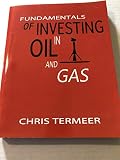
Fundamentals of Investing in Oil and Gas | $24.99 | Buy on Amazon |
| 3 |

|
Investing in Oil and Gas Wells | $12.99 | Buy on Amazon |
| 4 |

|
The Upside Of Oil and Gas Investing: How The New Model Works And Why It Puts The Traditional Model... | $9.99 | Buy on Amazon |
| 5 |

|
Oil 101 | $29.95 | Buy on Amazon |
“In my opinion, oil prices have already reached the top from now on.”
The full context matters. Lacalle paired that view with the judgment that price risks were tilted toward stable or slightly lower levels, and he also said that geopolitical risk could keep prices above the levels seen over the preceding two years. In other words, he expected the rally to lose momentum while still allowing for a floor under prices set by conflict and shipping risk. “Loses steam” is a fair summary of his opinion. It is not a confirmed price direction, and his remarks were made in late April 2026, several months before the date of this article.
#1 Best Overall
Why “ample supply” is an interpretation
Lacalle’s argument rests on two linked claims: that the conflict-related rise in prices was, in his view, larger than the underlying physical shortfall justified, and that supply would adjust as disrupted production and shipping recovered. Both claims are conditional. If flows through affected routes stay constrained, the supply cushion he described would arrive later or in smaller volumes. If they recover quickly, the surplus case strengthens.
That is why the IEA’s own 2026 outlooks, which moved between June and September, matter more to a reader than any single opinion.
How the IEA’s 2026 outlooks changed
Two IEA outlooks from this year are the most useful checkpoints. The June figures were reported by S&P Global; the September figures were reported by ICIS. The September numbers come from ICIS’s summary of the outlook, so check the IEA’s own publication for exact wording before quoting them.
| Element | June 17, 2026 outlook (as reported by S&P Global) | September 11, 2026 outlook (as reported by ICIS) |
|---|---|---|
| 2026 oil demand change | Contraction of 1.1 million barrels per day | Decline of 2.5 million barrels per day |
| 2027 oil demand change | Not stated in the reporting reviewed | Recovery of 2.6 million barrels per day |
| 2027 supply change | Not stated in the reporting reviewed | Output expected to rebound by 8 million barrels per day |
| Market balance timing | Could return to surplus in Q4 2026 if supply recovered | Not stated in the reporting reviewed; the Q4 surplus timing is not repeated |
| Conditions attached | Dependent on improving conditions; exposed to downside risks | Not stated in the reporting reviewed |
Two points stand out. First, the 2026 demand contraction in the September outlook was larger than in June, so the demand side weakened rather than strengthened over the summer. Second, the June outlook tied a possible Q4 surplus to supply recovery, while the September outlook pushed the demand recovery into 2027. Read together, these are successive forecasts with different assumptions, not a single consistent view. All of the figures are projections, not observed results.
Rank #3
- Used Book in Good Condition
Dated price expectations: the January Reuters poll
For a sense of where price expectations stood earlier, Reuters surveyed 34 economists and analysts in December 2025 and reported the results on January 5, 2026. The poll’s average 2026 forecasts were:
- Brent: $61.27 per barrel
- WTI: $58.15 per barrel
The gap between the two benchmarks in that poll was $3.12 per barrel. These numbers predate the 2026 supply disruptions and the later IEA revisions, so they describe what professionals expected at the end of 2025. They are not a current quote and should not be compared directly with prices from later in the year without that label.
Rank #4
What would make the rebound fade or persist
- Restoration of disrupted production and shipping. The June IEA view tied its surplus timing to supply recovery. Any delay in restoring affected flows pushes that timing back.
- Demand response to prices. The sharp revision to 2026 demand between June and September shows that demand is the variable that has moved most in the forecasts.
- Geopolitical risk. Lacalle explicitly argued that this risk could keep prices above the prior two years’ levels, even if his broader view is that prices have peaked.
- Forecast horizon. A poll taken at the end of 2025, an April opinion, and an IEA outlook from September run over different horizons, so each answers a different question.
How to check an oil-outlook claim
- Identify the benchmark. Brent and WTI often diverge, and a forecast for one does not describe the other.
- Check the date. A forecast from late 2025 or April 2026 may no longer reflect current supply or demand assumptions.
- Separate demand from supply. A forecast of falling demand and one of rising supply can both be true and still leave the balance uncertain.
- Identify the source type. An agency outlook, a survey of economists, and an individual’s opinion carry different weight.
- Look for the conditions attached. Phrases such as “if supply recovered” change what the forecast means.
This article does not forecast where oil prices will go, and a single commentator’s view is not a basis for buying or selling energy-linked assets or for setting a household fuel budget. For budgeting, a range of scenarios with stated assumptions is more reliable than any one point forecast.
Quick Recap
Best Value
- Used Book in Good Condition
Product prices and availability are accurate as of the date/time indicated and are subject to change. Any price and availability information displayed on Amazon at the time of purchase will apply.




