Farm products are a central part of recent U.S.-China trade announcements: China has announced purchase targets for U.S. soybeans and other agricultural goods, while the two governments have also addressed tariffs and market access for products such as beef and poultry. The latest update, dated September 25, 2026, reports a new working group on agricultural market-access barriers and consensus on recommendations for more favorable tariff treatment—not a final tariff schedule or proof that all commitments have been fulfilled.
What farm products did China agree to buy from the United States?
Soybeans are the clearest product-specific commitment. In a November 1, 2025 fact sheet, the White House said China would buy at least 12 million metric tons of U.S. soybeans in the final two months of 2025, followed by at least 25 million metric tons in each of 2026, 2027, and 2028. It also said China would resume purchases of U.S. sorghum. These are terms announced by the White House, not confirmation that the specified volumes were delivered or purchased. (White House, November 1, 2025)


A May 17, 2026 White House fact sheet added a broader agricultural target: China would buy at least $17 billion of U.S. agricultural products per year in 2027 and 2028, with the 2026 amount prorated. The fact sheet says this target is in addition to the soybean commitments. It does not specify a product-by-product breakdown of the $17 billion target. (White House, May 17, 2026)
| Provision | Products or market | Announced commitment or step | What the announcement establishes |
|---|---|---|---|
| Soybean purchases | U.S. soybeans | At least 12 million metric tons in November and December 2025; at least 25 million metric tons in each of 2026, 2027, and 2028 | White House-announced purchase targets; not proof of completed purchases. (White House, November 1, 2025) |
| Other agricultural purchases | U.S. agricultural products; the fact sheet does not give a product breakdown | At least $17 billion per year in 2027 and 2028, with 2026 prorated; stated to be additional to soybean commitments | White House-announced aggregate value target, not a verified shipment total. (White House, May 17, 2026) |
| Sorghum | U.S. sorghum | China would resume purchases | The November 2025 White House fact sheet announced a resumption, but did not state a volume. (White House, November 1, 2025) |
How do tariffs and market access fit into the deal?
Purchase targets are only one part of the agricultural provisions. The November 2025 White House fact sheet said China would suspend retaliatory tariffs announced since March 4, 2025. The listed products included chicken, wheat, corn, cotton, sorghum, soybeans, pork, beef, aquatic products, fruits, vegetables, and dairy. This was an announced tariff measure covering a broad set of farm and food exports, not a purchase commitment for each listed product. (White House, November 1, 2025)
The Tool Desk
Outbyte PC Repair FREERepair Windows errors before they cause bigger problemsFix Now →Outbyte Driver Updater FREEFix the driver behind crashes, sound loss and screen glitchesFind Drivers →The September 25, 2026 White House update said the governments had reached consensus on recommendations for more favorable tariff treatment for $30 billion of non-sensitive goods in each direction. The U.S. export categories named included agricultural goods, fish and seafood, and logs and wood products. The announcement describes recommendations, not a completed tariff schedule or a final resolution of all agricultural trade barriers. It also says the governments launched a working group focused on agricultural market-access barriers. (White House, September 25, 2026)
Beef: renewed facility listings
The May 2026 White House fact sheet said China restored U.S. beef market access by renewing expired listings for more than 400 U.S. beef facilities and adding new listings. A facility’s listing affects whether it may export to China; the announcement is evidence of a stated regulatory step, not a measure of the volume of beef subsequently shipped. (White House, May 17, 2026)
Poultry: imports tied to disease status
The same fact sheet said China resumed imports of poultry from U.S. states that the U.S. Department of Agriculture determines to be free of highly pathogenic avian influenza. The condition matters: the announcement does not describe unrestricted poultry access from every state. (White House, May 17, 2026)
What do the commitments mean for U.S. farmers?
If fulfilled, the purchase targets could provide U.S. producers and exporters with substantial planned demand in China, especially for soybeans. But the announcements do not establish actual delivery volumes, payments, or how the targets will be divided among farmers, exporters, and other parts of the supply chain. Tariff relief and restored market access address different constraints: tariffs affect the cost of importing goods, while facility listings and animal-disease rules determine whether particular products can enter the market.
Rank #3
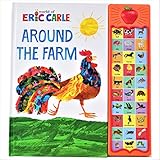
- 30 sound buttons, each representing a different animal.
- Children press button to hear animal name and sound associated with animal.
- Recommended for children ages 3 and older.
- Illustrated by renown children's book creator Eric Carle.
The distinction between announced targets and measured trade is important given the recent history. The Associated Press, reporting USDA trade data, said China’s imports of U.S. agricultural goods peaked at $38 billion in 2022 and fell to $8 billion in 2025. AP also reported that U.S. beef imports to China were under $500 million in 2025, and U.S. poultry meat and product exports were $286 million that year. Those figures describe past trade, not the outcome of the newer commitments; the figures here are attributed to AP’s reporting of USDA data. (Associated Press, May 18, 2026)
Independent reader supportYour contribution helps us test, update, and keep practical guides available for everyone.Why should readers distinguish a deal announcement from implementation?
Earlier agreements show why a stated commitment should not automatically be treated as a completed outcome. The 2020 Phase One agreement addressed structural and non-tariff barriers across food, agriculture, and seafood, including meat, poultry, seafood, rice, dairy, infant formula, horticultural products, animal feed, pet food, and agricultural biotechnology. USTR’s 2025 National Trade Estimate says China implemented reforms in some areas, including meat, poultry, and facility registration, but had not implemented important commitments on agricultural biotechnology or a risk assessment relating to ractopamine use in cattle and swine. (USDA Foreign Agricultural Service, Phase One background; USTR, 2025 National Trade Estimate)
Rank #4

- Author: George Orwell.
- Publisher: Signet
- Pages: 140
- Publication Date: 1996
- Edition: 50th Anniversary
There is also a difference in how the May 2026 terms were publicly described. The purchase figures come from the White House fact sheet. The Associated Press reported that Beijing had not immediately confirmed those exact terms; China’s Ministry of Commerce described the sides as agreeing to resolve or make substantial progress toward certain agricultural non-tariff barriers and market-access issues. That public-description gap is another reason to treat the specific purchase figures as White House-announced terms rather than as independently verified performance. (Associated Press, May 18, 2026)
Quick Recap
Best Value
Product prices and availability are accurate as of the date/time indicated and are subject to change. Any price and availability information displayed on Amazon at the time of purchase will apply.
Do these 3 things before closing this tab:
1Scan for outdated or missing drivers - takes under a minute2Repair Windows errors before they cause bigger problems3Fix the driver behind crashes, sound loss and screen glitches



