Free tools Windows power users keep installed
One-click scans. No signup required.
Human resource planning helps a business translate its growth strategy into the people, skills, roles, and capacity needed to carry it out. Rather than asking only how many employees to hire, it helps leaders anticipate future workforce needs, spot gaps early, and decide whether to recruit, develop, retain, or redeploy talent. It can support growth decisions, but it does not guarantee higher revenue or profit.
What human resource planning means
Human resource planning, also called workforce planning, connects an organisation’s goals with the workforce it has and the workforce it may need. The Chartered Institute of Personnel and Development (CIPD) defines it as “the process of balancing labour supply (skills) against the demand (numbers needed)” in its workforce planning factsheet.
That balance involves more than total headcount. Planning considers the mix of roles and skills, where and when people are needed, how the workforce may change, and whether employees can be developed or moved into new work. It also takes account of factors such as attrition, employee views, contractual arrangements, and alternative scenarios.
The process should begin with the business strategy and operating plans, not as a separate annual HR exercise. The U.S. Department of Commerce provides a public-sector example: its strategic workforce planning approach links forecasts and skill-gap analysis to the agency’s objectives.
#1 Best Overall

- Multi-Use Calendar Dry Erase Board: Our magnetic monthly whiteboard can put your life in order and plan ahead. You can write down your weekly schedule, and this whiteboard planner is perfect to plan ahead any activities, reminders, appointments, tasks. The magnetic double-sided whiteboard allows you to have two projects going. The other sided is blank. It is the best tool for home teaching or memo. It can hang on wall to remind you not forget the important thing.
- Weekly Planner & Whiteboard: This whiteboard provides double side, white board and dry erase calendar board. Dry erase weekly calendar for busy people to keep in track of event, dates, or use as to-do list, aid to daily tasks. The movable hanging hooks allow you to adjust the hanging distance easily. Small Portable white board can be hung horizontally and vertically as you like. This whiteboard is great for distance learning, daily reminder, grocery list, to do list, meal plans.
- Never Miss the Important Thing: The board is printed with an undated Week Calendar grid. Our portable dry erase board is cool for the kitchen, dorm, bedroom and office. The whiteboard is a great classroom learning board that help students lesson plans go smoothly. Perfect vision board organizer for planning weekly schedule, to do list tasks and family chores organization. The weekly board is the perfect visual tool for clear communication.
- Super Value Pack of Small Whiteboard: The 16 X 12 inches double-sided weekly planner dry erase board set comes with 10 pack magnetic dry erase markers (include 8 color), 4 pack magnetic piece, 1 pack dry eraser. This big dry erase whiteboard is great size for wall, office desktop, study table, bedside table, class podium and kitchen counter. Double sided wall portable small magnet dry erase whiteboard easel with solidly built but light weight which makes it suitable for handheld as well.
- Smoothly Writing & Easy to Clean: Magnetic white board comes with a smooth and sturdy writing surface. It's easy to write on and easy to wipe clean without stain. The value of getting organized and always be on time. Our magnetic dry erase calendar makes it easy to always be a step ahead of your schedule. The dry erase board is specially made for home, kitchen, teacher, office or anywhere you want. Perfect for reading, learning, memo, to do list.
Why workforce planning matters for business growth
It makes the people implications of growth visible
A plan to expand into a new market, increase production, change a service, or adopt new technology can change the volume and nature of work. Workforce planning helps identify which capabilities will be needed, in what roles, and by what point in the growth plan. It can also reveal obstacles or targets that may be unrealistic without changes to staffing or skills.
It gives leaders time to address gaps
Finding a shortage before it becomes urgent gives the business more choices. Depending on the need and available time, leaders might recruit, train current employees, retain scarce expertise, redeploy people, redesign roles, or use external support. The right mix depends on the organisation’s circumstances; no single response works for every skills gap.
Rank #2
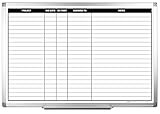
- MAGNETIC DRY-ERASE SURFACE — The whiteboard design is permanently printed onto durable, industrial‑quality dry‑erase vinyl that won’t smudge and is resistant to stains and ghosting. Its smooth, long‑lasting writing surface is also magnetic, giving you added functionality for notes, magnets, and accessories
- EASY INSTALLATION — Comes complete with durable mounting brackets and hardware, ensuring a secure and effortless wall‑mounting
- DURABLE ALUMINUM FRAME — Built with a sleek 1" aluminum border and a spacious 2.5" deep aluminum tray to keep markers and accessories neatly within reach
- SPACIOUS WRITING SURFACE — Ample writing space with a usable area that extends nearly edge‑to‑edge, measuring just 2" shy of the board’s total dimensions
- Please inspect your whiteboard upon arrival — If you notice any issues, please contact us through Amazon's Buyer-Seller Messaging system
It can focus development and improve deployment
CIPD identifies potential uses including responding to changing customer needs, targeting inefficiencies, supporting retention, improving productivity and quality, and directing people development toward organisational priorities. These are possible contributions of planning, not guaranteed results for every employer.
It tests whether the strategy is achievable
Comparing expected workforce supply with future demand can expose dependencies and risks behind a growth target. If a plan relies on capabilities that are difficult to recruit or develop in time, leaders can revise the sequence, investment, or operating model before committing to assumptions that the workforce cannot support.
Rank #3

- VISUAL COMMUNICATION: This task list board can outline specific tasks, checklist, deadlines, status etc., it's big and has plenty of space for writing, team members can review individual job quickly
- INCREASING PRODUCTIVITY: Help employees reduce workloads, improve productivity. Have visual task tracker infront of them, Let them work with clear expectations
- ERASABLE TASK LIST: The surface is laminated by dry erase film, wipe off easier than traditional whiteboard. You can remove completed tasks easily after a long time
- BUILT TO LAST: The dry erase task board is made of thick construction paper, double lamination & 4 grommets on the corners make it tear-resistant, it can be used year after year, but lightweight poster allows us to mount on wall alone without tools
- COMPLETE PACKAGE: This large paper task tracker comes rolled-up in sturdy tube and includes mounting tapes and eraser for convenient installation and immediate use
A practical human resource planning cycle
The following six steps adapt CIPD’s strategic workforce planning framework and factsheet. CIPD describes a three-to-five-year horizon for its strategic guide, but its general guidance says planning can vary in timescale, scale, and the roles covered. Use the horizon that fits the business decision rather than treating three to five years as a universal rule.
- Start with the business plan. Set out the goals, planned changes, operating assumptions, and time horizon the workforce plan must support. Include relevant scenarios, such as faster or slower growth, rather than relying on one forecast.
- Build a workforce baseline. Map current roles, skills, workforce composition, locations, and existing capabilities. Review likely attrition and other factors that affect the availability of employees.
- Estimate future demand. Translate planned business activity into future role and skill requirements. Specify when and where each capability is needed, not just the eventual number of employees.
- Assess supply and compare it with demand. Consider internal talent, likely availability, development capacity, retention, and external labour supply. Identify shortages, surpluses, and mismatches between available skills and required work.
- Choose actions to close the gaps. Compare recruitment, development, retention, redeployment, changes to work design, and outsourcing against the urgency and nature of each need. Consider cost, feasibility, and fit with the business priorities.
- Deliver, measure, and update. Assign owners, involve relevant stakeholders, and give line managers the support to carry out actions. Set evaluation criteria and revisit assumptions when business objectives or conditions change.
How to choose a response to a workforce gap
There is no universally best answer to a shortage or surplus. Compare the options against the specific capability gap and growth scenario:
Rank #4
- MAGNETIC DRY-ERASE SURFACE — The whiteboard design is permanently printed onto durable, industrial‑quality dry‑erase vinyl that won’t smudge and is resistant to stains and ghosting. Its smooth, long‑lasting writing surface is also magnetic, giving you added functionality for notes, magnets, and accessories
- EASY INSTALLATION — Comes complete with durable mounting brackets and hardware, ensuring a secure and effortless wall‑mounting
- DURABLE ALUMINUM FRAME — Built with a sleek 1" aluminum border and a spacious 2.5" deep aluminum tray to keep markers and accessories neatly within reach
- SPACIOUS WRITING SURFACE — Ample writing space with a usable area that extends nearly edge‑to‑edge, measuring just 2" shy of the board’s total dimensions
- Please inspect your whiteboard upon arrival — If you notice any issues, please contact us through Amazon's Buyer-Seller Messaging system
- Speed: How soon must the capability be available?
- Capability fit: Is the need for a new skill, more capacity in an existing role, or a different role design?
- Cost and feasibility: What will the option cost, and are candidates, development time, or other required resources realistically available?
- Retention and continuity: Could developing or redeploying existing employees preserve useful organisational knowledge or support retention?
- Flexibility and risk: Will the choice work across plausible scenarios, and can it be adjusted if assumptions change?
- Strategic alignment: Does the option support the operating model and goals the business is pursuing?
For example, if a new service depends on a specialist capability, a business might compare recruiting externally with training current employees. The decision turns on when the skill is needed, how much development is feasible, whether qualified candidates are available, and how durable the demand is—not on a blanket preference for hiring or training.
Independent reader supportYour contribution helps us test, update, and keep practical guides available for everyone.Keep the plan connected to the business
Workforce planning is iterative. Changes in objectives, customer demand, technology, labour availability, or employee movement can alter both workforce supply and future demand. Reviewing assumptions and evaluating actions helps leaders update the plan instead of treating it as a fixed headcount forecast. CIPD’s 4 May 2023 announcement describes strategic workforce planning as “a comprehensive approach to assessing and analysing internal business drivers and goals, on a three-to-five-year time horizon”; that horizon is a strategic frame, not a requirement for every planning exercise.
Quick wins for a faster PC:
Clear out junk files and repair common Windows errorsFree Scan →Scan for outdated or missing drivers - takes under a minuteDriver Scan →Repair Windows errors before they cause bigger problemsFix Now →Best Value

- Complete Project Kit – Board, 6 markers, eraser, wall hardware, tray, and 4 rolls of color-coded tape to plan timelines and track task status.
- Instant Project Visibility – Use tape for timelines and status, so teams see progress, deadlines, and delays at a glance.
- Built for Business Use – Magnetic backing, aluminum frame, and smooth dry erase surface designed for daily office use.
- Large Format for Teams – 40"x24" size gives clear visibility in meetings, offices, and project rooms.
- Professional Management Tool – Ideal for business planning, team collaboration, and project management professionals.
Planning can help businesses make growth plans more workable by connecting them to the capabilities and people needed to execute them. The value lies in making workforce choices deliberate and revisable—not in treating a forecast as a promise of growth.
Quick Recap
Product prices and availability are accurate as of the date/time indicated and are subject to change. Any price and availability information displayed on Amazon at the time of purchase will apply.




