Windows Errors? Fix Them Before They Spread
Repair common Windows errors and clear accumulated junk for a smoother, more stable PC - no reinstall needed.Free scan · no reinstallOutdated Drivers Are Slowing You Down
One free scan finds every outdated or missing driver and matches the right update for your exact hardware.Free scan · exact hardware matchAML compliance is the system an organization uses to meet applicable anti-money-laundering rules, identify and monitor risk, and report certain transactions or suspicious activity. In the United States, the main federal framework is the Bank Secrecy Act (BSA). Effective compliance can help reduce legal and operational risk, but no program guarantees that an organization will avoid crime, enforcement or fines.
What is AML compliance?
AML means anti-money laundering. In the United States, BSA/AML commonly refers to the Bank Secrecy Act and the rules that implement it. The Financial Crimes Enforcement Network (FinCEN) explains that the BSA authorizes the Treasury Department to impose recordkeeping and reporting requirements on financial institutions and other covered businesses. The information collected can support criminal, tax, regulatory, intelligence and counterterrorism work.


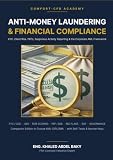

For an organization, AML compliance is the practical combination of policies, controls, assigned responsibilities, customer identification and due diligence, transaction monitoring, staff training, testing, records, escalation and reporting used to meet the rules that apply to it. It is not one universal checklist: obligations depend on jurisdiction, the organization’s type and activities, and the specific regulation.
AML compliance is also not the same as a promise that illicit activity will never pass through an organization. A program is meant to identify and manage risk, comply with applicable duties, and respond appropriately when concerns arise.
#1 Best Overall
Who has AML duties?
In the United States, BSA duties apply to covered financial institutions and certain other businesses under the rules governing their activities. The specific obligations differ by entity type. For example, FinCEN describes requirements for money services businesses (MSBs) separately; those requirements should not be assumed to apply in the same way to every company.
For MSBs, FinCEN guidance identifies written policies, procedures and internal controls; a designated day-to-day compliance person; appropriate staff education and training; and independent review. It also says an MSB principal and its agents remain independently responsible for applicable requirements and cannot avoid liability simply by assigning work to another party by contract.
Consumers generally are not responsible for running a bank’s AML program. A bank or other covered institution may, however, ask customers for identity or transaction information as part of its own obligations. Internationally, the Financial Action Task Force (FATF) publishes AML/CFT standards, but each jurisdiction puts its own requirements into law and supervisory rules. FATF standards are not a substitute for checking the local rules that apply to a particular organization.
What should an effective AML program do?
Federal banking agencies describe a BSA/AML program as reasonably designed to assure and monitor compliance. Their listed elements include internal controls, independent testing, a designated person or people responsible for coordinating and monitoring compliance, and training for appropriate personnel. Covered banking institutions must also have a Customer Identification Program with risk-based procedures that allow them to form a reasonable belief that they know their customers’ true identities.
Set clear ownership and escalation
Someone must be responsible for coordinating the program and monitoring compliance. In practice, staff also need a clear way to raise concerns and escalate problems to the appropriate decision-makers. A policy that assigns responsibility on paper but does not enable action is not an effective control.
Assess risk and understand customers
Controls should reflect the organization’s actual exposure, including relevant customers, products, services, geographies, delivery channels and changes in business activity. Customer identity and risk information may include beneficial ownership or expected activity when the applicable rules require it. Risk-based procedures are not the same as applying identical checks to every customer regardless of context.
Monitor activity and investigate alerts
Monitoring should cover relevant transactions and be reviewed as products, services and risks change. An alert is a prompt for review, not by itself proof of wrongdoing. Staff need procedures to investigate and escalate potentially suspicious activity, and the organization needs a process for deciding whether a report is required under the rules that apply.
Train staff, test controls and fix findings
Appropriate personnel need training that helps them recognize relevant risks and follow the organization’s procedures. Independent testing should assess whether controls work in practice, not simply whether written policies exist. Findings need to be addressed and documented so that weaknesses do not remain unresolved.
Recommended Free Tools
These are practical operating questions, not a regulator-specific checklist for every organization. The applicable rules determine what a particular entity must do.
What reporting and recordkeeping can the BSA require?
FinCEN’s BSA overview describes requirements that include keeping records of certain cash purchases of negotiable instruments, reporting cash transactions exceeding $10,000 in daily aggregate amount, and reporting suspicious activity that might signify money laundering, tax evasion or other crimes. The $10,000 figure refers to the cash-transaction reporting threshold described in that overview; it is not a universal threshold for every AML report or every business.
Whether a report or record is required depends on the covered entity, transaction, applicable deadline and any relevant exceptions under the governing rule. Organizations should use the requirements that apply to their specific activities rather than treating one threshold as a general AML rule.
Independent reader supportYour contribution helps us test, update, and keep practical guides available for everyone.How can AML compliance help reduce the risk of major fines?
A functioning program can help an organization detect issues earlier, make required reports, maintain required records, and demonstrate that it has processes for managing risk. Monitoring, customer due diligence, training and independent testing need to work together. Weaknesses in several areas can leave an organization exposed to regulatory or criminal consequences.
The Department of Justice’s October 10, 2024 announcement about TD Bank, N.A. and its parent illustrates the scale a case can reach. DOJ said the bank pleaded guilty to conspiracy offenses involving failure to maintain an AML program, inaccurate Currency Transaction Reports and money laundering, and agreed to more than $1.8 billion in penalties. DOJ reported that 92% of the bank’s transaction volume went unmonitored from January 1, 2018 through April 12, 2024, representing approximately $18.3 trillion in transaction activity. It also said the bank failed to add new monitoring scenarios from 2014 through late 2022, despite introducing products and services and facing known risks.
Those are DOJ-reported facts about the TD Bank case, not typical penalty amounts or a prediction of what another organization would face. Deputy Attorney General Lisa Monaco said when announcing the resolution: “For years, TD Bank starved its compliance program of the resources needed to obey the law.” Penalties depend on the applicable law and the facts, including the conduct, its duration and harm, cooperation, remediation, and decisions by regulators or prosecutors. A checklist alone cannot guarantee a particular outcome.
How should an organization choose controls or compliance tools?
Whether an organization is evaluating internal processes, training or a transaction-monitoring system, the useful question is how well the solution fits the rules and risks it actually faces. Relevant criteria include:
- Jurisdictions and entity types the solution is designed to support.
- Coverage of the organization’s risk assessment, customer and transaction data, and monitoring needs.
- How clearly the organization can explain decisions and preserve audit trails.
- Integration with existing systems and the workflow for investigating and escalating alerts.
- Support for staff training, independent testing and remediation.
- Implementation effort and total cost in light of the organization’s size and risk profile.
These are practical evaluation criteria, not a ranking or endorsement of vendors. No software or training product should be treated as regulator-approved unless that status is established by an authoritative source. Books and other general references can provide context, but they do not replace current law, regulator guidance or qualified legal advice.
What’s actually slowing this PC down?
Pick the symptom - the matching free tool is one click away.
Quick Recap
Product prices and availability are accurate as of the date/time indicated and are subject to change. Any price and availability information displayed on Amazon at the time of purchase will apply.




