E-commerce roll-ups could help consumer packaged goods (CPG) brands reach scale, but the evidence does not yet show that they are the next dominant force in the sector. Challenger brands are gaining share in some U.S. retail categories, and established CPG companies are reshaping their portfolios through acquisitions and divestitures. The earlier wave of Amazon-focused brand aggregators, however, also ran into tighter funding and pressure on margins. The key question is whether a buyer can turn online sales and a collection of brands into durable, profitable demand—not simply buy more products.
What an e-commerce roll-up means in CPG
An e-commerce roll-up acquires multiple businesses or brands and combines some of their operations, financing or sales capabilities. In CPG, a buyer might seek to bring together online-first sellers of products such as personal care, household goods or packaged foods. That differs from a traditional CPG acquisition, which may involve buying a whole company or an established brand to strengthen a category position, refocus a portfolio or gain operating scale.
The term does not describe one uniform strategy. Some buyers may focus on marketplace-native brands; others may acquire companies with sales across multiple channels. The available evidence does not provide a controlled comparison of these models or establish that aggregator-owned brands are driving current CPG growth or deal activity.
Why the thesis looks plausible
Challengers have gained ground
NielsenIQ’s March 3, 2026 release, describing U.S. retail measurement with Kearney, reported that established niche brands gained 1.5 percentage points of share from 2022 to 2025, while large and mid-size national brands lost 2.1 percentage points over the same period. Those figures show momentum for challengers in the measured market; they do not isolate brands owned by roll-ups, Amazon-native sellers or brands acquired by aggregators.
#1 Best Overall

- #1 Brand Pick for Meal Prep Containers: Bentgo is the top pick for meal prep containers!* This lightweight, portable 20-piece set includes tennmnnmake portioning easy to support balanced, healthy meal plans. Clear, stackable lids help keep food fresh and organized in your fridge or pantry.
- Perfect for Portion-Control: Each container’s 4-cup capacity and embossed measurements make portioning easy to support balanced, healthy meal plans. Clear, stackable lids help keep food fresh and organized in your fridge or pantry.
- Durable & Reusable: Made from tough, PFAS- and BPA-free materials, these meal prep containers are built to last through repeated use. Say goodbye to single-use plastics with these reusable containers you can take to work, school, or the gym.
- Microwave, Freezer & Dishwasher Safe: Easy to heat, store, and clean! Safely reheat food from fridge or freezer—microwave trays only. Top-shelf dishwasher safe for hassle-free cleanup; hand-wash lids for best results.
- What You Get: 10 one-compartment trays, 10 custom-fit lids, and caring customer support.
McKinsey’s January 26, 2026 analysis also describes a difficult growth environment: growth slowed across more than 40 CPG categories, and current growth rates in most cases were more than two percentage points below historical averages. McKinsey says faster innovation and shifting consumer preferences can favor disruptors, while advantages such as distribution reach, shelf space and procurement leverage no longer guarantee growth. That is an explanation of conditions that may help challengers—not evidence that roll-ups caused the change.
Online commerce offers a route to market, not proof of a winning business
The U.S. Census Bureau’s August 18, 2026 report estimated Q2 U.S. retail e-commerce sales at $340.2 billion, or 17.1% of total retail sales on a seasonally adjusted basis. The estimate was not adjusted for price changes and covers retail broadly, not CPG or marketplace sales alone. A Census Bureau notice dated September 28 said the estimate would no longer be the most up-to-date after that date; the agency listed a Q3 release for November 19, 2026. The Q2 figure is therefore context for online retail, not a current measure of CPG roll-up performance.
Rank #2

- Versatile Shapes and Sizes: With 20 airtight food storage containers in 2 shapes, including 6 rectangle containers (1X 50.7OZ, 1X 33.8 OZ, 2X 16.9 OZ, 2X 8.1 OZ), 8 round containers (2X 40.6 OZ, 2X 23.7 OZ, 2X 13.5 OZ, 2X 6.1 OZ), and 6 round sauce cups (3X 2 OZ, 3X1 OZ), our set offers a variety of sizes to suit your storage needs. From 8 OZ to 51 OZ, we have you covered
- BPA-Free and Safe: Crafted with upgraded food-grade materials, our food storage containers set are BPA-free and safe for your health. Our food storage containers are also microwave(without the lid), dishwasher, and freezer safe, adding convenience to your daily routine
- Enhanced Design for Ease: Our storage containers with lids feature upgraded designs, including 4 enhanced rounded lock mechanisms for ergonomic use, durable non-slip bottoms, and stackable, nestable shapes for space efficiency. They are much Lighter than glass containers, very easy to carry, they fit any lifestyle
- Superior Airtight Seal & 100% Leak Proof: With the airtight seal enhanced by food-grade silicone rings, our food containers set ensures your food stays fresh, preserving flavors and nutrition. Say goodbye to fridge odors, and even liquid foods like soups remain securely contained
- Versatile Storage Solution: These space-saving pantry organizers accommodate various food types – from fruits, veggies, and salads to meats, snacks, leftovers and condiments. The transparent box makes it easy to check the status of your food at any time. Perfect for indoor and outdoor use, from home meal prep to outdoor picnics and BBQs
Euromonitor International’s February 2025 summary characterized marketplaces as a major FMCG e-commerce channel and said FMCG e-commerce grew 11% in 2024, with marketplaces facilitating 36% of value growth. Those claims come from the publisher’s summary; the underlying report was not accessible for independent checking. Even if marketplaces help brands find customers, channel reach alone says little about repeat purchases, contribution margins or the cost of acquiring those customers.
What a roll-up has to make work
Buying several brands creates value only if the combined business performs better than the brands would separately. A buyer’s operating thesis may include shared logistics, marketing, data, purchasing or access to new geographies. Capstone Partners’ July 2023 report described aggregator consolidation as a way to seek scale, geographic expansion, attractive brands and potentially better financing terms. These are possible benefits, not guaranteed outcomes.
Rank #3
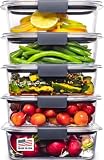
- 100% Leak-proof: Guaranteed no-spill seal and secure latches
- Crystal-clear Tritan Built: Stain-resistant and odor-resistant material for a clear view of contents
- Lightweight & Sturdy: Easy to carry, yet durable for everyday use
- Built-in Vents: Convenient microwave heating without removing the lid
- Space-saving: Stackable design for organized fridge or pantry
For a CPG brand, the commercial test is whether customers continue to choose the product after the acquisition and whether each sale contributes enough to cover product, fulfillment, marketing and overhead costs. An acquisition count, a larger catalog or a high top-line sales figure cannot answer those questions by itself. Integration can also be difficult: brands may have different suppliers, inventory needs, customer profiles and channel economics. A shared platform can reduce duplication, but it can also impose costs or weaken a brand’s distinct positioning if the operating model does not fit.
How roll-ups differ from current CPG portfolio deals
McKinsey’s February 13, 2026 overview frames much of current CPG M&A as portfolio realignment in response to weak volumes, changing preferences, margin pressure and uneven demand. Companies may acquire or divest businesses to concentrate on core categories, exit weaker-growth areas, free capital or pursue scale and operating efficiency. That is related to roll-up logic, but it is not the same thing as aggregators combining online-first sellers.
Rank #4

- 🍱SINGLE 1 COMPARTMENT MEAL PREP CONTAINERS, LEAK PROOF, STRONG DURABLE CONSTRUCTION – Advance meal prep containers, diet portion control, healthy nutritious meals and to-go meals are super convenient to prepare in these durable FOOD STORAGE CONTAINERS for meal prepping. The hard-plastic construction will ensure no cracks or breaking along the way. The leak proof lids will tightly seal the food containers for meal prepping, preventing any annoying leaks or spills in your bag or freezer.
- 🍱 FREEZER SAFE FOOD STORAGE BOX - Prepare and package up your meals ahead of time. These safe to freeze food containers ensure that your prepared cooked meals retain their flavor, color, and texture. These plastic boxes with lids will prevent freezer burn and any absorbing of other odors from the freezer.
- 🍱 MICROWAVE SAFE FOR WARMING FOOD – Enjoy the ease and efficiency of using a microwave safe meal prep container. Whether you are in a rush at home, or warming up food in the microwave at the office or in your college dorm room, make your life simple by preparing, packaging and warming up your food all in the same dish. From the freezer to your hungry belly all in one serving container.
- 🍱 SAFE MATERIAL - REUSABLE - RECYCLABLE - BPA-Free and Food-Grade Safe PP material. You can reuse these durable to go containers as many times as you like. Clean these portion control boxes easily by placing on the top rack of the dishwasher. If you don’t want to reuse them you can simply throw these containers into a recycling bin or trash.
- 🍱 PACK OF 50 TAKE-OUT BENTO BOXES BULK PACK, ONE COMPARTMENT MEAL PREP FOOD CONTAINERS, GREAT FOR CATERING SERVICES – These stackable serving containers are perfect for packaging food at your deli, kiosk, food truck, catering service or restaurant for to-go meals. they stack neatly on top of each other allowing for completely mess free transportation and making all your customers happy as well.
| Question | Traditional CPG portfolio transaction | E-commerce roll-up |
|---|---|---|
| What is being combined? | Often an established brand, business or category position; transaction scope varies. | Often multiple brands or sellers, potentially with shared operating capabilities. |
| What is the value-creation thesis? | Portfolio focus, category position, scale or operating efficiency. | Potentially shared operations, channel capabilities, geographic reach or financing. |
| What must be tested? | Whether the acquired business fits the portfolio and can support profitable growth. | Whether brand demand persists and shared operations improve economics without harming the brands. |
| What does the available evidence establish? | McKinsey reports defined CPG transaction counts and values, but they do not measure roll-up performance. | Capstone describes historical consolidation motives and pressures; it is not a current buyer-status tally. |
McKinsey counted 140 qualifying CPG M&A transactions in 2025, down from 180 in 2024, while aggregate deal value rose to approximately $152 billion from approximately $99 billion. Its count includes majority-share purchases with disclosed deal value above $25 million and excludes minority investments; reported deal values are enterprise values unless otherwise noted. McKinsey attributes the increase in value to megadeals, including large beverage and personal-care transactions. The higher total therefore does not establish that small digital-brand roll-ups are driving CPG M&A. McKinsey also reports differences among food, beverage and other subsectors, so the sector-wide totals should not be read as a single uniform market signal.
Independent reader supportYour contribution helps us test, update, and keep practical guides available for everyone.What the earlier aggregator boom warns about
Capstone Partners’ July 2023 report describes a market that had moved from rapid fundraising toward consolidation and more selective deals. Citing Marketplace Pulse, Capstone reported aggregator funding of $12.3 billion in 2021 and $2.8 billion in 2022. These are figures relayed by Capstone, not independently verified here against the original Marketplace Pulse publication. The report also identified moderating marketplace spending, increasing debt costs and margin pressure as headwinds to acquisition-led growth.
Free tools Windows power users keep installed
One-click scans. No signup required.
Best Value

- 【Sturdy & Reusable】Made of premium thick plastic and strong construction, Dealusy meal prep containers with lids ensure no cracks for your take out meals. They can also be easily cleaned for reuse with hand wash or on the top rack of the dishwasher.
- 【Leakproof & Stackable】: These food prep containers come with tight sealed lids, you can easily stack them and won’t worry that the food would leaks or spills.
- 【Microware Safe & Freezer Safe】: Made of premium food grade plastic, these BPA-free disposable food containers can withstand a temperature from -4℉to 248℉, totally Microware Safe & Freezer Safe.
- 【Convenient Use】: With the pre-set volume of these disposable food containers, you can easily pack your healthy meals, vegetables and fruits without measuring your portions. Great for taking your meals out for school, work, gym or a camping trip.
- 【50 Value Package】: This value package includes 50 pack (100-Piece) 24 oz meal prep containers with lids. They are the perfect choice for your daily meal preparation.
Capstone’s examples included the 2023 Suma Brands and D1 Brands merger to form Ambr Group, and SellerX’s agreement to acquire Elevate Brands. The report said terms were undisclosed for those examples. They illustrate aggregator-to-aggregator and portfolio consolidation at that time; they do not show which buyers are active in 2026 or how those transactions performed afterward.
The lesson is that consolidation can be both a response to operating strain and an attempt to gain scale. When acquisition financing becomes harder or more expensive, a buyer that depends on continual dealmaking may struggle to support its portfolio. Debt terms, marketplace rules and selling costs can all change the economics after a purchase.
What would make the “next wave” claim convincing?
The thesis would be stronger if evidence showed that roll-up-owned CPG brands were sustaining consumer demand and improving their economics after acquisition—not merely participating in a broader challenger-brand trend. Useful signals include:
- Repeat demand and profitable organic growth at the brand level, rather than growth explained mainly by acquisitions or promotions.
- Lower operating costs or better service from shared capabilities, without losing the distinct appeal that attracted customers.
- Sales across more than one channel where appropriate, reducing reliance on a single marketplace’s rules, fees and discovery systems.
- Financing that can support the business through inventory cycles and integration, without requiring continual acquisitions to meet growth expectations.
- Transparent results by category and deal type, so a large corporate transaction is not mistaken for evidence of a successful digital-brand roll-up.
NIQ’s chief communications officer and global head of marketing, Marta Cyhan-Bowles, said in the March 3, 2026 release that “The growth levers that larger brands have come to rely on—like mergers and acquisitions—are no longer reliable paths to sustainable, long-term growth.” That is an executive’s view, not a settled industry finding; it underscores why acquisition volume alone is a poor measure of lasting disruption.
Quick wins for a faster PC:
Fix the driver behind crashes, sound loss and screen glitchesFind Drivers →Clear out junk files and repair common Windows errorsFree Scan →Verdict: a credible possibility, not an established CPG wave
Challenger brands, slower category growth and online channels create an opening for new ownership models. But the current evidence supports a narrower conclusion than the headline thesis: CPG is seeing challenger momentum and portfolio reshaping, while the earlier e-commerce aggregator cycle showed both consolidation opportunities and meaningful financing and margin risks. Whether roll-ups become a major source of disruption depends on durable brand demand and improved operating economics after acquisition—outcomes the cited evidence does not yet establish.
Quick Recap
Product prices and availability are accurate as of the date/time indicated and are subject to change. Any price and availability information displayed on Amazon at the time of purchase will apply.




