A North Dakota district judge voided state approval of Summit Carbon Solutions’ three proposed CO₂ storage permits because he found the law used to authorize them unconstitutional. The March 10, 2026 ruling is a district-court decision, not a final state Supreme Court judgment. By August, Summit had sought cancellation of two permits, continued to prioritize a third, and planned to send captured CO₂ to Wyoming for storage while appeals remained pending.
What did the second judge rule?
On March 10, 2026, South Central Judicial District Judge Jackson Lofgren reversed the North Dakota Industrial Commission’s approval of Summit Carbon Solutions’ permits for three underground CO₂ storage areas. He concluded that the state law authorizing the permits violated the North Dakota Constitution. The decision was a district-court ruling, and the state and Summit were appealing as of North Dakota Monitor’s August 31, 2026 status report.
This was the second district-court ruling against the law, but it arose in a different kind of case. In December 2025, another case brought by the Northwest Landowners Association directly challenged the law. Lofgren’s March decision came from landowners’ administrative appeal of the Industrial Commission’s permits. He wrote that the court “largely reaches the same conclusion” as the earlier case.
Why did the court void the permits?
The dispute concerns pore space: underground cavities in rock formations where injected CO₂ can be stored. The 2009 law allowed the Industrial Commission to authorize use of pore space beneath property owned by people who had not consented, if at least 60% of affected landowners agreed. The March report said injected gas would move outward across property lines, raising questions about the use of subsurface property even beneath land whose surface owner had not signed a lease.
Free tools Windows power users keep installed
One-click scans. No signup required.
#1 Best Overall

- Electrochemical sensor technology detects CO gas
- Easy installation, no wiring needed, detects during a power failure by operating on 2-AA batteries (included); Install on a wall of your home or place on a tabletop
- Green LED indicates power to the carbon monoxide detector, while an 85-decibel alarm & a red LED indicates the presence of carbon monoxide
- Event Memory records the last time carbon monoxide was detected or when the unit was last tested
The court found the law did not protect the constitutional right to just compensation determined by a jury and paid before property is taken. The judge also rejected the state’s argument based on the correlative-rights doctrine. As reported, he reasoned that precedent treating oil reservoirs as shared resources did not fit this CO₂ storage case.
In the March ruling, Lofgren wrote: “Because the findings and conclusions of the NDIC are not sustained by the North Dakota Constitution, they must be reversed.” That is the court’s stated basis for reversing the commission’s permit decision; it does not mean the state Supreme Court has affirmed the ruling.
Rank #2
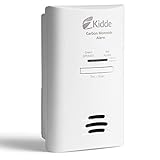
- Easy Installation - simply plug-in to a standard, 120V outlet in your home
- 2-AA battery backup provides protection during a power outage
- 85-decibel alarm announces when carbon monoxide is detected
- Peak Level Memory records the last time carbon monoxide was detected or when the unit was last tested
- Test-Hush Button makes testing the detector or silencing false alarms easy
How large was Summit’s proposed North Dakota project?
North Dakota Monitor described Summit’s proposed network as a roughly 2,500-mile system gathering CO₂ from ethanol plants in five states and bringing it to North Dakota for underground storage. Its proposed storage area covered about 90,000 acres in parts of Oliver, Mercer, and Morton counties. The outlet reported that approximately 92% of landowners in the project area had voluntarily signed pore-space leases; the 2009 law allowed compulsory inclusion once at least 60% had agreed. These are reported project figures, not independently verified measurements or separate findings by the court.
What happened to the permits after the ruling?
North Dakota Monitor reported on August 31, 2026, that Summit asked to cancel its Summit #1 and Summit #2 storage permits and said it would not proceed with those facilities. The district court had voided all three permits, but Summit and the state were appealing; Summit asked to limit its appeal to Summit #3. The company was prioritizing that facility and had secured about 98% of its storage rights there, according to the outlet’s report.
Windows Errors? Fix Them Before They Spread
Repair common Windows errors and clear accumulated junk for a smoother, more stable PC - no reinstall needed.Free scan · no reinstallCrashes, No Sound, or Screen Glitches?
Random freezes, missing sound and display glitches usually trace back to one bad driver. Find and replace yours safely.Free scan · under a minuteRank #3
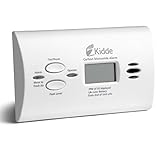
- Electrochemical sensor technology detects CO gas
- Easy installation, no wiring needed, detects during a power failure by operating on 2-AA batteries (included)
- Conveniently designed & portable: simple to install on a wall of your home or place on a tabletop
- Green LED indicates power to the smoke detector, while an 85-decibel alarm & a red LED indicates the presence of carbon monoxide
- Peak Level Memory records the last time carbon monoxide was detected or when the unit was last tested
Summit also planned to transport CO₂ to a Wyoming storage site for injection. The August report said the company left open possible future use of its North Dakota route easements and storage rights. The permit and statutory cases remained in litigation, so the March ruling did not finally settle whether the state can authorize this kind of compelled pore-space use.
Independent reader supportYour contribution helps us test, update, and keep practical guides available for everyone.What should landowners and project watchers take from this?
- The district court reversed the permit approval. That ruling is not the same as a final decision by the North Dakota Supreme Court.
- The constitutional question is about private property and compensation. The dispute centers on whether pore space can be compelled for storage without the constitutional protections the court said must apply to compensation.
- Permit status differs by facility. Summit sought cancellation of Summit #1 and #2, while Summit #3 remained the focus of its appeal and project plans as of the August report.
- Project plans may change while litigation continues. The reported Wyoming storage plan does not establish that Summit has abandoned every North Dakota right or easement.
In July, North Dakota Monitor reported that the related cases were on appeal to the North Dakota Supreme Court. The state was also appealing attorney-fee awards, which were conditional on the underlying decisions surviving appeal.
Quick Recap
Best Value

- DETECTS CARBON MONOXIDE: Model COP monitors CO levels & sounds a loud 85 dB alarm to signal evacuation; sleep peacefully with no nighttime chirps; LED warning light indicates hazard; Test/Hush button for quick checks
- PLUG-IN POWER WITH BATTERY BACKUP: CO detector plug-in operates on 120V AC with 2 AA backup batteries (included) for detection during outages; rotating plug fits vertical or horizontal outlets; includes power surge immunity to help maintain performance
- TRAVEL-READY DESIGN*: Compact carbon monoxide detector is suitable for use at home or for travel; lightweight design allows you to take it on the go to use in hotels or vacation rentals when detection is needed away from home
- TESTED & TRUSTED: This carbon monoxide alarm is rigorously tested to meet UL 2034 5th Edition standards, and is ETL Listed; includes a 10-year limited warranty on alarm
- BUILT FOR EVERY HOUSEHOLD: Designed to help provide dependable carbon monoxide monitoring for everyday residential use; supports renters, homeowners, and pet owners seeking added awareness and protection from CO hazards in the home
Rank #4

- DETECTS CARBON MONOXIDE: Model COB monitors CO and sounds a loud 85 dB alarm to signal evacuation to fresh air; LED warning light indicates hazard; Test/Hush button allows quick checks or temporary silencing
- AA BATTERY POWERED: This CO detector is battery-powered, installs without wiring, mount it on the wall or set it on a table, and operates during outages using two included AA batteries
- TRAVEL-READY DESIGN*: Compact carbon monoxide detector is suitable for use at home or for travel; lightweight design allows you to take it on the go to use in hotels or vacation rentals when detection is needed away from home
- TESTED & TRUSTED: This carbon monoxide alarm is rigorously tested to meet UL 2034 5th Edition standards, and is ETL Listed; includes a 10-year limited warranty on alarm
- BUILT FOR EVERY HOUSEHOLD: Designed to help provide dependable carbon monoxide monitoring for everyday residential use; supports renters, homeowners, and pet owners seeking added awareness and protection from CO hazards in the home
Product prices and availability are accurate as of the date/time indicated and are subject to change. Any price and availability information displayed on Amazon at the time of purchase will apply.




