Call centers are more likely to retain agents when the everyday job is workable and offers a credible future: fair pay and security, predictable schedules, useful coaching, manageable workloads, connection with colleagues, and visible ways to grow. AI and remote work can change that experience, but neither is a retention fix by itself. The evidence below points to practices leaders can test and measure—not guaranteed reductions in turnover.
Why do call center agents leave?
There is rarely one cause of attrition. Pay and job security matter, but so do what the work feels like each day: whether schedules are predictable, monitoring feels proportionate, supervisors are available, effort is recognized, and agents can see a future beyond their current role.
McKinsey’s analysis of a survey of 320 U.S. contact-center employees links satisfaction and intent to stay with factors including promotion opportunities, effective supervision, recognition, and the quality of team practices. Respondents who expected to remain at their company a year later were nearly twice as satisfied as those who did not. That is an association, not proof that any single practice causes employees to stay. McKinsey also describes constant scrutiny and lack of recognition as factors associated with stress and greater likelihood of leaving. Read McKinsey’s analysis.
Career growth can be a retention issue
ICMI’s 2024 analysis of a survey of 129 industry leaders—95% of whom held leadership positions, across the United States, Canada, and the United Kingdom—reports that 50% said agents left positions to seek greener pastures; the report identifies lack of career growth as a factor in departures. Only 41% of the organizations surveyed had programs to prepare agents for leadership roles. These are leaders’ reports, not a direct survey of all agents. See ICMI’s 2024 findings.
Do these 3 things before closing this tab:
1Scan for outdated or missing drivers - takes under a minute2Repair Windows errors before they cause bigger problems3Fix the driver behind crashes, sound loss and screen glitches#1 Best Overall

- Digital Stereo Sound: Fine-tuned drivers provide enhanced digital audio for music, calls, meetings and more
- Rotating Noise Canceling Mic: Minimizes unwanted background noise for clear conversations; the rotating boom arm can be tucked out of the way when you’re not using it
- Handy In-line Controls: Simple in-line controls on the headset cable let you adjust the volume or mute calls without disruption
- Plug-and-Play USB Computer Headset: Simply plug the USB-A connector into your computer and you’re ready to talk or listen without the need to install software
- Padded Comfort: Comfortable headphones with adjustable headband features swivel-mounted, leatherette ear cushions for hours of comfort and is easy to clean
How can call centers reduce agent turnover?
Start with reasons agents themselves identify, then choose interventions that address those conditions. A program is more credible when workers can see what will change, who owns it, and how its effects will be assessed.
Make career movement concrete
Show realistic routes into senior-agent work, quality, training, workforce planning, specialist roles, and leadership. Publish the skills and criteria for each move, provide coaching and development time, and recognize lateral moves as growth. Not every agent wants to manage people; a useful career framework includes ways to deepen expertise as well as ways to lead. McKinsey’s analysis also identifies promotion opportunity as relevant to satisfaction and retention.
Make coaching useful and monitoring proportionate
Use regular one-to-ones and team huddles for specific feedback, problem-solving, and recognition—not just score reviews. Explain how performance monitoring works and give agents a chance to understand or challenge a metric that does not reflect the interaction. McKinsey’s survey analysis describes huddles, training or nesting, social opportunities, and intentional supervision as practices that have proved effective in its analysis. It does not establish a universal frequency or a guaranteed effect size.
Rank #2

- Crystal-Clear Calls with ANC & ENC—Our noise cancelling headset features advanced Hybrid Active Noise Cancellation (ANC) to block out background noise for your focus(press ANC button, enjoy 3 modes), wireless headset with mic combined with Environmental Noise Cancellation (ENC) through the microphone to ensure your voice comes through clearly—even in noisy offices or busy homes. Be perfectly heard on every Zoom, Teams, or customer call
- Plug-and-Play Qualcomm USB Dongle for PC/Mac Use—Headsets with microphone for work come with a dedicated Qualcomm USB-A dongle, providing a more stable, low-latency connection than standard Bluetooth. Work headset with mic is the perfect solution for computers without built-in Bluetooth or with restricted settings. USB dongle plug-and-play (Not compatible with landlines/desk phones/VoIP phones)
- Dual Connectivity & Intuitive Flip-to-Mute Microphone—Noise cancelling headphones for work stay connected to two devices at once via adaptor and Bluetooth. The innovative flip-to-mute microphone boom allows you to mute conversations instantly and reliably with a simple, physical flip—ensuring privacy and convenience without fumbling for buttons (MFB answers/ends cell calls only)
- Advanced Bluetooth 5.4—Powered by the latest Bluetooth 5.4, the wireless headphones with mic offer faster pairing, a rock-solid connection, and significantly lower battery consumption. Enjoy the freedom to move around your workspace with an impressive 33-foot operating range, all while maintaining crystal-clear audio without dropouts
- All-Day Comfort—With breathable leather ear cushions, an adjustable headband, 270° rotatable microphone, Bluetooth headset with microphone remains comfortable through the longest shifts. Quick 2-hour charge delivers up to 35 hours of talk time or 50 hours of music, making wireless computer headset with microphone ideal for back-to-back meetings and international travel.
Give agents input into schedules
Where coverage and security requirements allow, offer input into shift choice, swaps, bidding, or predictable scheduling. Set out how requests are handled and revisit the policy with agents rather than treating nominal flexibility as meaningful control. ACXPA’s Australian 2024 report says 89% of surveyed centers allowed agents to swap and/or bid for shifts; it also reports that full flexibility over work location had fallen to 14% in 2024. These are Australian report findings, not a prescription for every operation. See ACXPA’s 2024 report.
Recommended Free Tools
Reduce avoidable strain in the work itself
Ask agents where effort is being wasted, then examine schedule-adherence rules, difficult call types, repetitive tasks, tool friction, and the number of channels handled at once. A retention effort that adds another system or scorecard without removing friction may make the job harder rather than better. Pair employee feedback with operational measures so a change that appears efficient on paper does not quietly increase stress or undermine service quality.
Does working from home reduce call center attrition?
The available findings do not establish that working from home, by itself, reduces or increases attrition. Remote and hybrid arrangements can suit some workers and operational needs, but they require deliberate support for connection, training, and access to supervisors.
Rank #3

- Digital Stereo Sound: Fine-tuned drivers provide enhanced digital audio for music, calls, meetings and more
- Rotating Noise Canceling Mic: Minimizes unwanted background noise for clear conversations; the rotating boom arm can be tucked out of the way when you’re not using it
- Handy In-line Controls: Simple in-line controls on the headset cable let you adjust the volume or mute calls without disruption
- Plug-and-Play USB Computer Headset: Simply plug the USB-A connector into your computer and you’re ready to talk or listen without the need to install software
- Padded Comfort: Comfortable headphones with adjustable headband features swivel-mounted, leatherette ear cushions for hours of comfort and is easy to clean
ACXPA’s 2024 Australian report says 55% of employees worked from home on a given day. Among the concerns managers cited for remote workforces, 48% named employee engagement, 47% workforce disconnection, and 44% mental health. ICMI’s separate 2024 survey of leaders across the United States, Canada, and the United Kingdom found that 52% perceived engagement and culture to have declined under remote work. These percentages describe different surveys and respondent questions; they are not directly comparable, and the ICMI result is leaders’ perception rather than a measure of agent-wide sentiment.
Compare work arrangements on the outcomes that matter
Rather than assuming one location policy will suit everyone, compare arrangements using consistent measures and feedback from agents doing the work.
Free tools Windows power users keep installed
One-click scans. No signup required.
- Agent preference and schedule predictability
- Peer connection and access to supervisors
- Onboarding, training, and nesting effectiveness
- Service quality and operational coverage
- Security and privacy requirements
- Absenteeism and retention, measured with the same definitions over time
For remote or hybrid teams, plan peer contact, accessible supervision, supported onboarding, recognition, and informal connection. Online availability and productivity metrics do not, on their own, show whether agents feel included or supported.
Rank #4
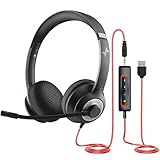
- ✅【Outstanding Noise cancelling Microphone】 The headphones with unidirectional boom 270°microphone that only picks up your voice and block out unwanted background noises. Also, you can wear it on the left or right ear as you like.
- ✅【All-Day Comfort for All Head Shape】 Eaglend always designed for all-day comfort using, there will be no restraint pressure, with the adjustable headbend fit adult and kids easily.The soft protein memory foam earpads is made of high-level breathable materials,ROHS certified materials prevent your ears from heat and sweat.
- ✅【Enhanced sound performance & 40mm audio driver】:Corded phone headset with built-in audio sound card, Eaglend sound lab tested thousands of times for your daily conversation/music/movie/gaming, bringing you extra clear and bass for pleasant experience.
- ✅【USB/3.5mm Connection】 The headphone is designed for multiple use, 3.5mm audio cable with USB In-line audio volume control (cord length 5+4 feet),with mic mute &indicators /speaker mute.Compatible with PC/Tablet/Mac/iOS/laptop /Android phone and other devices."
- ✅【Global warranty &multi-purpose】24 months warranty by eaglend. Great ideal for online courses, Skype chat, call center, Webinars Presentations, Office, Business, Rosetta Stone, Dragon Speaking, Conference Calls and more.
How can AI help agents without replacing them?
AI adoption does not automatically mean AI is improving customer outcomes or the employee experience. Treat each use as a work change to design with agents: define the task it should support, train people to use it, and preserve clear options for escalation and human judgment.
ACXPA’s 2024 Australian report says 37% of contact centers used AI in some capacity, while 23% said AI had improved customer satisfaction. ICMI’s separate 2024 leadership survey found 71% of respondents believed AI would enhance productivity and help people work collaboratively. Those results measure different populations and questions, so they should not be read as a direct disagreement or as proof that AI improves retention.
Run a bounded pilot with agents involved
- Choose a defined task. Specify whether the tool is meant to help find approved knowledge, reduce after-call work, or support another clearly identified part of an interaction.
- Involve agents in selection and testing. Ask them to identify workflow problems, test realistic cases, and report where the tool adds effort or uncertainty.
- Set human controls. Explain what the system can and cannot do, how an agent can check its output, and when to override or escalate.
- Train for the actual workflow. Provide practice and supervisor support before expecting agents to use the tool in live work.
- Assess the whole outcome. Track accuracy, access to reliable knowledge, customer experience, escalation, agent autonomy, workload, and the time or support required to operate the tool.
Continue only if the pilot improves a meaningful outcome without creating unacceptable accuracy, workload, or control problems. ACXPA’s reported AI outcomes are mixed, so claims of automatic cost savings, better service, or lower attrition are not warranted by these figures.
Best Value
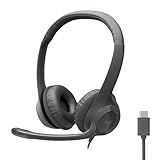
- Digital Stereo Sound: Fine-tuned drivers provide enhanced digital audio for calls, meetings, music, and more
- Rotating Noise-Canceling Mic: Minimizes unwanted background noise for clear conversations; the rotating boom arm can be tucked out of the way when not in use
- Handy Inline Controls: Simple inline controls on the headset cable let you adjust the volume or mute calls without disruption
- USB-C Plug-and-Play: Simply plug the USB-C cable into your computer, including MacBook Neo laptops, and you're ready to talk or listen without installing software.
- Padded Comfort: Comfortable USB C headphones with adjustable headband feature swivel-mounted, leatherette ear cushions for hours of comfort
How should a center measure whether retention efforts work?
Define the outcome before comparing teams or interventions. “Attrition” can refer to different events, and a headline rate is misleading if its definition, period, geography, or population changes.
Use consistent definitions and segments
- Separate voluntary from total attrition, and distinguish departures from internal transfers.
- Track early-tenure losses as well as retention at six and twelve months.
- Where sample sizes permit, examine results by tenure, team, location, schedule, and manager.
- Pair retention with absenteeism, employee feedback, service quality, and schedule stability so a change is not judged on one number alone.
ACXPA reported 27% average attrition for Australian contact centers in its 2024 report, five percentage points lower than its 2023 figure. That is a local, report-specific average, not a global benchmark or a target for every center. ACXPA says more than 300 centers contributed to the report, and individual results may reflect different respondent subsets. No single comparable global call-center attrition rate is established by the figures cited here.
How to prioritize retention changes
Choose a small number of interventions tied to documented reasons for leaving, then make the trade-offs explicit. Compare each option by its cost, reach, employee acceptance, time to effect, measurable outcome, and fit with the problem agents report. A career-path program will not solve a scheduling problem; an AI tool will not substitute for a responsive supervisor.
For each change, record a baseline, the teams or roles included, the period measured, and any operational changes happening at the same time. Review employee feedback alongside service and retention data before expanding a policy or pilot. This makes it easier to distinguish a promising improvement from a coincidence or a result driven by changes elsewhere.
Quick Recap
Product prices and availability are accurate as of the date/time indicated and are subject to change. Any price and availability information displayed on Amazon at the time of purchase will apply.




